
Farmers can increase their access to larger retailers through aggregators
Demand for local food is growing. In March 2023, Chipotle Mexican Grill announced their target to purchase at least 37.5 million pounds of local produce to supply their 3,200+ restaurants across the US.
But they have a big task. How do farms and regional procurement teams form connections? Can family farms in America tap into these contracts?
One example of this beginning to happen on a larger scale is the recent announcement from Local Line, an online platform for farmers and buyers, that it will begin aggregating inventory from local farmers to sell to Chipotle.
Challenges in Local Food Sourcing
Farms today are consistently evaluating new sales channels, from selling direct to consumer, via a CSA or into wholesale outlets. But farmers often don’t have enough time to try all of these marketing options. Day-to-day farming is already a full-time job — there’s little time left to thoroughly evaluate the best sales and marketing channels.
Direct marketing is an option for many farms. Farmers are able to get higher margins for their products, define their own fulfilment and offerings, and build deep connections with their community. But when selling direct to consumers, farmers soon realize that they have many critical jobs to do if they’re going to be successful. They need to tackle the daily realities of running their own farms and being creative marketers, salespeople and customer service experts. Higher margins also mean more marketing. And the reality is that not all of us want to be marketers.
Selling business-to-business (B2B) or wholesale can be a viable option; but how do farmers without large contracts, or access to contacts, go about finding buyers? And how do buyers find local farmers?
What has held local food back from reaching its full potential is not a lack of demand. Everyone wants fresher, healthier food — even large-scale buyers like Chipotle. Instead, local food has been held back by a lack of information and a lack of supply chain infrastructure. The problem is an information disconnect between producers — farmers — and their customers.
North America has over two million family farms. Many of them use spreadsheets to track their inventory data. This is essential commerce information, but it is all on spreadsheets. The question is, how can grocery retailers, food service operators, restaurants and institutions tap into that information? How do they know what is available to them? How do they go about ordering direct from the farm?
Local Line — the company for which I serve as brand manager — is an all-in-one sales platform built for farmers and buyers. Local Line provides the link between farms and their customers in two main ways: how farms store their data and accept orders, and how buyers find farms and place orders.
Instead of having orders come in through multiple channels — phone calls, order forms, emails, direct messages on social media — farms can accept orders through their online store: a digital order sheet.
In addition, farmers have the option to set up multiple price lists or catalogs where they can adjust pricing, pack sizes and availability for different customer segments. They can build a private price list for chefs, for example, that gives chefs a unique log-in, access to wholesale inventory and custom fulfilment options.
Farms can easily accept orders from all different types of customers while maintaining one inventory list and using only one app.
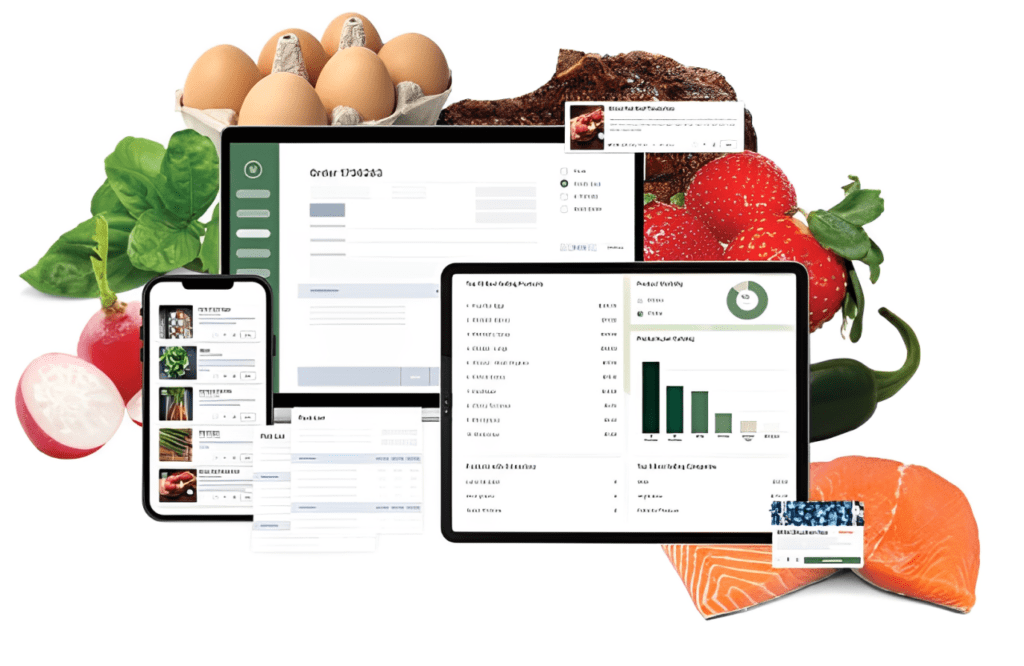
Local Line also manages the workflows that occur after an order has been made. Users have access to all their orders and can keep track of invoices and payment terms to ensure they are paid on time. Additionally, farmers can access picking and packing lists and their fulfillment plans to ensure orders are packed correctly and arrive on time.
Sourcing 37.5 Million Pounds of Local Food

Over the past several years, Local Line has optimized its platform for farms to do direct sales to local restaurants, schools, grocers and individual consumers. Now, Local Line has developed a solution for connecting family farms across the US to large-scale buyers.
Many buyers, such as grocery retailers, food service operators and restaurants, want to source local food. Their customers are asking for it, but sourcing larger volumes of local food is no easy task. That is why they have turned to Local Line for help.
In March 2023, Chipotle Mexican Grill announced their partnership with Local Line to source local food for its 3,200+ restaurants.
Local Line’s platform provides the much-needed digital infrastructure for the sourcing teams at Chipotle to increase the effectiveness of their procurement processes. Local Line will help Chipotle “plug into” regional food networks and obtain better product discovery and market visibility at their central office in California.
This digital aggregation provides transparency in the local food supply chain across the different states — the prerequisite to reaching local food targets. By supporting independent farmers looking to engage with bigger buyers through providing the exposure and ordering platform, buyers like Chipotle are better equipped to access new farms and grow their local food program nationwide.
Sourcing Networks
Local Line has built the scalable way to aggregate farm inventories allowing buyers to access information on food product specifications, up-to-date availability, location variability, certifications and other food safety measures. The information is required for both the discovery and scaling aspects of the sourcing operations.
All the local food sales can be transacted through Local Line, facilitating connections between regional distribution centers and farms with the right products at the right time. Distribution center managers search Local Line’s sourcing application for availability. They can create orders with the farmer instantly and payments can happen by invoice or upon delivery through electronic payment options.
Larger food-service and retail buyers will be able to assemble farmers with the right product for each season into Sourcing Networks to further optimize the procurement process. Farmers can qualify for such networks with multiple different buyers or collaborating buyer groups.
For their part, farmers can tap into different networks and choose which buyers they wish to qualify and be connected to. They are fully set up for trade, while retaining full control over what information is shared with which buyers through the price list or catalog features. The farmers maintain their autonomy.
“Local Line strives to build solutions for America’s family farms. With our Sourcing Networks applications, we intended to create sales opportunities for the farmers and smaller producers we work with,” said Cole Jones, CEO and founder of Local Line, “Some farms tell us they don’t want to do local retail direct marketing and are looking for bigger partners. We’re excited about our new partnership with Chipotle because our relationship is going to pave the path for more buyers to source more local food. Moving forward, we continue to be very focused on building new partnerships that help the American family farm succeed.”
Local Line strives to continue to build solutions for America’s family farms. Providing a sales platform and connecting farms and local food procurement teams nationally is just the beginning.
Since the program is new, access to Local Line’s Sourcing Networks is currently by invitation and pre-registration only. By the end of 2023, Local Line will be launching functionality that will enable farmers to browse various buyers and submit applications to work with them. Farmers and producers who are interested in joining the Sourcing Networks program are encouraged to reach out to Local Line at info@localline.ca.
To better support farmers who are looking to start selling wholesale, Local Line is also currently developing a Wholesale Readiness training program. This program will include all the information farms need to scale up their business to meet the demand of large buyers like Chipotle. To learn more about this program, visit site.localline.ca.
Nina Galle is the Brand Manager of Local Line (localline.ca).