
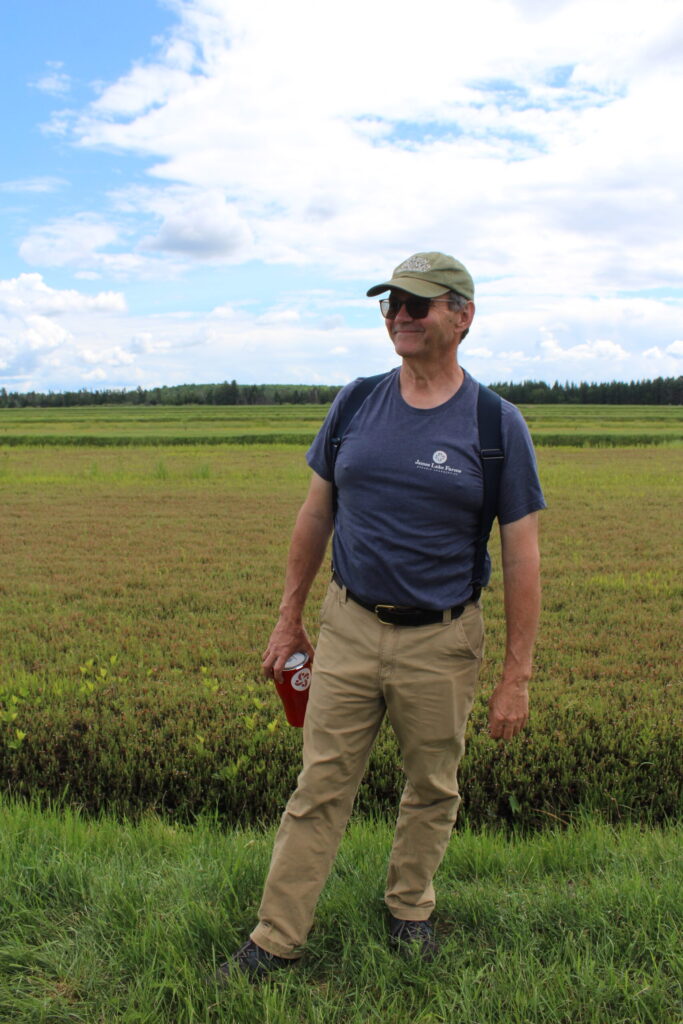
James Lake Farms in northern Wisconsin has figured out the art and science of organic cranberry production
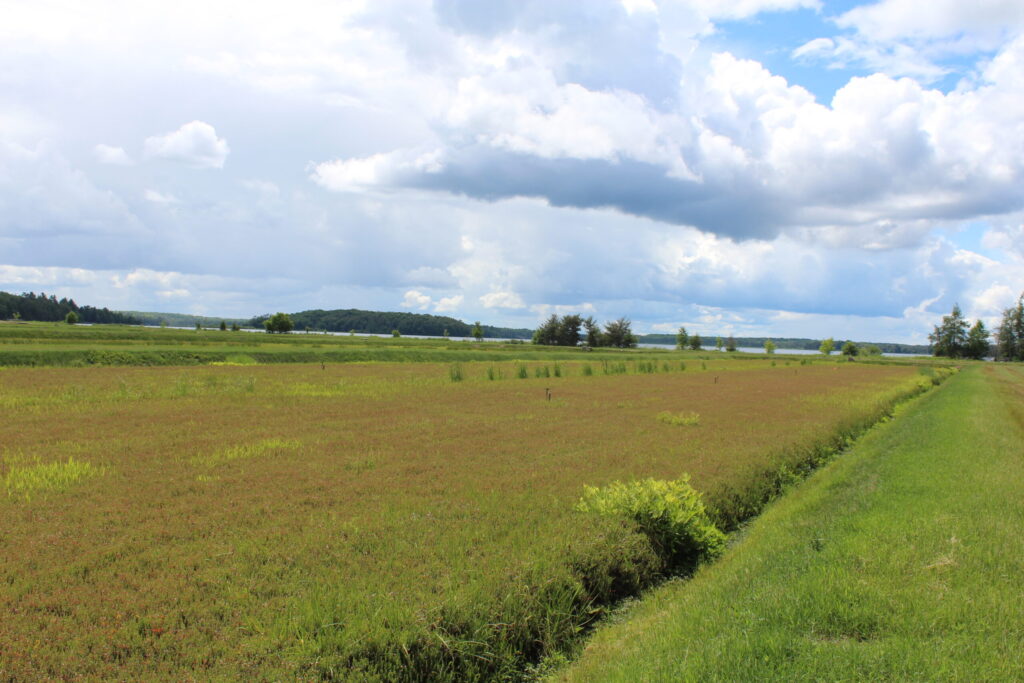
At first glance, northern Wisconsin doesn’t seem like an agricultural area. It’s got lots of pine and hemlock forests, acidic peat marshes, and beautiful glacial lakes studded with vacation homes, boat ramps, and campgrounds. But the land isn’t suitable for growing most crops — except for cranberries.
You can’t see it from the road, but one of the largest organic cranberry farms in Wisconsin is located near the small town of Three Lakes. John Stauner bought James Lake Marsh in 2006 and Thunder Lake Marsh — a few miles away — in 2016. Between the two marshes, James Lake Farm owns nearly 2,000 acres of land, with 177 acres currently in certified organic cranberry production.
With its peat bogs and cold climate, northern and central Wisconsin is well-suited for cranberry production. The state produced 4.6 million barrels (a barrel is 100 pounds) of cranberries in 2025 — 60 percent of total U.S. production.
Only 0.5 percent of U.S. cranberry production is certified organic. But Wisconsin is still the leader, producing 27,162 barrels of organic cranberries in 2021, which was 65 percent of total U.S. organic cranberry production. And since there are only eight certified organic cranberry farms in the state, a good percentage of those were grown on James Lake Farm.
Since cranberries are somewhat of a specialty crop, there wasn’t much information available about how to grow them organically in 2006. John had to figure things out as he went, developing a system that would work on his land. So why did he decide to do it?
One reason was economic. “I knew we were never going to be competitive with large-scale growers” in central Wisconsin, John says. “I needed to come up with a business plan and actually make this work. The return on organic was sufficient to make that happen.”
There was a philosophical reason, too. John wanted “to be able to grow something that was good for people and good for the land on which we are growing it.”
That’s why he started transitioning James Lake Marsh to organic production in 2006.
A Year in the Life of a Cranberry
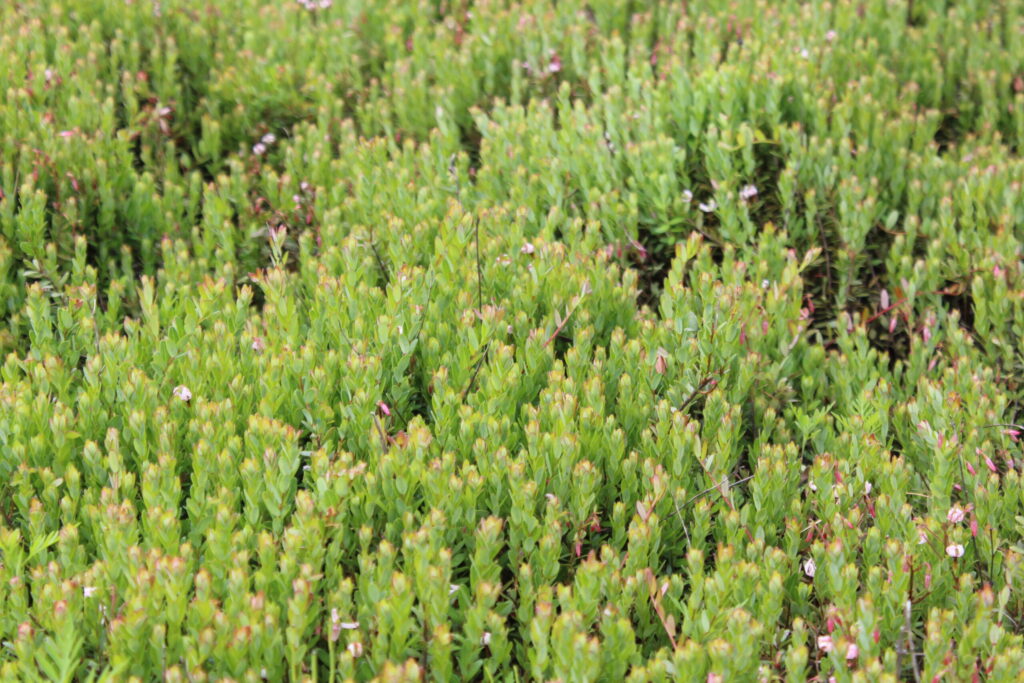
Cranberries are a unique crop. There’s really nothing else like them that’s grown commercially. Part of the Ericaceae family, cranberries are native to the highly acidic peat marshes of northern Wisconsin. They thrive at a soil pH of 4.5, which would quickly kill most other agricultural crop plants.
“The good news is that we are growing something in an environment in which it evolved,” John says. “I’ve got cranberries growing wild around the property here.” In fact, several of the varieties that he grows are natural selections — wild cranberries that were propagated for commercial production.
Cranberry plants grow as low vines, sending up short uprights to form flowers and fruit. They’re easiest to propagate vegetatively — growers establish new beds by mowing existing ones, spreading the cuttings on prepared soil, and pressing them into the ground with a disc.
It takes sixteen months to grow a cranberry. Next year’s buds start forming in July, while the current year’s fruit is already starting to ripen. After the fall harvest, growers protect cranberry plants from winter’s cold and wind by flooding the marshes and letting an 18-inch layer of ice freeze, then draining out the underlying water. In late winter, growers spread a layer of sand on the ice, which will bury old, dead tissue as the ice melts and encourage the plants to put out new roots and uprights.
Spring can be a touchy time. Once the vines begin breaking dormancy, the buds become susceptible to frost. Growers have to turn on sprinklers for frost protection anytime the nighttime lows dip below 35°F, which happens frequently in May and June because the temperature in the cranberry beds is 15 degrees lower than the high ground forecast temperature.
The cranberries bloom in June. John brings in both bumblebees and honeybees to pollinate his cranberry fields, but bumblebees are more reliable. Honeybees will abandon the cranberries for a better nectar source, like a basswood tree a half mile away. Plus, bumblebees will fly on cold, rainy days. “It has to be 65 degrees and sunny before the honeybees even think about going out,” John says. “Different union completely. We like our bumbles.”
In addition to bringing in commercially raised Bombus impatiens, John says that entomologists have documented four other species of native bumblebees on his property, including Bombus borealis and the rare Bombus frigidus. He has a three-acre pollinator planting near James Lake Marsh to provide forage when cranberries aren’t in bloom.
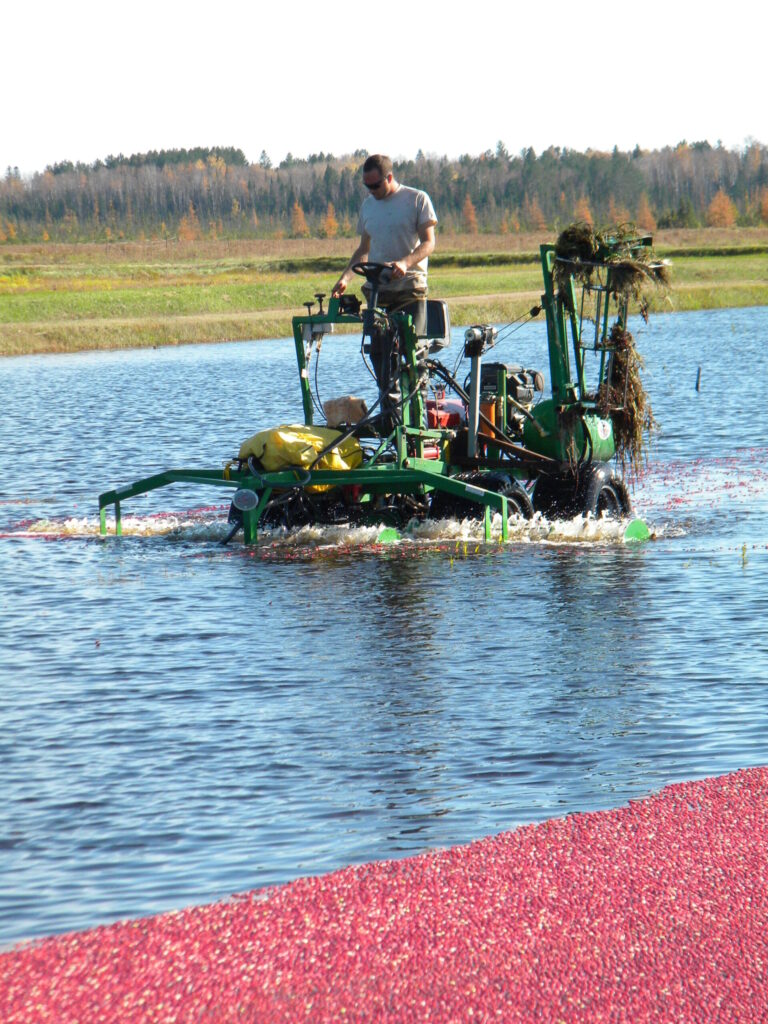
Once they’re pollinated, cranberry fruits grow rapidly, maturing in October. Fresh-market harvesting at James Lake Farms is done with Getsinger-style harvesting heads, which rake up the berries with a line of metal teeth that retract as the berries roll up a rotating drum and fall onto a belt. It’s not the fastest harvesting machine available, but it’s the gentlest, which is essential for the fresh fruit market.

After the cranberries are harvested, they’re cleaned, washed, dried, sorted, and packaged in the farm’s own processing facility. Then they head off by truck to the Naturipe warehouse, where they’re distributed for sale to consumers. James Lake berries are sold under a variety of labels, including Naturipe, Trader Joes, Simple Truth, O Organics, Bluewater Farms, and Habelman. A small number are also sold to food co-ops in the Twin Cities area under the James Lake Farms label.
What’s Different About Organic?
While most of the infrastructure at James Lake Farm is typical for the cranberry industry, organic production requires some key changes in management. The two biggest differences are in nutrient management and pest control.
Nutrient management is fairly straightforward. John applies rock phosphate and OMRI-listed potassium sulfate. For nitrogen, he mostly uses composted or heat-treated poultry manure. Too much nitrogen will stimulate vegetative growth, resulting in less fruit, so it needs to be managed carefully.
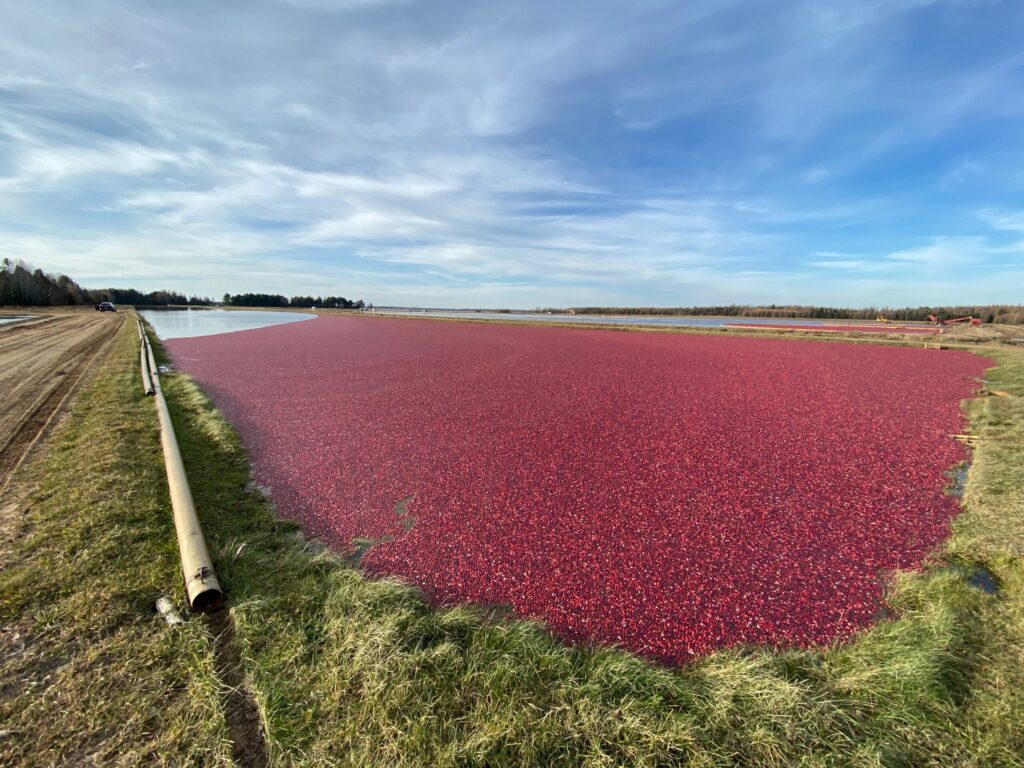
John relies on scouting to determine how much fertilizer to apply. Organic cranberries can measure low in nitrogen on a tissue analysis test but still have overgrowth. Instead, he looks at upright extension, leaf color, and canopy growth, which can vary depending on the variety. “This is where it becomes more of an art than a science,” he explains.
Pest management requires vigilance. John uses standard integrated pest management (IPM) thresholds, but he scouts more frequently than conventional growers. Cultural practices like sanding the ice-encased beds every third winter help keep pest pressure down. So does good trash cleanup and irrigation management.
John’s organic pesticide toolkit includes products like Spinosad (Entrust), neem oil, and pyrethrins. He uses Regalia, a giant knotweed extract, to control a disease known as cottonball (Monilinia oxycocci). It works by activating the plant’s natural defense system, which makes the leaves temporarily turn red. He also uses a Pseudomonas product called Howler.
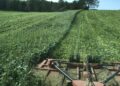
Weed control is the biggest challenge in organic cranberry production. Since the vines are planted in permanent beds — some of John’s are sixty or seventy years old — cultivation is not an option. “The best defense is a good offense — keeping that canopy closed,” John emphasizes. Some varieties have a denser canopy than others. One of the best for weed control is a native selection called Ben Lear, which John suspects may also have allelopathic properties.
John’s main tool for weed control is mechanical clipping. He also uses organic herbicides, but because they’re not systemic, they don’t provide long-term weed control. When all else fails, there’s always hand-pulling, which is the only way to get out willows, leatherleaf (Chamaedaphne calyculata, another member of the Ericaceae family), and other woody weeds.
Weed management is especially difficult when renovating a bed — burning out the cranberry vines and replanting it with a different variety. John reluctantly came to the conclusion this year that the only way to economically renovate a few of his beds was to temporarily remove them from organic production so that he could spray the herbicide Callisto (mesotrione) for weed control. Once the cranberry vines are big enough to compete against the weeds, he’ll transition them back to organic.
Another difference between organic and conventional production is the certification process. John is certified organic with MOSA and also has Kosher and food safety certifications. He discovered that organic certification actually requires less paperwork and documentation than food safety certification. Having all three certifications gives him access to a wider variety of markets.
Harvesting and packaging cranberries for the fresh fruit market is an important part of John’s marketing strategy, because fresh cranberries sell for a higher price than processing-grade berries. The fresh market is also more consistent; frozen cranberry prices have fluctuated significantly since 2006, while fresh prices have stayed stable.
Making the Organic Transition
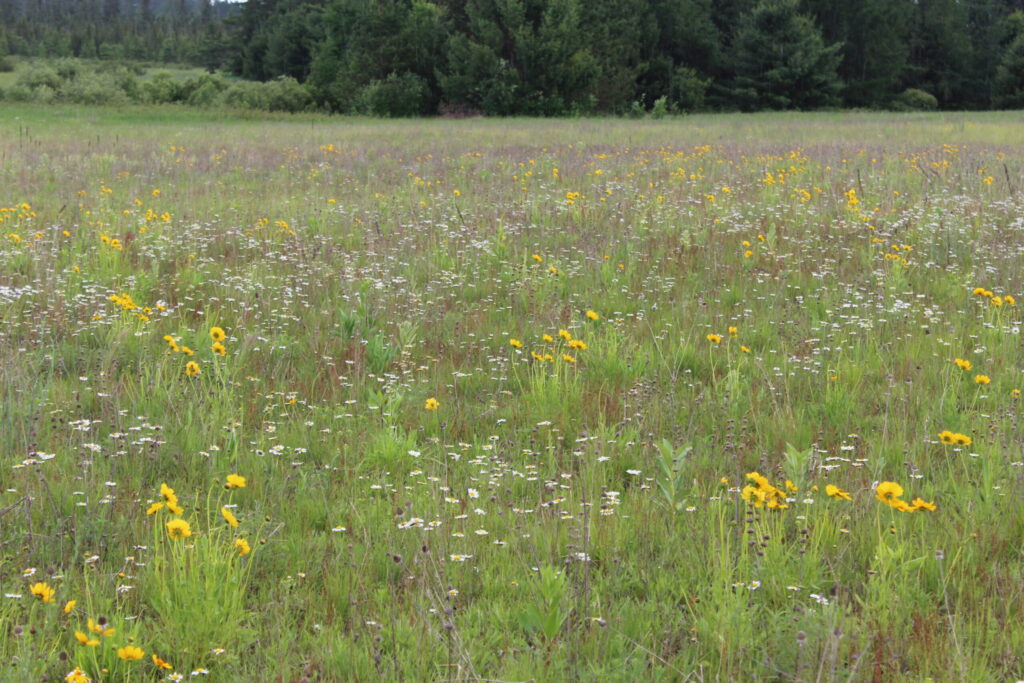
John explains that one key to successful organic cranberry production is owning enough land to ensure an ample supply of water and sand. He owns a total of 2,000 acres, with 177 acres currently in production. The rest is water, pollinator habitat, and forest. The isolated location has made it easier for John to transition than it would be in an intensive cranberry-producing region.
Transitioning to organic cranberry production requires a shift in thinking — from an emphasis on yields to an emphasis on profitability. The transition period is the riskiest part, because it takes time for the biology to adapt to organic practices, and growers can’t get the organic premium until three years after they last use a prohibited substance.
“You’re going to see some things happen in transition that, once it’s balanced out, you’re not going to see,” John explains. “I had a biblical amount of toads the first year.” He also had a lot of cranberry tipworm damage at first, but after three years the beneficial insects got back in balance and controlled the tipworm. “Balance is a strength, and diversity is a strength, and sometimes if you just let things be, they will come into check,” John says.
At first, organic is scary. Then it’s hard. Then it’s habit. And finally, you’re where John’s at now with James Lake Farms. As he puts it, “You get to a certain point, and you can’t imagine anything else.”
Anneliese Abbott is an editor with Acres U.S.A. She is the author of Malabar Farm: Louis Bromfield, Friends of the Land, and the Rise of Sustainable Agriculture, and she runs the site historyoforganic.com. She has a master’s degree in agroecology from the University of Wisconsin-Madison and farms with her family in Otsego, Michigan.