

Biome Capital’s Erin Feger talks about how to craft mutually beneficial relationships between ecologically minded farmers and the investment community
Acres U.S.A. One of the issues ecologically minded farmers face is access to markets and funding — problems that companies like Biome Capital are trying to help solve. Could you first tell us about your background, though — how you got into this sector, before you started with Biome Capital?
Erin Feger. Sure. I am a partner at Biome Capital Partners now, but I came into this world from the healthcare sector. I studied public health and was working in healthcare technology, and through a series of both professional and personal experiences and projects, I found myself frustrated by the restrictions of the health system and wanting to understand what true human health looked like. I was recognizing how far away I was from the food on my plate and wanted to understand the relation between that and the larger health systems that I was a part of at that time.
Eventually I had the opportunity to work with a couple folks who were really connecting the human-health-to-soil-health narrative that people are talking about a little bit more today. I kept going deeper down that path to try and identify where I could potentially contribute and dedicate my efforts — did I want to work on the nutrition side? Did I want to work at developing health brands? As I kept going a step further and further, eventually I landed at the heart of farming communities and the growers themselves. How can we expect change when the health of farmers and their businesses are suffering and surrounded by a system that is often preventing them from thriving?
I knew I couldn’t be a farmer, but I knew that I could play a role — through my skills in operations and project management — in creating new pathways for farmers to gain access to capital so they could farm more regeneratively.
That’s the story of a lot of my team members, who have come from different sectors. We all started asking ourselves, “How can we merge our knowledge and relationships alongside the farmers’ skills of farming to potentially carve a new path so that the food system can become more resilient and the communities behind them can also become more resilient?”
Acres U.S.A. Who were some of those influences — the people who were making those connections for you between human health and soil health?
Feger. The nonprofit Farmer’s Footprint was actually founded by a couple of my partners, and they became a platform for sharing some of those stories. They originally set out to develop a documentary to track what was happening in the Mississippi Delta — the chemicals that were going into the watersheds there — and they ended up talking to a lot of farmers along the way and learning from them. That was a big part of my journey — being connected with them as a group and a lot of the different voices that they were bringing in.
Acres U.S.A. This is the work Zach Bush is doing? I remember him speaking about cancer rates in the Mississippi Delta at the Acres U.S.A. conference a few years ago.
Feger. Yes — Dr. Zach Bush and David Leon co-founded Farmer’s Footprint, and they’re now my partners, alongside others, at Biome Capital.
Acres U.S.A. What is the guiding philosophy of Biome Capital? What are you trying to do?
Feger. Our guiding philosophy is to restore vitality to the land, bring prosperity to growers and nourish future generations. We value progress over perfection and recognize we must consider investment holistically across the supply chain in order to accelerate change. We are really aiming to bridge the gap between investors and the opportunities to funnel more capital into accelerating regenerative management.
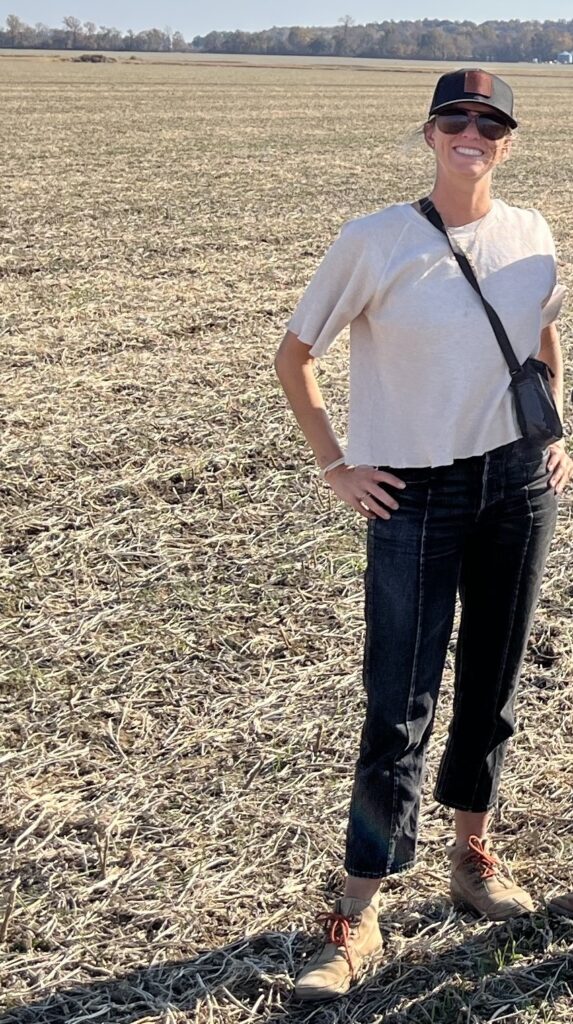
We are partnering with farmers in the U.S. through a shared equity approach and are providing additional investment opportunities outside of the farm gate that can drive profitability back to the land and to growers — this could be infrastructure, tech or food brands. These are two things that I think make us different than some of the other financial avenues out there.
In terms of our equity model, if there are growers who are looking to expand their acreage into neighboring land — or perhaps it’s land they’re already managing and renting, but they’re looking to grow their owned acreage — we can go in with an equity partnership with the growers. We tailor our partnership depending on their debt capacity and their goals. Do they want to own it today? Do they want to own it over the next 40 years? What’s their management capacity? We look at all of that; as equity partners, it just depends on what they’re able to do and desire to do.
But we don’t just buy land and offer leases. We believe a typical lease model, while comfortable and familiar, actually limits the potential of the business and restricts a grower’s longer-term decision-making process. As shared owners, there is shared alignment and incentive for both parties to think and contribute longer term on profitability potential, on key barriers to navigate, and generally on what truly makes sense for each unique farm.
Acres U.S.A. So, you help the farmer buy land, and how does the rest of the deal work — will Biome Capital retain some percentage of that land?
Feger. Typically, yes. Say a grower has a neighboring farm that they know is up for sale, but they don’t have the resources to purchase the property by themselves. We could partner with them, and they could put down perhaps 30 percent and we would own the remaining 70 percent. We aren’t specific on what that percentage needs to be; it’s really on a case-by-case basis. They could buy more of that 70 percent from us over time, or at the end of the fund they could buy it all from us; contractually, they will have first right to do so. There are multiple options for a deal like this; for example, we might look at a revenue share — the farmer getting all profits from their owned portion, plus a share of our portion for sweat-equity. We don’t have a “here are your terms, take it or leave it” mentality; often we invite the farmer to create the terms with us. I know this isn’t typical in the industry. But being able to walk through the process together has helped us build this strategy over the last couple of years in order to see what is actually needed.
What we’re trying to demonstrate is that there can be alignment — we’re a business partner, not just a landowner who leases land back to the farmer. You as the farmer are the master of the farmland; you can bring your gifts and have your lane, and we can bring industry resources and additional capital to supplement the business plan and help outside of the farm gate — whether that’s in the supply chain or on the offtake side. We want the growers to be in a better financial scenario than before we partnered with them, and that is what we map out together.
Acres U.S.A. In offering a lot of bespoke options to farmers, in this kind of scenario, what you really need is to find the right person — the right farmer. How do you do that? What are your characteristics you’re looking for?
Feger. Exactly. We don’t need the perfect piece of land or the perfect scenario; what we want is to back solid operating partners who are philosophically aligned and eager to grow. First, we’re looking for folks who are either interested in or have begun looking at regenerative management. It could be anywhere along that spectrum, and it’s not defined right now, but we’re looking for growers who are interested in increasing their profits through building soil health, using fewer chemicals, tracking outcomes, etc.
Second would be someone who’s ready to expand or interested in securing land that they are currently managing for a more stable period of time. Additionally, if someone is going through a generational transition and wants a small amount of equity for a short period of time — we could come in on their current land if mom and dad need liquidity, and then they buy us back out.
But really it comes down to ambitious growers who are aligned on exploring how regenerative management can drive increased profitability and walking that path together. Also, while our primary checks will go into the land, we also have an allocation that could go into infrastructure — something on-farm or some sort of ag tech. It might be a small infrastructure project that, with a little bit of capital injection, could really help improve the grower’s capacity.
Acres U.S.A. Something like on-farm processing?

Feger. Yes. Oftentimes this is a big reason people come to us — they have an opportunity to solve a current barrier by simply adding infrastructure on their existing farm or have identified an opportunity to do so in their area.
Acres U.S.A. And are you also able to help with finding new markets?
Feger. Yes, exactly.
Acres U.S.A. Are you looking for specific crops, specific acreage, specific locations?
Feger. We are. Right now, we’re primarily looking at permanent and row crops, with an emphasis on high-value crops — tree nuts, citrus, mixed-row vegetable, fruit, cotton, etc. Today we’re not doing a ton with livestock; we will look at that if it’s a component of an operation, but that’s not our primary focus right now.
The acreage also depends. It could be a citrus or tree-crop orchard of 100 acres, all the way up to 5,000 acres of row crops. Typically, though, managing at least 500 acres is our baseline.
And in terms of geographical scope, we’re trying to not scatter-shot 20 farms randomly across the U.S. with our fund. We’re trying to home in on a few targeted regions so our infrastructure investments could support and add value to multiple farms, and maybe even to farmers outside of our portfolio. While not finalized, right now we are looking at central California, the Mississippi Delta, the Pacific Northwest and the Hudson Valley. But ultimately, we’re looking to invest in clusters so that we can make decisions that make sense for each unique region.
Acres U.S.A. On the Biome Capital website, you have a post that talks about your mission and values, and it includes the statement, “The goal is not defined by fringe ways of stewarding land, bespoke supply chains, or onerous certification standards — it’s to make regenerative management into conventional agriculture 2.0, the baseline standard.” Could you talk quickly about these things? What do you mean by “fringe ways of stewarding land,” and why is that not something you’re focused on?
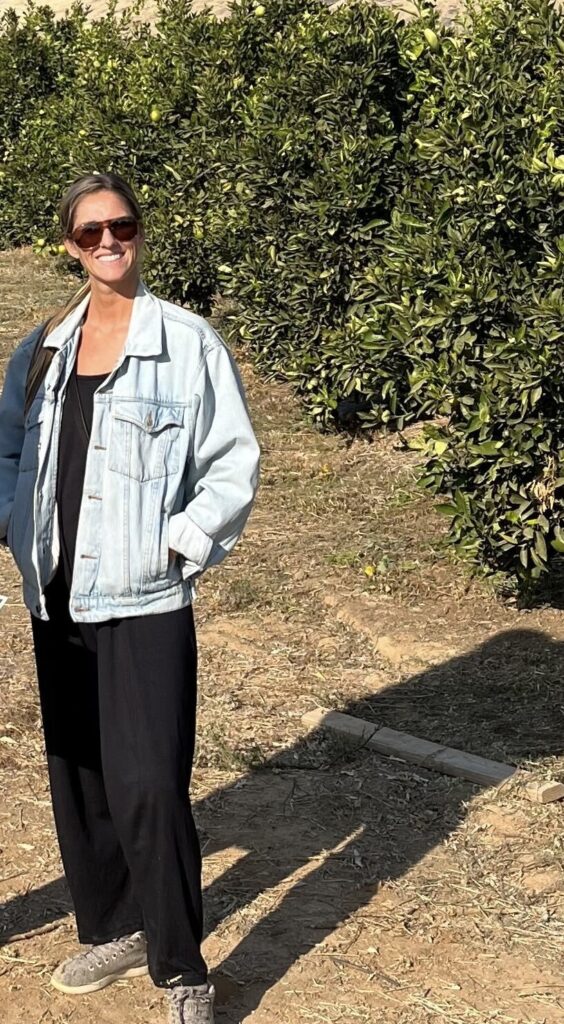
Feger. We see regenerative management — or a farm-manager mindset of approaching soil in a way that works with the microbiology versus against it, that works with the water, mineral and carbon cycles — as the only approach that will withstand and thrive through future disruptions in our food system. We don’t view regen management as an impact experiment to tell a good story on a select few ranches but as the only way forward. We are focused on the practicality of farmers and the rest of the supply chain considering this at scale. It’s the balance of recognizing the nuances of each farm and that each partnership could be bespoke in some way, but at the same time, it needs to be a wide path that more capital can move into over time and where the surrounding players — processors, distributors, brands — are evolving together.
Acres U.S.A. Right — it has to be a somewhat standardized farming system.
Feger. Yes, and we need to open the door of scale so that we can reach some of the larger institutional investors to bring more capital this direction
Acres U.S.A. And by bespoke supply chains, do you mean that you want to be able to get these products into the conventional pipeline of the commodity system? Or are you looking to build an alternative to that?
Feger. We are trying to avoid building a brand-new niche supply chain that ends up only becoming a small percentage of product offtake for a small percentage of people. The question becomes how we track product integrity and how to reward the farmers leading the way. We don’t have the answers for all of this but are looking at some of the intermediary steps we can make today through collaboration with the stakeholders involved in each of our partners’ operations.
Acres U.S.A. And then, do you want your growers to have some sort of certification standard?
Feger. We’re definitely not against them, but we do not require any certifications with the farmers that we’re partnering with. We take a very pragmatic approach to what the needs are for each farm. We keep up with the different certifications that are coming out, and if there are opportunities that make sense for some of the growers we work with, we certainly support them to do so. But we don’t limit farmers in this way.
Acres U.S.A. So that the farmers who are reading this can also understand the investor’s perspective, you also wrote in the same piece that “return is a consequence of good stewardship, not the sole objective.” How do you do that? Do you promise investors a certain return, and how do you set expectations for them?
Feger. We do have investment thresholds and parameters that we have to hold in mind. But at the same time, a big part of this is us finding the right investors who are leaning in more on the impact side. Even though we don’t classify ourselves as an impact fund, we’re finding that a lot of the people who want to come in as investors are people who are passionate about the food and agriculture system and communities. We’ve been able to build relationships with investors who understand, I think, the complexities — that farmland isn’t the same as a tech company, where growth might be more predictable. But at the same time, where can we mitigate risk to find that balance?
That’s really our job at Biome Capital — to bridge that gap. We’re not requiring the same return year over year for the fund. Maybe the farmer needs to make a decision in year one that will produce better results by year four; returns in the first three years won’t be as high, then. It’s our job to bridge that story to our investors.
We must be very clear upfront with the growers we work with about the expectations. Being as clear as possible with one another from day one is really what it’s all about. Including with returns — we walk through all the potential models and numbers together and build those out as a team.
Acres U.S.A. Is there anything else that you’d like to mention to farmers who are potential partners?
Feger. We’re always willing to have a conversation. We will often walk through options with someone and say, “You’re actually better off in this scenario going with a bank or with someone else.” Our goal is simply to bridge that gap between the investor world and what’s happening on the ground in agriculture.
Also, we have deep expertise on our team across different fields. We have investment experience, agronomy expertise, team members from across the supply chain — we have advisors who have worked in the consumer-facing goods side of things as well as in agri-tech businesses. I think that’s been a big part of our story — putting all of our heads together with potential farmer partners to solve problems and build new paths.