
Idaho rancher Glenn Elzinga explains why certification, transparency, and customer trust still matter in a shifting marketplace — as well as how stockmanship practices have transformed his operation
Acres U.S.A. You are 100 percent grassfed and organic. That’s rare — probably especially in Idaho.
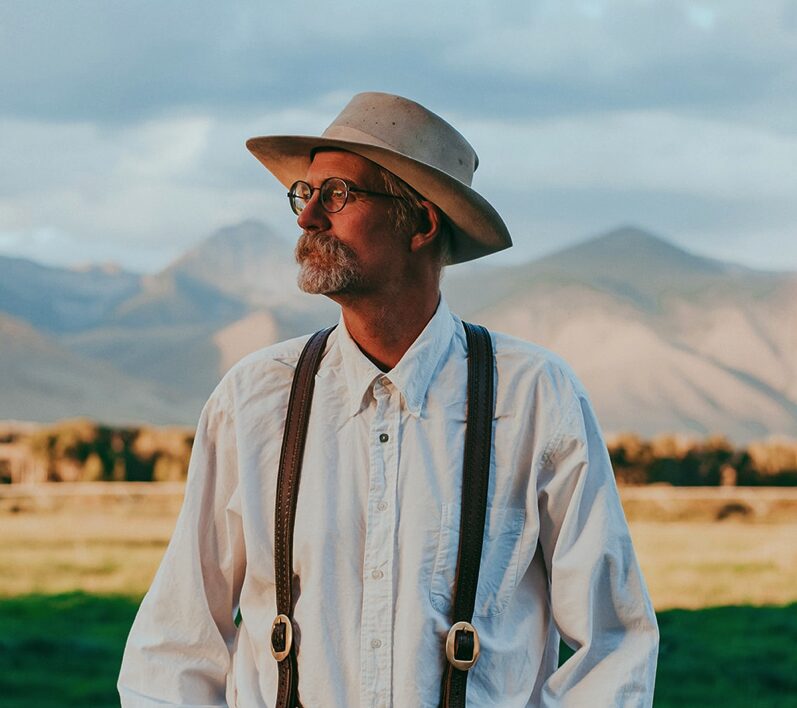
Elzinga. We live in a very traditional ranching state. There’s excellent cattle production in these mountains of central Idaho. Genetically they’re great black cattle, but they’re not organic. They are grassfed up to the point of leaving the state, which is usually around six to seven months old. They’re sold on video live auctions, and they get on semi-trucks and go to places all over the Midwest. There are very few cattle that get finished here. They’re all going to grain; very few, like ours, stay on grass.
Acres U.S.A. Let’s talk about the current state of organic grassfed beef. There are a lot of grassfed finishers who are essentially organic; they just don’t certify because they don’t see the need to. Do you have solid markets because of organic? Do you think it’s worth continuing the certification?
Elzinga. Great question. The demographic of buyers — we call them partners, not consumers — has changed fairly dramatically. We got started on this in the ’90s, serving farmers markets in Boise, which is five hours away. Nobody was interested in grassfed closer to us, but you go to the city and people are starting to hear about it. But we had to do a lot of education at that farmers market.
People would say, “Wait, aren’t all cattle grassfed?” And I’d say, “Well, they are to a point, but these are actually grass finished. They never get corn in a feed lot.” And then the second thing they would say was, “Are these cattle organic?” And at that time, we weren’t certified. We were practicing things organically, but we’d never gone through the certification. We’d have to give way more of an elevator pitch to describe why it was safe to eat our beef — no hormones, no antibiotics, no chemicals, etc. We’d go through all this, and they’re glazing over. I realized that if I could just say, “Yes, they’re organic,” people wouldn’t even know what that meant, but they’d be like, “Oh, well, then I’m going to buy that.”
The organic movement at that point in time, in the ’80s and ’90s, had already established that this was clean food. People didn’t know what that meant, but they were willing to jump through that window because they had this view of what those attributes were. They knew organic was good. So, being organic and grassfed gave me a way to open a door for people.
And besides that, we believed in it. We were already doing it. I was in conventional agriculture as a young kid, and so was my wife. We were both surrounded by atrazine. I was spraying Roundup. I was putting nitrogen fertilizer down on hot days, and it’d be burning my skin, and I was putting organophosphate ear tags on cattle, and I’d go to bed with these headaches. I was fed up enough that I didn’t want any part of that anymore.
There had to be a way to raise these cattle like they were designed. That became a long journey. But it was the customers who really motivated us to be certified. It only took two years to transition because we were already there on a lot of requirements. We just needed better record keeping. We became fully organic in 2005. Of course, we were grassfed before that.
It was a natural transition to move into an internet-based market. Being organic really got our foot in the door there because we were among the first organic grassfed beef producers in the world online.
Acres U.S.A. Do you think you would still go that route if you were starting today?
Elzinga. I think a lot of people have freaked out about what organic means in today’s marketplace. I have Real Organic Certification as well, which was started by Dave Chapman and Linley Dixon, and they’ve become good friends. There’s over a thousand of us in Real Organic.
But I’ve learned a lot about the stature of organic in America. I don’t have the exact numbers, but I think it’s somewhere around 95 percent of farms certified in the U.S. today are still small farms. They’re like me — they’re family outfits. They have a lot of integrity, a lot of concern about sticking to the attributes — not only the letter of law, but the spirit too. Only about 5 percent of that whole list of organic producers are corporate guys who seem, to us, to have ran out this tangent on organic certification and are no longer abiding by the spirit of the law, although they’re following the letter. These are the big egg farms and the big dairies. They’re the ones that the consumers say, “Oh, organic’s not what it’s supposed to be.”
But, in reality, if you go through the highways and byways of America, you’ll find that about 90 to 95 percent of the actual registries in the organic database are still small farmers who are trying to do the right thing. Organic really hasn’t been tarnished, except by the media, and people have believed that.
Here’s the crazy thing with regard to your question. We had some transitional cattle, some mama cows we picked up, and the beef rules say that if you feed them non-organic hay in their third trimester, the animals that are born from those transitional cows cannot be certified organic. It’s that third trimester that’s key. We had bought these mama cows from some neighbors, and they were the genetics we wanted. We knew the cows would never be organic, but we could raise organic calves by having those cattle on our ground. And that’s totally legit from a regulatory standpoint.
But we had some of those mama cows preg checked, and they started calving long before May 1. We got them in February, and they were still grazing some non-organic ground we had up till February 1. Some of these calves were born in March and April. So, guess what? We had 50 of these calves that were now non-organic. But they’re totally raised on organic ground. We can’t sell them as organic, but we can call them 100 percent grassfed. We call them our “white label” — we have a colored label on our organic cattle, and we have a white label for the non-organic ones.
We started selling these white label cattle on our webstore. The NOP [National Organic Program] didn’t care — they just wanted clear records that delineated what was organic or not. But Real Organic was actually concerned, because they don’t like mixed operations. There’s ways that people can screw that up, or there’s ways people can cheat, so they just want 100 percent organic operations. But I explained to them the situation, and they were good with it.
We were wondering if we’d have trouble selling the white label beef. I got a lot of phone calls and emails about it, but I explained that it was basically our beef without the USDA organic tag on it. And the customers were like, “Well, of course I’m going to buy that. I’m going to be able to save 10 percent.” Sales were slow at first, but then they gained momentum. And you know why they gained momentum? Because they trusted us. It was a relationship.
I have customers who have been with us for 15, 20 years. What’s crazy is that one person spent $52,000 with us in the past four years. This guy really depends on us as a food source. It’s not to restaurants — these are all individual people. We don’t sell wholesale.
I had a whole bunch of people buy that white label beef, and it kind of shocked me, especially in the face of what we hear — what we perceive — about organic agriculture in this country. A lot of brick-and-mortar stores we used to sell through eventually quit because they’re like, “People don’t care about the organic attribute anymore.” But that’s not true. There are people who are determined to stick with organic.
Acres U.S.A. One thing I get worried about with the regenerative tagline is that folks can just use it and not necessarily have any sort of proof behind it, and it opens the door to other issues.
Elzinga. It really does, and I think that’s only going to get worse with time. Thankfully, there are some good programs — Real Organic, Regenified, Regenerative Organic Certification. Those three standard bearers are going to hopefully move it forward so that we don’t end up in the same place as “sustainable agriculture” 20, 30 years ago. “All Natural,” “Sustainable” — what do those things mean? Nothing.
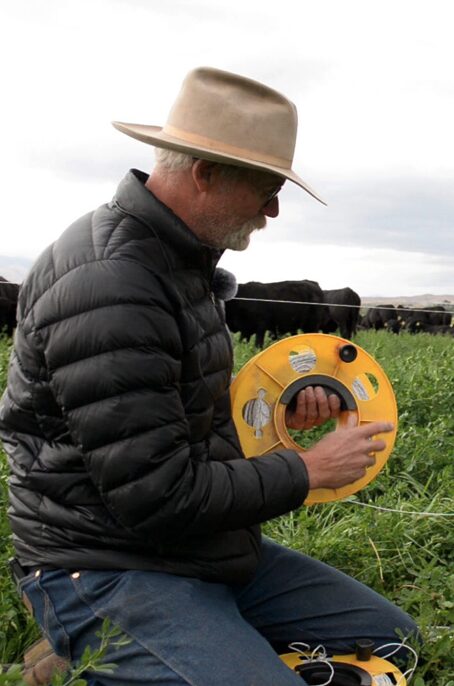
I’m afraid regenerative is doomed to fail as well, and governance is not going to kick in to create a certification. There are these private certifying NGOs putting together these programs, and I think they’re going to be mildly successful because people are going to need some way to engender trust, and they’re going to be able to pull it off.
Acres U.S.A. We market our beef as “regenerative,” but we have no certifications. We let people come out and take a look at our farm. We don’t do anything to the animals that would disqualify them from being organic, but it’s easy to see how someone could be certified and cut corners.
Elzinga. It’s true. Organic gets more complex every year because NOP adds more layers of stuff to inspect. I feel like the NOP is almost trying to legitimize their existence sometimes by creating more layers and more complexity. But the reason I keep going is really simple. It’s because — and I say this to our customers often — “I’m asking too much for you to simply trust me. This third-party certification enables you to do that. And that’s why it’s important.”
Taylor, you probably have a customer base that’s right around you. I have zero customers locally — within a two-hour drive. They just don’t exist.
Acres U.S.A. That’s what makes your success so impressive. It shows that no one can say, “I can’t do this where I’m at.” You have the cards stacked against you but have made it work.
Elzinga. The five-hour drive to the farmers market was not sustainable!
Acres U.S.A. How did you guys end up in Idaho and then scaling to where you are now?
Elzinga. We moved to Idaho in 1985. I was a forester at the time for the BLM. We had no money — no inherited equity or anything. I often tell this to people who are starting in agriculture. I really don’t believe that the barriers are any more substantial now than they were then. Sure, the market economy has completely changed, but if you look at the cattle market economy, nobody was getting $4 for a calf in 1985. Nobody was thinking they could get by with paying a buck or under for diesel fuel. And yet there we were — it was 60 or 70 cents a pound for those cattle, and we were under a dollar for diesel fuel. Yeah, land was way cheaper, but cattle prices couldn’t support the purchase of land then, either.
The fact of the matter is that the markets available to us in this day and age are way different. There was no internet in the ’80s and early ’90s. Now we have this complexity of being able to market online and create a market. A lot of producers in America live in a place where they have millions of people within reach. Idaho’s population just crossed a million five years ago, and it’s a very rural state, and the demographic is not oriented toward buying grassfed organic beef. So, there are many unfair advantages.
When I talk to prospective producers in their 20s and they’re like, “My mom and dad say this will never work,” I say, “No, there’s no ‘never’ here — the opportunities you have way exceed what we had to get started.”
Acres U.S.A. The big thing now is everyone wants to be able to farm without having a job in town. But the generation that came before us — everyone had jobs in town at some point. It’s just the way it is. And right now, we have more opportunity for remote jobs and different types of jobs that allow you to actually stay on the farm. Right after we get done talking, I’ll go do cattle chores for 20 minutes, and I’m back in here working at the “real” job.
Elzinga. People throw online marketing in the basket of the ranch, but it’s not really. It’s the town job. You think my wife and I like running an internet business? I mean, we love the connectivity with our customers, our partners — I love reaching out to them and telling stories about what we do — but the mechanics of running a Shopify webstore and putting beef in boxes — it is just a lot of work. And it’s not this rewarding thing where you’re smiling all the time when you’re in the freezer at 35 below zero and you’re trying to put beef in boxes. Every Monday you do that, and you’re thinking, “This is not the fun part. I think I’d rather shovel manure.” It’s just a perception switch.
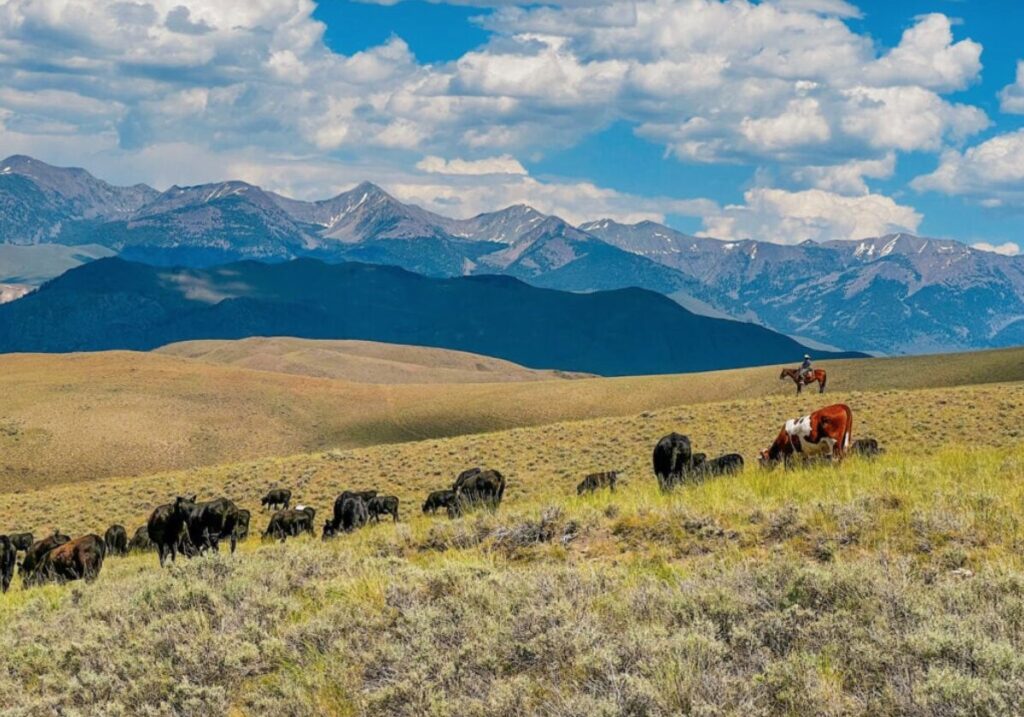
We all have subsidies that keep our agriculture alive. For a lot of us, the subsidy is marketing. I have relatives who are selling corn and soybeans, and they spend a lot of time at the computer evaluating markets and hedging risk. That’s their town job. They’re subsidizing their own existence. Granted, they don’t actually go to town, but their town job — marketing their commodity products — is basically subsidizing their existence on the farm.
So, we all have town jobs. My town job is really rewarding because I have this connectivity with partners that I would never have without the internet. It’s a beautiful thing to be able to have.
Acres U.S.A. That’s the case with any business. There is no business where you just get to do all the fun stuff. If we got to only move cows and make a living, everyone would be doing it. I think it’s a conflict of personality when someone wants to live off the land and not really deal with people — they have a hard time challenging themselves to learn those online marketing skills. But if you know how to do some of these things, your opportunities are endless, whatever field you end up getting into.
Elzinga. Think of the big picture too. What is wrong with our food system today? It’s that farmers are completely disconnected from the people who eat their food.
I was at a grazing conference up in Montana a few years ago, and there were a whole bunch of black-hat cowboys there, and they can be tough to reach. I was talking about putting beef in boxes and connecting to people with stories, and two people out of 200 came and talked with me afterwards. Then on the last day of the conference, this gal stands up, and she has a very commanding presence, and she walks up to the front of the room and says, “I am disappointed in all you cowboys. I am disappointed because not one of you, except that guy right there” — and she pointed at me — “ever mentioned that you raise food. You all raise cattle. You’re all raising commodities, bound for a feedlot in Kansas, and the commodities get traded on a Chicago board. But not one of you mentioned that you raise food, except that guy. This is a problem, and you need to deal with it.”
She sat down and the room was silent. The cowboys realized she was right. But that’s the way we are in all of conventional agriculture right now — we’re totally disconnected from the consumer.

Acres U.S.A. I did a similar talk in South Dakota about marketing, and no one had any questions — I thought, “Oh, that landed well!” But afterwards four or five people come up to me, and they were all wives. Their husbands were running the cattle operation, but the husbands never came over and talked to me. I think it’s an uncomfortable thing for people who haven’t had to do it. It exposes you, and it’s a challenge. Like you said, it’s a whole different business that has to be figured out.
But I get worried, with prices the way they are, that we’re going to go further down that path — because there isn’t the necessity to figure out how to market your own beef right now. Four years ago there was — everybody was interested in it.
Elzinga. Especially with COVID, right? I had people knocking on the door trying to get meat.
Acres U.S.A. The multi-billion-dollar companies couldn’t fill up the grocery stores!
Elzinga. Yeah. And that wasn’t even good food!
Just one more story — I had a similar experience in South Dakota, again with all these black-hat cowboys. I love these people, don’t get me wrong, but they didn’t even laugh at my Scandinavian jokes. There was no response to my talk, and it wasn’t even about marketing — it was about increasing organic matter and decreasing your chemical habit and increasing productivity. They were just against me.
But later that night, one guy invited me out to the courtyard. It was dark, and there were about 25 chairs, and it was cold and windy. I said, “What is this? This is like some weird cult event.” And the guy said, “You might call it that.” But, in the dark, all those chairs were full, and we sat there for two and a half hours in the dark, in the cold, talking about these things. They just asked questions, and it was totally anonymous — I couldn’t see their faces. But one by one they all told their story, and we swapped ideas, and they went back home galvanized.
Those people are out there, and they want hope for agriculture, and they want hope for their families. Sometimes we get discouraged. You get disillusioned in a South Dakota meeting. But, come to find out, there are people who really want to ask those tough questions — who say, “Maybe I need to do something different here.” And that’s just awesome. That makes it all worth it.
Acres U.S.A. I think we’re getting to the point where folks have to do something different. But in the last couple of years, we could have easily forgotten about our direct-to-consumer business and taken our animals to the sales barn and made pretty good money. In a couple years, when things flip and people need to direct market again, how important is it to keep your customers?
Elzinga. Yes, this direct marketing thing is hard. My wife and I have really struggled in the past year and a half, especially because we’re in a transition right now. We’re in our 60s, and we have seven daughters, and a lot of them are really interested in continuance. But transition is a tough nut to crack. That’s why a lot of people just bail and sell the dang cows and take the money and run. And I don’t blame them, because the money’s better than it’s ever been.
Jim Gerrish is a friend of mine, and he used to be a neighbor. He’s got so much breadth of information in terms of cattle, grass, and even marketing. I heard him giving his analysis on this whole relationship of what commodity prices are doing related to things like depreciation costs, costs of fuel, etc. He said that 1971 or 1972 was the highest price ever paid for cattle. Markets were high enough, but if you take all those other factors and make them equal, and correct for inflation and everything, that was the highest profit opportunity ever since the beginning of time in the cattle market — 1972.
So, if that’s true, people might feel like they’re making money right now. But things like depreciation are invisible for a lot of people. It’s depreciation of cows, if you’re a cow-calf person. Of course there’s equipment — there are all these things that rust and cause devaluation. Jim says that when all those things are normalized, this market isn’t that good. People feel like they’re catching up — they’re finally able to buy that new pickup or that new tractor — but they’re putting their money into highly depreciable assets, and they’re actually losing on an equity stance despite these markets of today.
When you can get somebody to objectively think about all those things, direct marketing is still a pretty good deal. It’s still a way to capture more of that money for yourself, because you’ve eliminated the middleman. That’s the core value of marketing.
Right now we have about 13,000 customers. That’s a huge thing to have in your pocket as far as an asset. You have customers who are returning and buying your stuff, and that’s a better surety for the future of your business, for the future of your family, for that legacy to go on, than anything you could ever establish on the commodity market. The commodity market cares not about you. But I have customers who write me regularly and say, “Are you guys okay?” When COVID was going on, they were really concerned about our family. They were asking about the kids. And to me, that’s sustainability — that is market security. They know, they love, and they trust us — and we reciprocate that with them.
Acres U.S.A. What was the process in getting 13,000 customers? What was your strategy?
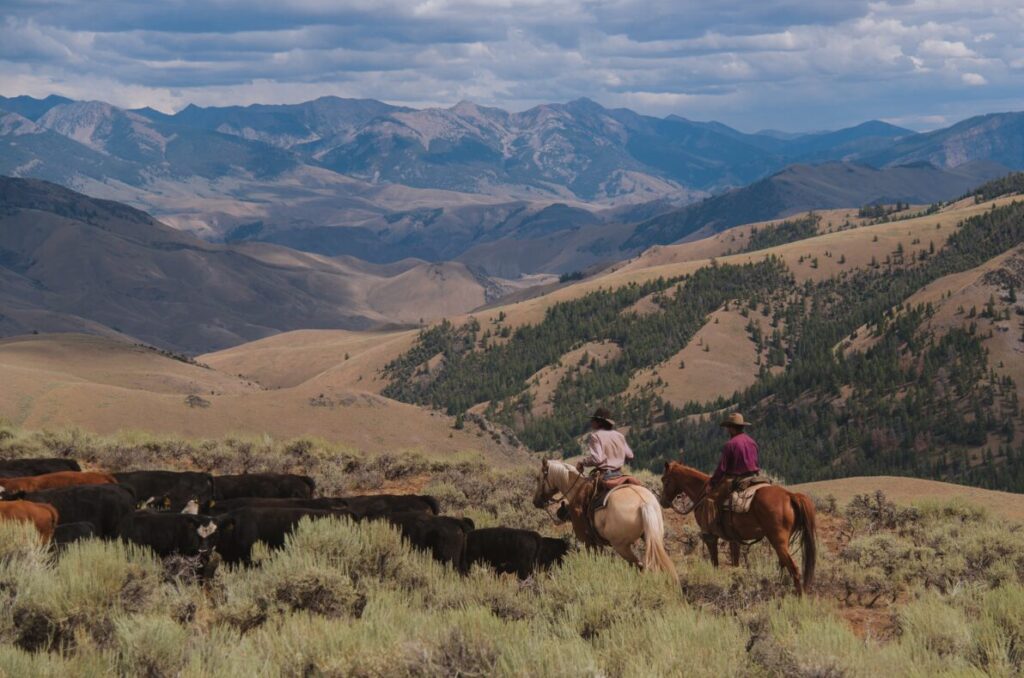
Elzinga. The biggest strategy at the beginning was just to get food in their mouths. At the farmers market, we always had burgers going. Because it’s different — it’s better than commodity beef. There’s this ludicrous amount of steak sauces at the supermarket because you have to mitigate the nasty flavor of commodity beef, which is finished now on DDGs — dried distiller grains.
A lot of people don’t even know that DDGs exist and how toxic they are. They’re not good for us. The oxidation stress from eating DDGs and the creation of cortisol in us is inconceivable. They’re actually health detractors. It’s an ethanol-plant byproduct of corn. About 60 percent of all feedlot beef gets fed some degree of DDGs now because we have this prevalence of ethanol plants all through the Midwest now, and 55 percent of our corn crop goes to ethanol. It’s this highly subsidized, toxic environment — we’re making gas, instead of food, to put in our cars at a subsidized rate. And people don’t even like the performance of their cars. Don’t get me started on ethanol!
Grassfed beef raised on diverse pastures, with functioning soil biota, develops a flavor profile nothing else can. Those cattle are eating a plethora of all these different grasses, with all these different phytonutrients and phytochemicals that flavor that beef.
So, samples at the farmers market — that was the gamechanger. Then, once we moved into the internet business, we realized it wasn’t about putting sales on — it wasn’t about writing sales copy — what really gained us all those customers was telling the story. I still do this twice a week. I just wrote a newsletter yesterday about stockmanship and the value of working cattle from the left eye position. Extremely esoteric, but I know from my email responses that it resonates with people. We just spread the story of, “Hey, blackbirds came back today,” or, “I saw a sandhill crane arrive on the ranch today — spring’s coming.” I’ll write 500, 1,000, 2,000 words about that. People read those, and it is that relationship with the land that they want to hear about. They’re becoming part of our culture, and it’s beautiful. It’s the way it should be.
Acres U.S.A. That’s true marketing. There is no silver bullet or easy way to skip through all that. You obviously have a gift for storytelling, too, and that is a skill.
Elzinga. It is. But I would submit to you that you don’t even need to be a really good storyteller. You can just tell people what you’re seeing. Sure, that’s going to take some practice. But when people engage with you, they’ve engaged with the land, and they’ve engaged with where their food comes from, and it’s beautiful.
Acres U.S.A. Yeah, absolutely. Let’s get to some of the management stuff. You’re in an area where, from my perception, I always just think of people kicking herds of cattle out into thousands of thousands of acres, and they’re eating little brown stubbles of grass. But you just took a herd off of grazing right now, almost through January — which is really impressive, especially in Idaho. How do you get to the point where you have grass finishers still grazing in the heart of winter?
Elzinga. So, none of these are my ideas. Caryl and I bought seven cows on 60 irrigated acres. We had no inherited equity. We just started from nothing. The only thing we had to offer was that we were willing to work like crazy, and we were willing to not spend money, and we were willing to learn from old predecessors — those salt-of-the-earth people. They taught us so much about land husbandry and about cows and about grass — even though, yes, it was traditional. But those were core cowboy kinds of skills and values that we had to have in order to make it.
You start out with those things, and then you start learning from other people and learning from the land itself. Like I said, none of the ideas were mine. I just started reading books, like Gary Zimmer’s on soil biology, or Jim Gerrish’s on management-intensive grazing. And I think one of the biggest things is that you’ve got to be willing to make mistakes over and over and over again. Sometimes you make the same mistake, right?
Those are the core things: you have to be able to shut up and listen — to the land, to your neighbors, to a book, to a podcast. We’re in a podcast world today. For example, I was listening to this guy named Tom Noffsinger recently. He’s a veterinarian, and he talks about how we need to work cattle initially by working off their left eye. I was like, “That’s the most ludicrous thing I’ve ever heard of.” But he described how the left eye is connected to the right side of the brain because the optic nerve crosses. It forms an X in their head. And he said that the left eye is really important because their right side of the brain processes slight and fear and consideration of response. So, if you start working cattle from the right eye first, they don’t have an opportunity to process you, and it’s not going to go well initially.
I told my daughter about this, and she’s seen me come up with all kinds of crazy ideas. She thought this was just another one. But she agreed we needed to try it. We did with a load of cattle recently, and everything changed. The cattle just quieted right down compared to when we were working them on their right eye
I’ve been at this 33 years, but I’m still learning things. It also made me realize that every gooseneck trailer in the United States of America has the gate hung on the wrong side! Nobody wants to ask the cow how they should be loaded. They want to load from that left eye. They want to move counterclockwise across you. They don’t want to move clockwise, yet we’ve designed a whole cattling system that’s ubiquitous all across the United States, where we try to load them the wrong way the whole time.
So, how do you learn this? From everywhere. The biggest piece of advice I would have is to never stop learning.
Acres U.S.A. I’m running back in my mind all the times I’ve loaded cattle, and the times that went smoothly, I can visualize being on the left side of them. The times that were terrible were when someone was standing at the gate, which is always going to be on the right side of them, and they always get hung up there.
Elzinga. We’ve incorporated this into our corral now — we actually run cattle backwards from what we had been doing, so they have to turn counterclockwise on the flow-through. We preg-checked 250 mama cows with the vet the other day and dusted them with diatomaceous earth — that’s what we do for lice — and retagged. My guys thought I was nuts. I was so stressed out about it. But son of a gun — those cows just trotted right through the whole system, and the sort was so quiet. We ran 250 mama cows through in just over three hours, without yelling. I didn’t let anybody yell or whistle. No beating, no flags; although we will use a hot shot if a cow is really recalcitrant and it’s dangerous to my crew.
Also, when we’re done with them in the chute, we open a head catch and they step out. Some of them, when we started doing it this way, just turned around and looked at us. I had never had that in my life. Normally they don’t wait to get out of there — they blow out of the chute. But these cows, even though they’re not docile cows, would step out of the chute, and some would turn around. I was shocked. At the end, my vet said he’d never been around a preg-check that went like that.
Here I am, 33 years in the business, and this idea blew me away. It changed everything, and it will change everything from now on about how we work with cattle.
Acres U.S.A. That’s something I need to learn more about, honestly. For me, the handling is the worst part. I will barely be able to sleep the night before. And then the second you get them on the trailer, it’s like you’re the happiest person in the world.
Elzinga. I’ve talked with my daughter and my wife about the same thing. Sometimes it becomes very stressful, where even my relationships with my fellow humans — my crew members — get compromised because we’re yelling at each other. Have you ever seen those t-shirts and bumper stickers that say, “I’m sorry about all the stuff I said while we were working cows”? But this has totally transformed my life.
I was at a conference in Colorado a few weeks ago, and a woman was presenting on wolves. We have over 1,500 wolves in our three-county area here in Idaho. It blew me away, because her whole point was that wolf predation drops to almost none on ranches that embrace these stockmanship principles — these very things you and I were just talking about. Wolves go on to the next ranch and eat their fill, but the ones that are practicing these stockmanship procedures didn’t have any predation.
It sounds crazy, but she said that she believes it’s because wolves are a hundred to a thousand times more effective in terms of olfactory detection than we are. They’re way more adept at picking up scent than we would ever be. Wolves basically see with their noses what’s happening in a herd of cattle. They can detect whether or not cattle are sick, whether cattle are lame, whether cattle are dealing with some kind of digestive stress, respiratory stress, whatever the case may be. And those are the ones they’re going to go eat. They don’t want to take on a cow that’s healthy, because the cow will win. They’re not going to go after a potentially angry mother who’s going to roll them. But the one they can tell, by smell, that has some issues, they want to go get her.
One time a neighbor watched a whole pack of wolves come through my cattle in a big meadow. These wolves walked right through my cattle, and he said, “It was amazing. The cows never looked up. They’re just out there grazing with their calves.”
It all came to a head for me at this talk in Colorado. All of a sudden I realized that stockmanship is everything. It’s the place where the rubber really hits the road in terms of keeping your cattle safe from predation. If your cattle are under cortisol stress because of the way you handle them while you’re preg-checking, and they’re still dealing with elevated labels of cortisol, they’re more susceptible to predation. And even worse, these animals are now susceptible to all these diseases that plague cattlemen — bovine respiratory distress, bovine viral diarrhea, etc. Those are all unseen, but they’re just as much predators as wolves are.
These are the game changers — when we start respecting animals and creating a paradigm of stockmanship that honors their position and honors their ancestry.
My crew generally does think I’m nuts because I come up with this stuff. But that is the way forward. It’s to keep that open mind and to be able to receive this new information and learn from your cows and learn from the land. That’s the beauty of what we’re doing. We never stop learning.
| Learn more about Glenn and Alderspring Ranch at aldrespring.com. |