

Minerals, clean water and apple cider vinegar offer holistic disease prevention for cattle
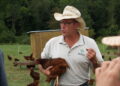
During a recent Acres U.S.A. podcast, I had the pleasure of interviewing holistic veterinarian Will Winter. Our conversation explored innovative, chemical-free ways to promote cattle health. One of the things we discussed was using apple cider vinegar (ACV) and thoughtful mineralization to combat pests and diseases without relying on pharmaceuticals.
Will shared his evolution as a veterinarian and how he moved away from the conventional model of treating diseases with drugs. “Since 1999, I have never used any vaccines, chemical wormers or antibiotics,” he explained. “At first, it was scary to cross that bridge, but now I have something better. It’s all about strengthening the immune system.”
He emphasized that many modern issues in livestock health stem from weakened immune systems caused by poor management and nutrition. His solution? Remineralizing the cattle, avoiding chemicals, testing your water, testing your feed and offering cattle apple cider vinegar.
The Role of Minerals
Minerals are the cornerstone of Will’s approach. I’m a big fan myself — for several years I’ve used cafeteria-style mineral feeders. I think it makes a big difference in the summer for flies and then in the winter with lice.
However, Will’s perspective on how to provide them has evolved. “When I first started at Thousand Hills, I was gung-ho that everybody should do it cafeteria style, dragging the mineral sled around. But it was a train wreck — everybody hated my guts because they had to have a huge barn to store 12 to 18 SKUs of products. And they didn’t know which minerals to bring out to the cattle. Sometimes the cattle would be hitting the selenium, sometimes the copper. Farmers started reporting problems, and I would go out there, and there would be bins that had been empty for so long that the cattle had even eaten the plywood.
“So, I do not recommend cafeteria-style feeding anymore. I recommend an all-in-one mineral. In theory, cafeteria style was brilliant; in the real world, it doesn’t work. Just get a good all-in-one mineral.
“Also, separately, give them a good sea salt. There’s no salt in your mineral. Salt will destroy your chelated minerals, and the ratio is locked in. On a hot summer day, the cattle are going to want more salt, but then to do so — if you just give salt and mineral mixed together — they’d have to eat more mineral, wasting it. Or some days, if they’re pregnant or stressed, they want more mineral. But if the salt is in it, it’d be like a half a cup of salt on your hamburger — you couldn’t eat it. So, I un-couple those two. One hopper is mineral, one is salt.”
I asked Will what he thought about garlic salt. “I think garlic’s a great idea. You may not need it, though — once you get your animals healthy and mineralized and well-nourished, you’re not going to have parasites.”
Will also emphasizes the importance of clay supplement. “There’s so much pollution on farms now — it’s in the water, it’s in the air, it’s in the soil. I use a detox clay like bentonite or zeolite. When cattle eat that, it takes away heavy metals. It takes away pesticides. It takes away stuff that might be in your water.”
Water Testing
So, if cattle aren’t offered individual minerals cafeteria style, how do you ensure they are getting enough of the right minerals? Will says that testing forage and water regularly is key. You have to know what deficiencies exist before you can address them effectively.


Bull
“You have to get your water tested right away. If it’s well water, or if it’s coming downstream from somebody else, find out what’s in your water. It’s likely bad. In Minnesota, we have iron in our water, and iron will tie up copper and zinc. Copper is your dewormer, and zinc is for all your membranes and calving. I was talking to a guy in Missouri last night, and he has sulfur in his water, and it’s killing his cattle. The clay mitigates that.”
Apple Cider Vinegar
Will’s final recommendation is to give the herd ACV.
“This is optional, but I recommend apple cider vinegar. Apple cider vinegar will cut 20 percent off your feed bill because it stimulates the cellulosic bacteria in the rumen to break down cellulose.
“One of the first things I look at on a farm is the manure. If that manure is all stacked up like horse manure, that’s fiber. There are sticks in it. Their rumens have a hard time digesting it. But your animals need to start digesting cellulose. Cellulose is a sugar — it ends in -ose — but it’s a long-chain hydrocarbon. You can’t break it down. We can’t, pigs can’t, chickens can’t. Horses can barely break it down. So, the vinegar does that.”
“What’s your limiting factor in livestock production? It’s always energy. It’s never protein. People get these protein blocks, but they’re not going to be protein deficient. They’re going to be energy deficient. If you can break down starch, if you can break down cellulose, if you can digest properly, you’re going to make money. You’re going to be able to fatten your cattle.”
As to how exactly to give ACV to cattle, Will said there’s no right answer. He puts out three days of hay and adds 3-4 ounces of ACV per head per day, varying by body weight, stress level, season and quality of ration.
I was so inspired by this that I plan to incorporate ACV into my own operation and document the results.
My time with Will reaffirmed my belief in taking a holistic approach to cattle health — one that emphasizes prevention over treatment. By combining ACV with a well-researched mineral program, farmers can reduce disease pressure and boost overall herd health without resorting to chemicals.
Winter’s parting advice was simple but profound: “Your management should make the vet obsolete. If you’re focused on proper nutrition, breeding and pasture management, you won’t need a vet except for emergencies.”
As I begin incorporating ACV and rethinking my mineral program, I’m excited to see how these changes impact my cattle. Stay tuned for updates on this journey toward a healthier, more sustainable herd.
Taylor Henry is the owner and CEO of Acres U.S.A.