

Acres U.S.A.® Magazine
  • Articles
    • News
    • Ecological farming
      • Climate
      • Environmental Issues
      • Farm management & planning
      • Human health
    • Livestock
    • Farm
    • Crop
      • Crop management practices
        • Ag technology
        • Cover crops
        • Crop nutrition
          • Crop protection
          • Diseases
        • Crops
        • Fruits
    • Soil
    • Opinion
  • Resources
    • Magazine
    • Online Learning
    • Newsletters
    • Free Articles
    • Blog
  • Magazine Issues
    • 2026
      • March 2026
      • February 2026
      • January 2026
    • 2025
      • December 2025
      • November 2025
      • October 2025
      • September 2025
      • August 2025
      • July 2025
      • June 2025
      • May 2025
      • April 2025
      • March 2025
      • February 2025
      • January 2025
    • 2024
      • December 2024
      • November 2024
      • October 2024
      • September 2024
      • August 2024
      • July 2024
      • June 2024
      • May 2024
      • April 2024
      • March 2024
      • February 2024
      • January 2024
    • 2023
      • December 2023
      • November 2023
      • October 2023
      • August 2023
      • July 2023
      • June 2023
      • May 2023
      • April 2023
      • March 2023
      • February 2023
      • January 2023
    • 2022
      • December 2022
      • November 2022
      • October 2022
      • September 2022
      • August 2022
      • July 2022
      • June 2022
      • May 2022
      • April 2022
      • March 2022
      • February 2022
  • About Us
    • Our History
    • Our Staff
    • Contact Us
    • Community
      • Soil Health Primer Resources
  • Events
    • Eco-Ag Conference
    • Farm Weird Event
    • Viroqua On Farm Event
  • Subscribe
  • Login
  • Register
No Result
View All Result
  • Articles
    • News
    • Ecological farming
      • Climate
      • Environmental Issues
      • Farm management & planning
      • Human health
    • Livestock
    • Farm
    • Crop
      • Crop management practices
        • Ag technology
        • Cover crops
        • Crop nutrition
          • Crop protection
          • Diseases
        • Crops
        • Fruits
    • Soil
    • Opinion
  • Resources
    • Magazine
    • Online Learning
    • Newsletters
    • Free Articles
    • Blog
  • Magazine Issues
    • 2026
      • March 2026
      • February 2026
      • January 2026
    • 2025
      • December 2025
      • November 2025
      • October 2025
      • September 2025
      • August 2025
      • July 2025
      • June 2025
      • May 2025
      • April 2025
      • March 2025
      • February 2025
      • January 2025
    • 2024
      • December 2024
      • November 2024
      • October 2024
      • September 2024
      • August 2024
      • July 2024
      • June 2024
      • May 2024
      • April 2024
      • March 2024
      • February 2024
      • January 2024
    • 2023
      • December 2023
      • November 2023
      • October 2023
      • August 2023
      • July 2023
      • June 2023
      • May 2023
      • April 2023
      • March 2023
      • February 2023
      • January 2023
    • 2022
      • December 2022
      • November 2022
      • October 2022
      • September 2022
      • August 2022
      • July 2022
      • June 2022
      • May 2022
      • April 2022
      • March 2022
      • February 2022
  • About Us
    • Our History
    • Our Staff
    • Contact Us
    • Community
      • Soil Health Primer Resources
  • Events
    • Eco-Ag Conference
    • Farm Weird Event
    • Viroqua On Farm Event
  • Subscribe
No Result
View All Result
Acres U.S.A.® Magazine
No Result
View All Result
Home Crop management practices Crops Fruits

A Lucrative Lawn

Michael Brown by Michael Brown
May 2, 2026
in Fruits, Marketing, May 2026
0
A Lucrative Lawn

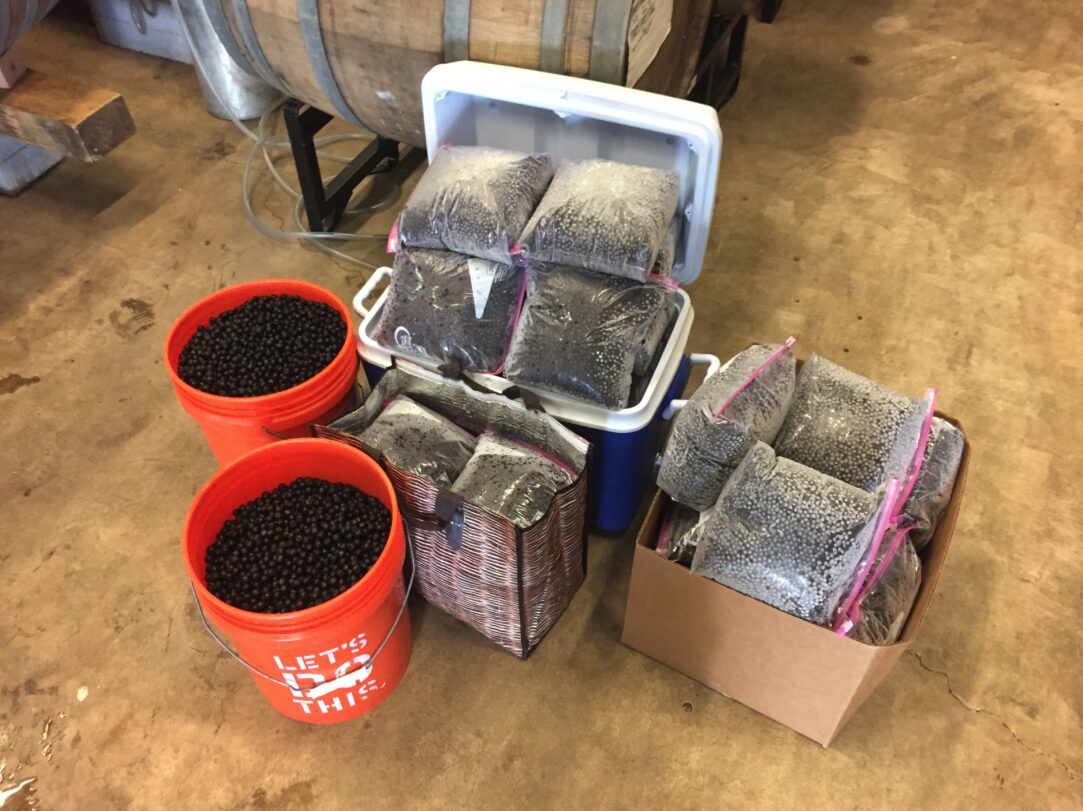
A delivery of aronia and elderberry ready to go to a brewery.

0
SHARES
17
VIEWS
Share on FacebookShare on Twitter

A simple decision to sell fresh figs to a local chef led to the creation of a thriving suburban farm built on niche crops and smart market strategy

By Michael Brown
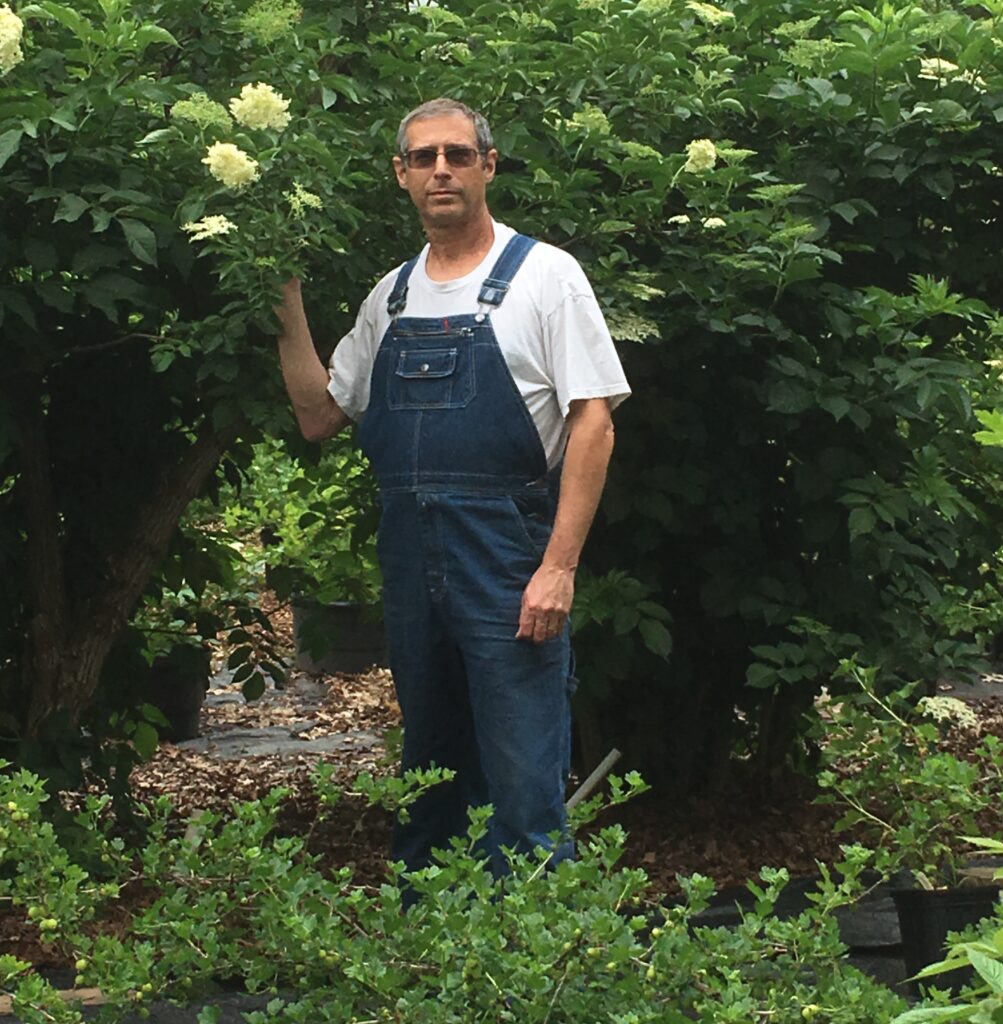
The author with his elderberries

Years ago, when I moved with my family to central New Jersey, I became the owner of a typical suburban home and yard, dotted with random trees and an overgrown hedge, along with grass that needed regular mowing and care. I had always been drawn to gardening, and the first thing I did was clear away some of the grass in a sunny spot to begin growing vegetables. Slowly I began to expand my plantings and to incorporate some perennials. 

My appetite was whetted when one day, on a whim, I decided to bring some freshly harvested figs to a nearby restaurant. We had a bumper crop, and I didn’t feel like freezing them or making jam. The chef was really excited, and the feeling of satisfaction of supplying quality local produce to someone who appreciated it was truly rewarding.

And so it began. Over the next couple of years, I transformed my sterile, suburban yard into a thriving farm/nursery. My suburban home and lot of two-thirds of an acre looked like any other suburban residence from the street. My total growing area of about a third acre was in my fence-enclosed back yard. In this space I had rows of berry plants and nursery stock that I propagated myself. On average, I devoted anywhere from 10 to 30 hours a week to the farm, depending on the time of year. I was able to work about 10 months of the year. 

Though I’ve been farming for many years, I still feel strange sometimes referring to my business as a farm. My internal picture of a farm with a silo, farm animals and acres of cultivated fields must be embedded pretty strongly. However, this picture can and should change. Small landowners can effectively and positively contribute to the food stream while earning a decent per-acre return on their work and contributing to the wellbeing of their towns and neighborhoods.

Things to Consider Before You Begin

Make sure you have time for farming. Combining a demanding corporate job with starting a new farm may be biting off more than you can chew.

It may seem unnecessary, but get legit. Unless you want to stay very informal and limited, register as a business, get farm insurance and learn something about keeping records.

Feel out the markets. Talk to some local high-end chefs about their interest in berries, or stop by your local produce market to see if they want to carry the berries you’re thinking of growing. Every location has different markets; explore all your possibilities.

How big, what can you handle? A suburban farm is based on a specific household and one or more family members. In my case, I was the sole worker at my farm. 

Irrigation, how will you get water to your plants? Access, since my growing area is in my backyard, I can’t pull up a truck to load or unload plants, manure, or other things. I generally use a wheelbarrow. Availability of soil amendments, over the years, I’ve added tons of organic matter to my soil, such as manure, leaves and compost. Do you have a nearby source for such things? 

Sunlight, suburban and urban areas can be short on sunlight. Do you have enough sun exposure to grow plants? Soil and drainage, how is your soil, and how is the drainage? These can be improved in a number of ways. Are you willing to make this effort? 

Infrastructure, a small truck, refrigerators and chest freezers, and good hand tools are important if this is going to be a real business.

Farm Guidelines

Here are four guidelines that helped over the years in running my suburban farm business:

Time is money. I work alone. Hiring even part-time workers in New Jersey is expensive if you do it legally, so I need to grow products that command a good price relative to my time. At one point I was selling alpine strawberries, which are very small but remarkably flavorful. They generated a lot of interest, but it was difficult to get the price I needed to warrant the time it took to pick them.

Grow something special. When I try a new crop that’s not generally available in my area, I’m always a bit wary: Did someone try growing it and fail, either because of the demands of the plant or the lack of a market? If it’s the former, I need to see whether I can do it better or more successfully than the last person. If it’s the latter, I need to figure out how to create the market.

Uncover niche markets. Living near people from varied backgrounds creates possibilities for exploring new crops. Are the needs of a specific group in my area not being met? Are they longing for something I can grow? For example, many Eastern Europeans and people from Britain grew up eating gooseberries. Maybe their grandparents’ cottage had a few gooseberry plants, or their mother made a fantastic gooseberry pie. By offering these products, you are helping them reconnect with those memories.

A short shelf life is your friend. Because my customers are relatively (and sometimes very) close by, I can get my produce to them quickly. Delicate items will still arrive in pristine condition. By servicing nearby markets, perishable items will have much less competition. For example, I pick elderflowers in the early morning when they’re still fresh and cool. After a day in the refrigerator, their appearance and fragrance are already compromised. The solution: I immediately put them in a cooler and delivered them to my customer within a few hours. They won’t survive being shipped long distances, so my competition is limited.

What Should You Grow?

The possibilities are endless, but I focused on berries. While they’re not the perfect crop, they require a lot of labor for harvesting, and birds can be a major pest, there are many advantages.

Berries command good prices. You just need to look at the produce section of your local supermarket to see the price of berries flown in from hundreds of miles away. Your berries will be tastier, fresher and more nutritious. Depending on the berry, they can be sold fresh or frozen. In fact, some berries are best sold frozen. This gives you huge flexibility for selling your crops.

Some customers may only need a relatively small amount. This allows you to get into restaurants and other places that might otherwise be closed to you. Berries lend themselves to multiple markets, and many are high-end.

Markets

Growing your plants is only part of the equation. The other part is selling them to an end user. Here are some suggestions for markets:

Restaurants. Your best bet is a restaurant that advertises itself as farm to table. This designates a commitment to sourcing local food whenever possible. 

Breweries and distilleries. Craft brewers are the way to go with breweries and distilleries since they have smaller production runs and generally are more open to sourcing local ingredients.

Herbalists. Many herbalists will purchase local berries, especially those with a pronounced health benefit like elderberry, aronia or schisandra.

Produce stores. Small, independent produce stores are a good way to move your crops, especially if the store is in a high-end location. The downside is you will have to sell at wholesale prices and also spend some additional time and cost in packaging.

How much can you earn in this model? Your farm revenue will depend on many factors, including your location, how you work, your crop profile, and the size of your farm, but my farm revenue averaged between $15,000 and $18,000 over about ten years.

← Previous Milton Whitney, Regenerative Advocate? Next Stockpiling It On →
Tags: Berries
Michael Brown

Michael Brown

Next Post
Yes, There Are Enough Organic Wastes

Yes, There Are Enough Organic Wastes

Please login to join discussion
  • Trending
  • Comments
  • Latest
The Most Important Livestock in Our Fields

The Most Important Livestock in Our Fields

July 1, 2024
Glyphosate Does What It’s Designed to Do — Kill

Glyphosate Does What It’s Designed to Do — Kill

February 19, 2025
USDA organic seal over American farm land

Losing Organic Farms

January 27, 2026
The Take-Half, Leave-Half Fallacy

The Take-Half, Leave-Half Fallacy

July 1, 2025
We Don’t Need Another Bridge — We Need an Off-Ramp

We Don’t Need Another Bridge — We Need an Off-Ramp

3
Under One Roof

Under One Roof

3
A Rose By Any Other Name

A Rose By Any Other Name

2
Terra Preta’s Biological Advantage

Terra Preta’s Biological Advantage

2
Yes, There Are Enough Organic Wastes

Yes, There Are Enough Organic Wastes

May 7, 2026
Apple blossoms infected with fire blight.

ECO-UPDATE

May 1, 2026
View from the Country

View from the Country

May 1, 2026
May 2026 • Issue #659

May 2026 • Issue #659

May 2, 2026

Recent News

Yes, There Are Enough Organic Wastes

Yes, There Are Enough Organic Wastes

May 7, 2026
Do GMO Crops Uptake Nutrients Differently?

Do GMO Crops Uptake Nutrients Differently?

May 2, 2026
ECO-MEETINGS

ECO-MEETINGS

May 2, 2026
The Solution Lies in Trees

The Solution Lies in Trees

May 2, 2026

About ACRES USA

Acres U.S.A.® Magazine

Acres U.S.A.® is North America’s oldest publisher on production-scale organic and regenerative farming. For more than 50 years, our mission has been to help farmers, ranchers and market gardeners grow food profitably and sustainably, with nature in mind.

Magazine Issues

  • News
  • 2025
    • June 2025
    • May 2025
    • April 2025
    • March 2025
    • February 2025
    • January 2025
  • 2024 Articles
    • December 2024
    • November 2024
    • October 2024
    • September 2024
    • August 2024
    • July 2024
    • June 2024
    • May 2024
    • April 2024
    • March 2024
    • February 2024
    • January 2024
  • December 2023
    • December 2023
    • November 2023
    • October 2023
    • August 2023
    • July 2023
    • June 2023
    • May 2023
    • April 2023
    • March 2023
    • February 2023
    • January 2023
  • December 2022
    • November 2022
    • October 2022
    • September 2022
    • August 2022
    • July 2022
    • June 2022
    • May 2022
    • April 2022
    • March 2022

Contact Acres U.S.A

  • Contact Us
  • About Us
  • Advertise With Acres U.S.A.
  • My Subscription

Learn

  • Resources
  • Events
  • Magazine
  • Newsletters
  • Free Articles
  • Webinars
  • Online Courses
  • Bookstore

Our All Socials

Follow With Us...

  • My account
  • News
  • Ecological farming
  • Refund and Returns Policy
  • Privacy & Policy

© 2024 Acers USA Magazine

Welcome Back!

Login to your account below

Forgotten Password? Sign Up

Create New Account!

Fill the forms below to register

All fields are required. Log In

Retrieve your password

Please enter your username or email address to reset your password.

Log In

Create a free account, or log in.

Gain access to read this article, plus limited free content.

Yes! I would like to receive new content and updates.

Upgrade your subscription

Support Acres USA and get full access to all content.
Upgrade Now
No Result
View All Result
  • HOME
  • ARTICLES
    • News
    • Farm
    • Ecological farming
    • Livestock
    • Crop
      • Crop management practices
      • Cover crops
      • Crop nutrition
      • Crop protection
      • Crops
      • Ag technology
    • Soil
    • Opinion
  • RESOURCES
    • Magazine
    • Online Learning
    • Newsletters
    • Blog
    • Free Articles
  • MAGAZINE ISSUES
    • 2025
      • June 2025
      • May 2025
      • April 2025
      • March 2025
      • February 2025
      • January 2025
    • 2024
      • December 2024
      • November 2024
      • October 2024
      • September 2024
      • August 2024
      • July 2024
      • June 2024
      • May 2024
      • April 2024
      • March 2024
      • February 2024
      • January 2024
    • 2023
      • December 2023
      • November 2023
      • October 2023
      • August 2023
      • July 2023
      • June 2023
      • May 2023
      • April 2023
      • March 2023
      • February 2023
      • January 2023
  • ABOUT US
    • Our History
    • Our Staff
    • Contact Us
    • Community
      • Soil Health Primer Resources
  • EVENTS
    • Eco-Ag Conference
    • On-Farm Viroqua Event
    • Farm Weird
  • SUBSCRIBE
  • Login
  • Sign Up
  • Cart

© 2024 Acers USA Magazine

Are you sure want to unlock this post?
Unlock left : 0
Are you sure want to cancel subscription?