
Animals are not merely products or pests; they are essential pieces in cycling nutrients, shaping landscapes, and building resilient ecosystems
For decades, mainstream agricultural and ecological discourse has treated animals as either “products” or “pests.” In the industrial model, a cow is a protein conversion unit. In some conservation models, a deer is a threat to the forest, and cows are the cause of grassland overgrazing and are inevitably going to fart us into climactic oblivion.
As ecological farmers and ranchers, though, we seek to peer deeper into how the world actually functions. When we do this, we find that animals are not merely inhabitants of an ecosystem — they are its primary engineers, its mobile nutrient distributors, and its maintenance department. They are catalysts for the cycling of life.
To understand the function of animals in terrestrial ecosystems is to understand the difference between a static painting and a living, breathing landscape. Whether wild or domestic, animals are the mobility of the Earth’s mineral and botanical wealth.
Nutrient Cycling and Redistribution
Arguably the most fundamental function of animals in terrestrial ecosystems is the breaking of biological bottlenecks. Plants are masters of capturing solar energy. They cycle nutrients between deep in the soil profile and the surface. Nutrients go around and around but mostly within the same location. Plants are stationary. Left to their own devices, the nutrients they accumulate in their roots, stems, and leaves — nitrogen, phosphorus, carbon, etc. — are locked inside lignified and cellulosic tissues (woody plant parts) waiting for the slow, passive decay of fungal and microbial action.
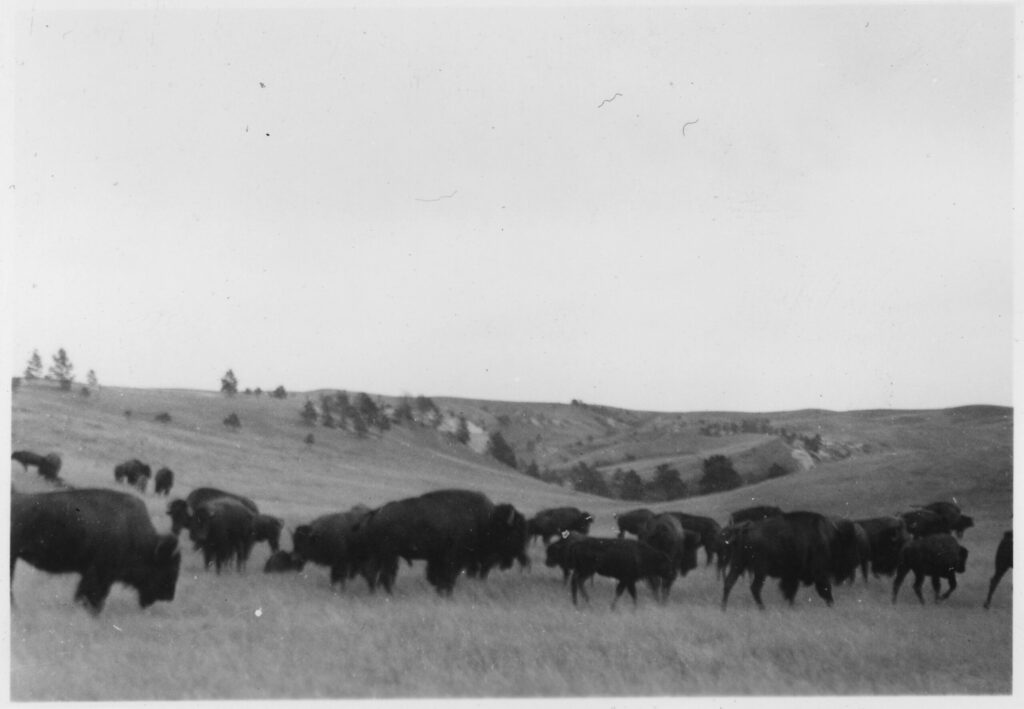
Animals act as accelerators of decomposition and nutrient cycling. When a bison on the prairie or a beef steer in managed pasture grazes, it performs a high-speed chemical transformation. It takes complex plant fibers and, through the alchemy of the rumen, converts them into highly bioavailable manure and urine. This isn’t “waste.” It is a concentrated biological primer, teeming with microbes that kickstart soil and plant life.
Not only do they accelerate the liberation of plant nutrients — animals are the mechanism for the lateral movement of nutrients within the landscape. The Earth’s surface is naturally uneven; gravity pulls nutrients straight down into the soil profile. Water can carry nutrients into valleys and riparian zones, but animals counteract the downward disappearance of nutrients by feeding in lowlands and then redistributing those same nutrients on hilltops or across migratory routes when they poop and pee. In a regenerative agricultural context, we mimic this function through planned grazing. We move domestic herds across the landscape to ensure that the fertility is distributed evenly rather than accumulating in a single sacrifice lot.
Disturbance: The Architect of Diversity
Ecologists speak of the “intermediate disturbance hypothesis.” This suggests that ecosystems reach their highest level of biodiversity not when they are left entirely alone, but when they are subjected to periodic, moderate stress. Animals are the primary agents of this creative destruction. Consider it the “hoof effect.” An animal hoof strikes the ground and breaks up the “biocrust,” or capped soil, allowing oxygen to enter and seeds to find a home. In wet soils, moist hoofprints act as seed and water catchment basins. In the wild, the thundering herds of the Serengeti or the historic American West created a mosaic of trampled ground, grazed patches, and untouched areas. This heterogeneity is vital. It creates niches for pioneer species, ground-nesting birds, and a variety of insects that couldn’t survive in a uniform, monolithic stand of tall grass. They definitely don’t exist in monocrop stands of annual ryegrass.
Domestic livestock, when managed with the intelligence of a world-class ecologist, fulfill this exact role. They know that by using high-density, short-duration grazing, a farmer can use animal impact to “wake up” a dormant seed bank. The animal’s mouth is a pruning tool; its hoof is a tiller; its gut is a chemistry lab. Without this animal-driven disturbance, many grassland ecosystems collapse into a state of “senescence,” where old, oxidizing plant material chokes out new growth and reduces the land’s ability to grow more forage.
The Trophic Web and the “Landscape of Fear”
In wild systems, the presence of animals — specifically the relationship between predators and prey — governs the physical shape of the world. This is what we call a “trophic cascade.” When wolves were reintroduced to Yellowstone, the most profound changes weren’t just in the elk population, but the trees and rivers. Because elk changed their behavior to avoid being caught in vulnerable valleys (the “landscape of fear”), the willow and aspen grew back. This provided habitat for songbirds and material for beavers, whose dams then raised the water table and cooled the streams for trout.
In our managed landscapes, we humans are the predators. Our fences, and the movement patterns they establish, create a simulated “landscape of fear.” By moving cattle frequently, we prevent them from overgrazing the sweets — the most palatable plants — and force them to eat the weeds. This management mimics the ecological pressure of a wild predator, maintaining the health and diversity of the pasture.
Seed Dispersal and the Genetic Highway
Animals are the couriers of the botanical world. Roughly 70 to 90 percent of woody plant species in tropical and temperate forests rely on animals for seed dispersal. From the squirrel burying acorns to the cow passing clover seeds through its digestive tract, or burrs stuck in its fur, animals are the primary drivers of plant migration.
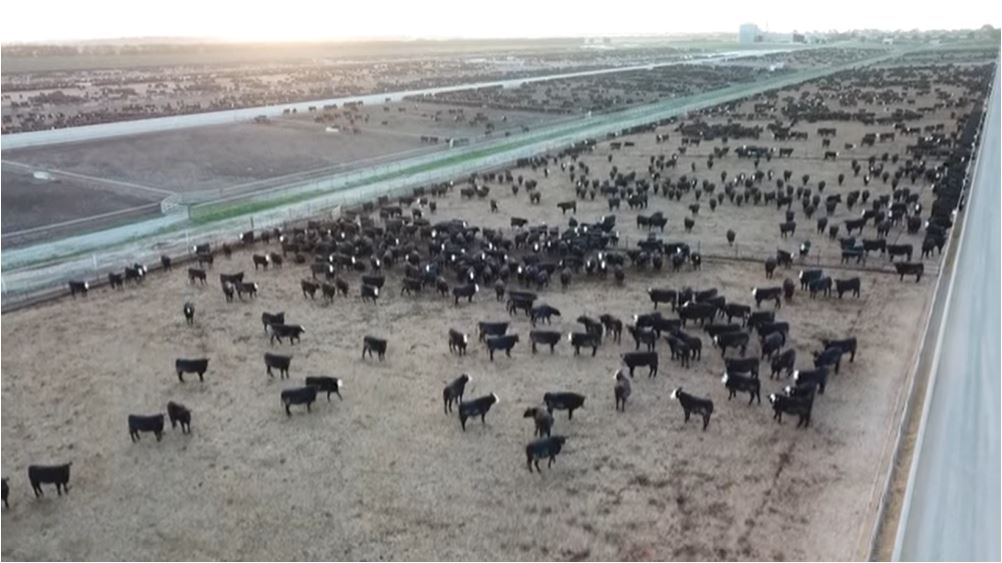
This function is increasingly critical in an era of habitat fragmentation and climate volatility. As temperature zones shift, plants must move to find suitable mates, but they can’t walk. The animals can. A diverse population of wild birds, small mammals, and large grazers are the genetic highway. They ensure that the flora of an ecosystem can relocate to another location. Once relocated, they can pollinate with their distant relatives, introducing new traits to isolated populations. New traits can help old species survive new conditions. When we remove animals from the landscape — or confine them to feedlots — we sever these migratory links, leaving our plant communities genetically isolated and vulnerable.
The Domestic-Wild Continuum
At Acres U.S.A., we often focus on the farm, but the ecologist sees no hard line between the farm and the wilderness. The function of a domestic sheep is biologically analogous to that of a wild bighorn; the rooting of a pig is a mirror to the turning of soil by wild boars or grizzly bears.
The tragedy of modern industrial agriculture is the decoupling of animals from the land. When we move animals into confinement, we transform them from ecological assets into environmental liabilities. The nitrogen that should be spread across vast landscapes, feeding soil-building microbes, becomes a pollutant in a lagoon. The movement that should be stimulating plant growth becomes a source of physical stress in a cramped pen.
True ecological farming — what many call regenerative agriculture — is essentially the art of reintegrating the animal function into the landscape. It is the recognition that a terrestrial ecosystem without animals is a stalled engine.
Carbon Sequestration
Perhaps the most contentious and exciting area of modern ecology is the role of animals in the carbon cycle. While much is made of the methane emissions of ruminants, this is often a reductionist view that ignores the beneficial functions of animals in the landscape. Much of the research on bovine gas has been done on confined cattle fed corn, soy, and dry hay, not on grazed animals eating fresh green forage.
In a healthy grassland, the grazing action of animals stimulates the plants to pump liquid carbon (exudates) into the soil to feed the fungi and bacteria that will help the plant regrow. This “liquid carbon pathway” is the most effective way to build stable soil organic matter. Without the animal to “prune” the grass and provide the biological pulse of manure and urine, this carbon pump slows down. When managed correctly, the carbon sequestered in the soil by an animal-integrated system can far outweigh the emissions of the animals themselves. Animals are the spark plugs of the soil’s carbon engine.
A Call for Integration
As we look toward the future of both conservation and agriculture, our mission is clear: we must stop viewing animals as optional add-ons or mere commodities.
A forest without its browsers, a prairie without its grazers, and a farm without its livestock are all ecosystems in decline. The function of the animal is to provide the movement, the chemistry, and the disturbance that life requires in order to remain vibrant and viable. Whether it is the restoration of the keystone beaver in a wild creek or the strategic rotation of a poultry flock through an orchard, the goal is the same: to harness the inherent genius of the animal to build a more resilient, fertile, and diverse world.
The land is not just a stage upon which animals act; the animals are the very actors who build the stage itself. It is time we gave them back their roles.