

Acres U.S.A.® Magazine
  • Articles
    • News
    • Ecological farming
      • Climate
      • Environmental Issues
      • Farm management & planning
      • Human health
    • Livestock
    • Farm
    • Crop
      • Crop management practices
        • Ag technology
        • Cover crops
        • Crop nutrition
          • Crop protection
          • Diseases
        • Crops
        • Fruits
    • Soil
    • Opinion
  • Resources
    • Magazine
    • Online Learning
    • Newsletters
    • Free Articles
    • Blog
  • Magazine Issues
    • 2026
      • June 2026
      • May 2026
      • April 2026
      • March 2026
      • February 2026
      • January 2026
    • 2025
      • December 2025
      • November 2025
      • October 2025
      • September 2025
      • August 2025
      • July 2025
      • June 2025
      • May 2025
      • April 2025
      • March 2025
      • February 2025
      • January 2025
    • 2024
      • December 2024
      • November 2024
      • October 2024
      • September 2024
      • August 2024
      • July 2024
      • June 2024
      • May 2024
      • April 2024
      • March 2024
      • February 2024
      • January 2024
    • 2023
      • December 2023
      • November 2023
      • October 2023
      • August 2023
      • July 2023
      • June 2023
      • May 2023
      • April 2023
      • March 2023
      • February 2023
      • January 2023
    • 2022
      • December 2022
      • November 2022
      • October 2022
      • September 2022
      • August 2022
      • July 2022
      • June 2022
      • May 2022
      • April 2022
      • March 2022
      • February 2022
  • About Us
    • Our History
    • Our Staff
    • Contact Us
    • Community
      • Soil Health Primer Resources
  • Events
    • Eco-Ag Conference
    • Farm Weird Event
  • Subscribe
  • Login
  • Register
No Result
View All Result
  • Articles
    • News
    • Ecological farming
      • Climate
      • Environmental Issues
      • Farm management & planning
      • Human health
    • Livestock
    • Farm
    • Crop
      • Crop management practices
        • Ag technology
        • Cover crops
        • Crop nutrition
          • Crop protection
          • Diseases
        • Crops
        • Fruits
    • Soil
    • Opinion
  • Resources
    • Magazine
    • Online Learning
    • Newsletters
    • Free Articles
    • Blog
  • Magazine Issues
    • 2026
      • June 2026
      • May 2026
      • April 2026
      • March 2026
      • February 2026
      • January 2026
    • 2025
      • December 2025
      • November 2025
      • October 2025
      • September 2025
      • August 2025
      • July 2025
      • June 2025
      • May 2025
      • April 2025
      • March 2025
      • February 2025
      • January 2025
    • 2024
      • December 2024
      • November 2024
      • October 2024
      • September 2024
      • August 2024
      • July 2024
      • June 2024
      • May 2024
      • April 2024
      • March 2024
      • February 2024
      • January 2024
    • 2023
      • December 2023
      • November 2023
      • October 2023
      • August 2023
      • July 2023
      • June 2023
      • May 2023
      • April 2023
      • March 2023
      • February 2023
      • January 2023
    • 2022
      • December 2022
      • November 2022
      • October 2022
      • September 2022
      • August 2022
      • July 2022
      • June 2022
      • May 2022
      • April 2022
      • March 2022
      • February 2022
  • About Us
    • Our History
    • Our Staff
    • Contact Us
    • Community
      • Soil Health Primer Resources
  • Events
    • Eco-Ag Conference
    • Farm Weird Event
  • Subscribe
No Result
View All Result
Acres U.S.A.® Magazine
No Result
View All Result
Home Magazine issues July 2026

The Bucks Stop Here

Caroline Abbott by Caroline Abbott
July 1, 2026
0
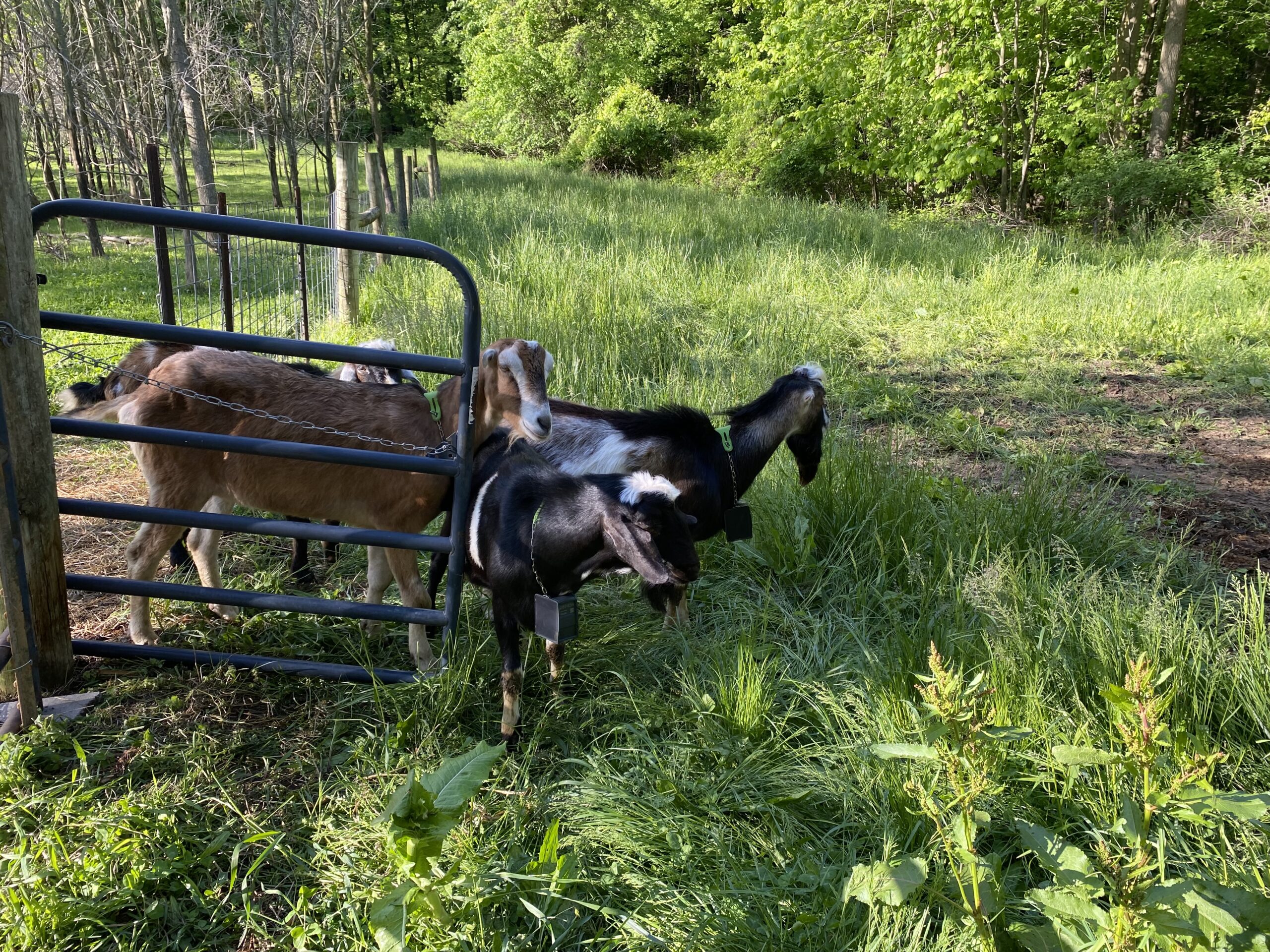
Going out to pasture — The virtual-collar-affixed goats venture out into pasture.

Going out to pasture - The virtual-collar-affixed goats venture out into pasture.

0
SHARES
0
VIEWS
Share on FacebookShare on Twitter

Virtual fencing offers a workable, affordable solution for livestock – even smelly male goats

Caroline Abbott

Our small farm has included dairy goats since late 2005. We started with just three does. In the beginning, it was much easier to take our does to another farm to breed them. Adult male goats have certain characteristics that make them challenging to keep on the farm. The first and most noticeable is that they have a very strong smell when they are in rut. They also have lovely habits, like urinating on their heads to enhance this lovely fragrance, because the ladies seem to be very attracted to the strong smell. Especially in the fall, then, buck goats are not socially acceptable in polite company.

But as most goat owners of a herd of any size eventually realizes, we had to have our own bucks for breeding. We also knew we didn’t want that stink in our doe barn. Another characteristic of buck goats is their strong desire to breed. They can leap tall buildings in a single bound and clear any obstacle to get to a doe in heat. This necessitated a separate residence for our boys.

Our farm happens to have two separate pieces of property, with a neighbor’s field in between. The extra property is downwind from the main farm, which is a great plus when considering the location of smelly animals. It had once been farmed but had been left untended for about 15 years, so it had lots of vegetation, including many young saplings.

We had six or seven goats in the buck barn when we finished the fenced-in pasture area. By the next spring, we realized they had killed most of the young trees by eating the bark off in the winter. They kept the fence line clear, but of course only on the inside of the fence. In the few areas where they could reach their heads through the fence, they kept it clear as far as they could reach outside the fence.

We realized that this was not adequate, but we couldn’t afford to extend the fence, and we couldn’t let our goats wander the neighborhood. Adjacent to their living quarters is a four-acre hayfield we own. First cutting is always frustrating for us. We do not own hay equipment, so we must rely on others to cut when they think it is time. By the time the hay gets cut, first cutting is way overblown — pollinating at the least, already gone to seed at the worst in any given year. This makes first cutting only good for mulch hay, to use or sell. Once that is finally off the field, second cutting can be worth keeping, but only if first cutting gets off in a timely manner and weather conditions allow for good regrowth.

We debated endlessly how to manage the hayfield better and how to manage the buck goats so they could be free to pasture. The logical solution would be to pasture the goats on the hayfield in the spring so first cutting wouldn’t go to seed, but the expense of fencing that in was beyond our means.

Searching for a Different Solution

Then one day I was selling some extra hay to a couple who used goats for brush control. They told me about a virtual fencing system they were using with the goats. I was intrigued. Normally I am quite low tech. I do not despise technology; I am just not in awe of it. I grew up with a father who always had the latest technology, way before the general public. Then I married a tech geek who also always had the latest and greatest. This allowed me to look at technology realistically. If something works better than something less technological, and it makes my life easier and solves a problem, I will use it. Cost also must figure into the practicality of all of this.

So, I began an online search for a virtual goat fence. I found that one company, Nofence, had the technology. They are a Norwegian company, and their products had only become available in the U.S. in the fall of 2024. I was skeptical at first. I have seen wonder products before that didn’t live up to the hype. I also have used radio fences with dogs for many years and realized how much training is required for the animals and how diligent you must be to keep it working.

But Nofence is very low-key. Their website doesn’t even try to sell the product; they just give you the information on how to get started. When I called the U.S. number, I got helpful people who were quite willing to answer my questions honestly and weren’t just trying to sell me a product. So I took the plunge. I had five buck goats then, so it required me to buy five collars and to subscribe to their service. To me the price was reasonable enough that if it was a failure, I could absorb it. My family was skeptical, but I had more faith that this was the solution I had been waiting for.

A Year with Virtual Fencing
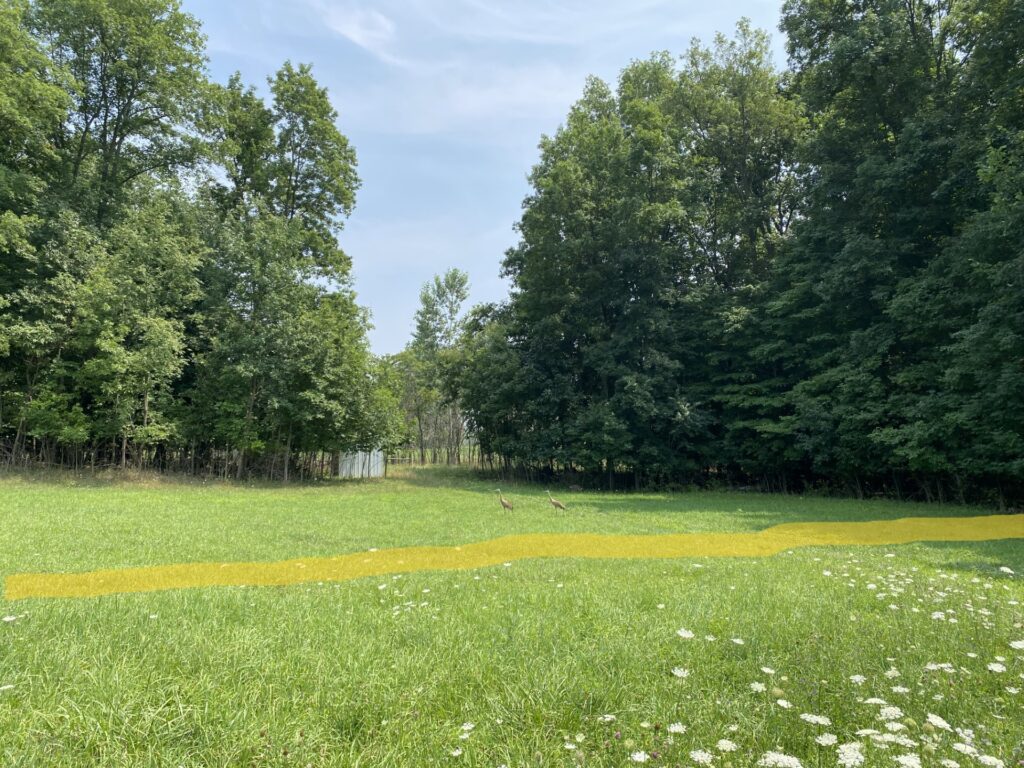
Pasture line – You can clearly see where the virtual line had been set.

In May 2025, we launched. At first, we set the virtual fence right on our physical boundaries, and the animals were getting shocked in their safe areas. So we extended the boundaries out to a safe distance and waited to see what would happen. In about a month’s time, the system became much more accurate, and the boundaries were consistent with where we drew them. It takes some time for the system to “learn” and to gain accuracy. I was impressed with how quickly the animals learned to obey the warnings; after a short time, they very rarely got an actual shock. I was able to extend the boundaries into the hayfield and could clearly see after about two or three weeks exactly where the boundary was — there was a clear line where they had eaten the vegetation. 

When August came, my bucks began to go into rut. Along with the smell comes more aggressive behavior toward each other. They rear up and slam into each other. I didn’t realize until one collar stopped working that the bucks were slamming into each other, and the collars were getting caught in the crossfire. I contacted the company and found out the collars have a five-year warranty. I had to have three replaced before I realized it was time to take them off pasture for a while.

Overall, I’ve been very pleased with how the collars work. They solved the problem of how to get the bucks out on pasture and how to clean up areas I needed cleaned up without any effort on my part. The bucks went into fall rut season very healthy and with glossy coats. After the first year, the company charges you for the service only when the animals are on pasture, so next year I will not pay when they are off pasture. I will start them a little earlier next spring and see how much of an effect I can have on the hayfield with them out there.

Virtual livestock collars seem like a good solution for people who want to graze cows, sheep or goats on pasture without having to invest in fencing. Moving animals to adjacent pastures is no effort at all because you just move the boundaries, let them move to the next pasture, then move the opposite boundary to keep them confined to that area. I think this could greatly expand the ability of smaller graziers to utilize rotational grazing.

← Previous Virtual Fencing for Small-Scale Graziers? Next No Margin, No Mission →
Tags: Virtual Collars
Caroline Abbott

Caroline Abbott

Caroline Abbott runs Abbott Farms in Otsego, Michigan.

Please login to join discussion
  • Trending
  • Comments
  • Latest
The Most Important Livestock in Our Fields

The Most Important Livestock in Our Fields

July 1, 2024
Glyphosate Does What It’s Designed to Do — Kill

Glyphosate Does What It’s Designed to Do — Kill

February 19, 2025
USDA organic seal over American farm land

Losing Organic Farms

January 27, 2026
The Take-Half, Leave-Half Fallacy

The Take-Half, Leave-Half Fallacy

July 1, 2025
We Don’t Need Another Bridge — We Need an Off-Ramp

We Don’t Need Another Bridge — We Need an Off-Ramp

3
Under One Roof

Under One Roof

3
A Rose By Any Other Name

A Rose By Any Other Name

2
Terra Preta’s Biological Advantage

Terra Preta’s Biological Advantage

2
Building Ag Research

Building Ag Research

June 23, 2026
Encouraging Small Meat Processors?

Encouraging Small Meat Processors?

June 17, 2026
Screwworm Is Back

Screwworm Is Back

June 10, 2026
Who Owns American Farmland?

Who Owns American Farmland?

June 2, 2026

Recent News

Building Ag Research

Building Ag Research

June 23, 2026
Encouraging Small Meat Processors?

Encouraging Small Meat Processors?

June 17, 2026
Screwworm Is Back

Screwworm Is Back

June 10, 2026
Who Owns American Farmland?

Who Owns American Farmland?

June 2, 2026

About ACRES USA

Acres U.S.A.® Magazine

Acres U.S.A.® is North America’s oldest publisher on production-scale organic and regenerative farming. For more than 50 years, our mission has been to help farmers, ranchers and market gardeners grow food profitably and sustainably, with nature in mind.

Visit Our Advertisers

Magazine Issues

  • News
  • 2025
    • June 2025
    • May 2025
    • April 2025
    • March 2025
    • February 2025
    • January 2025
  • 2024 Articles
    • December 2024
    • November 2024
    • October 2024
    • September 2024
    • August 2024
    • July 2024
    • June 2024
    • May 2024
    • April 2024
    • March 2024
    • February 2024
    • January 2024
  • December 2023
    • December 2023
    • November 2023
    • October 2023
    • August 2023
    • July 2023
    • June 2023
    • May 2023
    • April 2023
    • March 2023
    • February 2023
    • January 2023
  • December 2022
    • November 2022
    • October 2022
    • September 2022
    • August 2022
    • July 2022
    • June 2022
    • May 2022
    • April 2022
    • March 2022

Contact Acres U.S.A

  • Contact Us
  • About Us
  • Advertise With Acres U.S.A.
  • My Subscription

Learn

  • Resources
  • Events
  • Magazine
  • Newsletters
  • Free Articles
  • Webinars
  • Online Courses
  • Bookstore

Our All Socials

Follow With Us...

  • My account
  • News
  • Ecological farming
  • Refund and Returns Policy
  • Privacy & Policy

© 2024 Acers USA Magazine

Welcome Back!

Login to your account below

Forgotten Password? Sign Up

Create New Account!

Fill the forms below to register

All fields are required. Log In

Retrieve your password

Please enter your username or email address to reset your password.

Log In

Create a free account, or log in.

Gain access to read this article, plus limited free content.

Yes! I would like to receive new content and updates.

Upgrade your subscription

Support Acres USA and get full access to all content.
Upgrade Now
No Result
View All Result
  • HOME
  • ARTICLES
    • News
    • Farm
    • Ecological farming
    • Livestock
    • Crop
      • Crop management practices
      • Cover crops
      • Crop nutrition
      • Crop protection
      • Crops
      • Ag technology
    • Soil
    • Opinion
  • RESOURCES
    • Magazine
    • Online Learning
    • Newsletters
    • Blog
    • Free Articles
  • MAGAZINE ISSUES
    • 2026
      • June 2026
      • May 2026
      • April 2026
      • March 2026
      • February 2026
      • January 2026
    • 2025
      • December 2025
      • November 2025
      • October 2025
      • September 2025
      • August 2025
      • July 2025
      • June 2025
      • May 2025
      • April 2025
      • March 2025
      • February 2025
      • January 2025
    • 2024
      • December 2024
      • November 2024
      • October 2024
      • September 2024
      • August 2024
      • July 2024
      • June 2024
      • May 2024
      • April 2024
      • March 2024
      • February 2024
      • January 2024
    • 2023
      • December 2023
      • November 2023
      • October 2023
      • August 2023
      • July 2023
      • June 2023
      • May 2023
      • April 2023
      • March 2023
      • February 2023
      • January 2023
  • ABOUT US
    • Our History
    • Our Staff
    • Contact Us
    • Community
      • Soil Health Primer Resources
  • EVENTS
    • Eco-Ag Conference
    • Farm Weird
  • SUBSCRIBE
  • Login
  • Sign Up
  • Cart

© 2024 Acers USA Magazine

Are you sure want to unlock this post?
Unlock left : 0
Are you sure want to cancel subscription?