

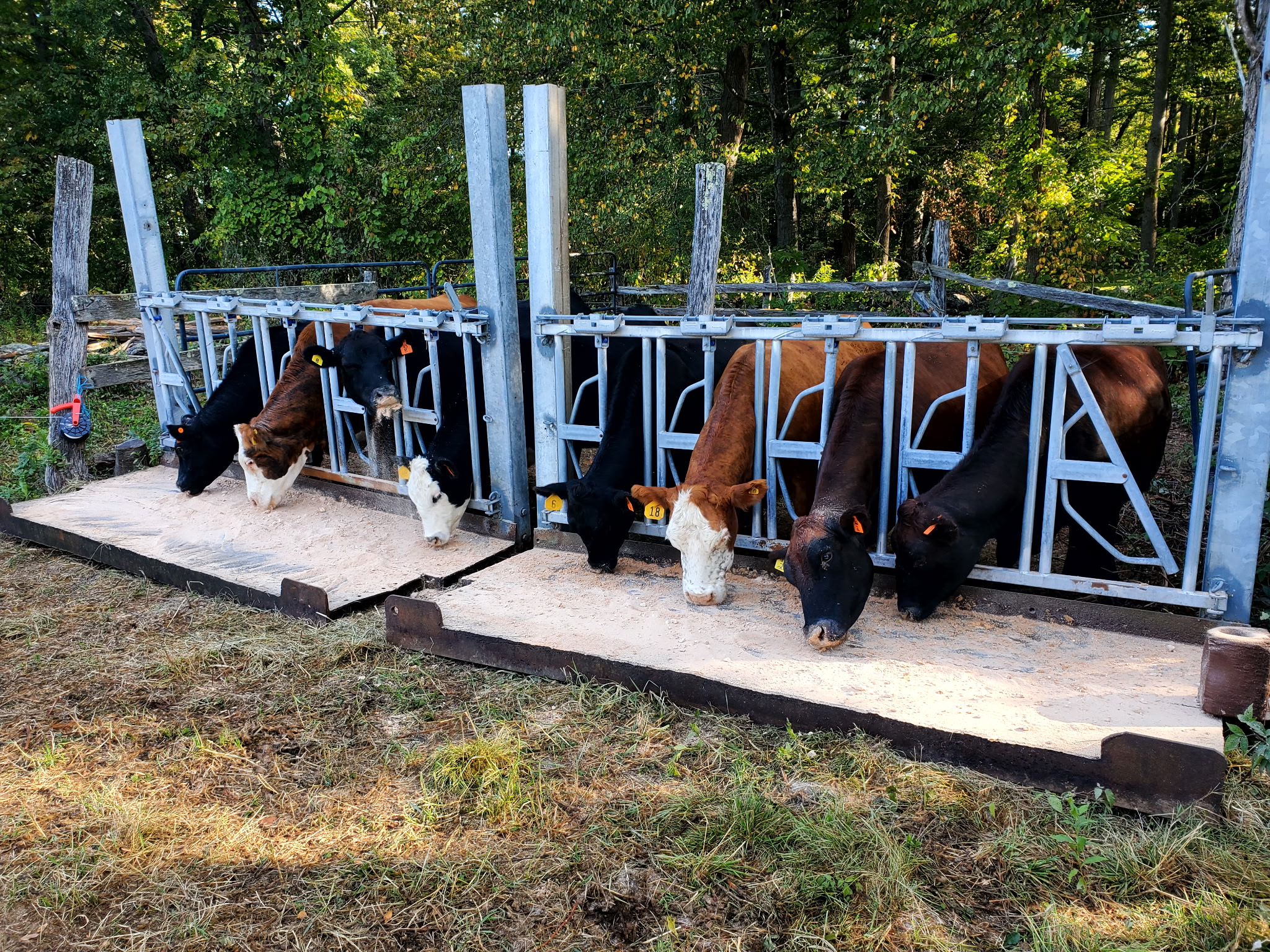

A group of seven New England graziers tested virtual fencing — for now, at least, whether it’s a cheap investment or an expensive mistake depends on your circumstances
The promise of virtual fencing is compelling: GPS-enabled collars teach livestock to respect boundaries through audio warnings and, if necessary, an electric pulse. No posts, no wires, no branches shorting out your hot fence. You draw the paddock on your phone, and the animals stay in it. When it’s time to move them to new grass, you edit their paddock or draw a new one and “move” the collars.
This all sounds good, but it’s a major investment, so most farmers are still a bit skeptical. Small-scale farmers in particular doubt whether the technology is designed with them in mind. In New England, where the trials described below took place, there are a few other potential issues. Aside from small herds (the seven farmers in this trial ranged from 10-60 animal units), we have oddly shaped fields and topographies, spotty connectivity, and only six months of grazing to capture the potential benefits.
Momentum Ag coordinates farmer-led trials across the Northeast. We look at innovative techniques and technologies that have clear ecosystem benefits and ask farmers whether they are practical and profitable. In the case of virtual fencing, the benefits are pretty clear: more frequent rotations, longer rest periods, carbon sequestration, and the ability to exclude animals from waterways and environmentally sensitive areas. With a grant from the Massachusetts Society for Promoting Agriculture, we distributed one NoFence collar to each of seven grazers across Massachusetts. We chose NoFence because it uses cell service, not base stations, and they make both small ruminant and cow collars.
Support authors and subscribe to content
This is premium stuff. Subscribe to read the entire article.