


We can each help give the next generation a chance to be stewards of the land
Every schoolkid is asked at some point, “What do you want to be when you grow up?” For me, it was either Elvis or a farmer.
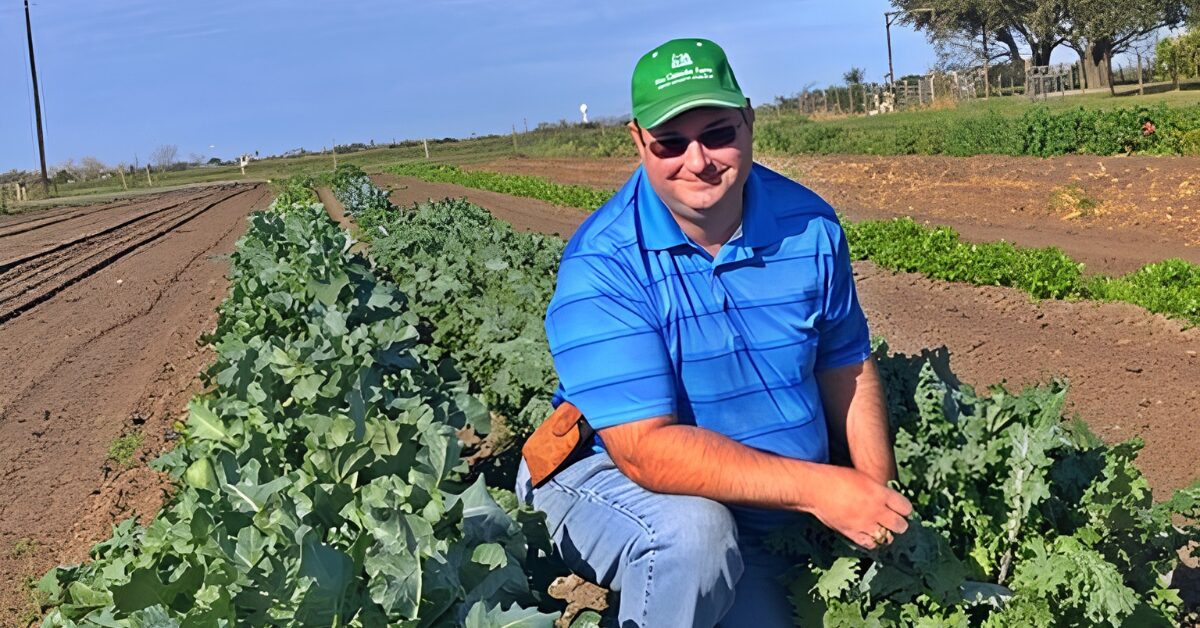
While I am not entertaining millions as a singer, I have been fortunate to have a career rooted in agriculture and a small market farm. As I built a passion for agriculture and decided what career path to take, I never knew just how important that decision was — not just for myself, but for society as a whole. Not that I have a puffed up sense of my own importance, but that the United States, and much of the world, has a crisis on its hands that is at the very basic need of civilization: food production. With an aging population of farmers, who will take over, and what does the future farmer look like?
My Farming Dream
As a kid, I dreamt of owning and operating a 2,000-acre cotton farm in Texas or moving to Iowa and growing corn. Animals and vegetables were never really on my radar. My family had a history of raising cotton, corn and cattle, but my dad did not grow up directly in a farm family, even though his grandparents had farmed. For our family, the demise of the American farm family began in the early 1900s when my grandparents did not take over the farm. Luckily, that land is still in the family, but it is not the same type of farm today. My dad still owns the first tractor in the family, a 1936 Farmall F-12, and the last tractor purchased by his grandfather, a 1951 Ferguson TO-20. He also still has the tractor he bought to briefly farm with, a 1966 John Deere 4020 LP. I personally operate a two-acre market farm and find stress relief in getting on the tractor for even just 30 minutes.
My dream of farming large tracts of acres never became a reality, and I’m okay with that. As an agronomist, I get to do the next best thing: help farmers succeed. I get to work with growers across the country and the world. Over the past 20 years of being an agronomist, I’ve observed one constant: the farmers aren’t getting any younger, and few are being replaced.
My first experience with large-scale agriculture was driving an International 1466 for row-crop farming and an International 766 on that same farm, driving the square baler and other equipment. Those were big tractors in the day. Now look at what we consider a small row-crop tractor — it’s at least twice that size, covering at least twice as many rows in a single pass. Our equipment has gotten larger and costs more than many three-bedroom homes. How can someone not involved in agriculture get started? This is a question I have asked myself many times, and it is part of what has formed my personal opinion that agriculture is at a crossroads.
Agriculture is the one industry that does not listen to its consumers. Instead, it tries to force its beliefs on those who are keeping it in business. I have always found it odd that we try to fight markets, such as the non-GMO corn market in Mexico, simply because we want to farm big and easy. The big and easy mentality is part of what makes regenerative agriculture adoption difficult, due to the types of products being used and the management principles being asked of large producers. Most are used to simply pushing a button and going. Yet as equipment gets bigger, more conventional large-scale farmers retire from farming, and farms merge. Where do we find new farmers?
Traditional and Non-Traditional Paths
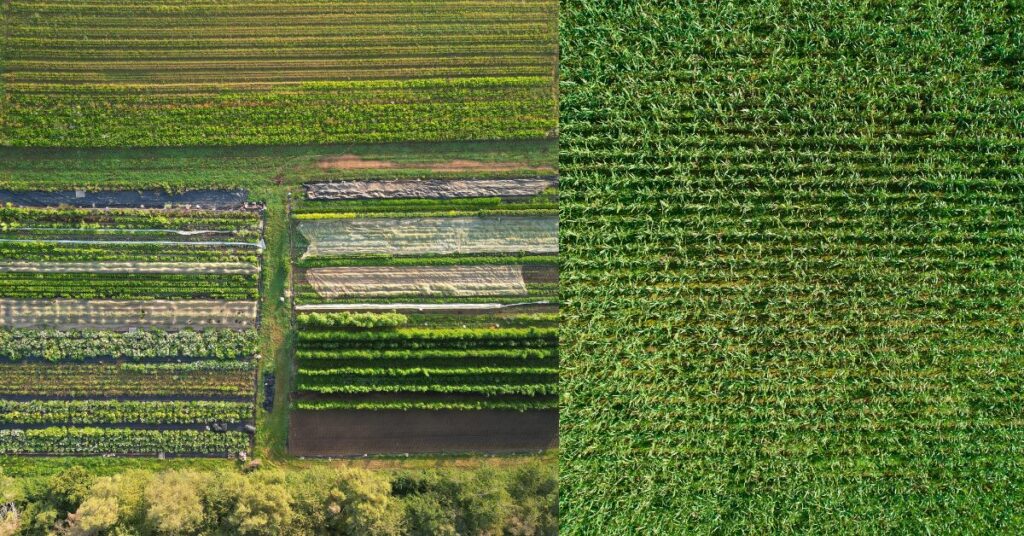
In a traditional sense, I see fewer farm kids coming back to the farm. Given the entry cost of farming, you have to hit things just right or be in a position to potentially carry heavy debt while building a viable farm business. I’m not going to discuss land availability, but that is a major issue in many areas — especially finding productive land. I don’t see any way other than for these farms to get bigger if they are going to focus on commodity crops and fuel production.
Alternatively, there are a lot of non-traditional agriculture universities and colleges focusing on organic and regenerative agriculture. These schools are graduating farmers that think completely differently than students from a major agriculture university such as the one I attended. They are bringing more of a focus on the social impact of agriculture, with a vision of bringing the community together through smaller farms and locally sourced food production. This type of agriculture does not keep the major ag chem, seed and equipment companies in business, though.
What does all of this mean for the future of agriculture? Does the traditional farmer continue to get bigger and truly become a corporate business focused on livestock feed and fuel production? Does the next generation of agrarians focused on actual food production come from non-traditional sources — going back to the roots of agriculture, managing smaller acreages?
In short, I believe a combination of farm types is where we are headed. We are losing farmland by the thousands of acres every day. We are losing farmers in our traditional sense. At some point, we have to find the solution, and with the general population asking for more and more locally sourced foods, I believe the non-traditional farmer has a bright future ahead. Some areas of the country are definitely ahead in embracing this type of agriculture, but unless the farm kids start coming back to the big farms, change is inevitable.
The future of agriculture in the United States does not have to be one of fear for finding the next dollar. For many farmers, on-farm profitability has dried up. Everywhere you look, the agriculture industry is laying off workers. Small towns have been turning into ghost towns for decades. High schools that used to have a rich tradition in athletics don’t even have enough kids to compete. Grocery stores are closing, hospitals are shutting down, popular food venues are boarding up their windows. Finding the solution to the next generation of farmers also plays a role in regenerating our communities. Smaller, more diverse farms can drive rural America to a new era of success. Large farms that are able to sell to a more diverse market — those that reward quality over quantity — while still supporting an industrial market such as ethanol can also be part of the solution. There is room for both; there’s no need to fight with each other.
Farms as Nutrition Centers
I’ve had many interesting conversations on these topics as I’ve traveled the country. Some farmers support the status quo model of production agriculture, with a reliance on convenience, defending the chemical companies, and believing change is not needed beyond an increased price for what is grown. In the other camp are growers and healthcare professionals who are concerned with how the methods we use in production directly impact both animal health and health. They focus on nutrient density and quality while seeking a premium for production (which is unfortunately not always realized). I work with all types of growers in both camps, and there is not a single grower out there who is trying to have a negative impact on society.
By today’s standards, I am the next generation of farmers. I may be mid-career as an agronomist, but I am a youngster when looking at the average age of farmers. I only have a two-acre vegetable and flower farm, but I am looking to expand, given the right opportunity. We may have that chance through a partnership with another non-traditional farmer. Even with just two acres, though, life on the farm has been difficult. Our lake system is depleted, and the irrigation district cannot provide consistent push water in the canal for us to irrigate and utilize our drip irrigation system. The lucrative market we were able to profit from during the COVID years has dried up as the consumers have gone back to the grocery store instead of supporting local farmers markets. The local university extension system focuses on training new market farmers instead of training the public on building market farm support.
We are small enough that it is difficult to be able to adhere to government regulations around food safety, such as requiring a separate restroom from the house even though we do not have employees. GAP certification is possible but also difficult to achieve in a small operation, and GAP is required to sell wholesale vegetables to our local school district. There’s one obstacle after another. It’s no surprise that my kids do not want to look at agriculture as a career field. I personally continue down the path simply because I love the connection to the land and the literal microbial sensory connection between myself and the soil that keeps my mental health in check. My local friends that farm on a large scale have similar issues. At the end of the day, it all comes back to profitability.
So, how do we bring our kids home to the farm and invite a new generation of farmers? It goes well beyond making farming great again. We have to make farming profitable again. That all starts with the unpoliticized efforts of making America healthy again. Part of my farming is now my health journey. The typical American diet has caught up with me, and I am at a point where I view agriculture differently than I did as a fresh-out-of-college agronomist. My utopia is now focused around building my farm as a support center for the health of my community, my family and myself.
When we look at our farms as nutrition centers, it changes how we farm. It gives us a story to tell that the public wants to hear. Bring the community back to agriculture, and our profits will follow. Nothing about our American farmer situation is an overnight easy fix, but the first step is admitting there is a problem and doing what farmers do best: work to find a solution.
My call to action for you who are existing farmers is to help the next generation of farmer, even if they are not blood related. Help that young individual find a productive block of land to rent. Help them with custom work when they can’t afford the equipment needed. Help them by bringing them into your own operation if your kids are uninterested.
Simply put, give the next generation a chance to be stewards of the land.