

Separating soil-building decisions from fertility management helps vegetable growers avoid nutrient excesses that weaken crops and invite pest pressure
Small-scale farming has never been more appealing. As demand for local food rises, driven by healthier eating, lower carbon footprints, and a desire for community, more backyard growers are leveling up into the world of market gardening. However, what begins as a hopeful side venture can quickly become overwhelming without a plan to maintain soil health.

Many new growers find themselves stuck in the same exhausting cycle: endless hand weeding, multiple successions to replace those that fail, or constant covering and uncovering to exclude pests. The assumption is that these pressures can be cured with row cover and another layer of compost.
But the problem isn’t a lack of fertility. The problem is often too much of it. Modern market gardeners often inherit or create soils loaded with residual nitrogen, phosphorus and potassium from repeated compost and fertilizer applications — inputs added “just to be safe.” The result is vigorous but vulnerable plants that draw insects like a beacon.
Fertility excesses, not deficiencies, underlie many of the weed, pest and disease pressures growers experience today. And unless growers rethink how they interpret soil tests and how they time and scale fertility, these pressures only intensify as production increases.
Training Without Education
For many growers — especially those who came up through the modern organic movement — the foundational texts emphasized compost, cover crops and trust in soil biology. Eliot Coleman’s work shaped a generation of farmers who believed that carefully built compost, thoughtful crop rotations and soil biology could sustain both soil and plants for the long term. [Editor’s note: see our interview with Eliot Coleman on page __ to learn why he now emphasizes growing and incorporating green manures instead of just compost.]
Yet woven into that philosophy was an assumption that growers were watching their soil closely: testing regularly, observing changes over time and adjusting inputs with intention. Compost was never meant to be a default annual application. It was a tool — powerful, yes, but one that required judgment, timing and restraint.
Today’s market gardeners face a very different landscape. Rising land costs and the push to produce more on fewer acres have compressed crop rotations and nearly eliminated the possibility of long cover crop windows. CSAs and restaurants demand continuous, diverse harvests, leaving growers little room to cycle fields out of production or rebuild soil through slower, ecological processes. Tight urban spaces make on-farm composting unrealistic for many producers. As a result, purchased amendments — once supplemental — have become routine.
At the same time, the education pipeline for new growers has shifted toward the mechanics of production. Workshops and apprenticeships increasingly focus on bed layout, seeding efficiency, harvesting technique and postharvest handling — all essential skills, but ones that often leave deeper soil health education behind. The refrain becomes familiar: add compost, feed the soil, cover the beds, repeat.
Within this framework, pests become inevitable. When crops struggle or insects appear, growers often respond by layering on more fertility “just to help the plants recover.” But in many cases, this is the very pattern driving the problem. Excess nitrogen accelerates growth beyond what the plant can metabolically support, leading to thin cell walls, soft tissues, and elevated levels of soluble nitrogen. These unbound nitrates are essentially junk food for insects, as the plant hasn’t had the chance to convert them into complete proteins, which are much harder for pests to digest.
What looks like bad luck or unavoidable pressure is often the soil delivering a message: the system is out of balance.
Plant Health First
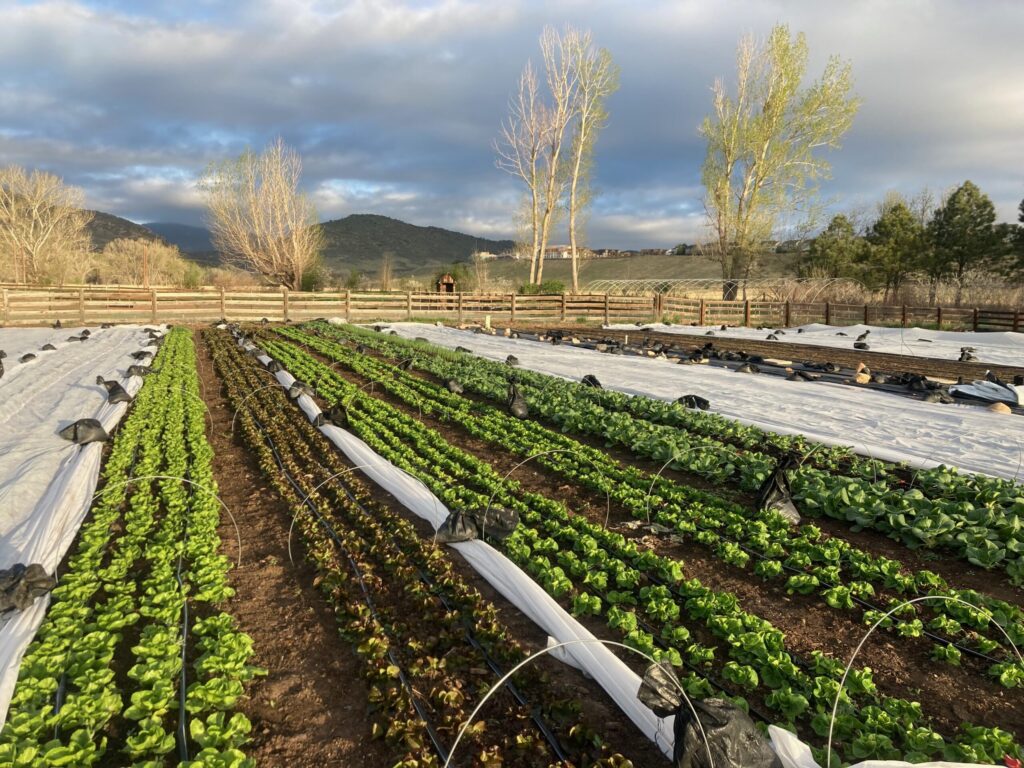
Disease and pests are nature’s garbage collectors. They only become a problem when there is garbage to collect. A well-balanced plant that is photosynthesizing well and converting nitrates to amino acids and complete proteins is simply not attractive to insects. Furthermore, weeds are often an indicator of nutrient excesses, mineral imbalances or poor soil aggregation.
Most market gardeners who run soil tests tend to scan for deficiencies in nitrogen, potassium and phosphorus. Yet the more valuable skill — and the one most often overlooked — is learning to recognize excesses and the imbalances they create. While N, P and K are considered the primary nutrients essential to plant growth, and can produce a large growth response, calcium, magnesium and sulfur — the secondary macronutrients — and a dozen or more micronutrients including iron, manganese, zinc, copper, boron, and molybdenum are integral to plant health.
Certain patterns appear repeatedly in intensive production systems:
- Phosphorus creeps ever upward from repeated compost and manure applications
- Potassium levels get high enough to interfere with calcium uptake
- Nitrogen becomes abundant and pairs with chronically low calcium
- Organic matter gets so high that nitrogen mineralizes faster than crops can use it
These conditions are closely tied to insect and disease pressure. Calcium is central to cell wall integrity and overall plant resilience. When nitrogen outpaces calcium, growth may look vigorous, but tissues remain soft and vulnerable to infection.
Learning to interpret a soil test does not require advanced chemistry. It simply requires understanding a few key relationships: pH as the gateway to nutrient availability, the balance of calcium and magnesium for soil structure, nitrogen in its forms and timing, the other nutrients that are essential to converting nitrogen into complete proteins, such as molybdenum, boron and magnesium.

Separating Compost from Fertility
One of the most important shifts for market gardeners is learning to distinguish between decisions about compost and decisions about fertility. Compost — particularly plant‑based compost — functions primarily as a soil‑building material. It improves aggregation, supports microbial life, buffers moisture, and contributes organic matter. Its use is best guided by organic matter levels, soil structure, and long‑term system goals, and in many cases, it may only be needed every one to three years.
Fertilizers, on the other hand, act directly on plant nutrition and sap chemistry. Concentrated organic fertilizers are potent tools, not safety nets. They should be applied judiciously, timed with care, and scaled back automatically in soils with moderate to high organic matter or a recent history of compost and cover crop use.
When these two categories are treated as interchangeable — when compost is viewed as fertility, or fertility additions are layered on top of compost without regard for timing or context — excessive nitrogen becomes almost inevitable.
Cover Crops Count Too
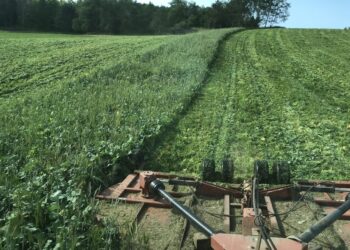
Cover crops and green manures are often discussed as “soil‑building” practices, but in intensive systems they also function as slow‑release sources of fertility and help to outcompete weed pressure. Legume covers can contribute significant amounts of nitrogen, depending on species and termination timing — sometimes enough to meet a garden’s needs for an entire season. When fertilizers are added on top of that without consideration, excess nitrogen is almost guaranteed.
Understanding the nutrient value of cover crops and matching their termination to the needs of the following crop is essential if you want them to solve, rather than compound, fertility challenges.
Ways to Prevent Disease
When crops appear vigorous, yet pest pressure rises, the solution is rarely more fertility. More often, it is different fertility. Calcium supports structural integrity and disease resistance. Silicon encourages stronger cuticles and helps limit insect feeding. Biological inputs facilitate nutrient cycling without forcing growth. And timing fertility applications — particularly knowing when to stop nitrogen — is as important as the materials themselves. For many crops, especially greens and roots, doing less is often the most productive intervention.
When you assume that pests are inevitable, your management becomes defensive — exclusion, sprays, control. When you recognize pests as indicators, your response becomes diagnostic. Aphids often point to excess nitrogen and insufficient calcium. Flea beetles thrive where nitrogen releases rapidly and cuticles remain thin. Poor storage quality can often be traced to late‑season nitrogen. These patterns are consistent and teachable. This does not eliminate the need for row cover or other tools. It simply returns them to their proper role — as support, not substitutes for soil balance.
Disease follows many of the same patterns as pest pressure: it emerges when the soil‑plant system is out of balance. There is a common misconception that plant diseases appear because something bad has invaded the soil. In reality, most of the fungi, bacteria and even nematodes capable of causing disease are present in nearly every soil ecosystem, nearly all the time. They are part of nature’s clean‑up crew — opportunists waiting for the right conditions.
In a well‑balanced, biologically active soil, though, those organisms rarely get the opportunity. A diverse soil food web — bacteria, fungi, protozoa, micro‑arthropods — creates constant competition for space and resources. Beneficial microbes crowd out potential pathogens, produce compounds that suppress them, and in some cases attack them directly. This microbial activity also signals plants to strengthen their own defenses, effectively priming the immune system of the crop before any disease pressure arrives.
But when soil biology falls out of balance — whether from repeated tillage, excessive inputs, or a lack of organic diversity — the protective species decline. The system loses its resilience. Suddenly, the organisms that were once held in check find openings. They proliferate not because they are new, but because the plant and the soil no longer have the biological strength to keep them in balance.
As with pests, disease is rarely an isolated misfortune. It is feedback — a sign that the soil‑plant system is under stress and needs recalibration. Rebuilding a diverse, active soil biology is not just a management strategy; it is the most reliable long‑term path to natural disease suppression.
Compost teas and extracts are excellent ways to inoculate your soil with a diverse array of beneficial bacteria and fungi. They can be sprayed directly onto beds, used as a seed soak, or applied as a transplant drench. Unfortunately, many purchased composts are devoid of biology and provide little more than nutrients and organic matter. If you can’t make your own, seek out local producers who focus on microbial diversity in their compost production and utilize seed inoculants to provide beneficial microbes around the plant roots (the rhizosphere).
Finally, rotating crops is a classic biological control method. It starves host-specific pathogens that build up in the soil when the same crop is grown repeatedly. Additionally, diverse cover crop mixes are fantastic. They provide different root exudates, feeding a wider range of microbes. When terminated and left on the surface (no-till) or lightly incorporated, they become a slow-release feast for soil organisms and naturally suppress weeds.
Returning to the Original Promise
Eliot Coleman’s early work was never about inputs alone. It was about observation, balance, and partnering with biological systems rather than overpowering them. The challenge for today’s market gardeners is not that these ideas no longer apply, but that the context has changed while the nuance has been lost.
By relearning how to read soil tests, separating compost from fertility decisions, budgeting nitrogen with precision, and interpreting pest pressure as feedback, growers can recover a form of organic agriculture that fits modern constraints without sacrificing resilience.
Healthy soil still grows healthy plants. The task now is simply to listen more closely.