

A new tool helps vegetable farmers determine which crops make sense financially
“Number one, you need to know your cost of production. I’ll guarantee you, 95 per cent of farmers out there do not know their true cost of production. Too many use their Schedule F as their cost of production. No, you need to know, down to the last penny, what it costs you to produce a product, whatever that might be.”
—Gabe Brown, December 2025 Acres U.S.A.
Knowing the cost of production is just as important for direct-marketed produce as for field crops and livestock. However, tracking costs can be particularly difficult for a market gardener growing twenty or more perishable items.
We tried putting together a complete enterprise budget for just one of our crops several years ago. While it was satisfying to know that the breakeven price for a bulb of our garlic was $1.49, putting together a complete budget was a huge undertaking. Not only did we have to track all of our expenses and labor for growing the crop, but we needed to do this for all of the other costs that go into running the farm and then somehow decide how to allocate these expenses to each vegetable.
When we joined the Know Your Costs to Grow program in 2023, though, we learned that it is much more realistic and helpful to focus on the crop-specific costs of growing each vegetable. With this information, we can compare how much each crop is contributing to all the other farm expenses, identify vegetables that should be dropped from the crop mix, and more easily see where to cut costs.
Know Your Costs to Grow
“The Know Your Costs to Grow program provides multi-crop vegetable farmers with a step-by-step process for determining their crop-specific costs of production and a framework for using cost of production information for business planning and decision-making. [It] is an ongoing partnership between Oregon Tilth and Oregon State University’s Center for Resilient Agriculture & Food Systems. The program started in 2015 when a handful of vegetable farmers in Oregon began participating in ‘cost study cohorts.’ Motivated by a desire to make more informed business decisions about everything from pricing to product mix, the farmers in these early cohorts set out to determine their farm’s unique crop-specific costs of production.”
| The Know Your Costs to Grow program (knowyourcosttogrow.com) is now managed by the Oregon State University Extension Small Farms Program, which is part of The Center for Resilient Agriculture and Food Systems. For more information, contact Nate Stacey (nathan.stacey@oregonstate.edu). |
The first step in the process is segregating production expenses into crop-specific costs and shared vegetable expenses using this rule-of-thumb: If a labor activity or input is used for all the vegetables grown on the farm or benefits all of the crops, they are shared vegetable expenses, not crop-specific costs. By definition, crop-specific costs will not be the same for all farms.
For example, if a market gardener uses compost for some vegetables, but not others, then compost is a crop-specific cost. However, on our farm, compost is not a crop-specific cost because we apply the same rate of compost before every vegetable crop. Likewise, we precede all of our vegetables with a fallow year of cover crops, so both cover crops and compost are shared vegetable expenses on our farm.
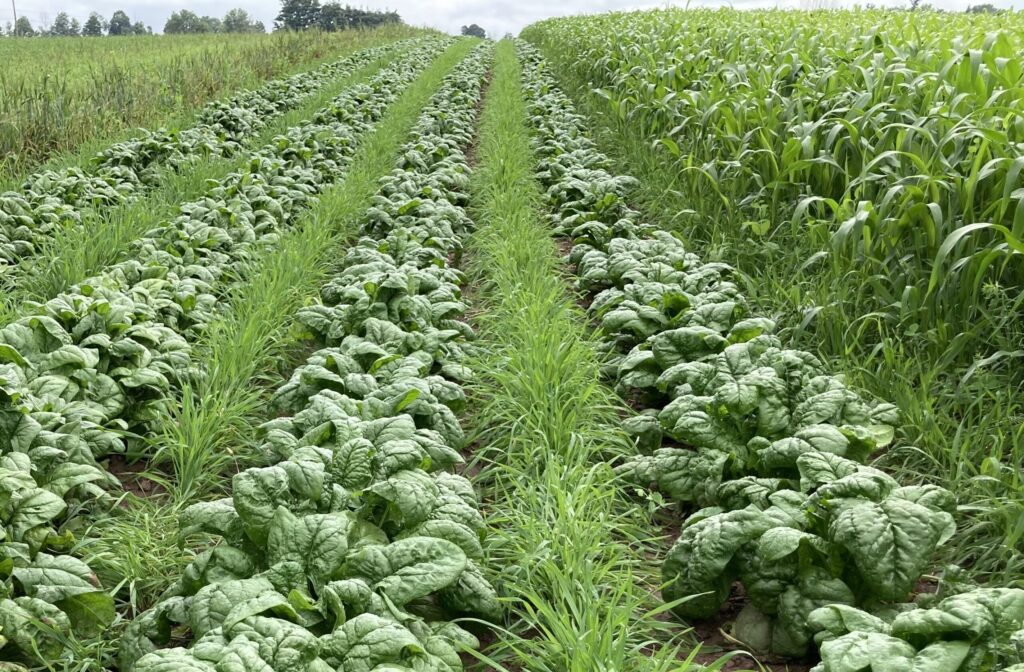
On the other hand, we interseed some of our vegetables with a single row of rye and mulch others with cover crop straw. So, interseeding and mulching are crop-specific costs for our market garden. Likewise, direct seeding and transplanting are crop-specific costs because we direct seed some of our vegetables, such as carrots, beets and spinach, and transplant others, like lettuce, broccoli and peppers.
Separating shared vegetable expenses from crop-specific costs simplifies crop comparison. It is also necessary to calculate the contribution margin, a key metric in the Know Your Costs to Grow program. The contribution margin is simply the amount that each crop can contribute to the expenses shared by all of the vegetables, including non-production farm costs like marketing, repairs, insurance and taxes.
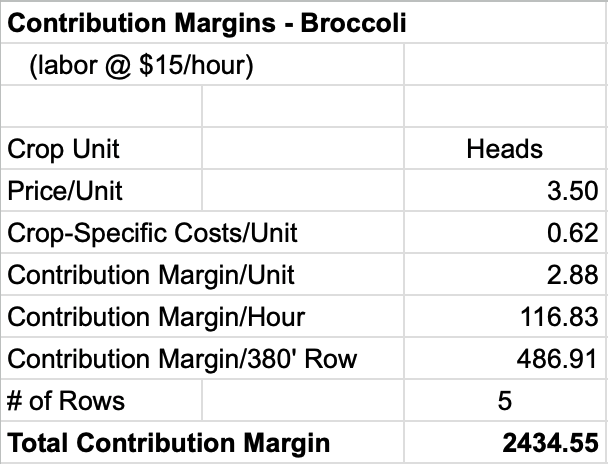
Calculating the contribution margin is super easy. We just subtract the crop-specific costs from the unit price of the crop. For example, the math for our broccoli looks like this:
| Price/unit: | $3.50/head |
| – Crop-specific costs: | $0.62/head |
| = Contribution margin: | $2.88/head |
After covering its crop-specific costs of production, each head of broccoli can contribute $2.88 to our shared vegetable expenses, such as compost and cover crops, as well as our non-production farm costs, like marketing and taxes.
Doing the math for the crop-specific costs is not as easy. Fortunately, the Know Your Costs to Grow program developed a user-friendly, web-based calculator for crunching these numbers as well as calculating other helpful metrics, such as the contribution margin per hour of crop-specific labor and the contribution margin per row, bed or acre.
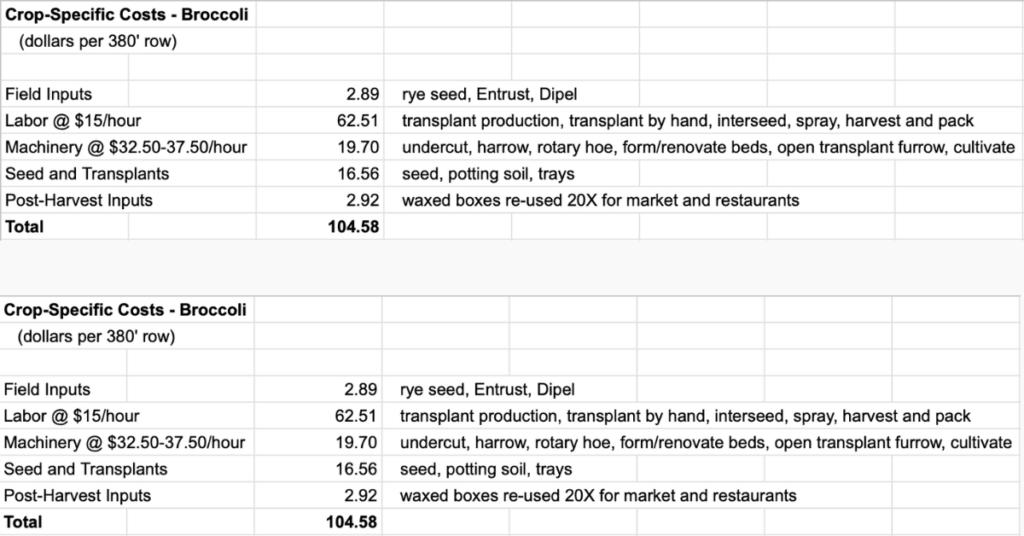
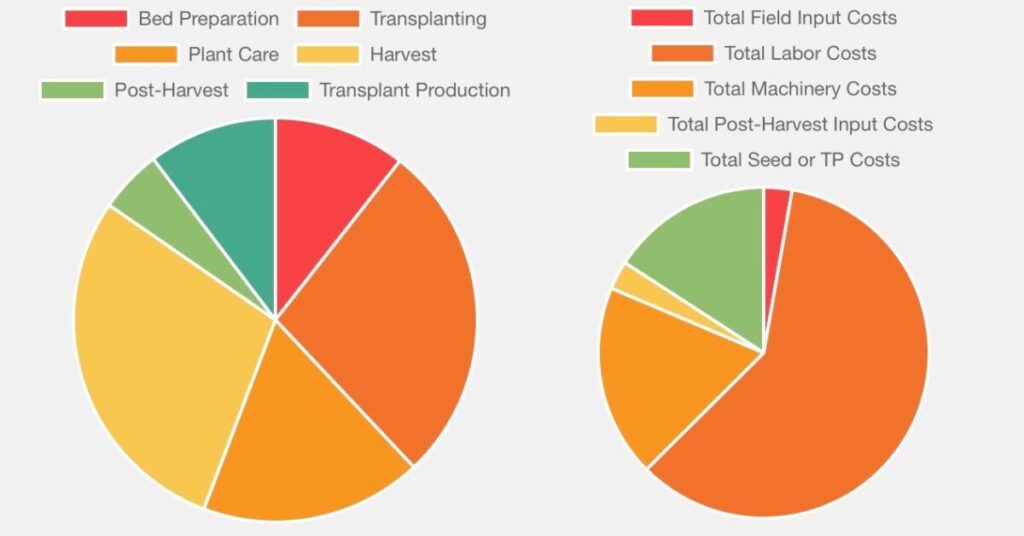
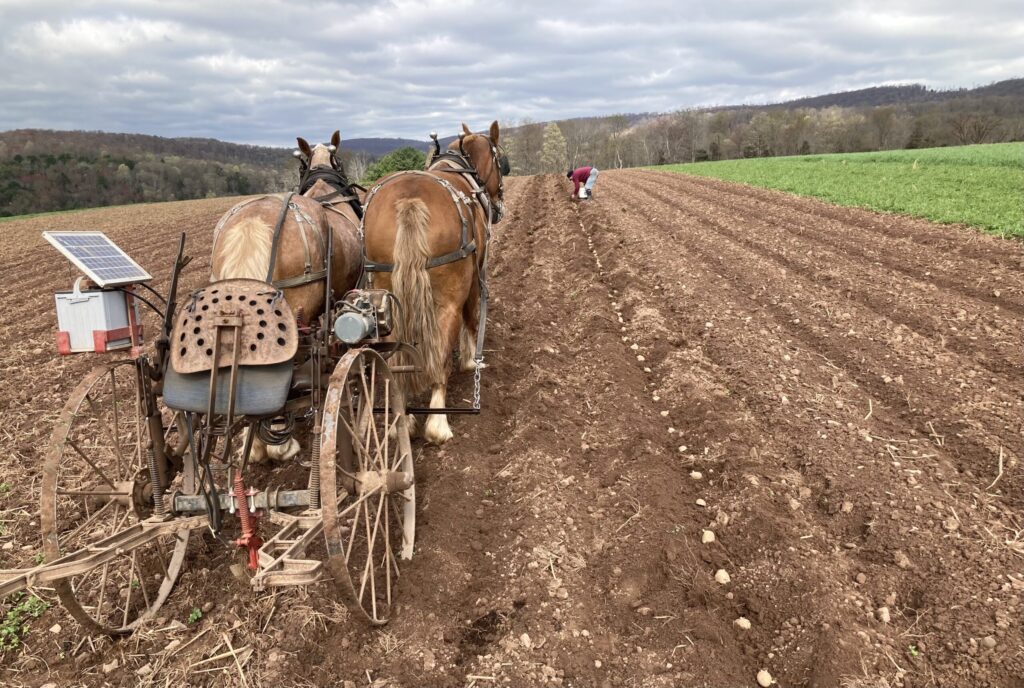
For instance, the numbers and pie charts generated by the Know Your Costs tool for our fall broccoli make it easy to see the biggest expenses for growing this crop. We were genuinely surprised to find out that transplant production was our third highest crop-specific cost and that hand-planting the crop took almost as much time as harvesting it. We also did not expect that bed preparation with the horses would represent such a relatively small percentage of our crop-specific labor, or that machinery costs (teamster wages at $25/hour, replacement cost for the team and equipment, workhorse care and expenses, etc.) would be our second highest crop-specific cost. Without this activity-based accounting, we were just making wild guesses about where to prioritize cost-cutting if the contribution margin for broccoli turned out to be too low.
In fact, the contribution margin per head of broccoli seemed pretty high to us, especially since it did not include the considerable sales from sideshoot production. But we don’t really know if $2.88/head is adequate until we see if the total contribution margin for all of the crops we grow exceeds all of our non-production costs and shared vegetable expenses.
Unlike a traditional vegetable enterprise budget, which saddles each crop with an equitable, if arbitrarily determined, portion of these fixed costs, Know Your Costs looks at how much the whole market basket of vegetables contributes to these general farm expenses. This strategy makes a lot of sense for direct-market vegetable growers because we need a diverse offering of produce to attract customers to our farm stand or to retain CSA members. Some of the vegetables may need to contribute more to shared vegetable expenses and non-production farm costs than others.
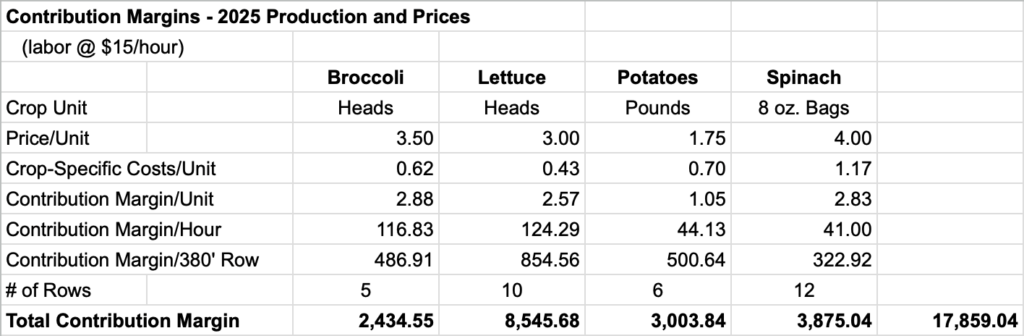
For instance, on our farm, lettuce and broccoli have a much higher contribution margin than potatoes and spinach. However, we need all of them (and many other vegetables) to make it worthwhile to attend the farmers market.
Based on our scaled-back production going into semi-retirement, these four vegetables generated a total contribution margin of $17,859. We can use the Know Your Cost calculator to test different pricing, cost-cutting and yield-enhancing strategies to see which is best for increasing the total contribution margin of the crop mix. We were particularly interested in using these what-if scenarios to see if we could cut back the number of hours we were working without reducing our income too much.
Increasing Prices and Wages
Toward the end of the 2025 growing season, we trialed a 50-cent increase for broccoli and lettuce at our farmers market stand, and customers did not bat an eye. We were also fairly confident that they would go for a more modest increase in the price of potatoes. However, we had learned the hard way that there was a limit to what people would pay for spinach. Increasing the price in 2023 doubled the contribution margin of our spinach but reduced sales significantly. We ended up with almost the same total contribution margin for this crop while doing a lot less work, which met our retirement goal, but it deterred us from raising the price of spinach again.
Plugging our projected 2026 price increases into the Know Your Costs tool showed a 15 percent increase in the total contribution margin for the crop mix and a 17-24 percent increase in the contribution margin per hour for broccoli, lettuce and potatoes — a step in the right direction.
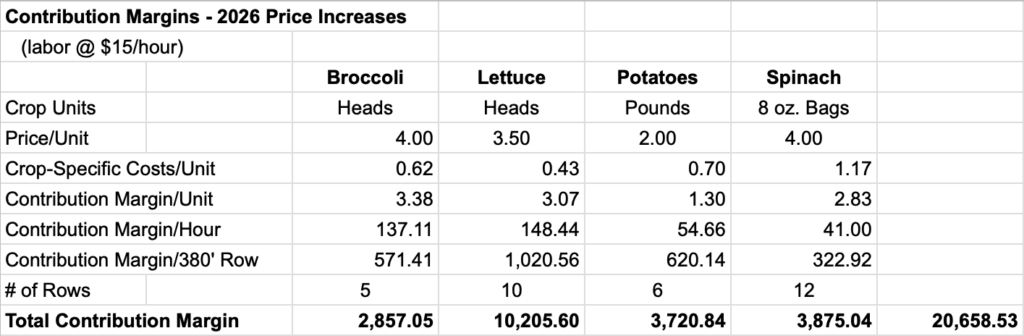
On the other hand, when we tested an increase in our base pay for crop-specific labor from a pre-pandemic minimum wage of $15/hour to $25/hour — more in line with post-Covid inflation — it cancelled the benefits of the price increase. The total contribution margin for the four vegetables dropped to $18,137, and the contribution margin per hour for broccoli and lettuce was only $10 higher than before the price increase.
Cutting Costs and Improving Yields
We can also use the calculator to see what would happen if we cut costs or increased yields. A glance at our crop-specific labor hours for the four vegetables showed that we spend the most time washing, sorting and packing potatoes by hand. We were also concerned that the contribution margins for this crop were based on the reduced yields from the hot, dry 2024 and 2025 growing seasons. The harvest was 40 percent lower than when we receive abundant rainfall, so we tried two what-if scenarios: an expected 60 percent reduction in post-harvest labor by investing in a root washer, and boosting the average yield 40 percent by mulching the potatoes.
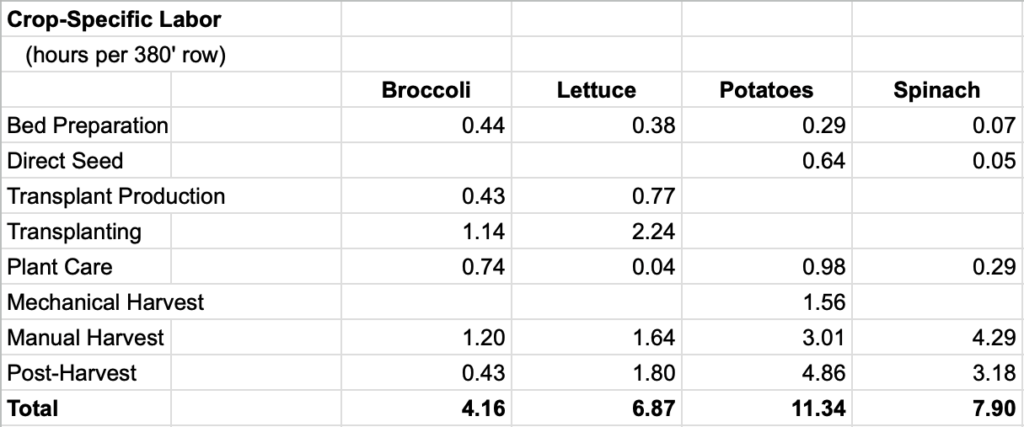
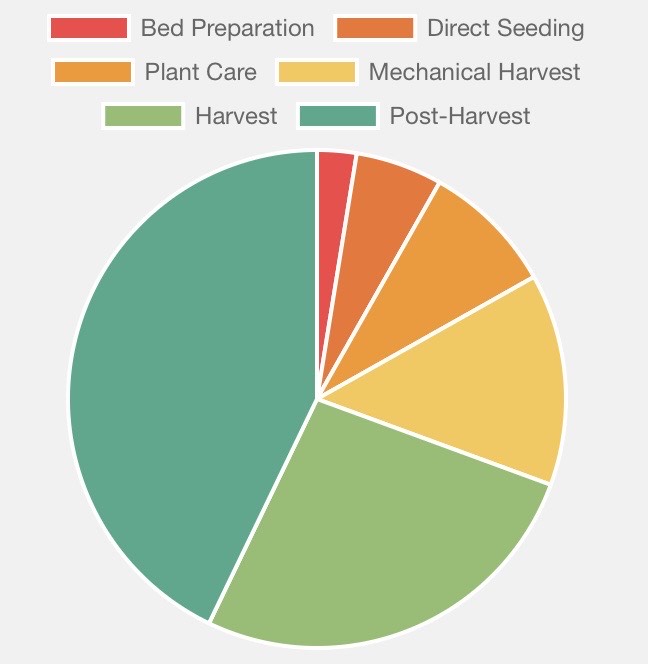
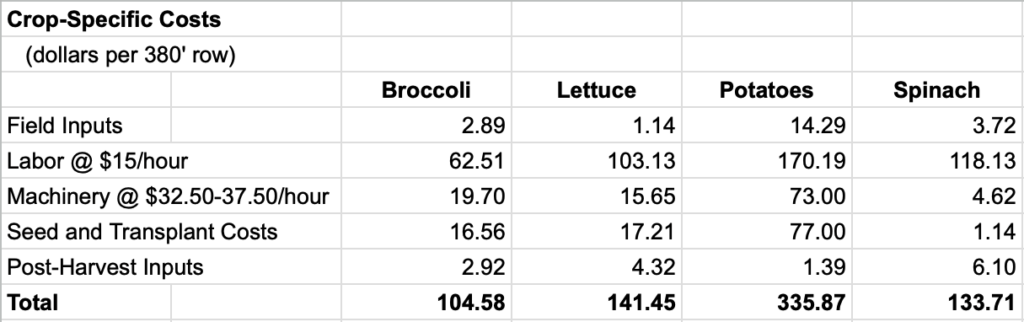
Even at a projected 2026 price of $2.00/pound, the root-washer scenario only raised the total contribution margin for the six rows of potatoes by $262, and that’s without plugging in the cost of the new equipment. On the other hand, the root washer could save us about three hours per row, increasing the contribution margin per hour by almost 50 per cent, which looked appealing to us from our semi-retirement perspective.
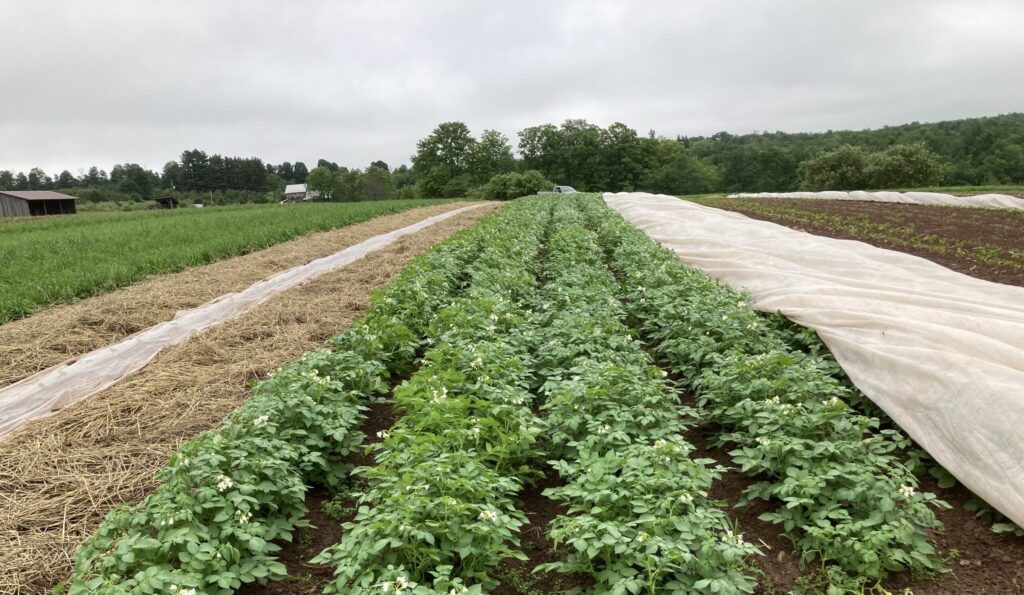
Increasing the yield 40 percent by mulching the potatoes with cover crop straw promised the opposite result. Our labor hours would increase by almost 50 percent due to an additional 80 minutes/row of anticipated labor for mowing, raking and moving the cover crop straw to the potatoes, plus the big increase in harvest and post-harvest hours. Consequently, our contribution margin per hour would only rise 55 cents, but the total contribution margin for the six rows would go up 50 percent.
At this late stage of the game, we are more inclined to try mulching the potatoes than investing in a root washer because we already have the tools and experience for mulching vegetables with cover crop straw. If we see the anticipated yield increase in dry years, then we could reduce our hours by cutting back from six to four rows of potatoes.

| Optimizing the Crop Mix Growers who have entered the crop-specific costs for all of their crops in the Know Your Costs tool can access an Excel spreadsheet tailored to maximize the total contribution margin of the vegetable farm. By ranking the vegetables from the highest to lowest contribution margin per unit and indicating the maximum number of units the grower is willing to grow for each crop, the spreadsheet creates the ideal crop mix. |
What About Other Farm Expenses?

Keep in mind that a high contribution margin does not necessarily guarantee a profit for the market garden. If our compost and cover crop budget is through the roof, it may not be reasonable to expect the contribution margin to cover these shared vegetable expenses with anything left over for profit. Likewise, if our marketing or management costs are too high, then the contribution margin may not be able to carry these non-production expenses.
Putting together the complete enterprise budget for our no-till garlic was not a waste of time because it forced us to track and categorize these overhead expenses. Joining the Know Your Costs to Grow program made us realize we should treat each of these non-production costs and shared vegetable expenses as separate budgets and to take a close look at each of these budgets if the market garden was not generating a satisfactory profit. The program also showed us that knowing our crop-specific costs was the most helpful way to analyze and compare the costs of production for each vegetable on a diversified produce farm.