

How to Re-establish Arbuscular Mycorrhizal Fungi in Your Plants
By Matt Powers
Mycorrhizal fungi are ancient beneficial symbiotic organisms that have always partnered with plants. Without them, our plants are vulnerable to attack, incomplete in their physiology, and reliant upon the farmer for phosphate. They’re also likely less nutrient-dense.
Using the Latin roots, we can see the meaning of “mycorrhizal” in the word itself. “Myco” means fungi (myco-logy is the study of fungi) and “rhizal” means “of the root” (the rhizosphere is the area immediately around the roots). Mycorrhizae live inside and partner with the plant roots—they are dependent upon plants for their sustenance and life cycle.
Mycorrhizae are not saprophytes. There is debate about a single alpine ectomycorrhizal species that might be saprophytic in rare instances, but it’s much more likely that the plant was already inoculated with mycorrhizal fungi before the decomposition began.
Mycorrhizal rely on the leftover roots from last season to reestablish themselves with plants in the new season. They only make spores in case of emergency (like an ice age or asteroid strike). Neal Spackman’s work in Saudi Arabia found mushroom species that hadn’t been seen in that area during the oldest person’s lifetime. The same is seen at the Boneyard in Alaska: thirty feet below the permafrost, newly uncovered earth from 12,000–30,000 years ago will have mushrooms and other fungi manifest nearly as quickly as it thaws.
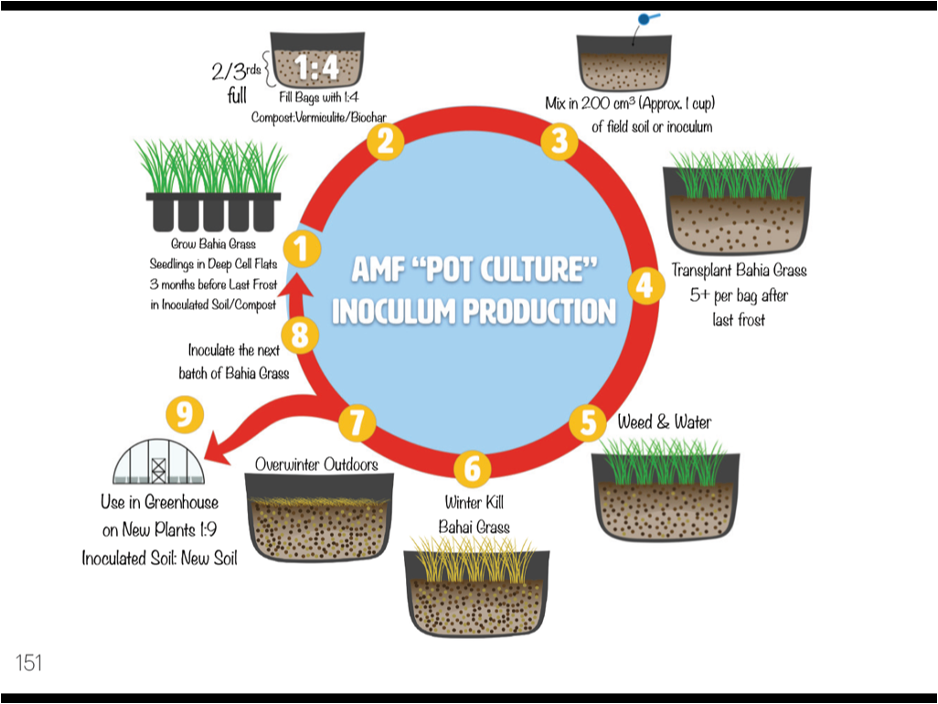
Mycorrhizal fungi don’t survive decomposition, which means they rely predominately on residual roots to survive from one season to another. Mycorrhizae are never in compost unless you put them there manually after the active compositing is done. This is why folks like Todd Harrington and the Wormies compost company are planting mycorrhizal-inoculated plants into their compost piles as they cure. The plant roots feed the microbes and also introduce mycorrhizal fungi into the pile. When this is done, compost can become a carrier for mycorrhizal fungi, but we want to make sure we are pairing our plants with the right mycorrhizal fungi for our soil goals.
Types of Mycorrhizal Fungi
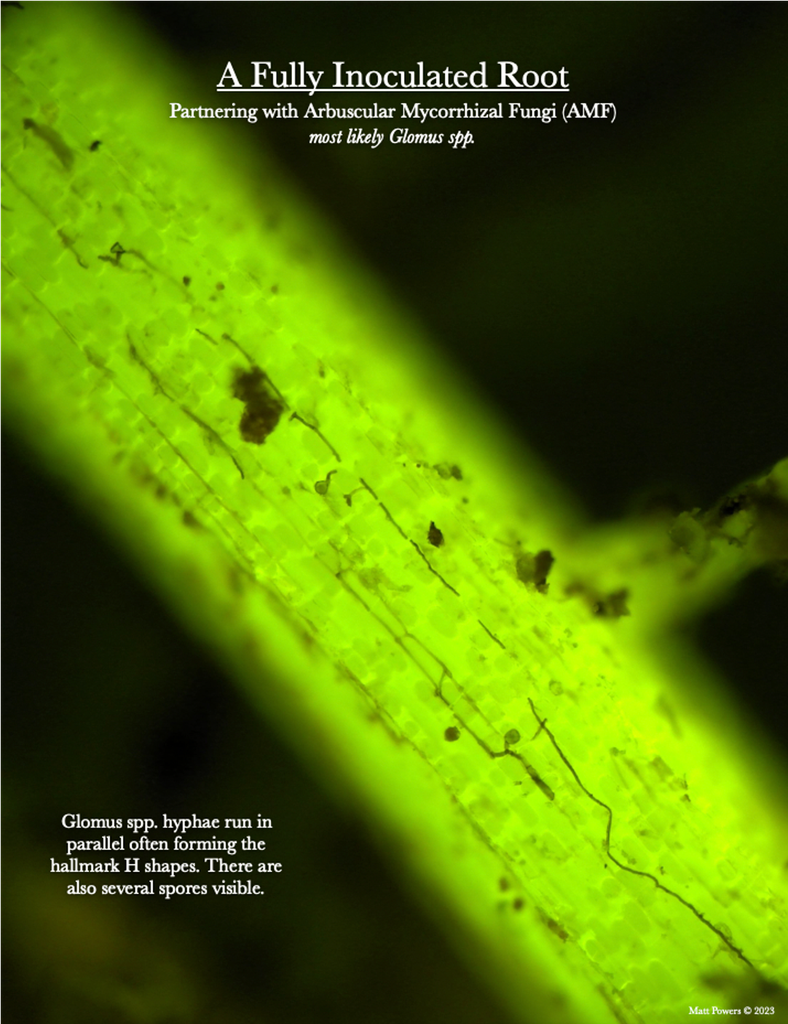
Arbuscular mycorrhizal fungi (AMF) are the most important and most common mycorrhizal fungi. They are endomycorrhizal, which means that they don’t ensheath the root like ectomycorrhizal fungi (ECM) do, primarily on alpine forest roots. Instead, AMF go past the cell wall but not the membrane to deliver nutrients (primarily phosphate) directly to plant cells.
AMF partners with over 90 percent of plants, including the majority of our garden, ranch, and farm plants. Blueberries, cranberries, and other ericoid plants partner with ericoid mycorrhizal fungi (which prefer acidic soils), and orchids partner with orchid mycorrhizal fungi, which are both also endomycorrhizal. Almost every other plant, including most of our orchard and rangeland species, partners with AMF.
Some ecosystems have unique strains of AMF, but there’s also a dominant species found all over the world: Rhizophagus irregularis (formerly called Glomus intraradices), which is often used in mycorrhizal fungi inoculant mixes. This means that we can inoculate our plants with a common AMF and get real benefit. It’s actually best practice to inoculate with a single species at a time. Because AMF pick up other genetic material, they adapt in real time as they grow, so you’ll have native or “indigenous” AMF very shortly after you inoculate and plant your plants or seeds.
Why Not Use Native AMF?
Dr. James White told me about Iroquois Corn Medicine, which describes how the Iroquois Indians simmered plant cousins and corn medicine plants in water to create a seed-soaking liquid. You could easily adapt this idea by gathering plant cousin roots, chopping them up roughly in a blender, and adding them to new seeds or transplant roots.
This is done all the time with ectomycorrhizal fungi (ECM): the forestry folks gather puffballs and mature mushrooms for the target species, crush them, and combine them with water to make a slurry to water the woods. But AMF don’t form mushrooms. Their hyphae do autofluoresce neon-highlighter yellow-green in epifluorescence lighting, so they have their own special superpower. But since they don’t form mushrooms, we can’t go and unearth soil and point to anything we see with the naked eye and say, “Look, that’s AMF hyphae.” AMF are so small that you can’t see them with the naked eye, and they don’t glow without a special light. The folks in videos online claiming to see AMF are simply showcasing saprophytic fungi or actinobacteria like streptomyces, also known as “false fungi.”

AMF can’t survive hot composting (including Johnson-Su) because the roots and spores can’t make it through, though vermicompost can actually prime mycorrhizal spores if you keep things cooler and more typical of their annual cycle’s levels of disturbance. It’s best to grow inoculated plants in the compost to inoculate the compost itself after decomposition rates have slowed. And remember, AMF don’t form mushrooms, so you’ll need a microscope to verify their presence in roots.
And yes, truffles are a type of mycorrhizal fungi, but that is its own rabbit hole—check out William Padilla Brown’s work to go deeper on that. Yes, there is also a small group of non-mycorrhizal plants. Some, like beets, are very desirable; for the most part, they tend to be what we call weeds. Brassicas can partner with AMF if trichoderma is present, so while they were traditionally regarded as non-mycorrhizal, they actually are mycorrhizal if other members of the soil food web are present.
Why Bother?
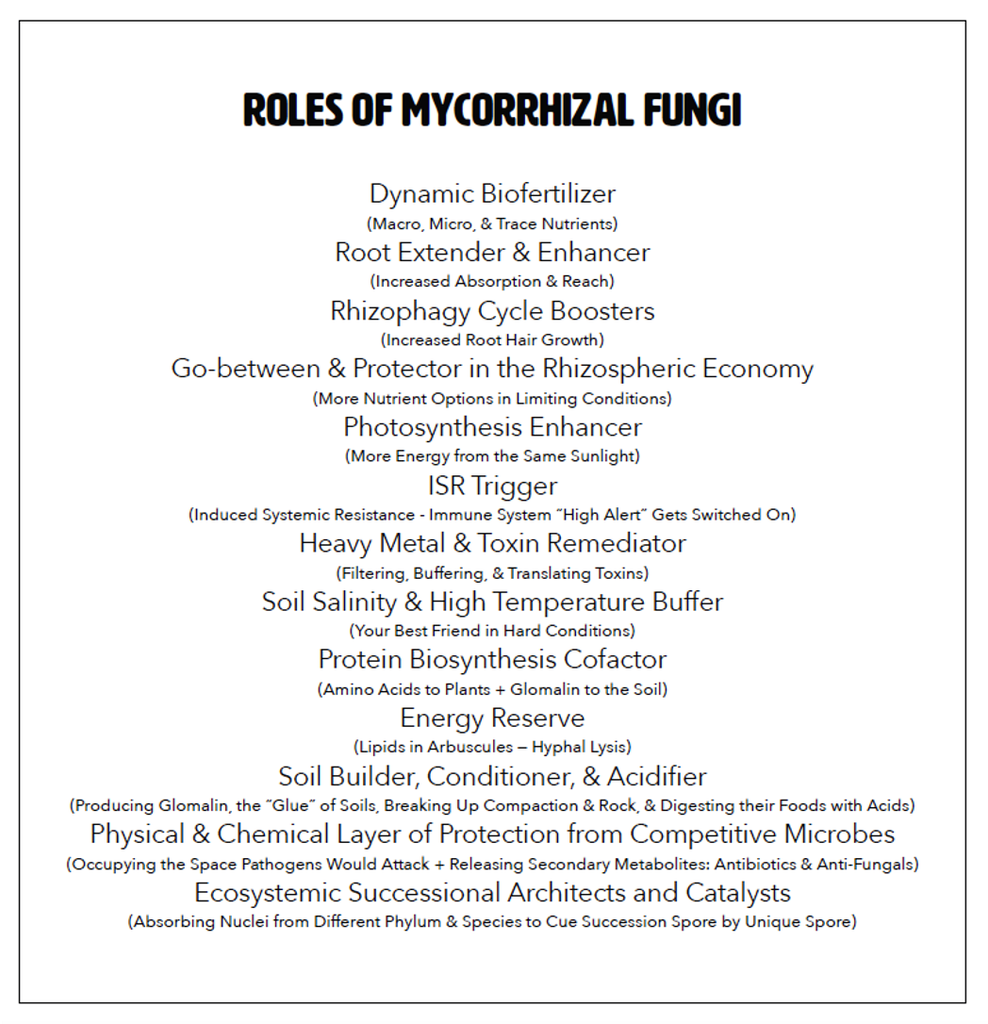
Once arbuscular mycorrhizal fungi are established, they become regenerative. They return each season and partner with the new crop’s roots or remain in partnership with your perennials. If you inoculate seeds, AMF can keep up with the root growth, making it easy to reach a rate of 80–100 percent inoculation.
And it’s worth it—you can replace your phosphate fertilizer regiment with a one-time application of arbuscular mycorrhizal fungi. There are studies showing you can do a bit of both AMF and phosphate fertilizer and get even higher numbers than either one alone can give you, but it’s not worth it in my opinion if you can just replace it all with mycorrhizae. Erase phosphate fertilizer off your ledger and let nature take care of it from now on.
It’s not just phosphate; AMF also help provide nitrogen. And it’s not just a trade of nutrients for photosynthetic carbon; AMF accumulate lipids and, when they senesce in the root, can be liquidated by the plant for energy in times of need or passed on to the next generation as both lipid and inoculant. AMF are a primary component of the plant’s immune system, root filtration, and protection. They help with drought conditions, high salinity, and even heavy metals in the soil.
But Wait, Why Is It Missing?
If AMF is this easy to propagate and becomes regenerative, why is it even missing in the first place?
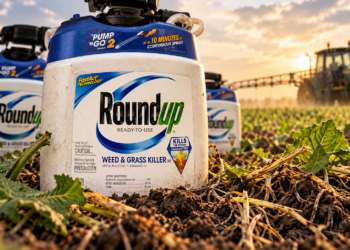
The culprits are tillage, phosphate and synthetic nitrogen fertilizers, and biocides—especially glyphosate and fungicides. Synthetic nitrogen was at one point marketed to “clean the soil” of last year’s roots—that would also mean the AMF inside those roots. Phosphate inhibits mycorrhizal fungi from forming relationships with roots, just like a field with too much nitrogen won’t allow legumes to form nodules with N-fixers inside them—there’s no reason for the plants to spend the sugars. Glyphosate is well-documented to lower spore viability and inhibit mycorrhizal fungal inoculation, but it’s far from the only biocide to disrupt these fundamental relationships.
We have to look to see if our roots are inoculated with AMF or not. I always recommend this to farmers before they purchase an inoculant in bulk. I also recommend that they test the inoculant itself before making that bulk purchase—look for those glowing root fragments. You may find that the plants around your farm all have AMF. Or the opposite may be true, and there will be a reason for that—it could be as simple as discovering that this area or farm was sprayed for years with glyphosate.
You may find that your soil is full of residual phosphate from years of adding it as an amendment. This is easily seen with the right kind of microscope—your organic matter will glitter with neon glowing crystals and look dried-up and desiccated. That residue is inhibiting your efforts to get AMF to become regenerative in your soil—you add them, but the roots don’t even notice they’re there. Or you might be adding phosphate-rich compost to your seedlings or transplants when you add the inoculant and preventing the relationship. Either way, it’s fixable—but you won’t know unless you actually take the time to look closer with the right tools.
Mycorrhizal fungi can become regenerative again because they always were. We just have to do things right once and then avoid making the mistakes of the past all over again. You can do this—just make sure you have the tools ready to check the inoculants before you apply them to all the seeds.
Take your time to make sure you have the best inoculant—do seed germination tests with various inoculants and compare vigor and inoculation rates after three to five days of growth. Choose the highest performer in terms of inoculation rates, growth rates, root hairs, and sprout vigor. Once you get things established, check the roots of your crop a week or two into growth to see if they are encountering last year’s inoculated root fragments.
Verification is key to all this, but once you have it going and growing in tandem, AMF are a powerful force for every farmer to partner with. If we stay out of the way, they’ll continuously regenerate themselves.