
Farmers should ask whether their equipment gives them greater control or leaves them dependent on software, subscriptions, and distant suppliers
After a month of traveling and visiting farmers, I noticed that my two-year-old tractor had a barely noticeable diesel fuel leak. The gravel beneath the tractor looked like someone had applied black driveway sealer to it — and I’m pretty sure nobody snuck over to my place and sealed a 2-foot-by-2-foot patch of gravel while I was gone. I’m pretty sure that I know where the leak is, and I’m pretty sure it is from cracked fuel lines, because most of the fuel lines cracked in the first year and were replaced by the dealer under warranty.
Replacing a fuel line should be a simple enough affair. Undo a hose clamp, yank or cut the offending line off the barb, slip on the new fuel line, tighten the clamps, and you’re off and running again. But not so with my super-efficient, whizz-bang, modern, computer-controlled machine. In order to get at that particular hose, I would have to remove the fuel tank. In order to do that, I would first have to remove the steering wheel (simple enough), then the instrument panel cover (also simple enough), then the single-piece cowling that surrounds the fuel tank, which is connected to the hood, which is connected to …
While waiting in line at the dealer shop to schedule a service call, I picked up a recent edition of one of those conventional farming magazines. The cover had a photo of a smiling farmer (with clean clothes, clean hands, and combed hair) happily tinkering with the precision-ag system. The articles mentioned on the cover enthusiastically described “your machines, only better,” the “essentials,” the “one low-cost tech package,” and the importance of choosing the “right technology for you!” I’m not writing this to disparage any magazine copy. In this day and age, a print magazine has to get your attention and keep it long enough for the advertising to sink in, and hopefully have you learn something on the way. This particular cover, though — read while I was about to sign up for a $375 minimum service call to replace a $6 fuel line — got me to wondering about some fundamentals.
What is the difference between a tool, a machine, and a technology? If there’s a fundamental difference, which of the three is most likely to foster independence, personal agency, and creative problem solving, and which would be the most likely to foster dependence on a fragile system of “outside experts” and inputs?
That first question brought me right into yet another exposure to the question: How do I learn the difference between a tool, a machine and a technology? Thirty years ago I would have turned to a tool and looked it up in a dog-eared, hardcover dictionary sitting on the shelf.
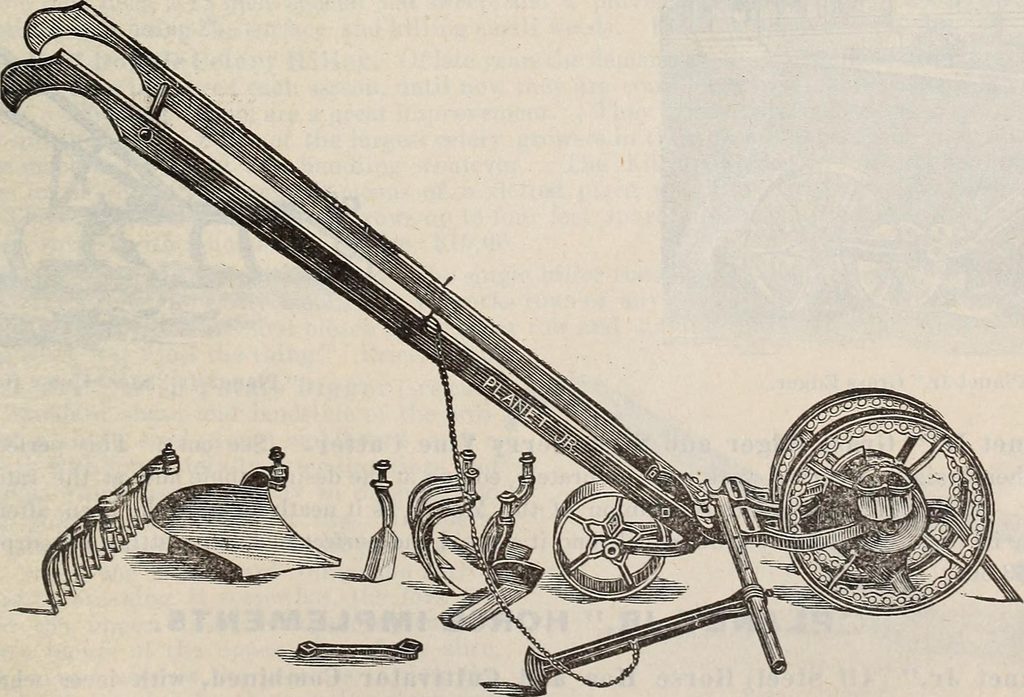
The dictionary would have told me that a tool is an object used to carry out a specific function and that its power source is the human being or an animal. The use of a tool is 100 percent user dependent. If you stop reading and put it down, the dictionary stops working. The hammer stops hitting nails. The horse-drawn rotary hoe stops weeding the corn. It seems to me that a tool is likely to be relatively easy to make and therefore easy to repair. The tool causes the user to think, to use one’s senses, to have an interactive relationship with the work at hand, and it is minimally dependent on long, brittle supply chains. A pick and shovel do not require software updates. They do not require purchased fuel, and they don’t require a subscription to a service. The user is autonomous, independent. Tools are a relatively low risk to the continued functioning of the farming operation.
Leafing through the pages back toward the front cover of that dictionary, I would have learned that a machine is an extension of the motive power that most often multiplies the work that can be accomplished. A machine is a combination of parts (some moving, some not) that are designed to use external energy to perform the work: fuel (fossil fuels, homemade ethanol), electricity, steam, animals or hydraulics. The machine is controlled by the user, but the machine assembly itself standardizes and leverages the force and pace of the work. A Dutch windmill for grinding grain, a paddlewheel turning an overhead shaft running through the sawmill or wood shop, a mechanical milker, and a tractor all are machines.
Machines are a little bit riskier than tools. For one, they’re generally more expensive. They require more technical repairs, and the farmer becomes dependent on a supply chain of manufacturers and transportation to deliver replacement parts, or special lubricants and filters to keep the machine running. The machine curbs the farmer’s creativity and requires a certain standardized method of work. Crop fields are arranged in a certain pattern based on the machines that will be used there.
The 1941 Farmall C I used for cultivating crops required certain-sized headlands for turning around; fields could only be so curvy, and the tractor required “clean fuel only” — or so said the fuel cap. If it broke down, it was relatively simple to fix, even for a mechanical idiot such as myself. Levers and knobs were mechanically attached to the moving parts that they controlled. The electrical system was little more than a spinning magnet inside of copper coils that sent an electric current to a distributor that spun by being attached to parts inside the engine. It didn’t even need a battery because you could jump-start it by rolling it downhill in gear and then dropping the clutch. If it didn’t start by the time you got to the bottom of the hill, you could always break out the hand crank. I always dreaded making it to the bottom of the hill. When something wasn’t working, you could generally see what was broken, which would give you a chance to get creative and fix it with the proverbial duct tape and baling wire.
There was a lot more risk with owning that machine. It was way more expensive than a horse and tools would have been. Yet while waiting to talk to the guy behind the counter, I began to run the numbers and I wondered if I’d be better off yielding less, earning less, but spending way less.
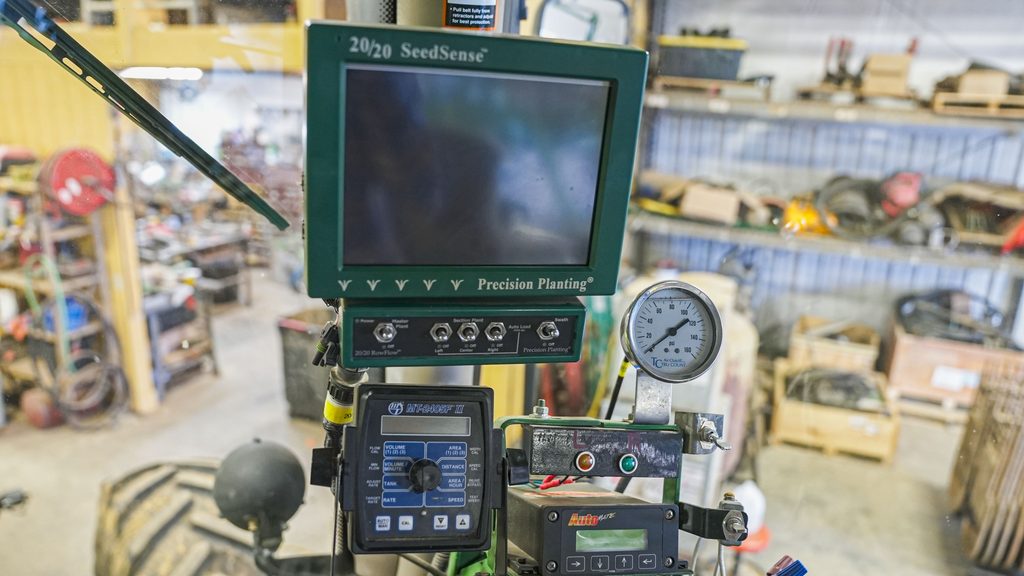
I flipped back to “T” in the dictionary and looked up technology. Technology, it said, is a “collection of techniques, skills, methods, processes and systems used to achieve an objective.” Technology includes both machines and tools, along with the embodied intelligence that makes them work: software, patents, electronic controls, and the information that makes them work. The power source of technology is the information, engineering, and connectivity that actually allows the things to function. Thus the ultimate control of the technology is out of the farmer’s hands. Much of that technology is run by somebody’s intellectual property, a specific sequence of DNA base pairs, markets, and the free flow of goods through strategic waterways half a planet away. (I have no idea how long it will take for that fuel line to get delivered from India. It either has to go through the Red Sea past a bunch of angry drone-launching folks, or it needs to get on an airplane that requires fuel coming through the Strait of Hormuz.)
The classic story is of a combine that quits while harvesting and the crop rots in the field while the farmer waits for the company-licensed field tech to come out and check to see if some computer code is malfunctioning. If you plant certain crops, you don’t just buy the seed — you promise to buy the custom-designed chemicals with which to treat those crops. You don’t save back and replant the seed; you get to buy some more next year.
Precision agriculture relies on reliable communication with the “cloud” and satellites orbiting the earth in order to meter out fertilizer or to steer the cultivator. The entire system requires subscriptions to systems that require frequent updates. My 85-year-old Farmall C still works. I just received notice that my four-year-old MacBook will cease to function by the end of September because of software updates that will no longer work on this ancient technology. Passwords get lost or compromised. Accounts get locked out, and the whole thing is at risk of a cyberattack.
As far as I can tell, there’s no way to stop the inexorable march of technology. I’m also not sure that we should. What I do think is that we all should examine our choices. Are we primarily using tools, machines, or technology? Are they making us better people? Are they helping or interfering with our relationship with the divine as we understand it? Are they helping or harming our relationship within our families? Are they helping to foster wholesome, vibrant communities built on mutual respect? Our choices are what shape the present and determine what the future will bring.
Are our tools, machines, and technologies making the world a better place?