

Growers can benefit from the many vital roles microbes perform in seed germination and stand establishment
Microbes play many important roles in successful and strong seed germination and stand establishment. Seed inoculation is an important opportunity to maximize yield and to restore soil biological processes.
Seeds can do all the germination and stand establishment processes without microbes, but they do these processes better with microbes. Accepting this thesis and acknowledging that most production soils have suboptimal microbe populations, this article will make the case for the benefits of using seed inoculants.
Several factors influence the success of seed germination and stand establishment: seed quality, soil moisture, soil temperature, soil aeration, seeding depth and weed suppression. Microbes play a part in each factor — including indirectly in seed planting depth, through their effect on soil tilth.
Each seed has an inherent genetic potential yield. We can’t increase this, so our job as farmers is to avoid getting less than that maximum. There is an opportunity to lose yield potential at each crop growth stage — whenever there is a suboptimal condition in nutrients, hormones, enzymes, metabolites or moisture status. Microbes contribute positively to all of these. Germination and stand establishment are the first and most critical opportunities to not lose yield potential. Over 10,000 species of microbes have been documented to occur within seeds (endogenous microbes). These microbes colonized either during the ovulation/polonization process of seed formation and seed coat development or through microcracks in the seed coat. Once the germination process starts, the seed puts out exudates inviting soil microbes to colonize it.
Seed Germination and Stand Establishment Processes
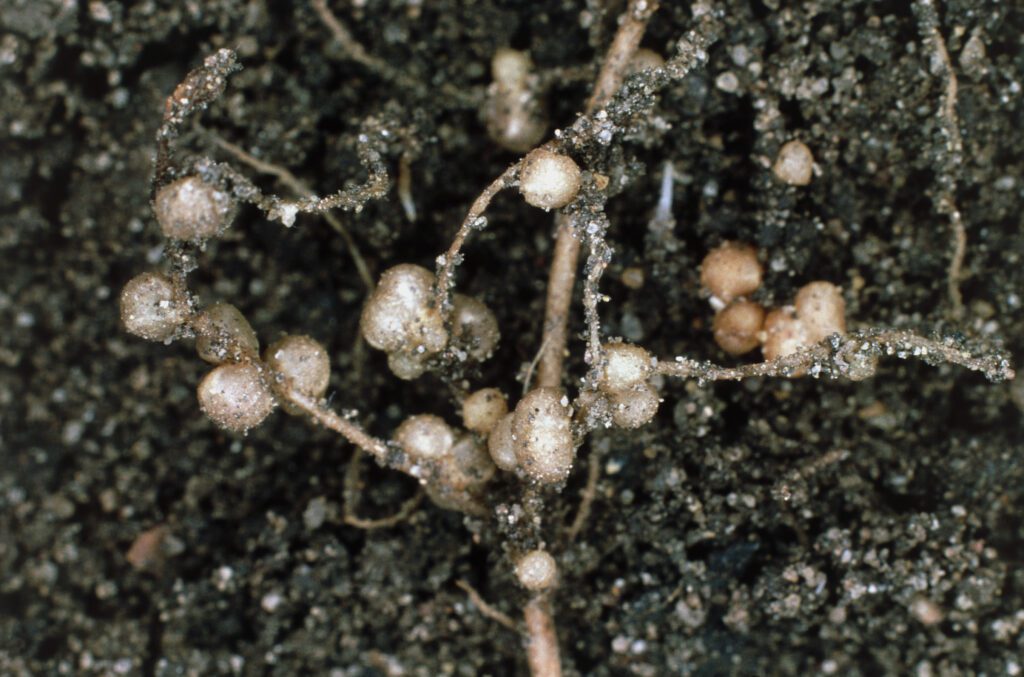
Seed germination phases (for the purposes of this article) include dormancy, germination initiation, seed coat softening and hydration, endosperm activation, cell initiation, cell division, cell differentiation, cell elongation, radical (root) emergence, elongation and branching, plumule emergence, stem elongation and soil emergence, and stand establishment. I share this long list is to convey that there is a lot happening in seed germination. Executing all of this well and efficiently is essential to avoiding loss of yield potential. In each of these phases there are typically at least two hormones involved that play a trigger and regulating role. If a hormone is low or out of balance with the other hormones at play, the phase will happen inefficiently and yield potential will be lost.
There are 10 different hormones currently documented to have key roles in these phases. There are also a number of enzymes that are required — 14 at current count. There are four different microbe metabolites that are also critical to several of these phases. Anytime a microbe is providing an input to the process — hormone, enzyme, metabolites, nutrient or water — it is saving the plant energy and increasing its physiological efficiency, which speeds up and improves the quality of seed germination and stand establishment.
Through their exudates, the seed directs microbes to deliver whatever it needs to supplement what it generates. This microbial support increases the odds that a seed and seedling have everything it needs, when it needs it, and in the correct proportions. The exudate includes sugar (carbon and energy) as well as signalers that “request” the microbe inputs for the plant. Research has not yet determined if the signalers in the exudates direct the microbe function, if it epigenetically activates the microbes to perform that function, or if the food just favors the reproduction and population growth of microbes that fulfill the function it needs. It is very possible all three of these are true and are important functions of the plant/microbe relationship. Microbes have been documented to colonize within a day after exudates are released (Liu et al., 2017).

Early seed and seedling nutrition is also critical to minimizing yield potential loss. Microbes contribute greatly to making nutrients available to the seed and seedling (Bhattacharya and Medhi, 2013) by mineralizing, solubilizing, chelating and actively delivering all of the macro and most of the micronutrients — all in plant-available and energy- and water-efficient forms. Fertilizers can deliver these nutrients, but they can also reduce microbe colonization, either through osmotic pressure, toxicity or nutrient imbalances.
For example, excess nitrogen in comparison to carbon will cause microbes that could fix nitrogen to not perform that function. Providing excess phosphorus will tend to inhibit endophytic fungi from being accepted by the plant to colonize. Microbes also synthesize vitamins, including B1, B2, B3, B6, B7, K1, K2 and C (an antioxidant that reduces cell damage from reactive oxygen species — ROS — created in seed germination, as well as soil salts).
Analysis, Discussion and Conclusions
This analysis of the benefits of microbe participation in seed germination and stand establishment provides potentially actionable information for growers.
Microbes Reduce Temperature Requirement for Germination. Some studies indicate that seeds can germinate at lower temperatures with microbe-assisted germination (Gyaneshwar et al., 2002). They attribute the reduced-temperature germination to the microbes breaking down the seed coat, allowing the embryo to access water and nutrients. These studies suggest that microbe-assisted germination could help improve crop yields in cold climates.
Microbes Improve Soil Structure. By creating soil particle aggregation (Rillig and Mummey, 2011), microbes improve soil respiration, which improves oxygen availability to the seed, thus contributing to increased germination rate and avoiding anaerobic conditions, which favor several damping off fungal pathogens. Soil aggregation also improves seed/soil contact, which increases seed hydration and germination rate. Soil aggregation also improves water infiltration rates and water holding capacity. This means you can work the ground sooner and the soil holds more water to support early germination. Soil moisture release curves of the energy required for a root to pull water are also reduced by soil aggregation. This provides more grace time for when irrigations or rain must occur.
Microbes Increase Seed Germination Rates. A number of studies document increases in inoculated seed germination rates: alfalfa, 20 percent; corn, 16 percent (Bashan et al., 1994); soybean 9 percent (Hartman et al., 1961); tomato, 24 percent (Kloepper et al., 1980); and wheat, 18 percent (El-Khadraoui et al., 2015). A lettuce seed study showed a 50 percent increase in germination rate and a 20 percent reduction in germination time compared to untreated (O’Connell et al., 2010). A study by my company, Sustainable Growing Solutions, demonstrated a 30 percent increase in cilantro seed germination. This increase in seed germination rate may allow practical use of less expensive seed or use of lower seeding rates to establish a target stand count.
Microbes Reduce Time to Germination and Emergence. The ranges of elapsed time of seedling emergence with microbe-assisted germination compared to sterile germination vary depending on the plant species, the type of microbe, and the environmental conditions. Studies have demonstrated reductions in time to germination of corn, 10 percent (Bashan et al., 1994); soybean, 6 percent (Hartman et al., 1961); tomato, 15 percent (Kloepper et al., 1980); and wheat, 12 percent (El-Khadraoui et al., 2015). SGS microbe-assisted germination studies on hemp were up to 50 percent faster.
Several microbe-assisted germination studies have shown that faster seedling emergence is associated with higher yields. A study of corn found that plants that emerged seven days later than average had a 10 percent lower yield (Nemergut et al., 2021). A soybean study found that plants that emerged 10 days later than the average had 20 percent lower yield (Wendt and Nafziger, 1997). Microbe-assisted germination studies on corn, wheat, soybeans, rice, tomatoes and other crops indicated a one- to three-day shorter time to seedling emergence. We can surmise that reduced time to emergence indicates relative vigor (and less loss of yield potential).

Microbes Improve Stand Emergence Uniformity. Variability of seedling emergence is another indicator of lost yield potential. In some cases, e.g. corn, it is possible that improved seed-to-soil contact from microbe crop residue decomposition is a factor in seed hydration, thereby improving uniformity of germination and emergence. In crops that have persistent residues, a microbial decomposition application may benefit seed/soil contact
Microbes Increase Seedling Strength to Break through Soil Crust. Seeds colonized by microbes can push through hard-crusted soil and emerge two to three days earlier, and with 30 percent increased stand, than uninoculated seeds (Vurro et al., 2016; Hallmann et al., 2018). Another study (Liu et al., 2021) found wheat seedling emergence force increased by up to 20 percent in high-crust-strength soils. Zhang et al. (2022) found that inoculation of maize seeds increased the seedling emergence force by up to 15 percent in soil with high crust strength. Extra strength for seedlings to break through soil crusts results in improved stand emergence uniformity and final stand counts. It also may reduce the need for an extra field operation to break heavy soil crusts in tough soils.
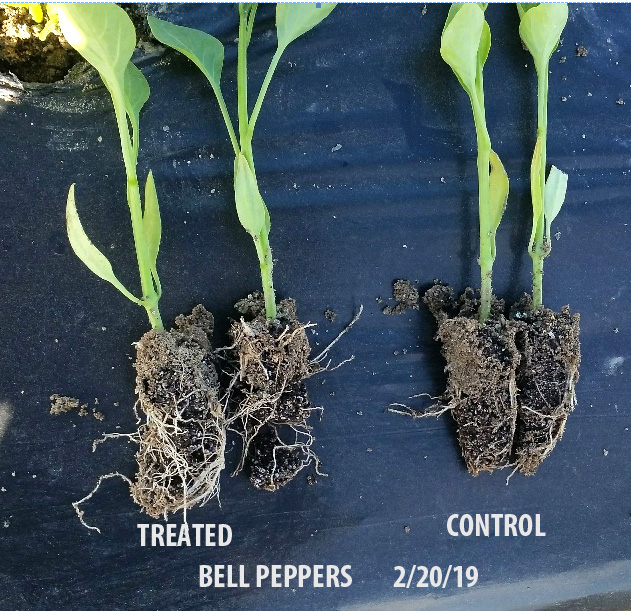
Microbes Increase Root Development. Microbes increase the volume and surface area of the root system, allowing for greater nutrient absorption and water and nutrient interception (Simard, 2021).


Microbes Increase Seedling Nutrient Status.Microbes actively deliver nutrition based on demand signals from the plant. At SGS we call this “Plant-directed, microbe-delivered plant nutrition.” We have several studies that confirm significantly increased plant nutrient status in microbe-inoculated plants. This allows growers to cut their fertilizer rates up to 50 percent and still have improved plant nutrient status.
Microbes Protect Plants from Pathogens. Microbes suppress pathogens in many ways: by competing for food and habitat, creating a physical barrier to access, performing direct predation (antibiosis), inducing and supporting the plant immune system, and preventing beneficial or benign microbes from becoming pathogens through quorum suppression.
If the seed is already infected with a pathogen, the problem is due to the health of the parent seed plant or handling and storage. If there are heavy infectious pressures of a pathogen in the field being planted, there has been a mistake in crop rotation, and/or the building of soil health has not yet reached the stage of disease suppression. In either case, a fungicide-treated seed may well fare no better than an inoculated one.
Microbes Protect Plants from Pathogens. Microbes suppress pathogens in many ways: by competing for food and habitat, creating a physical barrier to access, performing direct predation (antibiosis), inducing and supporting the plant immune system, and preventing beneficial or benign microbes from becoming pathogens through quorum suppression.
If the seed is already infected with a pathogen, the problem is due to the health of the parent seed plant or handling and storage. If there are heavy infectious pressures of a pathogen in the field being planted, there has been a mistake in crop rotation, and/or the building of soil health has not yet reached the stage of disease suppression. In either case, a fungicide-treated seed may well fare no better than an inoculated one.
Inoculated Seeds Can Control Pathogens as Well as Fungicides. Several studies indicate that inoculated seed have better control of pathogens than fungicide-treated seeds. Microbes produce antibiotics, compete with pathogens for resources, and induce systemic resistance in plants. These functions enhance their ability to withstand pathogen attacks (Lugtenberg and Kamilova, 2009). The performance of pathogen suppression of inoculated seeds in comparison to fungicide-treated seeds can vary widely depending on environmental conditions, crop type, and the disease. Singh et al. (2009) found that biological seed treatments were as effective as fungicide treatments in controlling Pythium. Li et al. (2013) found that biological seed treatments effectively controlled Fusarium verticillioides and Stegobolus neglectus, two common corn diseases. Schroeder et al. (2015) found that biological seed treatments effectively controlled wireworms. Overall, the research suggests that biological treatments can be an effective alternative to fungicides.
Fungicide-Treated Seeds Reduce Microbe Colonization. Fungicides discourage fungi from colonizing seeds. Some fungicides are somewhat specific to a particular genera or type of fungi, based on particular structural molecules or physiological compounds. In general, though, most fungicides are broad spectrum and suppress beneficial and benign fungi and bacteria as well as their intended potential pathogenic fungi (Hao, et al., 2014; Van der Putten, et al., 2007).
Studies have shown that fungicide treatment can reduce microbe population by up to 90 percent and diversity by up to 50 percent. A study by Zhang et al. (2021) found that seed treatment with the fungicide fludioxonil reduced the fungal population of maize seedlings by 80 percent and the fungal diversity by 40 percent. Chen et al. (2020) found that treatment with thiram reduced rice seedling bacterial population in the rhizosphere by 90 percent and the bacterial diversity by 50 percent. Systemic fungicides tend to be particularly unselective and discourage a wide range of microbes (Reddy and Narayana, 2009). Given that microbes reportedly provide as much or more protection from fungal pathogens as fungicide-treated seeds and provide many other benefits, are fungicide-treated seeds the way to go?
Endophytic Fungi Act as Root Extensions and Access Moisture and Nutrients that Are Otherwise Inaccessible. Endophytic fungal hyphae are 200 times smaller than root hairs, so they can mine water and nutrients from soil interstitial spaces, especially in clay soils, that root hairs cannot effectively mine (Pérez-López et al., 2017). Depending on soil texture and endophytic fungal colonization, well-colonized roots can access up to 50 percent more soil volume for corn and 30 percent more volume for wheat. The increased soil volume mined by the plants means more efficient nutrient and water capture. Rhizosphere microbes live in a biofilm around the roots and literally take the ride as the roots grow to expand in the soil volume. This root propagation and transmission of beneficial microbes is a tremendous multiplier in terms of value of seed inoculums and in contribution to restoring soil health.Microbes Increase Seedling Stress Tolerance. They do this by reducing drought stress, improving nutrient uptake, and increasing tolerance to salinity and heavy metals (Yang et al., 2009). Microbes help plants cope with stresses by regulating plant stress hormones and contributing antioxidants.

Recommendations for Growers
Here are a few simple things growers can do to benefit from all of the incredible roles of seed microbes.
Seed Quality Criteria Should Include Evaluation of Endogenous Microbes. In addition to being free of pathogens, high-quality seed should also include healthy populations of endogenous microbes. Seeds from plants that have a healthy microbiology will contribute to healthy microbe diversity in your field.
Beneficial Endogenous Microbe Populations Can Be Increased. Foliar sprays of beneficial microbes during the seed crop ovulation/polonization process and seed formation may be an effective way to improve seed quality. Reddy et al. (2017) found that foliar application of a Bacillus subtilis inoculant to tomato plants increased the number of B subtilis spores in the seeds by up to a hundredfold. This improvement would also apply to many other endophytic microbes, so a broad-spectrum foliar could have similar beneficial results, providing beneficial endogenous microbes to the seed.
High Concentrations of Synthetic Fertilizers Applied at Planting Reduces Microbe Colonization. This colonization inhibition is because synthetic fertilizers can alter the soil environment in ways that are unfavorable to microbes, such as by increasing soil salinity or acidity. Avoid large applications of phosphorus at planting if you want successful mycorrhizae colonization (Van der Putten et al., 2013). If high rates of nitrogen are applied relative to the carbon ratio of the planting mix and surrounding soil, then nitrogen-fixing microbes will be discouraged from accomplishing their beneficial functions. If it’s practical to apply synthetic fertilizers offset from the seed at planting, or by side dressing, then there will be better microbe colonization of the seed and seedling (Davidson et al., 1982).
Planting Fertilizer Mixes Can Influence Microbe Bacterial and Fungal Populations. Planting mixes that include sugars such as molasses result in more bacterial dominant microbe colonization (Reddy et al., 2017). Planting mixes that include amino acids and lipids (e.g., fish hydrolysate) and humates promote more fungal colonization (Davidson et al., 1982).
Colonized Microbes Are More Fit and Persistent. Microbes that participated in seed germination and stand establishment have closer associations with the plant and demonstrate increased fitness in persisting through several crop cycles. When exposed to an uncolonized plant, these experienced microbes colonize much faster and completely than even the same species that are from a culture that has not previously colonized a plant. The increased fitness and persistence of these microbes is much more valuable in establishing and maintaining a healthy soil than even the same microbe species added to the soil at other times of the crop cycle.
Lundberg et al. (2012) found a persistent core microbiome of bacteria present on roots from seed germination to plant senescence. Peiffer et al. (2013) showed that the bacterial community on maize — and Mendes et al. (2013) on fungal populations on soybean — was relatively stable over time, with some taxa persisting from germination to maturity.
The benefits of microbe-assisted germination and stand establishment are well documented. I hope that this information encourages you to give microbes the opportunity to make your next crop a better one.
David Olson is the owner of Sustainable Growing Solutions, LLC (sgs-ag.com). He is a 6th-generation California farmer and 2nd-generation scientist and agronomic consultant. SGS emphasizes the integration of organic inputs and biological products to create healthy soil and plants.