

“Glyphosate Girl” Kelly Ryerson discusses ag-gag laws, how to reconcile herbicides with regenerative agriculture, national security risks from toxic chemicals, and how to develop healthy food and farming into a truly purple movement
Acres U.S.A. We have some news coming out of Florida that’s slightly concerning. Can you tell us about that?
Ryerson. Yes — it’s so important. This just popped up a few weeks ago. It was very quietly put into both the senate and house versions of Florida’s state-level farm bill — a provision that is really outrageous. It would effectively gag all people that criticize farming practices or any of the commodities that come out of Florida. It will make it so that if you criticize practices or pesticides, then you are going to be liable for defamation. The chemical companies and Big Sugar can come after you and sue you and effectively bankrupt you in the process — even if the critique is ultimately correct. It’s a method the chemical companies are using to silence all critics.
There are several things are really frightening about this. First, of course, it’s unconstitutional — against the First Amendment — to limit free speech. Second, Florida has already passed anti-defamation laws around food. Already in existence is a law that says you can’t defame or even debate the health of a perishable food. So, for example, there’s the coating that is put on the outside of a lot of fruits and veggies, particularly fruits, and it’s not labeled. But a lot of people have reactions to it. And one woman has been sued for millions of dollars for defamation in Florida because she was criticizing a perishable item. It seems like that should be unconstitutional — to say people can’t say anything about these things — but, in fact, it went up through the court system, and it held as not against the right to free speech.
So, Florida has taken this existing defamation law, and they’ve expanded it now by adding that you also can’t criticize agricultural processes or pesticides or the products that come from them. It’s a really broad-sweeping thing that will quiet all of the activists. But it’s not just activists — it’s nutritionists, it’s doctors, it’s journalists, it’s farmers; everyone who works in the food system could be impacted by it.
Acres U.S.A. What’s driving this? Having this coming out of Florida might be surprising. You would think Florida would be a free-speech type of place.
Ryerson. It is wild, because Floridians are proud of their free state. People moved here during COVID just to have that freedom, so now to have free speech stifled is really shocking to a lot of people.
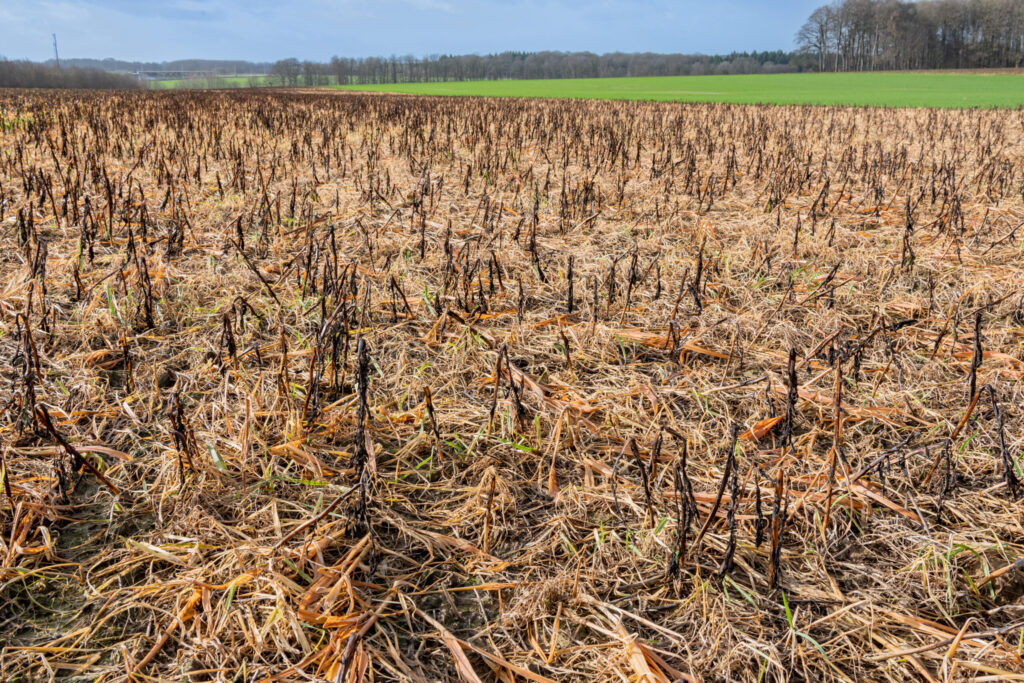
But there are a few things that are brewing behind the scenes that are leading to this. One is the ongoing arguments around Bayer and the pesticide liability shield. Bayer is standing on the brink of bankruptcy due to all of the glyphosate trials — 100,000 lawsuits at this point. Their stock price has plummeted, so they’re trying to set up these state- and federal-level liability shields so you can no longer sue any pesticide manufacturer if you get sick from exposure.
It’s really close to actually happening. If you live in Georgia or North Dakota, you can no longer sue pesticide manufacturers when you get sick from exposure to any of 57,000 different pesticides. We just beat a bill like this in Tennessee. They’re trying to pass it in Kansas and Wyoming. Florida is coming up next. GT Thompson of Pennsylvania just slid it into the national House version of the farm bill, so that we will no longer be able to sue chemical manufacturers federally if we get sick from pesticide exposure. This covers paraquat, atrazine, glyphosate, etc. — all these pesticides that are connected to disease.
It’s stripping American rights and handing all the power over to these foreign chemical manufacturers, like ChemChina. ChemChina manufactures paraquat, which causes Parkinson’s disease. China banned paraquat and then sells it here, and then they’re going to put in a liability shield so we can’t sue when we get Parkinson’s from paraquat. I’ve never seen anything like this.
They’re trying to pass this in Florida, and many congresspeople seem more than willing to jump on board. The chemical companies lie and say, “No, of course you can still sue. It’s just about protecting farmers.” I testified in Kansas recently. The modern ag alliance showed up to testify, with nonprofits backed by Bayer — the Farm Bureau, the Soybean Alliance, etc. I argued that these organizations don’t stand for every farmer at all. In fact, some of our farm communities are the sickest we have, and that’s just dismissed.
They tried to pass a law like this last year in Florida, but Floridians rose up and said, “This is insanity. Absolutely not. No liability shield for pesticide companies.” So, it disappeared. Well, the pesticide companies really want to have that protection in Florida because so many pesticides are used in the state, especially in sugar and citrus.
Their strategy is, “Let’s gag all the critics of pesticides, and then we can pass the liability shield, and then we win.” I’m going to Tallahassee next week to testify on this. People don’t want it. No one wants this. But the lies that the lobbyists are feeding to the state-level Florida reps is just nauseating. That’s what we’re up against. It’s so hard when the opposition is willing to lie, because it takes a lot longer to try and disprove.
Acres U.S.A. I suppose if they get it passed in the states, then it becomes a little bit easier to get passed federally down the line. Is there anything coming from MAHA, or could RFK step in and prevent this?
Ryerson. MAHA Action is the political action committee associated with the MAHA movement and Bobby Kennedy, and they have been supportive in trying to get some calls to action out there. Part of the problem is that Bobby Kennedy was an attorney who famously sued Monsanto and was involved in the glyphosate cancer cases, but he isn’t allowed to do anything about it now. He had to give that up once he took the position in government. That’s frustrating.
But what’s also annoying is that now, with the glyphosate cancer case, the Trump administration told the Supreme Court, “You should go ahead and hear that case.” The Biden administration had said, “Don’t hear it. You don’t need to take this case up. Let’s just move on.” This Supreme Court case is going to be the ultimate glyphosate case. It’s coming up in April. The Supreme Court will decide whether you can sue a pesticide company, if the EPA says that a pesticide is safe. The companies are trying to hide underneath the EPA labeling.
We were appalled when the Supreme Court took it up. They have thousands of cases they can pick from, but they picked this one. Clarence Thomas used to work for Monsanto and famously was in support of the patenting of seeds.
Acres U.S.A. It’s definitely not mainstream news — what’s happening in Florida.
Ryerson. It’s totally not. This would just be the beginning. If it can pass in Florida, you can believe that it will happen elsewhere rapidly because people aren’t as into health and freedom in other places.
But, in a way, clearly this is the moment we’ve been waiting for for decades. Enough people understand the risks around these farming practices that the chemical companies are so scared that they’re trying to put in gag laws. They must be seeing enough momentum on the opposition side that they’re needing to do something as egregious as silencing. In a way, that’s a good sign of the momentum we have.
Acres U.S.A. Say they get it passed. What does that look like? What is the new reality of, say, a farmer in Florida, or a consumer in Florida?
Ryerson. There are tons of nutritionists and journalists that write on these types of things and the connection between pesticide exposure and human health. Or a regenerative farmer could even say, “I farm regeneratively, and I was able to decrease my inputs, and my food is more nutrient dense.” That could be grounds for a lawsuit because you’re criticizing the chemical way of farming. It really will shut people up. People can do what they want, but you won’t be able to write articles about it or be very public about it. The influencers in Florida won’t be able to say anything about it. And the same with journalists. The entire MAHA movement and Bobby Kennedy himself are saying “sugar is poison,” but that will be grounds for defamation lawsuits.
What’s so interesting is that Casey DeSantis, the wife of Governor Ron DeSantis, has been doing a lot of work around food and cleaning it up — cleaning out the heavy metals, increasing nutrient density, thinking about where it comes from — and that’s been really compelling. Just yesterday she did a press conference with Ron DeSantis that was amazing. They had tested all these different bread types, and there were high levels of glyphosate, of course, because of pre-harvest desiccation, and they both got up to the microphone and talked about how that’s unacceptable. I was like, “This is amazing. But that’s something they will not be able to do if this law passes.” I think DeSantis is gunning for MAHA support for a presidential run, which I think would be great — please champion regenerative farming!
Acres U.S.A. What power does he have besides influence in this situation?
Ryerson. We don’t know for sure whether he’ll sign it. They slid this gag law into a large farm bill that has so many elements in it. That’s why we’re working so hard at these committee levels before it gets finalized on the house floor of Florida. They layer in things and do this back-and-forth bargaining as to what’s going to be in the final bill. And, by the way, there was just a huge freeze that did a real number on Florida agriculture, so it’s going to be a bad year for fruit growers, and now there’s even more urgency about passing this farm bill.
If it reaches DeSantis’s desk with the gag law, is he going to veto the entire farm bill that everyone’s waiting for on behalf of this one section and send it back to committee? That’s the question. He hasn’t spoken up about it. We think he’s probably aware because so many of us have been tweeting for two weeks straight.
Acres U.S.A. Did anyone ask him at the press conference yesterday?
Ryerson. No. It’s so sad.
Acres U.S.A. It is interesting to think about how much money these companies must flow into our politicians. How frustrating is it to you that this is how the bill system works — where you could put 20 good things in it and then they slip in this one thing, and then it’s take all or kill all.
Ryerson. I’m so tired of not having standalone bills anymore. It feels so rare. They keep on doing this at the federal level. It makes it so much harder to oppose, and they know it. I think they need to have a law that says you can’t insert things into a bill that are completely unassociated with it. For example, at the federal level, just last month, there was the huge spending bill that everyone in D.C. and the country is waiting for, and what do they do? They slid in a section for the pesticide liability shield in this enormous spending bill. It’s ridiculous to have a liability shield put into a spending bill.
The other thing is that these bills are so large and so densely packed. Things just slide right through and no one ever knows. It’s really a big problem with our bill system.
Acres U.S.A. I think Thomas Massey articulates it best. It’s sad that he’s a unique politician in that he explains things to the general public. We have no idea what’s in these bills.
Ryerson. This isn’t the first time they tried to slide it into the farm bill. This has been happening the last few years. The previous draft that came out of the House, on page 700-something, there were like three lines that took away your ability to sue pesticide manufacturers. It was before MAHA had momentum, and I’d go in ask, “Have you looked at this page?” And every congressperson said, “Oh, I didn’t even see that.” Of course they didn’t.
Acres U.S.A. Describe a little bit more about ChemChina — it’s owned by China, and they’ve banned their product, paraquat, in China, but they are continuing to sell it in the United States. We have a foreign entity selling a possible poison that’s going all over our soil. That’s unbelievable.
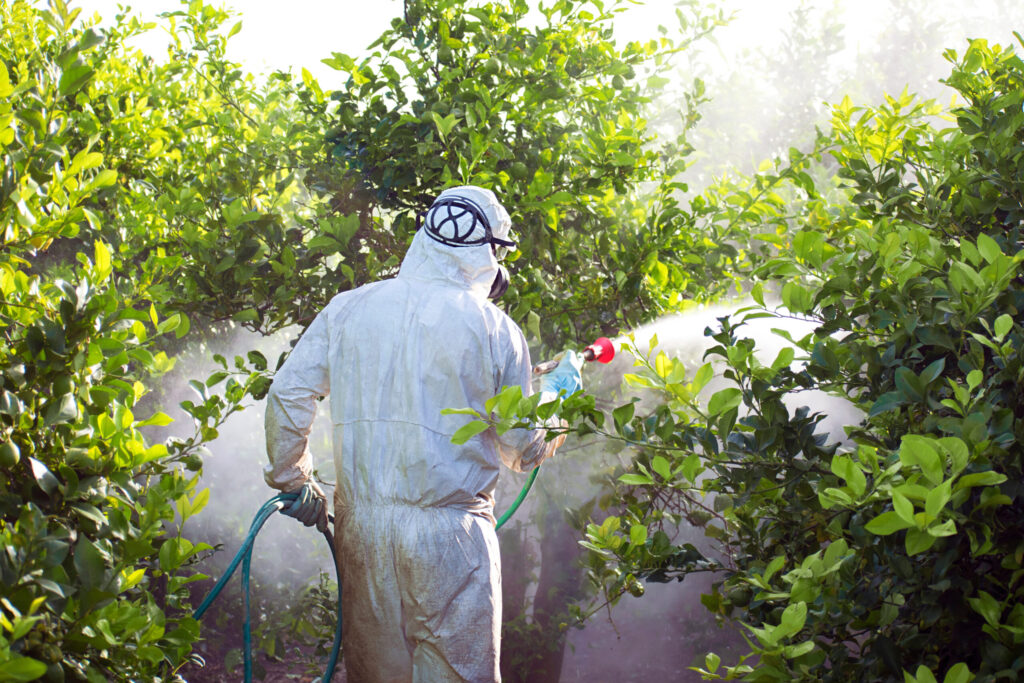
Ryerson. That’s what’s happening. It’s just unbelievable, the hypocrisy. It’s been a political angle we’ve been trying to take because there’s so much rallying and concern about China in general and how China’s doing all kinds of things in the United States. This seems like such a core thing — that China doesn’t even have to attack us because we’re attacking ourselves with their product.
Acres U.S.A. Yeah, so it’s a national security issue.
Ryerson. It’s entirely a national security issue. It’s just wild.
And then Bayer — we think of Monsanto being American, but it’s not. Bayer is a German company. There are very few pesticides that are even manufactured here. All of this is to preserve the profits of the foreign pesticide companies. We’re bending over backwards and taking away American rights just to make sure this German company keeps a solid stock price. That to me doesn’t seem very like a good trade, when I think of all the people I’ve met who have gotten cancer from exposure. That alone should be the argument that convinces a lot of Republican congresspeople, who are very suspicious of China’s intentions.
Acres U.S.A. I don’t like politics because it’s so frustrating. Do you think they really don’t know who’s donating to them — where that money is coming from?
Ryerson. They always play the dumb card. It’s “I didn’t realize,” or “That’s not what that means,” even though they know that’s what that means. Or they’re not lying, but they also don’t want to know, because if you don’t know, then you’re not culpable. So, letting people know is really important.
But with ChemChina, if China doesn’t think paraquat is safe for their citizens, then God knows we should not be considering it safe for our citizens.
Acres U.S.A. You would think that would just be common sense. What are the health issues these companies are concerned about in terms of getting sued for — specifically for pesticides? And do we have the science and the information that directly links these things to pesticides?
Ryerson. That’s a big part of the problem because in order to actually have a lawsuit, you have to have such a large body of scientific research to base it on. The EPA does most of its evaluations based on private research that the companies provide them, and then they make their evaluation. This is why so much corruption can happen — data is cherry-picked and given to the EPA. The EPA is making their decisions based on things that are not independently sourced.
There’s a lot of glyphosate research now, but with a lot of the other pesticides, you don’t have this broad body of research that you can realistically bring to litigation. And it’s expensive to bring a lawsuit. I don’t think that the risks are so huge, outside of glyphosate and paraquat, for the pesticide companies because of that. There’s just such a high hurdle of research that doesn’t exist. That’s why this Florida gag law seems like a really extreme measure.
Acres U.S.A. But the glyphosate cases actually hurt them. Not like shaving pennies off the top of a giant mountain of profit — they actually felt the pain from the glyphosate litigation.
Ryerson. Big time. It could genuinely bankrupt them. That’s how bad it is. But in a sense they’re unwilling to stop the drain. I was in the courtroom when the federal judge said, “I have an idea — why don’t you put a label on that just says the International Agency for Research on Cancer thinks that this might cause cancer, but the EPA doesn’t. Then you’d absolve yourself of all this liability.” But they will not do it. They will not put anything on the bottle. They just refuse to do it.
What’s crazy too is that there’s a study that was proven during the Monsanto cancer trials to be fully ghostwritten. It’s a study the EPA had relied on for two decades to claim that glyphosate doesn’t cause cancer, and during the trials it was determined that it was entirely written by Monsanto to say glyphosate doesn’t cause cancer. They slapped some independent researchers on it to act like they didn’t write it, and it’s super crooked. And so finally, just a couple months ago, the study was retracted, and now we’re like, “Okay, EPA, what are you going to do about it? You always pointed to this study to say glyphosate doesn’t cause cancer.”
That goes back to the liability shields and why this is such a problem. The way they are setting up the liability shields is not saying, “You can’t sue us.” They’re saying, “You can’t sue us if the EPA says glyphosate is fine,” or whatever the pesticide is. But if the EPA is relying on faulty research like this retracted study, then what?
The only thing that you can be sure of is that people are getting sick from exposure. Gabe Brown has ALS. My father-in-law died of it, from pesticide exposure. It’s a gruesome, awful death. The doctors at Duke University said, “We always see this with people that have been highly exposed to pesticides.” Are people totally out of luck because we don’t have a big body of research saying which pesticides specifically cause ALS? We don’t know how to cure it. It’s a terminal sentence.
Acres U.S.A. If they’re going to give us the disease, you’d at least think their business model would find the cure for it.
Ryerson. Maybe that’s coming!
Acres U.S.A. But it can’t actually be a cure. That wouldn’t be a good business model.
Ryerson. No, no. It would have to just be a temporary treatment.
Acres U.S.A. Yeah, that you have to buy from them the rest of your life.
So, what can people on the ground do? What’s the call to action to try to prevent this?
Ryerson. I’ve set up a website called stoppoison.org, and you can go there and sign up and I will email you when your state has a liability shield up for debate. Then you can contact your lawmakers to try and get these pesticide liability shields taken out. You can be in Florida or out of Florida — all voices are welcome.

Acres U.S.A. Do you feel like the glyphosate issue has improved in the last five to 10 years?
Ryerson. I was contemplating this recently. I got my start as a blogger during the glyphosate cancer trials. Those were such exciting days. We had these huge victories. I thought, “Thank goodness the truth is finally coming out that Monsanto did things unethically.” There was such momentum and hope that this was maybe the turning out of the chemical era.
But now when you see the repercussions of that — how all of our rights might be stripped away for all pesticides — I want to say it was still worth it. But I don’t know that it was.
So, that’s disheartening. But I do think that thanks to organizations like Acres and others there’s so much more information on regenerative agriculture. We’re at a huge tipping point from that perspective. This pesticide issue goes away if you can embrace regenerative agriculture. No one seems to be criticizing that at the moment, thank goodness. And certainly with the investment from the USDA — the $700 million pilot program — that’s a good sign, especially coming from a Republican administration. That’s a pretty big deal, and NRCS is locked in. I see a lot of hope with this. Thank goodness we all know this is an off-ramp.
Acres U.S.A. There’s something I’m a little bit concerned about with regenerative agriculture, and I’d like your perspective on it. Farmers are in a tough place. There isn’t a lot of information about the effects of these chemicals, so a farmer will look at it and be like, “Well, this could be doing something to me. It could be doing something to my soil. It could be doing something to my neighbor. But I don’t know, and I can’t make enough money right now to not use it.”
But “regenerative” kind of gives people an avenue to still use glyphosate and some of these other chemicals. When you say “regenerative,” technically, in some of these programs, you can still use chemicals. You’re supposed to wean yourself off of them, but it allows folks to use them and then get rewarded on a price structure that’s similar or competitive with organic — because regenerative is getting placed above organic in some ways now. I think it’s hurting the organic industry in some ways — not that the organic industry is perfect, but I’m concerned that we always come to this moment in agriculture, where you have a tagline like “regenerative agriculture,” and then we need to put some sort of barriers around it so people can’t just use the term widely, if they aren’t necessarily practicing it. Do you have some of these concerns?
Ryerson. Yeah, I know that predicament — basically greenwashing conventional agriculture culture by calling it regenerative. It’s such a hard sticking point. The organic people are of course upset. Regenerative-organic is best, but that’s so hard.
I see a future in the Regenified plan, where you’re obligated, if you want to stay in the system, to be constantly improving. Step one, you can’t do pre-harvest desiccation with herbicides. That’s an enormous first step, right?
Acres U.S.A. Let’s not spray it on right before we eat it.
Ryerson. Wouldn’t that be a big win across the board? I had a meeting with Lee Zeldin, the head of the EPA, in December, and that was my first ask. I said, “Let’s fund farmers for alternative drying methods if they really need it. That would be a really awesome thing you could do to massively improve public health.” But he hasn’t moved on that quickly — surprise, surprise.
USDA is also trying to determine a definition for regenerative, because they also have caution in not injuring organic. I think what’s really interesting in this $700 million USDA grant is that it’s the first time that it’s outcome based. You have to prove you’re improving the soil in order to continue getting the grant. If you’re spraying a lot of chemicals, you know you’re not going to get that improvement in the soil to the same extent, if at all. That’s starting to work toward an outcomes-based perspective.
But yeah — it’s not fair to organic if regenerative people that just sprayed all these chemicals have a much easier time collecting the same premium. That’s not right.
Acres U.S.A. It’s complex. And there is somewhat of an argument there — would you rather use a little bit of chemical or aggressive tillage — what are we really doing to the soil in those situations? But that’s the thing: we know what we’re doing with tillage. That’s well documented. We still don’t really know everything that happens — the long-lasting effects — of these chemicals. That’s the concerning thing for me.
We have a grazing operation, so it’s easier for us. We don’t use any chemicals. And maybe that’s part of the solution — let’s turn more acres into grass. But that’s easier said than done.
Ryerson. One of the many studies done on glyphosate that really scares me is about Roundup babies. There are studies that show that you don’t even see the impact of glyphosate until two to three generations out — then you start seeing the children with effects in these animal studies.
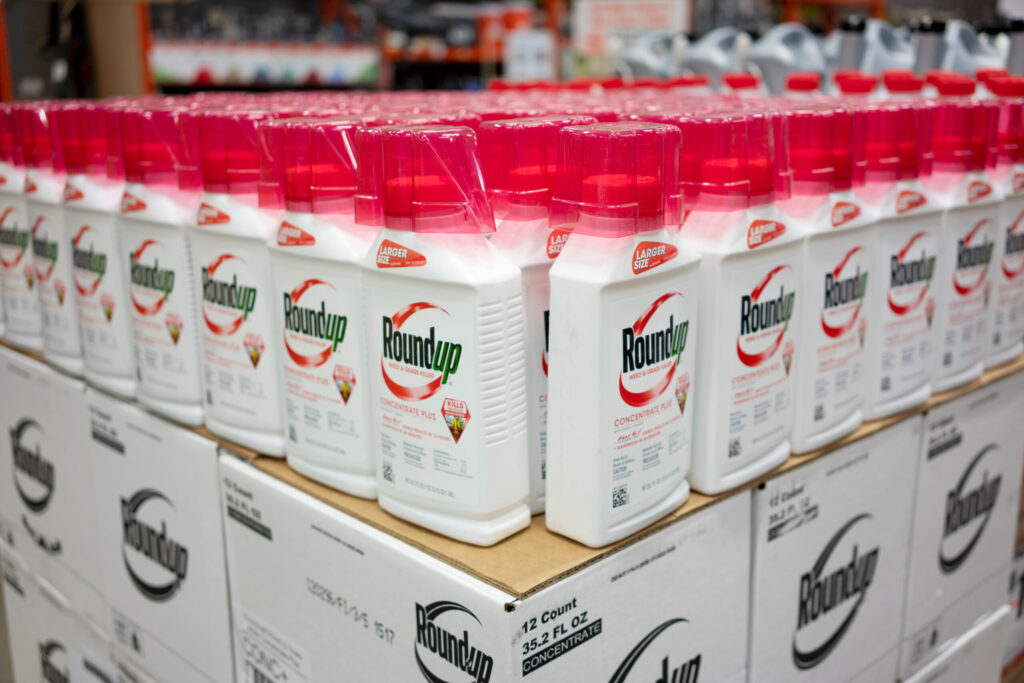
The other one that concerns me a great deal is by Dr. Shanna Swan of Mount Sinai — she’s an excellent toxicologist — and she measured the urinary levels of glyphosate in second-trimester women and then measured the genital distance between the anus and the vagina of all the baby girls. And there was an elongation of that distance, meaning a masculinization of the baby girls, if the glyphosate levels were at a certain high level in the urine of the second-trimester woman.
If that’s happening on a broad scale, what is happening? We know it to be a significant endocrine disruptor, and it’s showing now to even change the genitalia of kids.
Acres U.S.A. Where did mom get it?
Ryerson. Food.
Acres U.S.A. Well, there’s obviously something going on. We just had our third kid, and all of our friends are having kids. I know miscarriages have happened forever, but there are people in our friend group trying to have kids, and they’re just not having a lot of success. It’s so sad.
Ryerson. It’s just too heartbreaking. Yeah, the fertility rate’s crashing. Testosterone is down 20 percent, and there are studies that show it kills sperm. I was really curious several years ago and had four semen samples sent into a lab, and they all came back positive for glyphosate. That was dietary exposure — that wasn’t even from farmers. And then a big study came out from French farmers showing how much glyphosate was in their semen. It’s not confusing — how many infertile couples until we’re going to address this?
Acres U.S.A. It’s not good for the future of humanity. I feel like the excuse, when you compare today to the 60s and 70s, is always, “Well, we didn’t really keep track of things that well back then, so we don’t know if the numbers are increasing or not.”
Ryerson. They’re definitely increasing. I think it’s something like an average of 15 percent of people of childbearing age now are unable to get pregnant — similar numbers for women and men.
Acres U.S.A. How do these studies get funded? No one’s going to fund getting rid of these super profitable products.
Ryerson. No — that’s why you don’t see many studies on these things. But independent foundations put money toward it. NIH actually does put money toward some of these things, but not a lot. In fact, I talked to the head of NIH, Jay Bhattacharya, who’s awesome, and I asked him how much research goes into pesticides at NIH. He said not much. I think that explains a lot — that’s why we don’t have this body of research that we need.
The regulators, because we don’t fund enough research, depend on the company-funded research. That’s always going to be a conflict of interest. It’ll be interesting to see how under Kennedy, as head of HHS, which oversees NIH, which studies are going to start coming out. I’ve noticed that he is starting to focus on EMFs, because he was an attorney who sued to prevent 5G towers being put right outside of people’s bedrooms.
Acres U.S.A. How do you feel like RFK has done so far? During the campaign, people talked about getting all of these things done, and then when things don’t progress, you almost feel like you’re a little bit duped. Overall, I’ve been impressed with what he’s done. I just wonder how much internal pressure he gets because he’s a politician. I’ve had that sense — he’s said some things, and I’m like, “I bet he doesn’t really believe that.”
Ryerson. Totally. The first MAHA Commission report came out in May, and we were so excited. There was talk about pesticides and other toxins and how they accumulate and work together and what problems they’re causing. But then by the time the second follow-up report came out, all of that had been taken out. The only thing left was that the EPA will do a better job explaining to people why food is safe. RFK clearly got his area taken care of, and then the EPA wasn’t on board. That’s what it looks like to me. I wish that somehow EPA could fall under HHS, because then I think it’d be a different story.
Acres U.S.A. I think we’re moving in the right direction in some ways. We’re years and years inside of this intertwined mess. I’m sure a lot of folks run for these positions, they get into office, and then I picture the door closing behind them and the staffers saying, “All right, this is how things actually work. You ran a good campaign, but you’re not going to be able to do some of these things, and this is why.” And I don’t know — they might have legitimate reasons for it.
Ryerson. They might have legitimate reasons. It’s just so frustrating to watch from the outside. Although maybe it’s more frustrating on the inside — if you believe something to your core and then you’re told “no.” That’s also heartbreaking.
Acres U.S.A. I try to just focus on promoting high-level farming practices.
How did you get into all of this? No offense, but it doesn’t seem like you do the most fun work!
Ryerson. My dad is always like, “Can you stop? Just go enjoy your life!” And I say, “I can’t now!”
I had chronic illness and an autoimmune condition and was very sick, with no answers. I saw over 20 specialists, was put on all these drugs, and was told I was crazy. I had so many symptoms everywhere that maybe I did seem crazy — things like neuropathy, stomach problems, losing hair, rashes — a whole bunch of things. And then I finally had a vitamin test from a psychiatrist — I thought, “I should go see the psychiatrist if everyone says I’m crazy!” — and I had no nutrients whatsoever. I was nearly a dead person. I gave up gluten and suddenly started getting so much healthier. I was able to get off of the medications, and then I started eating organically.
But I was ticked off about not being able to have gluten — I really missed it. So I went to this conference at Columbia University on gluten sensitivity and celiac disease, and they said, “We don’t really know what’s causing it.” I asked, “Well, are they spraying anything on the field at the farm level?” I knew nothing about farming back then! They said no. But someone from General Mills heard me and came up afterwards and explained pre-harvest desiccation to me. They said, “It’s going to take two decades to get farmers to change their practices,” and I was like, “That’s too long — weedkiller is being sprayed on our food!”
A few years later, the cancer trials were starting, and I was living in San Francisco and decided to go. I was so mad at Monsanto. I had a sign, and I thought there would be a big protest, but then I got there and there was no protest — nothing. So I just walked into the courthouse and sat right next to Bobby Kennedy. I got to see Chuck Benbrook on the stand and all these incredible people, and I got fully engulfed in this world. Once you see the egregiousness and how many people are injured, it’s so heartbreaking. I quit my job and started blogging everything.
And there was a moment when I was really sick and was put into a full-body two-hour MRI. During the MRI I started making bargains with God. “If you bring me through this so I can be around for my kids, then I will do everything I can to not let other people get sick.” I came out of the MRI, and they said, “Your MRI is clean.” So I feel like I’ve made a deal with God for now — to advocate on behalf of a community. That’s what keeps me going when I’m feeling really bummed.
Acres U.S.A. Well, we appreciate your effort and everything that you do. You’ve formed a pretty big following. What’s the demographic of the person who is listening to you?
Ryerson. In the beginning, it was very hippie-natural types of people involved in wellness. And then during COVID I saw this huge shift in my followers, to super conservative women. I think my followers are like 85 percent women who are mostly very conservative, very religious people that feel that their opinions on life, and their religious convictions even, can’t accommodate continuing to poison their families with toxins — not just pesticides, but across the board: plastics and other things.
I had always felt that if some of the religious and conservative organizations could wrap their heads around this that they would absolutely want to champion it. Particularly pro- life organizations — what this is doing to fertility. And that’s starting to happen — I’ve been doing some work with the Heritage Foundation, and they’re really starting to become interested in this.
It’s the best. Because what would be the best thing is to have a purple movement — a movement where we can all agree on something so vital as our future and fertility. To see both sides now showing interest — I think that’s what gives me hope. It’s amazing. We disagree on so many things, but this is something that really is bringing people together.
Acres U.S.A. All of this soil health, anti-chemical stuff — that was a democratic/liberal type of idea back in the day. But now it’s becoming a thing with conservative and religious groups. So we have this clash of different political ideologies that are separated based on social problems but united on food and health and agriculture.
But I’m also concerned — how are we ever going to gain momentum in this type of movement when the people are voting separately? Like we talked about, these bills tie together a hundred different subjects. A bill — or a candidate — might be in favor of soil health policies but might hold social/cultural positions that are intolerable for one side or the other.
Ryerson. I think that’s one of our biggest issues. This is something we’re really talking about in the greater MAHA movement. I’m independent — I’ll go where the issue goes, and I have always felt that everyone needs to pay attention to this. It has historically been Democrats, and some Republicans are open to this, but by and large there are Republican congresspeople and senators that have been there forever and are never going to change their ways. I think they will always think that these issues are “left,” so they can’t support them. But you see this younger generation of conservatives coming along that are focusing so much on health.
We’re trying to grow this purple health movement and make it so vital that both parties have to fight to have that voting block. This is what happened in the last election — it’s how Trump won. It’s the big MAHA block. Maybe it’s not called MAHA — maybe it should be called something else. The goal is to get the two parties to compete with each other for who can be more aligned for healthy soil and healthy food. That’s the ultimate goal. To your point, even today, because MAHA was a Republican thing, you see some Democrats stepping back from the food movement because they’re like, “That’s a Republican thing.” I’m like, “Oh, heck no — we’re not going to start doing that now!”
Acres U.S.A. It was amazing to see Democrats arguing against not allowing people to buy Coke with SNAP benefits.
Ryerson. Yes — Democrats saying, “That’s their right to buy Coke with SNAP dollars” — I was like, “What is going on with you? You should be happy that the junk food can’t be bought.”
Acres U.S.A. It’s too bad. There are people that won’t even look at what MAHA has done as a positive because it’s tied to the Republican Party.
Ryerson. Yeah. It’s so disappointing. That food pyramid is amazing.
Acres U.S.A. It’s awesome. It’s unbelievable that it took this long.
Ryerson. It really is shocking. I’m excited about Kennedy’s plan to close the generally recognized as safe — GRAS — loophole, which is how so many chemicals have gotten into our food supply. Not pesticides, but other chemicals — manufacturers have lied and said that these ingredients are “generally recognized as safe,” even though no safety studies have been done on them. The plan is to not only close that loophole, but to retroactively start demanding that actual studies and proof of safety are done. It’s bad news for Impossible Burger.
Acres U.S.A. I like how fake meat has kind of collapsed on itself anyways. It didn’t work.
Ryerson. I’ve never felt sicker than after I tried an Impossible Burger.
Acres U.S.A. I can’t say I’ve ever eaten one.
Ryerson. They’re horrible.
Acres U.S.A. Thanks, Kelly — you’re doing a lot of important work.
| Update: No Libel Protection for Sugar! Activists Successfully Cut Food Disparagement Expansion from Florida Farm Bill As soon as Kelly Ryerson and others spread the word about the proposed Florida law discussed in this article, MAHA advocates, environmental organizations, and free speech defenders deluged their Florida senators and representatives with complaints. The Senate responded first, cutting the libel clause on February 10, and the House followed on February 24. The final bill, signed into law by Governor Ron DeSantis on March 23, omitted any mention of food disparagement. “FLORIDA FOOD GAG LAW DEFEATED!” Ryerson posted on X on February 24. “The attempt by industry to silence critics of pesticides and food failed. Free speech won. Bayer and Big Sugar lost. Thank you to all who boosted this fight! Thank goodness for a win, we could use it.” The challenges facing eco-agriculture can sometimes seem overwhelming. But this victory in Florida shows that we actually can make a difference — if we work together. And we don’t have to worry about getting sued for disparaging sugar. |
| Learn more about, and follow, Kelly at #GlyphosateGirl either on Twitter or Instagram or at glyphosatefacts.com. Meet Kelly at the American Regeneration Conference, April 30 – May 2. acresusa.com/events Listen and watch the recordings from Dr Don Huber’s two-day glyphosate symposium at the 2025 Acres U.S.A. conference — for free — at conference.acresusa.com/recordings-2025. |