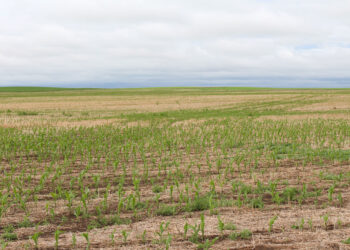


The Solar Corridor Cropping System offers the possibility of both yield and soil health
There has recently been an interest by farmers in wide-row corn — sometimes referred to as “stretched rows” — i.e., planting corn in 60-inch rows. This is being experimented with across many parts of the United States, including the corn belt.
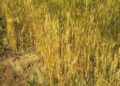
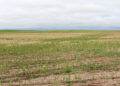
Although this concept may seem to be going backward from the evolution of planting corn in narrower and narrower rows, this concept is grounded in science that was conceived by agronomist C. Leroy Deichman, who questioned whether corn yield could be boosted by saturating the lower leaves with sunlight. Normally, in 30-inch rows, the lower corn leaves are shaded by the rest of the plant and contribute little fixed carbon to the final grain yield (Photos 1 and 2).
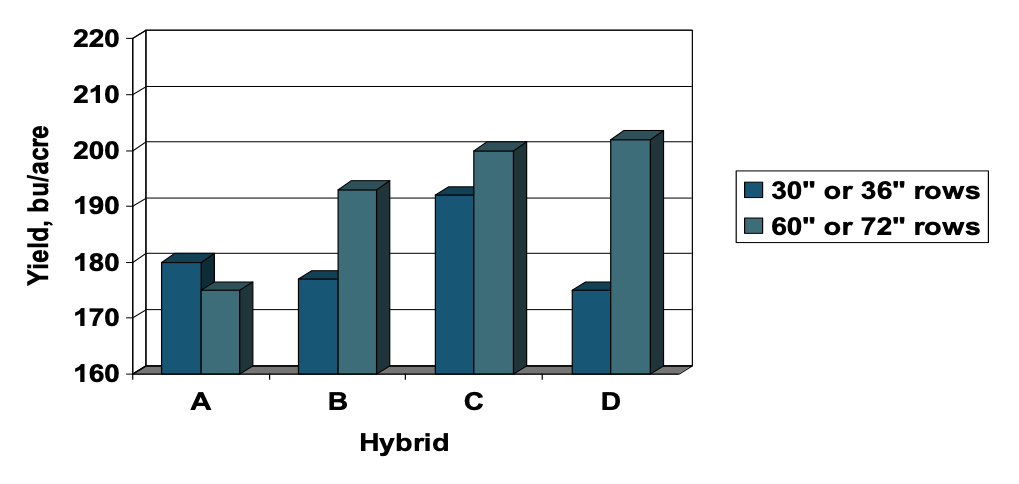
Corn belongs to a group of plants referred to as C4 plants, based upon the four-carbon form that is fixed in photosynthesis. Corn is highly efficient in fixing carbon, but its limiting growth factor is light. Most other food crops, including wheat and soybeans, belong to a group called C3 plants, which are not as efficient in utilizing CO2; they are limited by CO2. Deichman theorized that if rows were widened to 60 or even 72 inches, then the lower leaves would be sun saturated and would result in greater carbon fixation and corn yield (Figure 1).
Commercial agriculture has moved toward a rapidly expanding monoculture system that uses dense stands and many nonrenewable inputs to increase grain yield. Less than 60 percent of total available light is intercepted by the plant — mostly in the upper crop canopy. SCCS challenges the conventional system, offering a new paradigm that instead attempts to intercept and use more than 90 percent of available sunlight, efficiently trap CO2, and produce a high-protein secondary crop that enhances farmer profitability.
SCCS is essentially a strip-crop planting system, but on a row-by-row basis across the field. In this system, corn leaves throughout the entire canopy will be fully light saturated and the remaining light is utilized by a floor crop. The wider row between the highly efficient CO2-fixing corn plants creates turbulence within the canopy, resulting in more CO2 being replenished as it is fixed by the corn leaves, leading to more net CO2 fixation.
This system has many other advantages, including allowing farmers to sustainably produce more on a single acre of land, providing diversity, and improving soil health, which results in better water and nutrient utilization.
Testing the SCCS Concept
During the 1990s, Deichman tested 200 widely grown Midwest corn hybrids in both 30- and 36-inch rows, and in SCCS 60- and 72-inch rows, and found that hybrids generally fell into four groups, which he indicated by groups A, B, C and D (Figure 2).

Group A, which made up of 90 percent of available hybrids, had a negative reaction to the solar corridor, whereas groups B, C and D responded favorably to SCCS. Groups B and C were high-yielding hybrids in normal row spacing that demonstrated increased yield in the wider rows. Group D was a lower-yielding hybrid in 30- or 36-inch rows that showed tremendously increased grain yield in the wider rows due to its large ear flex potential. Corn hybrids responded similarly in 60- or 72-inch corridors. Deichman further examined these hybrids in single and twin rows and found that twin rows of groups B, C and D consistently outperformed single rows in SCCS.

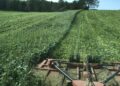
During the time of these initial studies in the 1990s, corn plant populations of 30,000 kernels/acre were typical for most farmers. The question arose whether corn plant population should match this in SCCS (by doubling the intra-row population) or stay the same in terms of intra-row spacing (planting 15,000 kernels/acre). Deichman tried the group B, C and D corn hybrids in SCCS with 15,000, 20,000, 25,000 and 30,000 kernels/acre, and his results indicated that maintaining a 30,000-plant population resulted in superior corn yield. Group D corn hybrids yielded consistently across all plant populations in SCCS. These results indicate that using a strong flex ear hybrid is critical to maximize the SCCS effect (Photo 3).

| Ear Flex Corn ear size — regardless of open pollinated or a hybrid — was traditionally a product of the environment, with larger ears being produced under lower populations or better growing conditions and smaller ears when the plant was stressed. This “flex” in ear size gave corn a resiliency across a wide range of environments. However, by the 1980s, most modern corn hybrids had been bred to produce high yields under high final plant populations. To do this, plant breeders had to change the plant architecture — for example, narrower leaves that are more upright, as well as plants with a consistently sized single ear. The Solar Corridor Cropping System works best if the corn plant possesses a flexible ear, which is not very common in most company lineups. Although most seed producers will give a flex rating, many are not sufficiently flexible to take full advantage of SCCS. A characteristic to look for when selecting a flexible ear hybrid is natural drought tolerance, since ear flex is critical to drought resiliency. Another characteristic of a very flexible ear is if the hybrid has a wide range of optimal plant populations. For example, if the company states that ideal final population is between 18,000 and 32,000, then you can bet that the ear has a lot of flex and is suitable for SCCS. Corn bred specifically for organic growers or listed as versatile for both grain and silage is often more flexible than other lines, but you will still need to check how it performs at low plant populations. |
Further studies at the universities in Missouri (Robert Kremer, Kelly Nelson and Tim Reinbott) and Illinois (Joel Gruver) have supported these concepts, including that hybrid response to SCCS is based upon the degree of ear flex. Although hybrids are considered “flex ear” by most corn seed companies, preliminary research has shown that most do not have great enough flex to respond to this system (see sidebar).
Farmers have asked whether a planting pattern of two 30-inch rows and then a corridor row can produce similar results. Research by Kremer and Reinbott has indicated that a single corridor is superior to two planted rows and then a corridor and the effect of the corridor diminishes with each row from the corridor; by the third row, little effect of the corridor is observed.

Expanding the Concept with Floor Crops
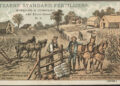
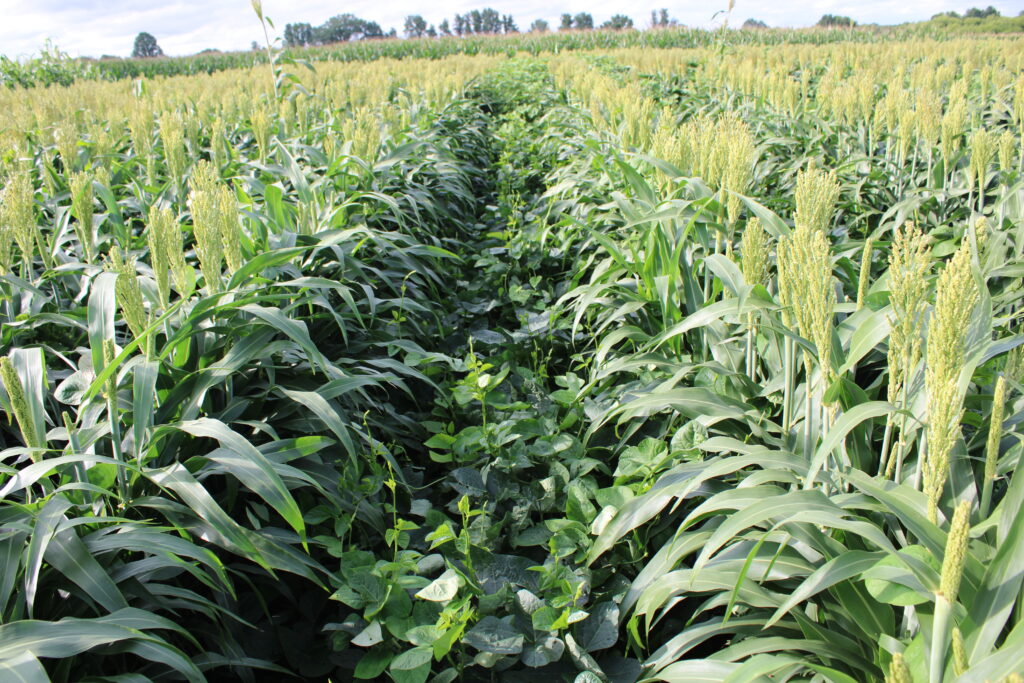
In order to fully optimize this system, a high-value floor crop such as cowpea or soybean can be planted in the corridor row to intercept the remaining light — thus greatly increasing sunlight and CO2 utilization and enhancing soil health (Photo 4). These floor crops can be planted simultaneously with corn, serving as a second grain crop or cover crop, and a cover crop could be utilized after corn harvest by livestock. Other options for intercropping in the SCCS corridor include overseeding small grains or cover crops for grain or grazing.

More light interception, CO2 fixation and carbon fixed through photosynthesis can result in better soil health parameters. Plants exude 20-40 percent of the carbon that is fixed from photosynthesis out of their roots into the rhizosphere, in turn becoming food for soil microorganisms. The type of carbon compound exuded by the plant can be targeted for a specific group of microorganisms depending upon the plant needs. Soil measurements taken by Robert Kremer indicated a 10 percent increase in total number of microorganisms in the rhizosphere in SCCS compared to solid-planted corn. This response of soil microorganisms can be explained by the relationship between active carbon — the carbon form that is readily utilized by microorganisms — and beta-glucosidase, the enzyme that indicates microorganism activity (Figure 3). Further tests of SCCS can be found in the book Solar Corridor Crop System, edited by Kremer and Deichman.
The Future of SCCS
Other C4 crops, including grain sorghum, can be used in SCCS for both grain and forage production. There is a growing interest in using grain sorghum as part of fall and winter grazing, but sorghum is protein limited. A legume floor crop in SCCS could be a key to improving total protein in this grazing system (Photo 4). SCCS can also be used for forage production, with corn and the legume floor crop together being chopped for silage or strip grazed, depending on the farmer’s needs and objectives.
Nitrogen application methodology is an important factor/challenge in SCCS. The corn crop must be efficiently fed, but many floor crops will not need the same nutrients at the same times as corn.
There are a number of ongoing research questions concerning SCCS. The studies mentioned in this article were performed with modern corn hybrids that have been developed for high populations in narrower row spacings, resulting in a very upright leaf pattern that is different than how corn was shaped a generation ago. How might older hybrids, and even open-pollinated lines, with wide, flat leaves that may intercept even more light, perform in SCCS? Does the increased light interception in SCCS improve corn grain nutrition? Answers to these and other questions could help further maximize SCCS as a successful regenerative agriculture system.

Dr. Timothy Reinbott is the director of Sanborn Field — the research farm at the University of Missouri where Dr. William Albrecht conducted much of his research. The late Dr. Robert Kremer was a professor of soil microbiology at the University of Missouri and a microbiologist with the USDA Agricultural Research Service. Leroy Deichman is an agronomist with Deichman Consulting and Maize Research.