
David Stelzer talks with John Kempf about how Azure Standard was founded, the huge demand for organic and regeneratively grown food, and why farmers are so important for our country
Kempf. There’s this constant refrain today from growers saying that the middlemen are making all the money. And yet, in many cases, growers are not adding a great deal of value. They find themselves in a commodity production system. You’ve chosen to take on the management of all — or some — of that value addition. You are developing a pathway to deliver growers’ products, starting with your own, to consumers, and you’ve essentially removed all the intermediaries in that pathway — you own the pathway itself.
I’d love for you to just tell us a bit about your context, your history. How did your farming operation come to be, and how did Azure Standard come to be?
Stelzer. My dad actually started farming organically in 1973, way before it was cool. In fact, hardly anybody knew what it was, but we had changed our diet as a family mostly because of health issues that I had as a small child. I was very ill and was not expected to live. I was super sick from the time I was about nine months old till I was almost five. My earliest memories in life were laying on the couch wondering if I was going to get my next breath or not.
A naturopath told my parents they had to change their diet radically or I would die. They did, I regained my health, and that piqued my dad’s interest.
Looking back on it, it was actually my microbiome. The bacteria I had in my body were different than most people’s. I wasn’t able to digest a standard modern American diet. Still to this day, I can’t handle dairy very well. I had to get off of refined sugar, white flour, Crisco — any kind of heavy fat or fractionated or hydrogenated oils. And this is back around 1970, before this was common knowledge.
Kempf. In today’s world, this is an increasingly common story. You were a bit of a canary in the coal mine.
Stelzer. I was way ahead of it. But after my parents got the recommendation from a naturopath, Dad was all in. He wasn’t half-hearted about anything. Our whole family changed our diet. A crazy thing was that my granddad had heart trouble. He had been a farmer as well. He had to retire when he was about 50 because he had such bad heart trouble. After the diet change, he got well too, and he was farming again — 16 hours a day when he was in his 70s.
That sold our family on the concept of healthy eating. And then my dad would be out planting wheat, and his hand would get all red and pink because of the treatment they put on the wheat, which he had bought from the elevator like everybody else. He decided to call them up and ask them what was on the wheat and what it was for. They had to call someone to figure out what it was, and it turns out that it was almost pure mercury.
He asked them, “Why are you putting mercury on the wheat?” They said it was for smut, because the smut spore can’t live in mercury. But we’re in eastern Oregon — we’ve never seen smut. So, that was the last time he ever planted treated wheat.
It’s like that a lot in agriculture — a one-size-fits-all approach. But that’s never what regenerative is. We never have a one-size-fits-all approach because it just doesn’t work that way. You have environment, you have climate, you have soils, etc.
When my dad started farming organically, the first couple years he didn’t really have a market, so he was still hauling his grain to the elevator like everybody else. Then he met Bob Moore, the founder of Bob’s Red Mill. Bob was just getting started at that time, and he and Dad hit it off and became friends. Bob was the processor, and dad was the farmer, and they had an in with Fred Meyer, the founder of the Fred Meyer grocery chain. That went on happily for 10 years or so.
But then Fred retired and sold the company to an investment group. Eventually this investment group asked, “Why are we carrying this expensive organic stuff?” This was in the mid-80s.
We were mostly raising winter wheat and rye at that time, and it was November or December when we found out that they didn’t want our wheat and rye — but of course we had just planted about 500 acres of it in September or early October. We had all that grain in the ground with no market for it. I was young and stupid at the time, I guess, and didn’t know that it was supposed to be hard to sell grain. But I figured, “We’ve got to be able to sell this. Somebody was buying it at Fred Meyer, so somebody must want it. We just have to find those people.”
So, I started going around to the health-food stores and food co-ops. At that time there were quite a lot more than there are now. This was before Whole Foods. I kept getting the answer, “Oh yeah, we’ll take five bags, or three bags.” And I’m thinking, “Well, I’ve got about a million pounds!”
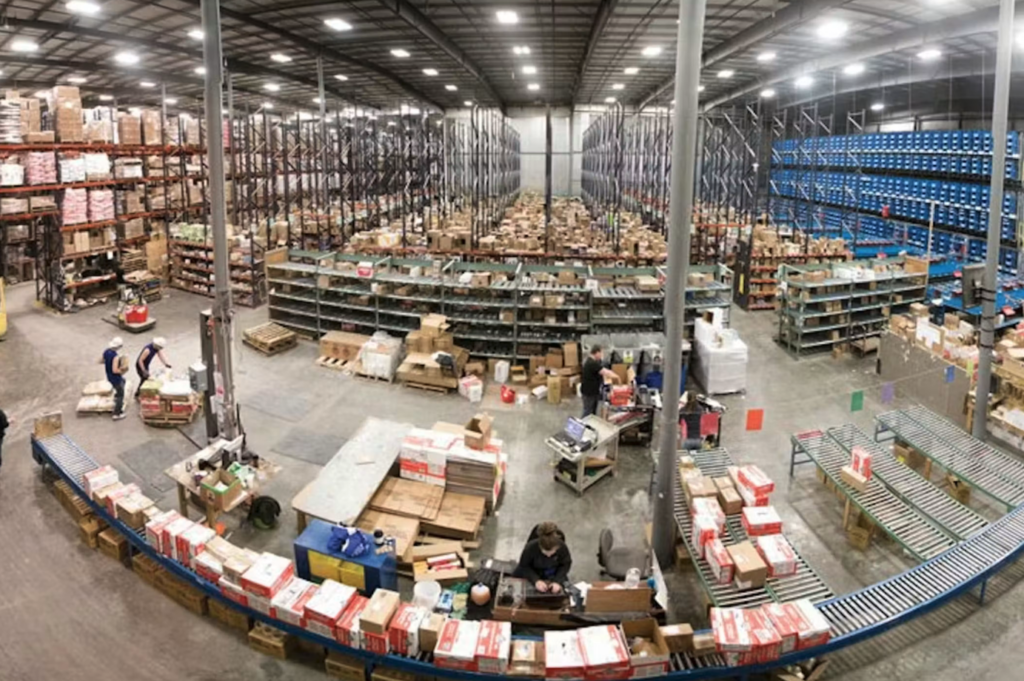
But, instead of saying no, I said, “Okay, can we do it every other week?” I started a little route here in the Northwest, just in my pickup truck. I would deliver one week to eastern Washington and Seattle and the next week to Bend, Eugene, Portland and back. That’s how Azure got started.
I realized pretty quickly that people didn’t want grain — they mostly wanted flour. So I hired a custom mill in Yakima to grind the flour for me. I sold three grains and the flours for those three grains. Six SKUs — that’s how we got started.
Kempf. That’s an interesting beginning — but there are many people who have made a beginning but didn’t grow into what Azure is today. How many SKUs do you have today?
Stelzer. About 12,000.
Kempf. What happened in the gap?
Stelzer. Well, when I was out delivering in eastern Washington, people kept asking me, “You’re going to be in Portland — can you pick me up some nuts or some spices or something and bring it next time?” I kept doing that as a favor. After it happened eight or 10 times, I suddenly realized there was a gap in the marketplace — not only for our products but for products in general. Finding those kinds of healthy products in eastern Washington was difficult.
Because Dad had been organic, I’d been attending all the Oregon Tilth meetings, so I knew a lot of farmers. I would call them up and say, “Hey, would you sell me a thousand pounds of almonds?” or a couple thousand pounds of lentils or whatever it was. And mostly they were happy to do that because I was pretty small then. I cleaned out a bedroom and a little room off the garage, and that was my first warehouse.
From the very beginning, I started doing breakdown. I would take the 50-pound box of almonds from a grower I knew who was either organic or no spray or one step better — into what we know today as regenerative agriculture — and I would break those down and put them in poly bags with a little label on the outside.
Kempf. Why did you choose to go the pathway of this regional, very widespread distribution network instead of going through the mainstream supply-chain channels?
Stelzer. I learned very early that distribution, especially in the natural channels, is exceedingly expensive to get into. You have no guarantees — nor do any of the distributors have any ethics to speak of. First of all, to get one SKU into national distribution and into multiple store channels — just paying for distribution, advertising in the distribution channels, the free fill for every store, slotting fees — in the high-volume stores, you’re going to be close to about $500,000 in today’s money before you make your first dime. That seemed absolutely untenable and unreasonable. I was already delivering, and I thought, “If we can just deliver a little bit further, there is no reason we have to use mainstream distribution.”
This is near and dear to my heart because of the health challenges I had — I know how important it is, especially for folks with families, to eat well. And, because we’re farmers, I know how important it is to find a market for your product. That’s the connection that has to be made. Nobody was making it. There was nobody doing that. There was mainstream distribution, and there were health-food stores, but nobody was really paying attention to the source and to the consumer.
By the late ’90s we ended up with the organic label. Nothing against the organic label — it’s a good label — but it doesn’t tell you what is in your food; it only tells you what’s not in your food. What’s not in your food is important. I’m not a big fan of glyphosate-soaked grains, and at least organic tells you that they didn’t desiccate with glyphosate. But it doesn’t really tell you how it was raised and whether that farmer cares about the soil, and that’s the connection that really needs to be made.
Kempf. I’d like to get your reflection on the narrative I’m sure you’ve heard a thousand times — that if we produce food in this manner, it’s going to be more expensive. It’s going to cost more because production is going to go down.
Stelzer. Will we have famine? Will food prices go up substantially if we go to a more regenerative agriculture model? On some items, food prices are artificially low. We have subsidized food prices here in America, and I don’t know that we’re going to get subsidized regenerative agriculture anytime soon.
As far as volume goes, in our experience, when Dad started farming, we had about 1,800 acres. We now farm a little over 5,000 acres. I’ve transitioned a fair amount of land from conventional to organic-regenerative concepts. I have yet to reduce yields for more than a year or two during the transition period. Our yields compare with any of our conventional neighbors.
Is it more expensive? Yeah, in some cases there’s more labor. In our fertilizer mix we’re putting on a half a million pounds of various kinds of inputs this spring. So it takes more labor, and it is going to cost a little bit more because of that.
But I will tell you one thing: it’s worth every penny of it, even if you’re paying a little bit more for your food.
Kempf. How is the model of Azure Standard different in pricing compared to the mainstream model — both to the consumer and in rewarding farmers?
Stelzer. We’ve been able to do this because, for the most part, we control the entire chain. I don’t grow anything for the commodities market. Well, I do sell a few cherries because we just have so many right now — and we’re putting in an IQF [individual quick freezing] line right now that will hopefully be done by cherry harvest.
But we control the farming, then we control the processing. If it’s fruit, we put it into our own packing lines. Right now we’re putting an IQF line in for the culls — so we can pit cherries and dice pears and peaches and freeze them and then have a direct-market frozen product. For grain, we have our own flour mill, then we put in our own packaging, and we put that in our own mixes. We control every aspect.
Now, if you go from the commodity price to the finished-goods price for that two-pound bag of pancake mix, there is still plenty of margin. But think about it from the perspective of standard commodities — even in the organic world. You’re selling to a broker, and they take their 5 to 10 percent. Then the broker sells to the mill, or maybe they sell to another broker. The mill buys it, and they need to mark it up for the processing they do. They put it in a big super sack, and then they send it off to the mixing plant. There’s another piece of packaging and freight. The mixing plant makes the pancake mix. Then they put it in their packaging, and maybe they’re vertically integrated enough that they can put it in a small bag. Maybe they’re not, though, and some other third party does a private-label brand. You lose margin again there. And that third party didn’t do anything except put their name on the product and market the product, but they’re the marketing agency, and they’re taking 30, 35 percent to do the marketing and the packaging.
Then it goes into distribution. The distributor is going to take 25 percent to distribute it — maybe a little more, depending on what kind of product it is. Then it’s going to be sold, typically by another broker — a retail broker. That’s another 5 to 10 percent. Then you have your retail store, and that’s at 33 percent minimum — it could be up to 40 percent margin.
That’s the real world that we live in with modern specialty foods. If we can cut all of that out, we can reduce the price so that we can pay the grower more. They’re producing a premium product, and we can still reduce the cost to the consumer by 50 percent.
When I started selling organics, I was very happy to get 1.5 of conventional price for organic. Today, if the Chicago Board of Trade is saying wheat’s worth $5 a bushel, a good-quality organic grain is at least $20 a bushel. The marketplace has changed that much over the course of the last 25 years or so. The demand for high-quality food has struck a chord in America, and a lot of consumers are willing to pay more.
But with the Azure model, we’re normally able to keep the price very competitive. I can’t say we can compete with the cheapest, lowest-quality products, but we’re going to be way better priced than anything of the same value — and I’m not going to sell bad products because I can’t do that in good ethics.
Kempf. In essence, in the conventional model there are multiple processors that are specialized, and by moving all of those various processes in-house and managing them internally, you’re reducing the overhead margin required in each step, and you’re reducing the number of brokers in the process. You’re essentially reducing the margin requirements because you have one party instead of 10 parties all participating.
Stelzer. That’s right. If I’m buying from another farmer, for the most part, we are going to do the processing and the packaging. But we don’t have all the processing machinery. For instance, if I’m going to buy millet, I have to get somebody to haul it. I don’t have a millet hauler. I don’t have a buckwheat hauler. But most of the stuff we do have — we’ve got all the cleaners and the color sorters. Then recently we started a sourdough bakery, so now you can actually buy loaves of frozen organic regenerative sourdough bread all ready to go.
Kempf. I’m sure you’ve encountered lots of headwinds and missteps as you’ve developed Azure over the past several decades, but you mentioned earlier that the food cooperative model greatly declined over the years. I wonder how much of that is a reflection of societal breakdown — perhaps a lack of collaboration and people no longer working together quite in the same way as they might have historically. But I suppose the larger question I’m trying to get to is why Azure has survived when others have not? And what is the opportunity today for other people who want to get into selling directly to consumers?
Stelzer. In my opinion, there has never been a time of more opportunity than there is right now. I think that in the last five years or so, the majority of Americans realized that the medical establishment and the government lied to them about COVID. And now there’s a bunch of doctors getting on the bandwagon saying it matters what you eat. Highly processed food can cause problems. Our children are not as healthy as they used to be. We shouldn’t put these chemicals in our food. And then the next step is, What about agricultural chemicals?
If we can tell that story to the consumers, mines are open. Even 10 years ago, not nearly as many mines were open to the concept that the food that we put in our bodies matters substantially toward our health and the health of our families and of the planet. Those are all issues that now are almost mainstream. They’re front and center. Furthermore, there are not nearly enough organic producers compared to the demand in the market. Around 60 percent of the organic food that is consumed in America is imported — and I’m just saying organic because we actually have statistics for that — most of the regenerative statistics are nebulous. It’s coming from other parts of the world. There are a few players like Costco and Walmart that dabble in the organic food space, and they just import, because that’s what they do.
Kempf. Are they importing for reasons of lowest cost?
Stelzer. Well, because of lowest cost and quick volume. Walmart is an import company — that’s their entire model. That’s how they became a wealthy company — through cheap imports to Americans. They do the same thing in the organic food space. And it probably is organic — it probably has the paperwork and probably doesn’t have the chemicals on it — but it came from China or Brazil or Argentina or Peru or Turkey or someplace.
But we are not able to keep up with organic demand — even for our supply here at Azure. I do everything in my power to purchase domestic production of high-quality products. For things like frozen fruits and vegetables, just as one example, we should be able to raise every bit of that here, but we’re having to buy frozen raspberries and things like that from Chile because there’s just not enough domestic production. We buy peaches from Turkey — there’s just not enough organic peaches being raised. The few that are raised go to the fresh market. There are very few processors in the U.S., and a lot of people think it’s hard to raise organic peaches. I don’t know. I mean, we’ve done it, but we can’t do everything.
Kempf. What are the significant products that you do not find adequate supply of in the United States that you’d love to purchase more of domestically?
Stelzer. Again, we’re working on an IQF line right now to be able to do some of that ourselves on the processing side. But there’s a huge demand for frozen fruits and vegetables that are fully organic and regenerative. Even just organic is a big step in the right direction. Beans is another thing that’s really hard to find. It seems like a wonderful legume add-on for any organic farmer, but lentils and beans of various sorts — we’re always right on the edge of having enough supply. It feels like the price of lentils has almost doubled in the last few years, and a lot of them are being imported now.
Kempf. Give us some context for the scale and the volume you’re talking about.
Stelzer. Well, for organic blueberries, we’re selling probably about a semi-load a week. You can get about 40,000 pounds in a semi. Peaches would probably be half of that. Raspberries we can never get enough of, but we’d sell probably close to the same as blueberries. They can’t even raise enough in Chile to cover the demand. Blackberries also — we can hardly get organic blackberries, but they should be something easy to grow.
Again, there is a processing step in there. You have to get them washed and frozen.
We’re not in the ideal location to grow the berries here, but we grow really good fruit. We grow a lot of cherries and apples and pears and things like that here. We grow apricots, and we’ve done some peaches. We just put in about 50 more acres of peaches this past year because the demand is there, but we are not going to be able to keep up with our own demand, even with that.
Kempf. You mentioned the transition that you observed over COVID and post-COVID. How have buying patterns and behaviors changed?
Stelzer. One of the big things is that Americans learned to cook at home again. I’m not saying everybody, but a huge number of Americans had to cook at home because they couldn’t go to restaurants, and they decided they liked it. They enjoyed eating home-cooked meals. I’m not saying there’s not still a huge market for prepared foods — there is — but the market for retail-ready ingredients has just skyrocketed. Eating at a restaurant, you’re almost never getting the highest-quality food — restaurants’ whole model is to buy cheap and sell expensive. They buy the cheapest food that they can possibly get. It’s just what their CFO tells them to do. Sysco pulls up with the cheapest junk they can possibly get, and the most semi-prepared, so the restaurant has the least amount of labor involved.
You’re not going to get good organic food at a restaurant. But somebody who’s cooking at home looks at that package and says, “Oh, it’s 50 cents more for the organic flour versus the conventional flour. I’ll just get the organic. I’m willing to pay an extra 50 cents.” They’re going to pick the organic nine times out of 10 if the price isn’t all that terribly different. The restaurant never will, but the home consumer will because they’re feeding it to their own family.
I don’t think organic regenerative food is ever too expensive. If you compare it to a few doctor bills, it looks cheaper and cheaper all the time, no matter how much you pay for it.
Kempf. Not only that, but there is this intangible characteristic of satiation — of how filling is a certain food. I’ve had the experience numerous times where I get a poor-quality meat versus a good-quality meat, and you’re only able to eat a third as much and you feel full — you don’t desire any more. Aside from all the differences to your metabolism and health, I’ve come to the realization that you can’t accurately do a direct pound-for-pound comparison and assume that they’re going to nourish you in the same way — they don’t.
Stelzer. Not even close. It’s like when you teach about how insects only eat simple sugars, and certain insects go away if the sugars in a plant are complex. We teach that same concept on our side of the fence — we teach a very similar concept to that regarding what it does in our bodies. When we eat a regeneratively raised food, we’re getting a complex sugar that is going to power our body for a long period of time. We’re getting a complete protein chain that is going to help build muscles and empower our stamina. Whereas if we’re eating a plant that’s just been pushed by anhydrous ammonia, it has a simple chain. That’s why you feel full — because you got a complex sugar, a complete amino acid chain, or lipids, that were actually fully developed instead of half developed. You might eat wheat that’s 14 percent protein, but it only had three amino acids in it instead of 12.
Kempf. Historically, the word “farming” was associated with growing things. If you wanted to be a successful farmer, you had to be good at growing either crops or livestock. But increasingly, if you want to be financially successful and viable as an operation, then perhaps the most valuable skillset is not growing things. That’s almost like a fundamental prerequisite. The thing that is really necessary is you have to be able to sell. You have to be able to market your product. Otherwise you’re on a commoditized pathway to doom. That’s perhaps some dire language, but it’s the reality that many people are facing today. Marketing is something that I enjoy, but I find that many people don’t, and I’m puzzled by that.
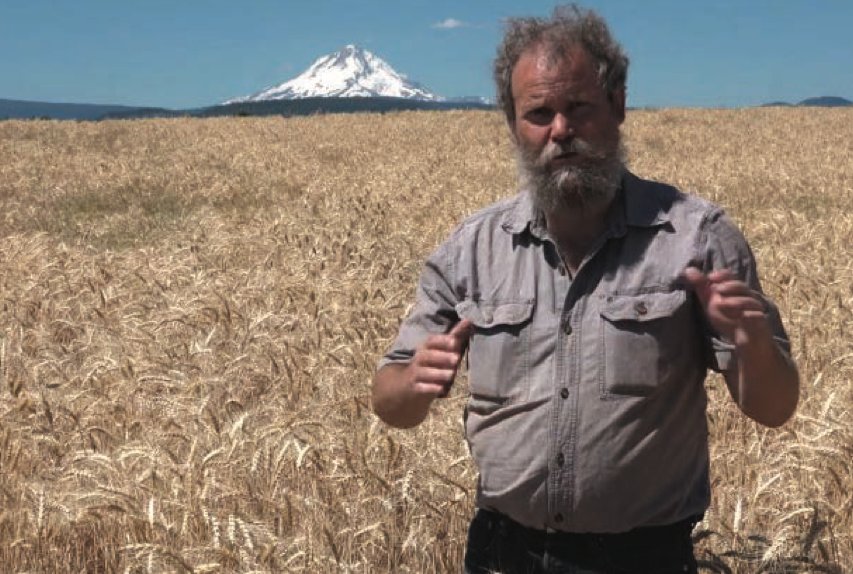
Stelzer. I have found that marketing is actually the most important part of our business. There used to be a saying, “Build a better mousetrap and people will beat a path to your door.” That’s completely not true. You can build the best mouse trap in the entire world and nobody will come to the door, because they don’t know about it. There are competing voices everywhere saying, “We have the best mouse trap,” even if they’re not telling the truth — but they may not even know about your mouse trap.
It’s the same with the food that you raise, whether you’re raising fruit or beef or whatever it is. If your customer doesn’t know you have the very best of the best, then why would they be willing to pay you extra money for it? They don’t know why they should. Marketing is basically just being able to tell people about what you do and why you’re producing a superior product and why people should buy it.
It’s that simple. It’s not a miracle. You can have terrible marketing and tell lies — but that’s going to be very short-lived. Nobody’s going to buy from a company that doesn’t deliver the quality and the product they say they’re going to deliver. You have to tell the absolute truth about what it is that you’re doing.
Regenerative farmers have a product that is so much better than what anybody can get in mainstream America’s grocery stores. It’s easy to tell that story. Tell people why you have complete protein in your beef. Tell them why you have complex polysaccharides in your fruit. Tell them why it makes a difference in their health. That’s when it becomes worth more, because they know that your product has complex polysaccharides that are going to allow their children to not have to eat candy bars during their basketball game — because they have slow-release sugar throughout the day from their meals — because they ate fruit that was not just pure fructose.
Once they experience that a little bit, they’ll never go back. This is your story.
Kempf. You preempted the question I was going to ask, David, which is, “What does your customer retention look like?”
Stelzer. Our customer retention for the most part is good. We do have quite a few people that try us once and drop off — I think mostly because of our delivery model. We hear, “You’re not real consistent with your times of delivery, and I have to go to work.” We’re working on a few things to change that. We just launched what we call “drop to home.” It’s a program a little bit like DoorDash — for an extra $10 or so, somebody gets your delivery at the drop location and takes it to your house.
We’re also starting to look at some kind of franchise retail model. We currently have three stores that we’re using as experiments. What we’re really trying to sell is the brand, and our brand has a certain guarantee. First of all, you’re not going to get any highly refined stuff. You’re not going to have to worry that there are preservatives or food coloring or MSG or anything. There’s not going to be any genetically modified anything. We have a long list of things that you will never find in any product you get at Azure — unlike every other retailer. Whole Foods — after they sold to Amazon, their standards went down. Now you can basically get specialized Pepsi in Whole Foods, but we’re doing exactly the opposite. We’re continuing to push our standards higher and higher. We used to sell some conventional beans, but we quit because we found traces of glyphosate on some of them, and our brand guarantee is that we pay attention to these kinds of things.
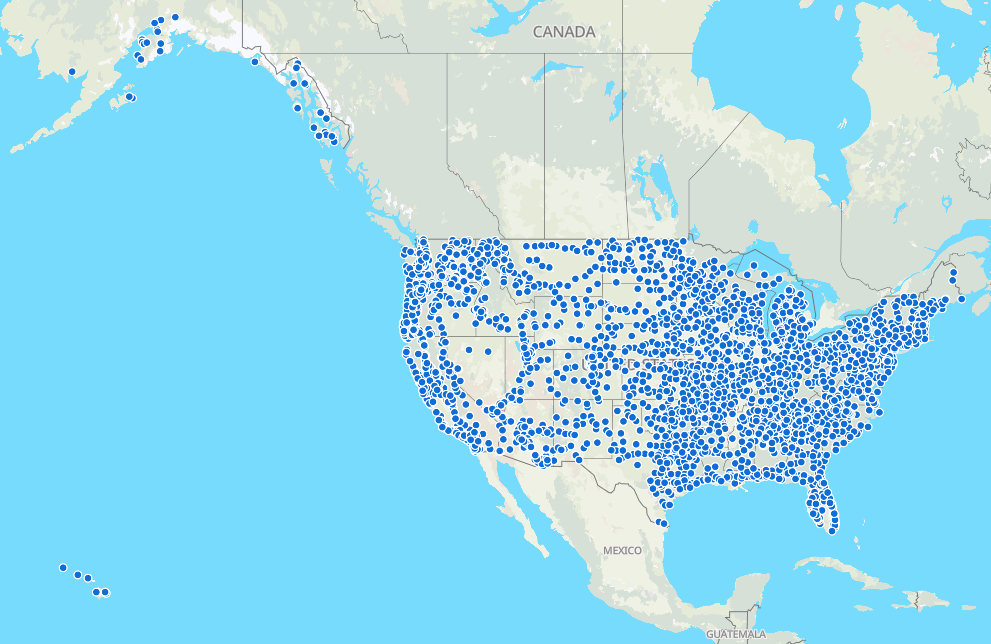
Right now you can get Azure products through our drop — or delivered to your home from the drop in about 21 different areas. We eventually want to have stores all over the country that are Azure partner stores, and you could even get products delivered from the store to your home if you need it instantly. That’s the vision.
Kempf. If you look at the entire agricultural landscape — and the consumer landscape, which you have a close perspective on — where do you see the biggest opportunity?
Stelzer. As far as agriculture, the opportunities are endless. I was flying over the Midwest last spring, and it’s one big yellow pit. It’s the richest farm ground in the world, and it looked like the whole thing had been sprayed. There was a little green patch here and there, but on 90-plus percent of it, I guess, they were getting it ready for their no-till GMO corn. And yet the market doesn’t even want that stuff.
Many farmers are stuck, unfortunately. I go to quite a few of the homesteading conferences, and I was talking to a farmer at one. His wife is a big advocate of homesteading, and he gave her 30 acres to raise their family cow and garden, and it’s changed their lives as a family — yet his thousand acres are still in GMO corn and soybeans because he doesn’t know what else to do. We need to get completely out of that cycle. He didn’t know how to stop — how to change the soil that’s been raising GMO corn and soybeans for 50 years. And then, if he were to be able to change, what does he grow, and how is he going to make ends meet? The elevator only takes corn and soybeans. How can he raise something else?
And yet there’s no deficit of demand for feed grains. The demand right now for meat that is healthy — not even organic, just grassfed — is through the roof. Meat used to have kind of a bad name. Now all of a sudden there’s people saying, “Eat a carnivore diet!” But it doesn’t work at all if they’re eating factory chickens from Tyson. It doesn’t work, and they’re learning that.
The demand for organic feed grains and meat is astronomical. I just feel like there’s a tie that needs to be made.
Kempf. It’s interesting — I’m having this conversation with you, and I have parallel conversations with dozens of people in similar positions who have some perspective on consumer behavior, and they see where the supply chains are falling short. And then I have these other conversations with growers, and I think it’s sometimes worth asking how serious they really are about desiring a different opportunity — because all they can see are the obstacles; they don’t see the consumer demand.
There is this significant disconnect between the opportunity that exists and the opportunity that growers perceive — perhaps for a wide variety of reasons. Perhaps they believe they lack the skillset or the capability or the infrastructure. The list of plausible excuses can become very long. And some of those reasons are very real — I don’t want to be dismissive of that. But also, if people invested as much energy in trying to resolve those challenges as they invested in justifying them, we would be in a very different space quite rapidly.
Stelzer. I couldn’t agree more. And you don’t have to start all in. There was a time before I started delivering to the stores that my mom would grind wheat in her kitchen flour mill and sell it to neighbors and the local food co-op. She could grind 10 or 15 pounds an hour.
Those kinds of opportunities at farmers markets and the like shouldn’t be dismissed. I mentioned that I had close to a million pounds of grain and was getting orders for five sacks at a time — 250 pounds. If you do the math, that should have been impossible, but it wasn’t. We sold through all of that and much, much more. We sell millions of pounds every year now. In fact, I hardly even raise wheat anymore because I can find other people to raise it. Now we raise mostly ancient grains because the demand is so high for that. We raise spelt and einkorn and khorason and all these other grains because they’re a little harder to raise, and we’ve been doing it a long time.
The demand is there, but we should not despise small beginnings. We should not despise getting our feet wet. Just because we don’t know how doesn’t mean we can’t learn how. And the best way to learn is by doing. Maybe my dad wasn’t that guy — he jumped in with both feet. When he decided he was never going to use chemicals on our farm again, he never did — 1973 was the last time any chemical ever hit our soil. But not everybody operates that way.
Take 20 acres of your farm and transition it to regenerative agriculture. Grow something that you see the demand for in your area. I can give you a list of things I would buy from you. But if you’re going to do a farmers market, what do people want? If you’re in the Midwest, lots of people have beef and corn and soybeans, but how many people have vegetables? Who sells rhubarb in the spring? Think outside of the box a little bit about what the demand is. And then you can experiment with the regenerative parcel and learn. Try it.
There are so many ways to learn, and sometimes it’s not as hard as you think. Yes, if you have huge fields and there’s huge economic risk, that’s one thing. But if you’re just experimenting with an acre or two, even if you lose something, you learned a valuable lesson. I can’t tell you how many things we’ve experimented with over the years. I’ve tried almost everything. Last year we grew carrots for the very first time commercially.
Kempf. In Oregon — that sounds like an adventure!
Stelzer. It was a lot of fun, actually. And they taste wonderful. We had the best-tasting carrots around, but nobody grows carrots here. It’s just not a thing — but they grow just fine.
Kempf. What is the one thing that you would like to remind people of — or just impress upon them?
Stelzer. The farmer is the guardian of the nation’s health. If we think of ourselves as farmers in that light, it changes the way we farm, and it changes the way we think. That was really the key for me.
Are we really acting like the guardian of the nation’s health? Or are we just acting like some other businessman who is going to try to see how much he can make? I believe it’s Dave Ramsey who says something like, “The more people that you serve, if your heart is into service, the more people will give you rewards of pieces of paper with presidents’ heads on them.” So, as we serve, if our heart is to serve, the reward comes. We become economically viable by serving more people at a deeper level — and that’s the basis of true, legitimate economics.