

A local food hub – made up of a whole cast of actors – can support farmers while helping make communities healthier
Locally accessible food. Individual and family health. Community compassion. Economic opportunities. Good neighbors. Happy kids. A sense of pride and fun.
Do we value these concepts? If so, how do we invest in achieving these ideals?
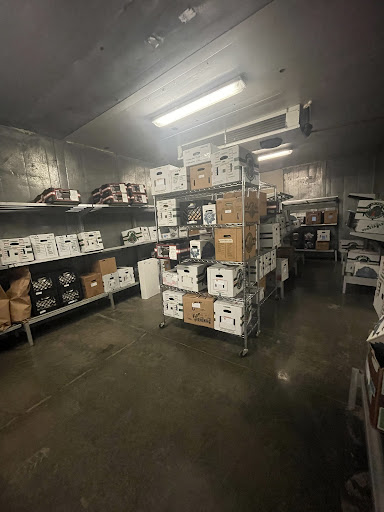
We have seen the slow, diminished heartbeat of our small- and medium-sized rural communities over the past several decades. This is happening across the country, and many times we are relinquishing our ability to think of solutions or backstops. We think nostalgically of days gone by when each town had numerous stores and services that are now only available in larger towns and cities. Even in my own lifetime, I remember our community having at least three grocery stores, two or three hardware stores, churches of many denominations, and numerous dentists, attorneys, barbers, and hairdressers.
We have watched as many farmers have transitioned out of their family operations as it has become harder to bring the next generation back onto the farm. The number of individual farms has declined, and the size of the remaining farms has increased. The diversity of experiences on the farm has diminished too. Recently I had the opportunity to visit a family farm owned by a doctor who shared memories of livestock, gardens, and the hum of morning life he experienced as he grew up. Today the farm is split between fields of corn and fields of soybeans. While he thinks about the past, he is also thinking about the future and potential opportunities for young people to have enterprises on his farm, gardens, orchards, livestock, and more. He is trying to capture the vision of the past, but I see it as a vision for going forward.
We have journals and stories of our family from a time when lots of things were produced on the farm and sold locally or transported to markets in the city, even if transportation of livestock was by foot! I suspect that kind of operation was pretty universal throughout rural communities. As new ways of marketing and transportation came into place, the local grain elevator became a staple in the community. Railways, trucks, and even waterway shipping became more common. The local farmer was able to harvest and deliver their grain to the local elevator and never really know the end consumer. The relationship between producer and consumer is now nearly invisible. This happens even in the greater food markets. Most people don’t know the name of the farmer or person producing much of what they consume.
Today, many larger communities have farmers’ markets that can recapture that idea of relationships to food. This is good. Knowing your farmer, where your food comes from, and how it is produced is really important to a lot of folks. But not everyone is cut out for the farmers market, either as a producer or a customer.
So, enter the local food hub. Down at the Farms, LLC has evolved from our experience on Spence Farm in Fairbury, Illinois. Spence Farm is our family’s farm that in four more years will have been in our family for 200 years. My grandchildren are the ninth generation to live on that land.
Over twenty years ago, we met up with a group of chefs in Chicago and began a journey that now includes more than 120 farmers. We found that there was no way one farm could provide enough product for even one of the restaurants that became our customers and friends. We saw many young people leaving their family farms and not coming back, as there wasn’t enough revenue to make it work for another family. Today, our food hub serves those 120 farmers, but we also serve restaurants, corporate kitchens, grocery stores, co-op food stores, schools, elder care facilities, food banks and food pantries, not-for-profit food distribution operations, a local college, a large-scale food distribution company, and several satellite hubs in communities around the state. We are also working with several healthcare facilities with food-is-medicine programs. Additionally, we are a few weeks away from partnering with the village council of a community of 22,000 residents that really has no local grocery store. This has become an exciting opportunity to explore getting great food into a community that has limited access. It’s something that a lot of the smaller towns in our country have issues with.
Down at the Farms acts in many ways like a local grain elevator, and in some ways as a connector for local farmers to have relationships with the consumers of their food. We are mostly a wholesale aggregator and distributor for farmers from across Illinois, Wisconsin, Michigan, Ohio, Kentucky, and Missouri, and we even have an organic avocado and citrus grower in southern California on his family’s multi-generational farm. We all work together in crop planning, production, and supporting each other.
Relationships are the key. It’s not just a transaction. Nearly all our producers are family enterprises. They have kids who are involved and learning about the natural world, learning business and how to communicate their experiences to help another grower. Five distinct Amish and Mennonite communities produce a vast array of products, and with each of those communities we work to have a non-Amish partner who can help with communications, invoices, and delivery of their products to our aggregation/distribution center. Therein lies another opportunity for personal support in the food system.
We have also developed opportunities for our farmers to bring in their products and to order from other farms, in order to take products back into their communities for distribution to their neighbors. This is one of the most efficient ways for us to support all our farmers in our group and to get high-quality food back into their communities as well. This expansion model was implemented extremely well over the last couple of years with a federally funded food program administered by the state of Illinois. We were able to distribute a couple million dollars worth of local food into underserved communities using this model.
That local food program then helped us realize the potential of what great food can do for individuals’ health. An anecdote that was shared by one of the communities was of a resident going to a doctor’s visit and being asked by her doctor, “What’s going on? You’ve lost 30 pounds, your blood pressure is nearly normal, and your glucose levels have dropped. Now you’re over-medicated!” She replied that she was just eating all this great farm food each week.
This shared experience has led to good conversations with the chief medical officer of a large healthcare facility. Those conversations revolve around not only patient health but also employee health. Providing weekly healthcare hero boxes could be game-changing for that company.
Can you see how all of this relates to the opening paragraph? While we are growing, we need more hubs with more local growers. We need more consumers to place value on their relationships to local, clean food. We need more communities seeing the opportunities to have their residents engaged with each other and the next generation seeing the important role that they can play in sustaining, even regenerating, their communities through local food.
I am very optimistic and hopeful that we can bring about positive change to our communities. As I say all the time, I am doing the most consequential work I have ever done, right now.
We need more partners. What will you do? What can you do? What should you do?
To help inspire you, the following are profiles of nearly a dozen partners in our local food hub. Read their stories and see if you and your farm might be able to play a part in your own area.
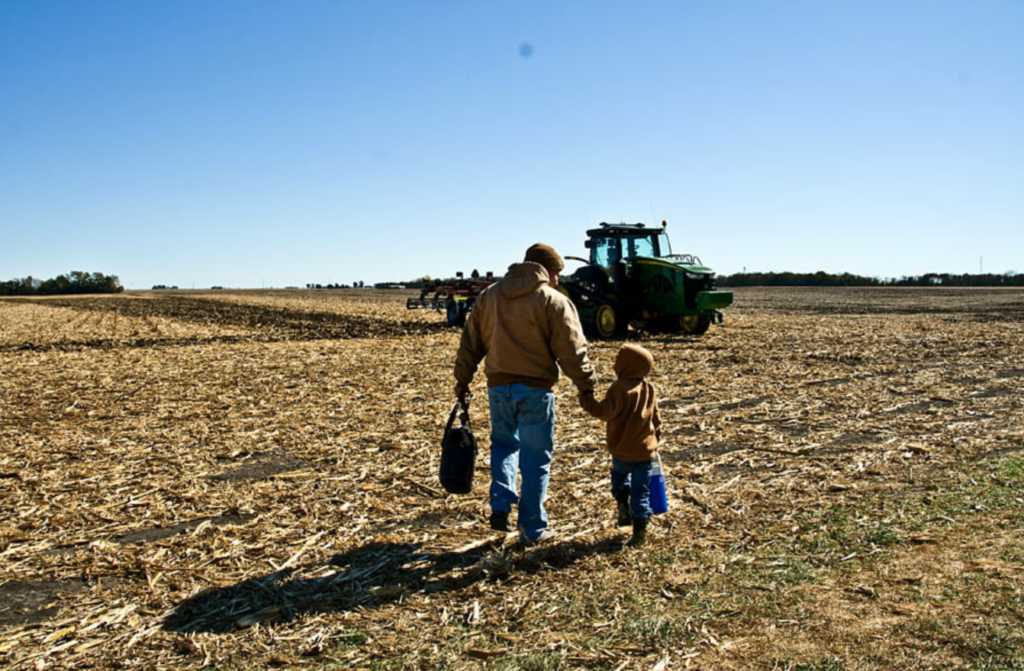
| The Farmer: Kilgus Farmstead, Fairbury, Illinois We are a fourth-generation family farm dedicated to producing high-quality dairy and meats for our local and regional community. Our farm has grown over generations with a focus on care for the land, our animals, and the families we serve. Our Jersey cows produce rich milk bottled on-site, and we also raise beef, pork, and goat as part of our diversified operation. Through our on-farm Country Store, we connect directly with customers by offering fresh milk, cream, ice cream, gelato, and a full selection of farm-raised meats, as well as other locally sourced goods — from fresh items to pantry staples. Our role in the local food system is grounded in direct connection. By keeping food local, we offer greater freshness, transparency, and consistency, while building lasting relationships within our community and with the families and businesses we serve. This approach keeps us closely tied to both the land and its people. We believe a thriving food system is one where farms and communities are intentionally connected and supported. Central Illinois has shown that this kind of system can grow, succeed, and remain sustainable. Continued collaboration and investment in local relationships are key to strengthening these networks and ensuring they remain viable for generations to come. |
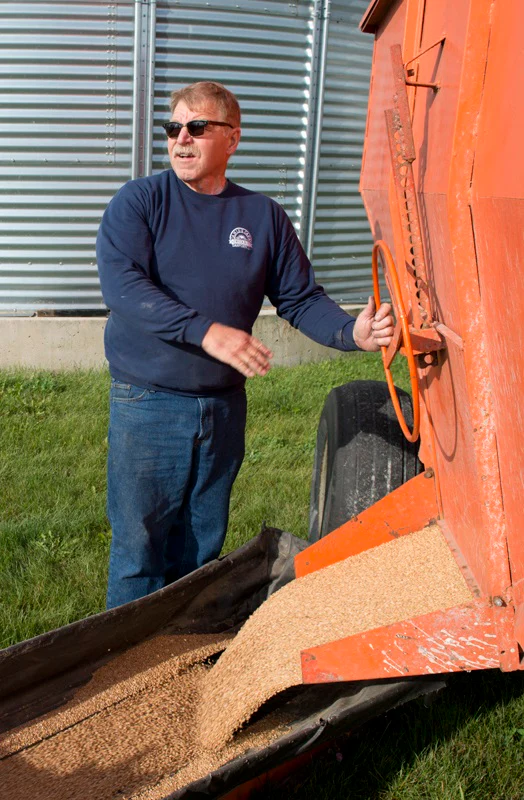
| The Millers: Harold and Ross Wilken, Janie’s Farm and Mill We are a father-son team that owns and runs both Janie’s Farm and Janie’s Mill. Together we farm over 4,000 acres of fertile land using organic and regenerative practices that benefit not only the soil, but the air, water, and biodiversity all around us. We grow certified organic corn, soybeans, oats, rye, and buckwheat, as well as many varieties of wheat. We then stone-mill our grains into high-quality organic flours and other products for professional and home bakers and for brewers and distillers. We partner with farmers, bakers, nonprofits, and others to help educate both farmers and the public through tours, field days, conferences, and mentoring of all sorts. Since 2018, Janie’s Mill has grown from one employee to 28, including 17 full-time and nine part-time employees. Its product line has expanded from six products to 49, with more in development, while the number of stone mills has doubled from two to four. The mill now handles 16 types of grain, up from three, and has increased its weekly production from less than 2,000 pounds to approximately 50,000. Of course, this growth would not have been possible without a lot of help from our friends! Those friends range from partner farmers to employees to bakers and many others — not the least of which is our friend Marty Travis and his team at Down at the Farms. Each and every week, Marty is the aggregator/distributor for our all-purpose, high-protein, artisan blend, spelt, and semolina flours. We were especially proud to be part of the local food procurement program that Marty is a key player in, thus allowing our products to get to food pantries and families that would otherwise not have access to them. Our vision for a thriving food system is one that starts with caring for the soil and ends with getting high-quality, nutrient-dense food to everyone in our community. What is still needed to achieve that vision are: 1) more farmers restoring the life and health of the soil through crop rotation and cover crops; 2) more farm businesses making value-added products for consumers and, in so doing, providing jobs that help keep their rural communities healthy — economically, environmentally, and socially; and 3) more aggregators/distributors and infrastructure to get high-quality food to local people and businesses. |
| The Value Adder: Jonathan Cox, The Saucier, Lincoln, Illinois As the owner of The Saucier LLC, I would classify my role in the local food system as an “endpoint producer.” I serve as a vital conduit between the consumer, the aggregator, and the producer. In this role, I do more than just process and mesh the products we receive; my daily interactions with consumers allow me to identify shifting demands and emerging trends. It is then my responsibility to communicate these insights back to our aggregators and growers to ensure the system remains responsive. Since its inception, my company’s motto has been “superior ingredients make a superior product.” My passion for food drives me to represent ingredients grown in the best possible environments, while my commitment to our community motivates me to provide healthy, nutrient-dense products that improve quality of life. My vision for a thriving system is one where we continue to bridge the gaps between every player in the chain. Food is the one thing that brings us all together, and I value the fact that we are all, in essence, sitting at one big table. To achieve this, we still need streamlined communication channels that allow real-time consumer feedback to reach our farmers more effectively. |
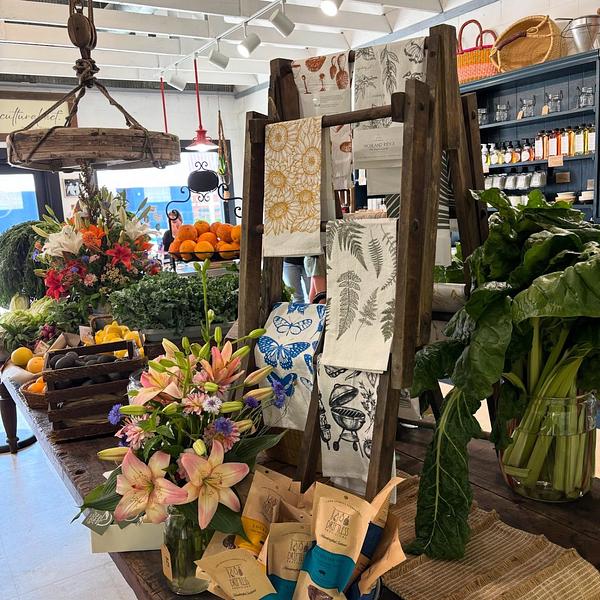
| The Grocers: Farm Family Foods, Benson, Illinois Our farmer-led, independent smalltown grocery store fills a unique niche, centered on community stewardship. We participate in the local food system as farmers, network builders, marketers, food hub managers, and distributors, each role aiming to strengthen the connection between local consumers and food produced in their community. The irony of working in a rural region dominated by commodity agriculture is that local folks are surrounded by production that doesn’t actually feed its people. At Farm Family Foods, we make it easier for small and beginning food farmers by offering a marketplace for their vegetables, fruits, grains, and animal proteins, simultaneously building opportunities for communities by offering fresh food access nearby. Our role focuses on reducing the barrier of entry for producers looking for a way to get their products to their neighbors. We believe every small town deserves local food access and see an urgent need to service more communities with bespoke, independent grocery stores. Smalltown grocers are the little engine that could: beating the odds and delivering outsized impact. By growing more farmer-led, community-based markets, we can reinvigorate rural America in a way that supports both community health and economic growth. |
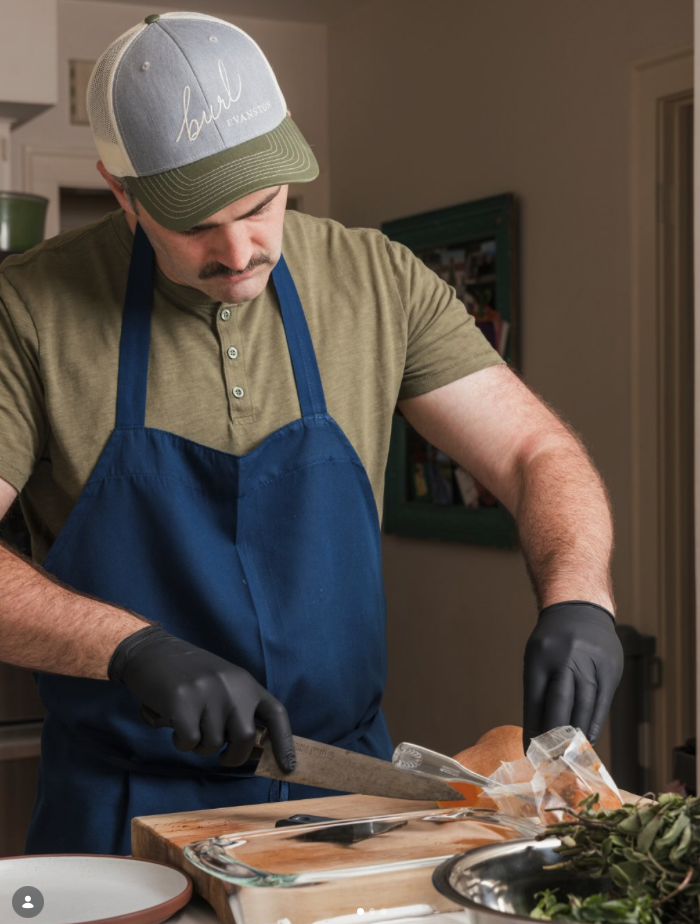
| The Chef: Tom Carlin, Burl Restaurant, Evanston, Illinois I met Marty at least 10 years ago, while I was working at Publican Quality Meats, and we have grown closer over the past decade. He is able to tell the stories of his cohorts in a way that is honest, easy to digest, and easy to pass on. This is the real secret to what I hope will be our continued success. At Burl, we do our best to tell the stories of our farmers. We call our restaurant “farmer driven,” as opposed to “chef driven” — because, if we are being really honest with ourselves, it has always been driven by the farmer. Every week and season, we ask what they want to get rid of, what they are proud of, or what they want to grow for next year — not the other way around. This provides the farmers some level of consistency and provides our customers, most of whom live a life disconnected from the farm, a little connection to a world different from the one they live in. I would like to have this model continue here at the restaurant and begin to perpetuate into our society. Restaurants can be places that drive cultural change. Hopefully we can continue the work, resulting in a more connected world. Working with farmers and enjoying the farmers market as a customer, means not only eating your weight in peaches in late summer, but beets in December and, around here, March. |
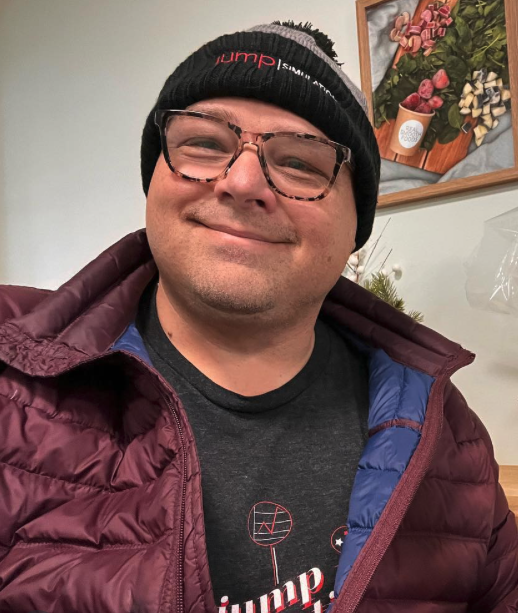
| The Doctor: John Vozenilek M.D., Chief Medical Officer, OSF HealthCare System My role in the local food system sits at the intersection of healthcare, agriculture, and community infrastructure. As a physician working in innovation, much of my work supports a healthcare system as it explores how to more directly engage with local and regional producers through aggregation and distribution networks. This includes building relationships with growers, aggregators, and distributors to ensure that local food can move efficiently into healthcare settings. I am also focused on advancing clear evidence of the nutritional value of foods produced on our regional farms, helping connect production practices with measurable health outcomes for patients. This role matters because strong local food systems must work for both patients and farmers. In rural Illinois, effective aggregation and distribution keep more dollars on the farm and in the community, while also improving access to high-quality, nutrient-dense food. When healthcare systems invest in local food, they support land stewardship, economic viability for producers, and better long-term health outcomes. My vision for a thriving system is one where healthcare is a consistent and dependable buyer within regional food economies. What is still needed is better coordination, scalable infrastructure, and financing models that create shared value for both patient health and farmer sustainability. |
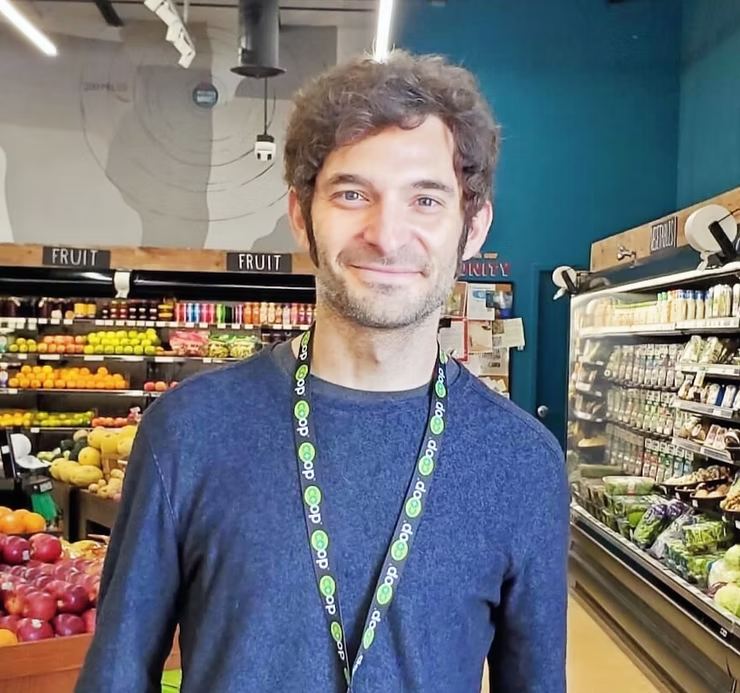
| Telling the Story and Walking the Walk: Matt Wechsler, Hourglass Films and Wild Onion Market My name is Matt Wechsler. My work in the local food system has always centered on storytelling and access. As a filmmaker, I directed the documentary Sustainable to highlight the challenges and resilience of Midwest farmers and connect consumers to the realities behind their food. During COVID, I expanded that mission by opening Village Farmstand, a small grocery store sourcing products exclusively from farms within 150 miles of Chicago. It became a direct bridge between Midwest farmers and my local community in Evanston, Illinois, at a time when supply chains were strained and trust in food systems was shifting. In 2025, I stepped into a more operational role as interim general manager of Wild Onion Market. There, I increased local produce purchasing threefold and built relationships with over a dozen new regional farmers, strengthening the cooperative’s commitment to local sourcing. My role has evolved, but the goal remains the same: to help build a resilient, equitable food system. I envision a future where local farms have the infrastructure to supply large grocery retailers at scale with competitive prices — creating stable markets for farmers, meaningful jobs in rural communities, and greater access to fresh, healthy food for all. |
| The Consumer: Peyton Beebe, Pontiac Township High School Our role in the local food system is as a student and community member who both consumes and influences food choices. Even though we are not a farmer or business owner, our decisions about what we buy, where we eat, and how we support local producers play a part in shaping demand. We also represent the next generation of consumers. By choosing locally sourced foods when possible and supporting school or community initiatives that prioritize local products, we help strengthen connections between producers and consumers. A strong local food system depends not only on those who grow and distribute food, but also on those who actively support it. When younger people are engaged, it helps ensure the system continues to grow and adapt in the future. Our vision for a thriving local food system is one where fresh, healthy, and affordable food is accessible to everyone, regardless of income or location. It would include strong partnerships between farmers, schools, businesses, and healthcare providers, creating a system that supports both community health and local economies. What is still needed is better access in underserved areas, increased awareness, and stronger collaboration across all parts of the system to make local food a consistent and realistic option for all. |
| Expanding a Food Pantry: Katie Travis, Fairbury Community Food Pantry I’ve felt a pull toward the issue of food insecurity for a long time. So, when I learned that my local food pantry was looking for a new lead, I felt an immediate call. The center has been a huge benefit to the people in our community for a long time, and I see certain aspects that could be even better. I’m excited to expand what they’ve already been doing to better help families. In the past there hadn’t been a lot of fresh foods available to families, so this was something I look forward to integrating. When my family and I began a garden just for the food pantry, it sparked an encouraging idea: if several people were willing to grow one thing for the food pantry, it could go such a long way for the people of this community. Local partners play a huge role, and I’m thrilled to connect with local farmers to make fresh produce a reality for the people in our community. My long-term vision includes creating a space where hot meals can be provided. Opening a kitchen would also open up the possibility of providing food education. I am deeply passionate about creating more opportunities for food variety, education, and collaboration — and in turn increasing the avenues of food for more people and continuing the growth of a vibrant local food system. |
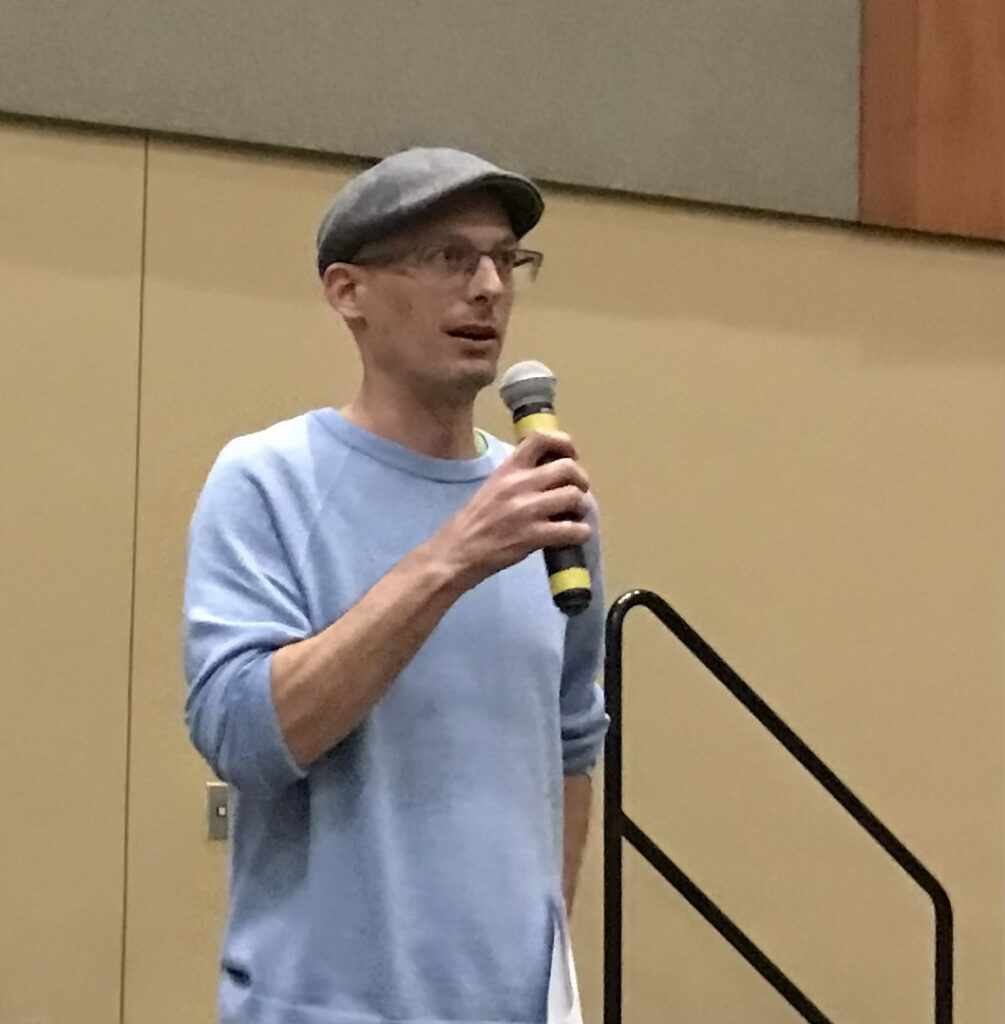
| Accelerating Change: Ryan Slabaugh, Think Regeneration I am the president and founder of Think Regeneration, a national 501c3 nonprofit working to accelerate change in agriculture and food. We operate real, catalytic programs that improve the lives of farmers, students, families, business owners, civic engineers, and ecologists. By breaking down silos between agriculture, food, healthcare, and economic development, we are starting to address critical issues affecting Americans like chronic diseases, rural degradation, loss of farmland, and food scarcity. Our vision for a thriving food system centers on re-engineering supply chains to prioritize nutrient density, farmer income, and ecosystem health. We believe it is time to move beyond systems that contribute to poor health outcomes, economic instability for farmers, and the decline of rural communities. We envision a future where healthy food is abundant and accessible and where farmers are compensated for producing nutrition — not just commodities. This transition is already underway across the country. From food-is-medicine initiatives in Illinois and medically tailored meals in Maryland, to school partnerships addressing chronic disease in Arizona, to labs researching connections between soil and human health, to emerging food hubs focused on health outcomes in Oklahoma and Indiana, we have found people working passionately in nearly every community in the country. These efforts are forming the foundation of a new, scalable model — one that strengthens local economies, improves public health, and restores ecological systems. |
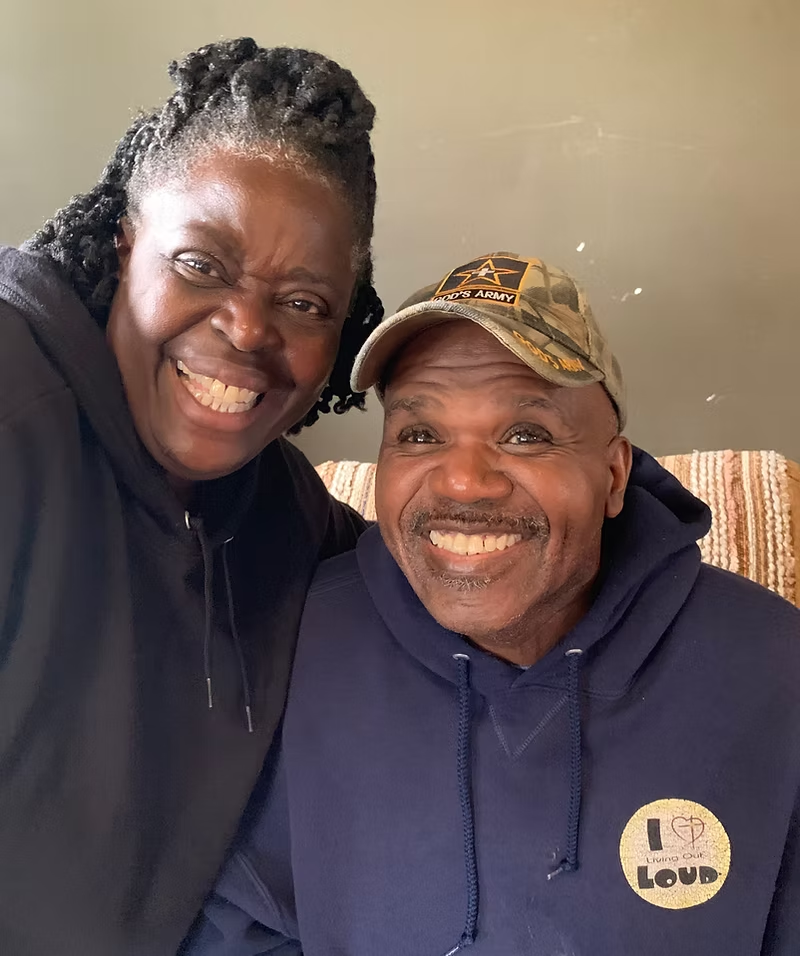
| Growing a Community: Run-A-Way Buckers I’m Brenda Stewart, owner and director of Run-A-Way Buckers in Pembroke, Illinois. Our organization operates in an underserved area without a grocery store, where I manage various operations. Over the past three years, our farm has supplied more than 7,000 pounds of fresh produce, protein, and fruit to our community. We aim to become a leading food producer and distribution center, providing large quantities of fresh food to local schools, stores, hospitals, nursing homes, and other venues. We still need more storage, transportation, and equipment. |