
Breeding for Better Rotations Opens a New Frontier in Farming Systems
Breeding crops for farming systems rather than yield alone could exploit untapped genetic potential and help farmers cut fertilizer bills. This new way of thinking about crop breeding has been set out by researchers at the University of Queensland and was recently published in Plant Communications and Nature Genetics.
Dr. Millicent Smith said the idea was to select varieties for what they left behind for the next crop, not just for what they produced. “We already know that every crop leaves a legacy, such as altered soil nutrients, water, structure, and microbial communities,” she said. “Rotating crops has delivered agronomic benefits for centuries, yet the genetics underpinning those benefits have remained largely invisible to plant breeding.”
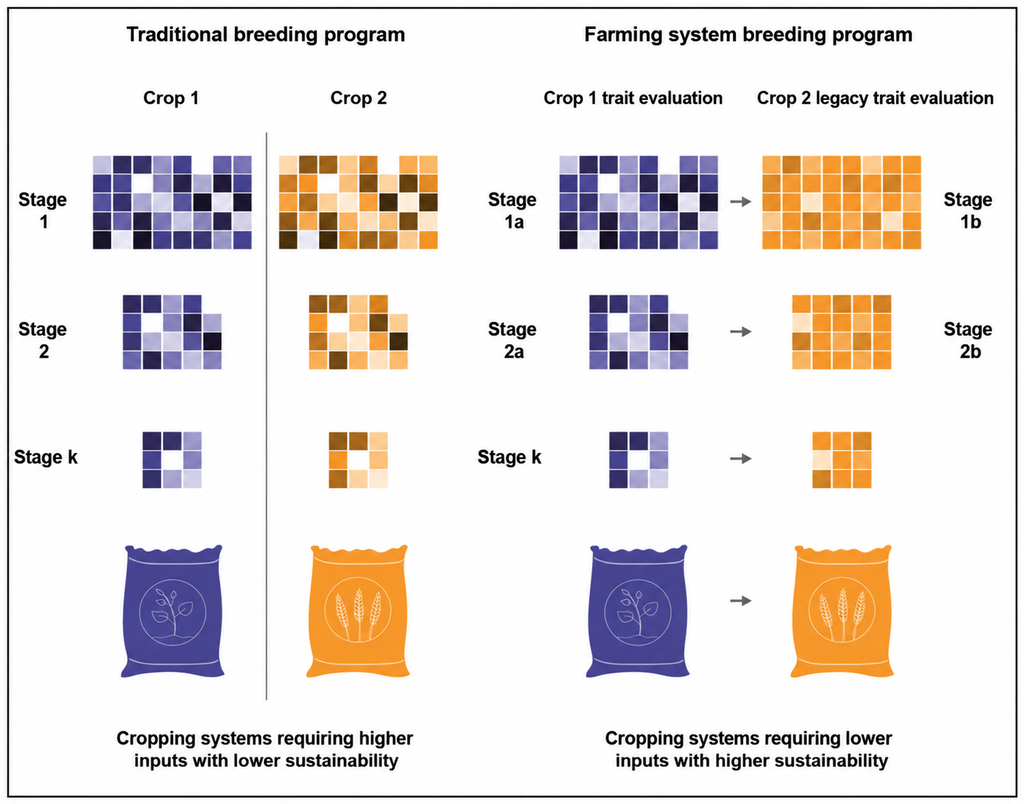
Dr. Smith’s team is treating rotation as a genetic question rather than a management one. “Growers choose which crop follows which. What we are saying is that the variety chosen matters too and could be something breeders select for,” she said.
Testing this theory has already shown remarkable results, with wheat yields varying by nearly 15 bushels per acre. In a first-of-its-kind experiment, the project team grew more than 300 genetically diverse mungbean types at a research station in southern Queensland and then planted the same wheat variety across all the plots.
“Some mungbeans lifted the following wheat by 45 percent, while others halved it,” Dr. Smith said. Based on these results, the research team believes it is possible to breed crops in an integrated way.
Plant breeder and crop geneticist Lee Hickey said the team can now point to specific regions of the mungbean genome that influenced how well the following wheat crop performed. “What’s striking is that some of those regions work against each other. The genetics that make one crop high-yielding can be the same genetics that leave fewer soil resources behind for the next crop.”
The team also simulated what would happen if selection was applied equally to both mungbean yield and the subsequent wheat yield. “That showed gains in both crops, highlighting the opportunity to breed for system-level productivity with reduced input requirements,” Dr. Hickey said.
Plants Are Pulled in Competing Evolutionary Directions
Plants facing both a warming climate and rapidly declining pollinator populations may be pulled in competing evolutionary directions. A University of Michigan study suggests that instead of adapting primarily to climate pressures, some plants may be evolving traits that help them attract pollinators.
In morning glories, researchers found that the population’s rate of adaptation fell by 96 percent over nine years. That sharp slowdown could also have implications for agriculture because morning glory is often considered a troublesome weed by farmers.
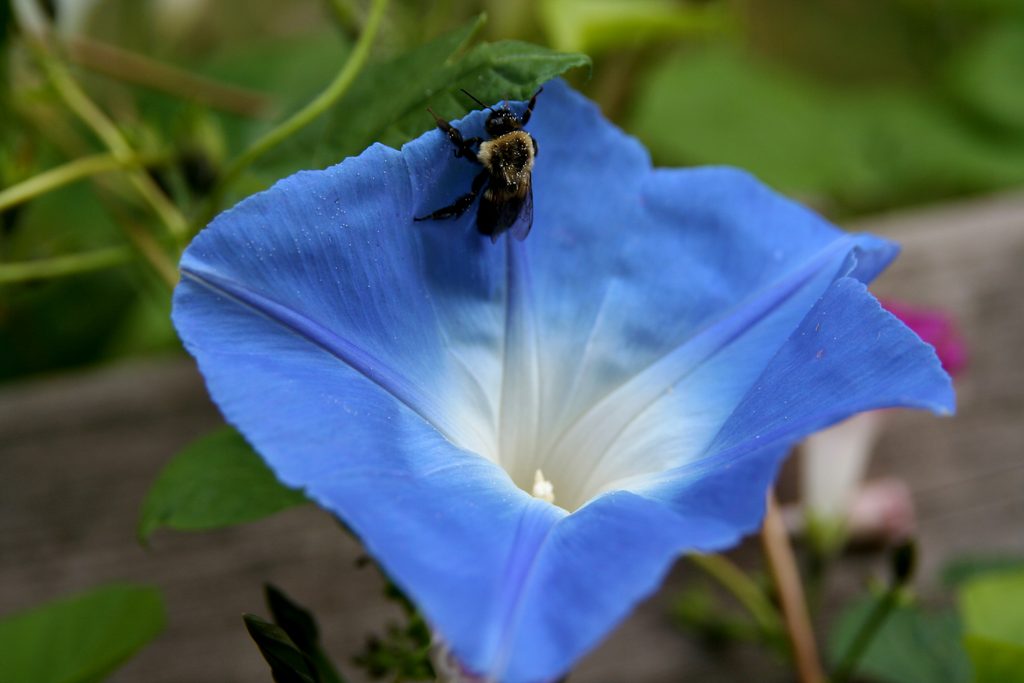
“Because pollinator pressure strongly favors larger flowers, that linkage may limit how efficiently the population can respond to other selective pressures. Whether that ultimately makes the weed more or less of a problem for farmers is hard to predict — and that unpredictability is itself part of the story,” said researcher Regina Baucom.
Baucom says the slowdown appears to stem from a conflict between two potentially useful traits. Larger flowers may improve a plant’s chances of attracting pollinators, while flowering earlier can help plants respond to changing environmental conditions. In the morning glory populations, those traits became increasingly linked. That connection appears to restrict how freely the plants can adapt, with selection for larger flowers taking precedence over the potential benefit of earlier flowering.
Importantly, the newer plant populations still contained substantial genetic variation. In theory, that diversity should provide enough raw material for continued adaptation. “The plant isn’t running out of evolutionary fuel — it’s increasingly locked into a trajectory that favors pollinator attraction, potentially at the expense of climate adaptation,” Baucom said.
The study, published in Evolution Letters, explores a growing mismatch between evolutionary theory and what researchers are observing in nature. Theory suggests organisms can sometimes adapt rapidly when their environments change quickly, but many wild plant populations do not appear to be keeping pace.
“Instead of evolving, there are all these wild populations that are dying off, declining, or going through genetic bottlenecks,” researcher Sasha Bishop said. “So, we’re looking at a situation in which there’s a lag in what we’re seeing in the adaptive rate in wild populations compared to what we think might be theoretically possible in terms of rapid evolution.”
To investigate the problem, the researchers grew morning glory plants from seeds collected from wild populations at two separate times, with the collections occurring nine years apart. They measured several traits that could be influenced by climate conditions or pollinator activity. These included the date of the first flower, flower size, nectar sugar, flowering time, and the distance between flowers’ anthers, or the pollen-producing part of the flower, and the stigma, the structure that receives pollen.
The team then calculated the plants’ adaptation rate using a statistic known as R. This approach estimates how a population is expected to adapt while accounting for relationships among multiple traits, rather than examining each trait independently. That allowed them to determine whether one trait might “constrain” another. In other words, changes in one characteristic could limit how much another characteristic is able to change.
When two traits are linked in this way, they are considered “covariants.” Bishop and Baucom found that flower size and flowering time became linked in the morning glory populations during the relatively short nine-year study period.
In the original morning glory populations, the researchers estimated that adaptation was occurring at about 76 percent of the rate expected if covariance between traits were not taken into account. Nine years later, that figure had fallen to roughly 9 percent of the expected rate without covariance. The result points to a substantial increase in evolutionary constraints over a relatively short period.
Flowering time is especially important because plants can shift when they bloom in response to environmental changes.
“There are quite literally thousands of studies showing that flowering phenology is a really important adaptive path when it comes to climate change, particularly temperature changes and precipitation changes, both of which happened in these wild populations in the locations where they were collected from,” Bishop said. “The implication in my mind is that pollinator decline, or the lack of pollination and selective drive to attract pollinators, is making these plants potentially less able to adapt to climatic shifts.”

| Confused by USDA Programs? A new free tool called Farmer’s Navigator (farmersnavigator.com) aims to cut through the perplexity of different USDA programs. It provides guides in plain English to help farmers and ranchers understand what to ask for, what the tradeoffs are, and how to go through the process of obtaining and utilizing government farming programs. |
High-Voltage Electrostatic Fields “Empower” Tomato Seedling Cultivation
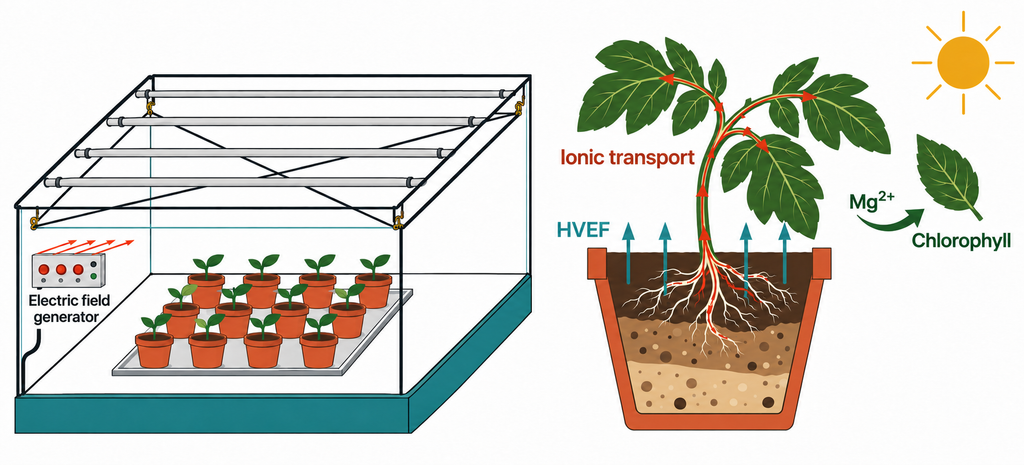
As a frontier technology in agricultural physical engineering, high-voltage electrostatic fields (HVEF) have attracted considerable attention for their potential to regulate plant growth and development in a non-chemical manner. Yet how electric fields of different polarities systematically affect the plant’s intrinsic physiological electrical network, and the underlying mechanisms coupling ion dynamics with photosynthesis, remain unclear. A team at Shanxi Agricultural University has now published a research paper in the journal Engineering Agriculture that details comparative experiments with positive and negative HVEF. The study systematically revealed, for the first time, the ion spatial distribution patterns driven by electric field polarity and their regulatory mechanisms on photosynthetic architecture.
Although previous studies have confirmed that HVEF can influence seed germination and preservation, the technology still faces key challenges in practical agricultural applications. First, electric field effects show a pronounced “biphasic regulatory effect.” In practice, negative electric fields often exhibit a “promotion first, inhibition later” phenomenon, leading to growth arrest or even plant death at later stages, while the time-dependent inhibitory mechanism remains unclear.
Second, plants possess a complex native electrophysiological system. How exogenous electric fields cross the physical barrier of the cell membrane to precisely regulate intracellular ion homeostasis — especially the spatiotemporal transport pathways of magnesium ions, which are central to chlorophyll — still lacks systematic evidence. In addition, the link between macroscopic phenotypic changes and microscopic ion dynamics and electrochemical signals has not yet been established, constraining the precision and engineering application of HVEF in protected agriculture.
At the microscopic level of ion and electrochemical mechanisms, the research team discovered a key phenomenon of “preferential magnesium ion transport.” After 25 days of +HVEF treatment, large amounts of magnesium ions were directionally enriched in leaves, reaching 1.58 times the concentration of the control group. Using inductively coupled plasma spectroscopy and energy-dispersive spectroscopy mapping, the team mapped the differential distribution patterns of ions in roots, stems, and leaves. Meanwhile, plant impedance spectroscopy and membrane potential data revealed that +HVEF induced cell membrane hyperpolarization and reduced impedance, effectively “opening” high-speed ion transport channels.
At the functional output level, these ion dynamic changes directly translated into improved photosynthetic efficiency. Leaf chlorophyll content increased substantially, stomatal conductance and stomatal aperture increased, and the activities of key photosynthetic enzymes such as Rubisco were synergistically activated. The study confirmed that it was precisely because +HVEF enhanced stomatal conductance while simultaneously improving carbon assimilation efficiency that intercellular CO₂ concentration remained stable, thereby reshaping the functional structure of photosynthesis.
| Not April 1: NASA-Backed Scientists Turn Plastic Waste into Edible Cookies Plastic bottles and cookies may seem to have nothing in common, but by engineering yeast, scientists at Southern Illinois University have developed a system that can transform compounds from plastic and agricultural waste into edible proteins, vitamins, flavorings, and other food ingredients. The approach could provide a new way to reuse difficult waste while also helping produce food in places where conventional supplies are limited. Potential applications range from disaster zones on Earth to human missions deep into space. “We were trying to develop technologies for plastic upcycling to make more valuable products. We thought, why not focus on making food? Because plastic is carbon and food is carbon,” explained researcher Lahiru Jayakody. A major target is polyethylene terephthalate (PET), a widely used plastic found in products such as soda and water bottles. PET contains carbon-rich molecules that can potentially be broken apart and rebuilt into useful compounds, including components that can ultimately become proteins. Scientists can perform some of these transformations using chemical reactions and laboratory solvents; the research team instead turned to microbes, which can carry out complex biochemical processes naturally. Yeast, for example, can be genetically programmed to produce valuable molecules. Insulin, which was once obtained from animal pancreases, can now be made using engineered microbes. The researchers applied a similar idea to waste. They programmed several types of yeast, including baker’s yeast, to take molecules derived from plastic and agricultural leftovers and convert them into proteins, vitamins, and flavoring compounds. Before the yeast can use those materials, however, the waste has to be broken into more manageable pieces. The researchers process PET plastic, discarded corn stalks and leaves, and other biomass using a proprietary technique known as oxidative hydrothermal dissolution. The process combines water and oxygen under high temperature and pressure to break resistant materials into compounds microbes can access. Those smaller molecules are then fed to the engineered yeast. The microorganisms transform them into new food components, including proteins, fats, and acids. Once the yeast-derived ingredients have been produced, researchers combine them with fiber, starch, and sweetener. The mixture is then pushed through a 3D printer to create protein-rich cookies called µBites (pronounced “microbites”). The available data indicate that µBites are safe to eat, although the researchers are still waiting for institutional approval before conducting formal taste tests. For now, participants have evaluated the cookies based on their aroma. Most said they would be willing to eat µBites in situations where food resources were scarce. The researchers are also working to make the cookies more appealing to people who have other food choices. They engineered yeast strains capable of producing additional food ingredients. Baker’s yeast can now generate vanilla flavoring from plant biomass. Another yeast strain can use ethylene glycol derived from PET to produce beta-carotene, which the human body can convert into vitamin A. The team ultimately wants microbes to produce even more of the ingredients needed for µBites. That includes the starch, fiber, and sweetener that currently have to be added separately. They hope the cookies could be ready for public consumption within the next few years. |