

News and Analysis on Developments in Agronomic Science
“Pathogens” May Actually Function as Beneficial Microbes Under Some Conditions
Mold and diseases caused by fungi can greatly impact the shelf life of fruit and vegetables. However, some fungi benefit their hosts by aiding plant survival.
Colletotrichum tofieldiae (Ct) is a root mold that typically supports continued plant development, even when the plant is starved of phosphorus. Researchers at the University of Tokyo have recently studied a unique pathogenic strain of the fungi, called Ct3, which, conversely, inhibits plant growth. By comparing the beneficial and harmful Ct strains, they found that activation of a single fungal secondary metabolism gene cluster determined the impact of the fungus on the host plant. When the cluster was disrupted — either genetically or by a change in environment — the fungi’s behavior changed from inhibiting growth to promoting it. Understanding mechanisms like this could help reduce food waste by harnessing the beneficial role fungi can have on food.
“Plant-associated fungi show varied infection lifestyles, ranging from mutualistic (beneficial) to pathogenic (harmful) depending on the host environment. However, the mechanisms by which these microbes transition along these different lifestyles remain poorly understood,” said Associate Professor Kei Hiruma of the University of Tokyo.
“We analyzed genetic information from varied strains of a root fungus called Colletotrichum tofieldiae using comparative transcriptomic analysis, which enabled us to study differences in gene expression between each strain. Surprisingly, we found that a single fungal secondary metabolism gene cluster, called ABA-BOT, solely determines whether the fungus exhibits pathogenic or mutualistic traits toward the host plant.”
“We identified two key points: First, on the fungal side, Ct3 activates the ABA-BOT biosynthesis gene cluster; and second, on the plant side, Ct3 induces the host plant’s ABA signaling pathways, through which the fungus inhibits plant growth,” said Hiruma. The researchers found that both pathogenic and mutualistic strains of Ct contain the ABA-BOT gene cluster, but mutualistic strains did not express it — i.e., the genes were not activated. The discovery came as a surprise, as pathogens and mutualists are conventionally thought to have distinct characteristics; these findings suggest that they are more intricately related.
When the gene cluster was disrupted, either at a genetic level or by changing the plant’s environment, the Ct3 was rendered nonpathogenic and even became beneficial to the host, promoting root growth. Although further study is needed, it appears that the ABA-BOT gene cluster may contribute to pathogenesis in diverse fungi beyond the Ct species. For example, it may be involved in the pathogenesis of the Botrytis, which afflicts common fruits and vegetables.
“I have come to realize that even pathogens can exhibit nonharmful characteristics during a significant portion of their life cycles,” Hiruma said. “In fact, I am beginning to contemplate the possibility that what we traditionally refer to as pathogens may actually function as beneficial microbes under other conditions.”
Farms That Create Habitat Key to Food Security
It seems intuitive that forests would provide better habitat for forest-dwelling wildlife than farms. Yet, in one of the longest-running studies of tropical wildlife populations in the world, Stanford researchers found that over 18 years, smaller farms with varying crop types — interspersed with patches or ribbons of forest — sustain many forest-dependent bird populations in Costa Rica, even as populations decline in forests.
In a paper published in the Proceedings of the National Academy of Sciences, Nicholas Hendershot and colleagues compared trends in specific bird populations across three landscape types in Costa Rica: forests, diversified farms, and intensive agriculture. The steepest declines were found in forests, then in intensive agriculture (and the species succeeding in intensive agriculture were often invasive). But on diversified farms, a significant subset of bird species typically found in forests, including some of conservation concern, actually increased over time.
While this research implies that diversified farming could be key for biodiversity, the relationship goes both ways: biodiversity is key for food security. In this case, that means having a variety of types of birds feeding on insects and helping to pollinate crops.
Gretchen Daily, a senior author on the paper, also noted that, in terms of food production, diversified farms are not necessarily lower yielding than intensive agriculture. “This is a recent assumption that is being overturned,” she said.
It has become increasingly apparent around the world that while protected areas remain critical, they are too few to provide the ecosystem services people and nature need to thrive.
Working Landscapes Crucial for Biodiversity Preservation
“Working landscapes are crucial for preserving biodiversity and its benefits. ‘People, including scientists, had the idea that farmland would not support a meaningful amount of biodiversity,’ said Daily. In this case, not only are diversified farms themselves providing habitat — they connect otherwise fragmented forested areas.
Over time, Hendershot said, ‘I have moved away from the ‘fortress conservation’ model, which focused more on creating protected areas separate from human activities, and I see more and more how much potential there is outside of forests. The forests are key — we need them, of course. But in addition to that, I’m always surprised by how important how you manage a farm is for biodiversity.”
Microplastics in Soil Could Introduce Drug-Resistant Superbugs to the Food Supply
Like every industry, modern farming relies heavily on plastics: plastic mulch in vegetable beds, PVC pipes draining water from fields, polyethylene covering high tunnels, and plastic seed, fertilizer, and herbicide packaging, to name a few. These plastics are now widely dispersed in agricultural soils in the form of microplastics and nanoplastics (as in nearly every ecosystem and organism on Earth).
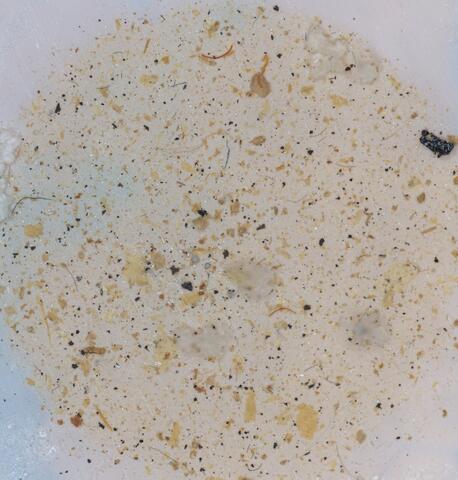
The twist, according to University of Illinois researchers, is that while micro- and nanoplastic itself may not be very toxic, in agricultural soil it may act as a vector for transmitting pathogenic and antimicrobial-resistant bacteria into the food chain. They published their results in the journal Pathogens.
Here’s how the link works. First, plastics are an excellent adsorbent. That means chemical substances and microscopic organisms love to stick to plastic. Chemicals that would ordinarily move through soil quickly — things like pesticides and heavy metals — instead stick around and are concentrated when they encounter plastics. Similarly, bacteria and other microorganisms that occur naturally in soil preferentially congregate on the stable surfaces of microplastics, forming what are known as biofilms.
When bacteria encounter unusual chemical substances in their new home base, they activate stress response genes that incidentally help them resist other chemicals too, including, sometimes, antibiotics. And when groups of bacteria attach to the same surface, they have a habit of sharing these genes through a process called horizontal gene transfer. Gene transfer between bacteria on microplastics has been documented in other environments, particularly water. So far, the phenomenon is only hypothetical in agricultural soil, but that doesn’t mean it’s not happening. Nanoplastics, which can enter bacterial cells, present a different kind of stress, but that stress can have the same outcome.
The authors point out many foodborne pathogens make it onto produce from their native home in the soil, but nanoplastics and antibiotic-resistant bacteria could be small enough to enter roots and plant tissues — where they are impossible to wash away. While nanoplastics have been documented in and on crops, the field of study is still new, and it’s not well known how often this occurs.
Ultimately, microplastics are here to stay. They persist in the environment for centuries or longer. It’s time to understand their impacts in the soil and our food system, raise awareness and push toward biodegradable plastic alternatives.
Ag Tech Can Cut Billions of Tons of Greenhouse Gas Emissions
As Earth’s human population grows, greenhouse gas emissions from the world’s food system are on track to expand. A new study demonstrates that state-of-the-art agricultural technology and management can not only reduce that growth but can eliminate it altogether. In fact, employing additional agricultural technology could result in more than 13 billion tons of net-negative greenhouse gas emissions each year. The study was published in the journal PLOS Climate.
“Our study recognizes the food system as one of the most powerful weapons in the battle against global climate change,” said Benjamin Houlton of Princeton University. “We need to move beyond silver-bullet thinking and rapidly test, verify and scale local solutions by leveraging market-based incentives.”
The world’s food system currently generates between 21 and 37 percent of the planet’s greenhouse gas emissions each year. With the global population approaching 10 billion by mid-century, greenhouse gas emissions of the global food system — if left unchecked — could grow to 50 and 80 percent by 2050, according to the paper.
Previous research has indicated that changing diets around the world is a key to reducing greenhouse gas in the food-system sector. If the entire human population adopted a so-called “flexitarian” diet by 2050 — which is promoted by the EAT-Lancet Commission — scientists estimated a gross reduction of 8.2 billion metric tons of greenhouse gas emissions, which falls far short of the net-negative emissions goal.
“Our study examines both dietary change and agricultural technologies as various options for slashing emissions,” said Maya Almaraz, an associate research scholar at Princeton. “This included an analysis of carbon sequestration.” In contrast to the marked benefit of agricultural technology in realizing massive sector-wide negative emissions, dietary changes had little effect on carbon sequestration, according to the study.
“We only looked at about a dozen technologies,” Almaraz said. “But there are even more under development, which hold a lot of promise for the food system.”
The new model showed that the most effective way to reduce emissions is to boost soil modifications for crops (biochar, compost, and rock amendments), develop agroforestry, advance sustainable seafood harvesting practices, and promote hydrogen-powered fertilizer production. In a process called “enhanced weathering,” for example, silicate rock dust can be added to crop soils every five years to accelerate the formation of carbonates. This process devours carbon dioxide, which can sequester several billion metric tons of carbon per year, according to the paper.
Advancements in Agricultural Techniques for Greenhouse Gas Reduction
Through agroforestry, planting trees on unused farmland can impound up to 10.3 billion metric tons of carbon annually, while seaweed can be farmed at the ocean surface and then buried in the deep sea, removing up to 10.7 billion metric tons of carbon dioxide. Supplementing livestock feed with additives could reduce methane emissions by 1.7 billion metric tons, and applying biochar to croplands may reduce nitrous oxide emissions by 2.3 billion metric tons.
“If people choose to switch to healthier diets, as suggested by EAT-Lancet — and if they can afford it — great,” Houlton said. “But to get the world to net-negative greenhouse gas emission — a global imperative to avoid the most dangerous climate impacts — we need to rely heavily on agricultural technology and management techniques.”
Solar-Powered Irrigation: A Gamechanger for Small-Scale Farms in Sub-Saharan Africa
In sub-Saharan Africa, where 80 percent of agricultural production comes from smallholder farmers, increasing farm productivity faces challenges resulting in a significant yield gap. With 90 percent of all cropland relying on rain-fed agriculture under unpredictable rainfall patterns and limited mechanization, low productivity and food insecurity persist.
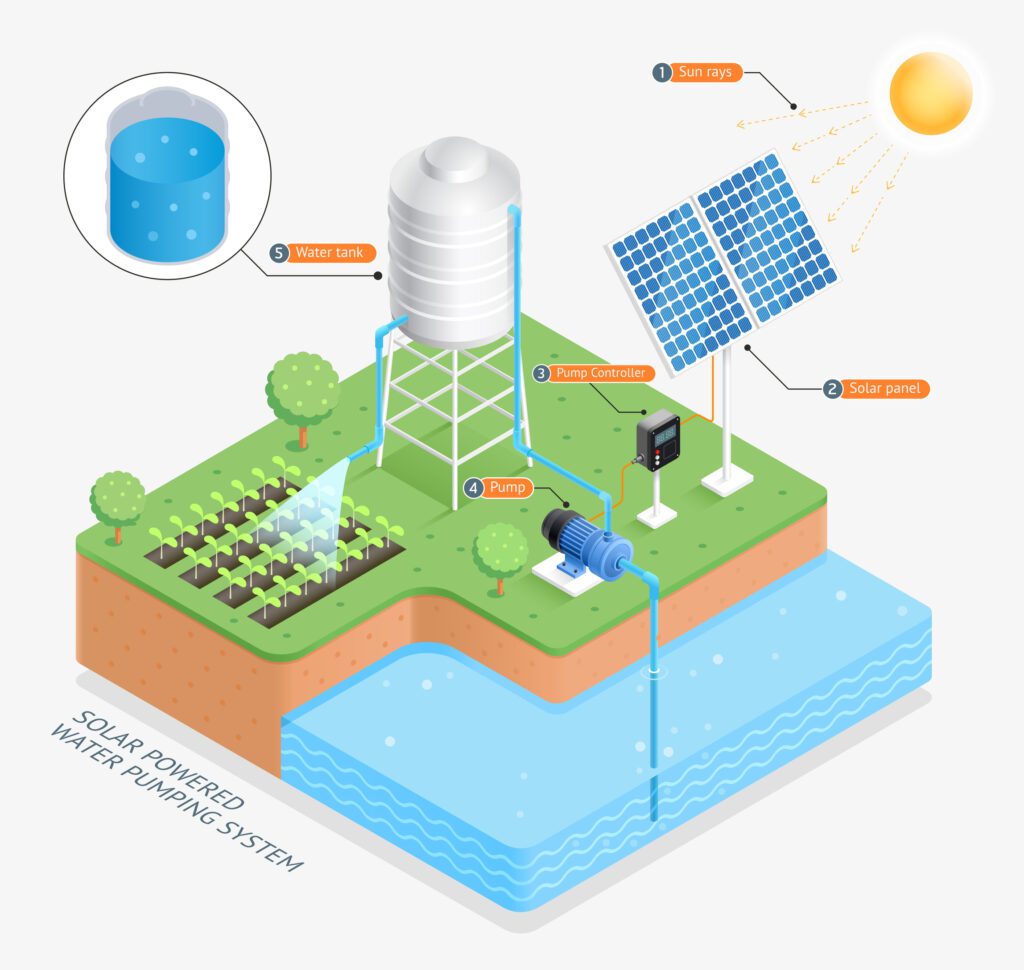
In a study published in Environmental Research Letters, an international research team calculated local irrigation needs, determined the required size and cost of technology components (such as water pumps, solar PV modules, batteries, and irrigation systems), and assessed the economic prospects and sustainable development impacts of adopting solar pumps.
“We estimate an average discounted investment requirement of $3 billion per year, generating potential profits of over $5 billion per year from increased yields to smallholder farmers, as well as significant food security and energy access co-benefits,” explained Giacomo Falchetta, lead author of the study.
Crucially, the study emphasized the importance of business models and investment incentives, crop prices, and PV and battery costs in shaping the economic feasibility and profitability of solar irrigation.
“Using a business model that spreads out all initial expenses more than doubles the number of workable solar irrigation systems, presenting a huge potential to achieving the [sustainable development goals] in the process,” noted research group leader Shonali Pachauri. “On the other hand, the study highlights that without strong land and water resource management, infrastructure, and governance, a widespread deployment of solar pumps may drive an unsustainable exploitation of water sources and reduce environmental flows. Consequently, both investing in infrastructure, such as reservoirs for water management during seasonal variations, and enhancing water resource governance are critical factors for ensuring the sustainability of widespread solar-pump deployment.”
Floating Sea Farms Could Grow Crops and Produce Fresh Water Using Only Sunlight and Seawater
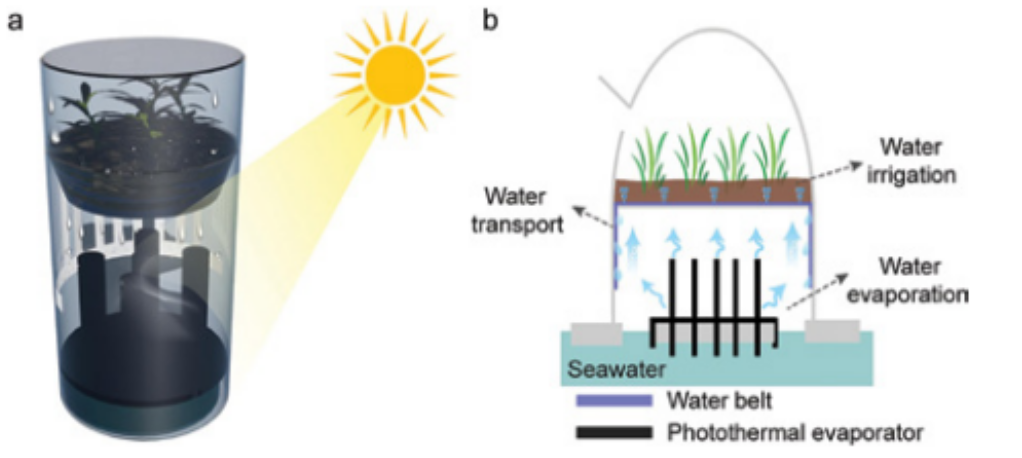
Researchers at the University of South Australia have developed a self-sustaining solar-driven system that evaporates seawater and recycles it into freshwater while autonomously growing crops. This innovation aims to address potential global shortages of freshwater and food in the future.
The vertical floating sea farm consists of two chambers: an upper layer similar to a glasshouse and a lower water-harvest chamber. Dr. Gary Owens explained, “The system works much like a wicking bed that household gardeners might be familiar with. However, in this case, clean water is supplied by an array of solar evaporators that soak up the seawater, trap the salts in the evaporator body, and, under the sun’s rays, release clean water vapor into the air, which is then condensed on water belts and transferred to the upper plant growth chamber.”
In a field test, researchers successfully grew three common vegetable crops—broccoli, lettuce, and pak choi—on seawater surfaces without maintenance or additional clean water irrigation. The solar-powered system offers advantages over other solar sea farm designs, with a compact footprint and avoidance of issues like overheating and crop death.
Professor Haolan Xu highlighted the efficiency of this design, stating, “It is fully automated, low cost and extremely easy to operate, using only solar energy and seawater to produce clean water and grow crops.” The recycled water produced is pure enough to drink, adhering to World Health Guidelines for drinking water. The research findings were published in the Chemical Engineering Journal.