

How Do Corn Earworms Develop Resistance to Genetically Modified Crops? Nobody Knows
For several decades, agribusinesses have genetically engineered crops so that they can produce bacterial proteins that kill key pests. However, widespread planting of such transgenic crops has led to rapid adaptation by some of these pests. A new study in the Proceedings of the National Academy of Sciences reveals the genetic basis of this resistance to transgenic crops in field populations of the corn earworm, also known as cotton bollworm or Helicoverpa zea. They discovered that field-evolved resistance was not associated with any of the 20 genes previously implicated in resistance to the pest-killing proteins in transgenic crops.
The corn earworm quickly evolves resistance to crops that have been genetically engineered to produce proteins from the common bacterium Bacillus thuringiensis, or Bt. Unlike broad-spectrum insecticides, Bt proteins are active against relatively few insect species. While broad-spectrum insecticides are nerve poisons, Bt proteins can exert toxicity only if they are eaten and subsequently bind to specific gut receptors that are absent in most non-pest species, including humans.
Bt crops are grown in dozens of countries on more than a quarter billion acres each year. In the United States in 2024, Bt varieties accounted for 86 percent of the corn and 90 percent of the cotton planted. However, evolution of resistance by pests such as corn earworm has decreased the benefits of Bt crops.
To analyze the genetic basis of field-evolved resistance of corn earworm, the researchers conducted DNA extraction and sequencing to enable scanning of the entire genome for genetic differences between the resistant and susceptible corn earworm caterpillars. The genomic analysis included 937 corn earworms from 17 sites in seven states across the southern United States, sampled from 2002 to 2020.
The 20 genes thought to affect how pests responded to Bt proteins in previous studies were found not to cause resistance in this case. The researchers found that resistance was associated with a cluster of genes that was duplicated in some resistant field populations, but it remains a mystery as to how many of those genes contribute to resistance and how they confer resistance.
Or…
Prevent corn earworm with a foliar spray of sulfur, magnesium, molybdenum and boron. The corn earworm adult moth lays her eggs, and when they hatch, the larvae consume their eggshells and then start consuming corn silk. If the silk has adequate levels of these four nutrients, and very low levels of nitrates, the earworm larvae will die within hours.
For further consideration of the holistic ecological effects of Bt…
“Dissecting the environmental consequences of Bacillus thuringiensis application for natural ecosystems,” Belousova, et al., Toxins, May 2021
Bacillus thuringiensis (Bt), a natural pathogen of different invertebrates, primarily insects, is widely used as a biological control agent. While Bt-based preparations are claimed to be safe for non-target organisms due to the immense host specificity of the bacterium, the growing evidence witnesses the distant consequences of their application for natural communities. For instance, upon introduction to soil habitats, Bt strains can affect indigenous microorganisms, such as bacteria and fungi, and further establish complex relationships with local plants, ranging from a mostly beneficial demeanor to pathogenesis-like plant colonization. By exerting a direct effect on target insects, Bt can indirectly affect other organisms in the food chain.
Furthermore, they can also exert an off-target activity on various soil and terrestrial invertebrates, and the frequent acquisition of virulence factors unrelated to major insecticidal toxins can extend the Bt host range to vertebrates, including humans. Even in the absence of direct detrimental effects, the exposure to Bt treatment may affect non-target organisms by reducing prey base and its nutritional value, resulting in delayed alleviation of their viability.
The immense phenotypic plasticity of Bt strains, coupled with the complexity of ecological relationships they can engage in, indicates that further assessment of future Bt-based pesticides’ safety should consider multiple levels of ecosystem organization and extend to a wide variety of their inhabitants.
Sustainable, Affordable Lime-Biochar Pellets Can Reduce Phosphorus Runoff and Create Beneficial Soil Amendment
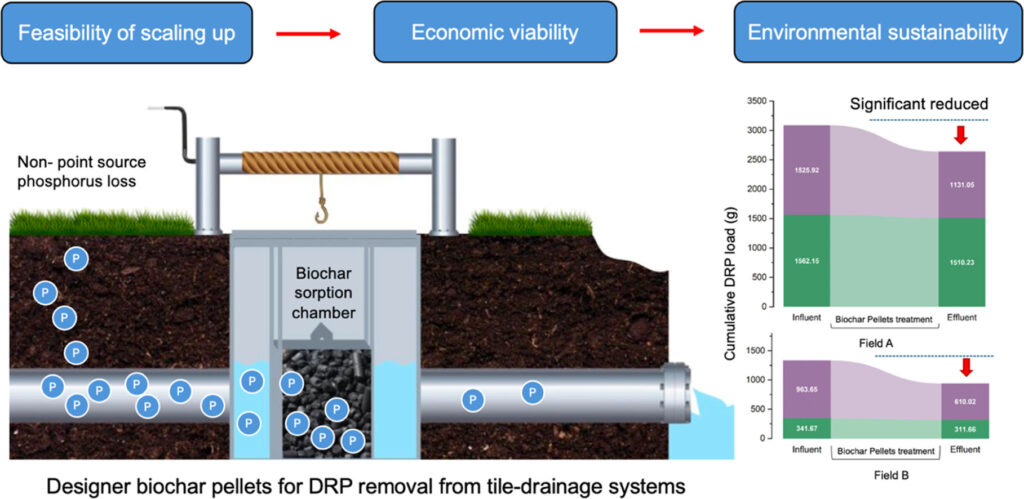
What if farmers could not only prevent excess phosphorus from polluting downstream waterways but could also recycle that nutrient as a slow-release fertilizer, all without spending a lot of money? University of Illinois researchers recently demonstrated this possibility through the development of a biochar-lime pellet that, when inserted into field tile drainage systems, can remove phosphorus and simultaneously create a beneficial soil amendment.
Current phosphorus sorption materials for tile-drainage-based removal systems are either inefficient or create industrial waste products that aren’t easy to dispose of. The researchers used sawdust and lime sludge — byproducts from milling and drinking water treatment plants, respectively — mixed them to form pellets, and slow-burned them under low-oxygen conditions to create a “designer” biochar with significantly higher phosphorus-binding capacity compared to lime sludge or biochar alone. Importantly, once these pellets bind all the phosphorus they can hold, they can be spread onto fields, where the captured nutrient is slowly released over time.
The team tested the pellets in working field conditions in Fulton County, Illinois, for two years. The tile drainage water flowed through phosphorus removal structures filled with the pellets. The 1-centimeter pellets removed 38 to 41 percent of the phosphorus in the water. Powdered materials wouldn’t work in the field — they would simply wash away.
After showing the pellets are effective in real-world scenarios, the research team performed techno-economic and life-cycle analyses to evaluate the economic breakdown for farmers and the overall sustainability of the system.
The cost to produce the lime-biochar pellets was estimated at $413 per ton — less than half the market cost of alternatives such as granular activated carbon ($800-$2,500 per ton). The team also estimated the total cost of phosphorus removal using the system, arriving at an average cost of $359 per kilogram removed. This figure varied according to inflation and depending on the frequency of replacing pellets — two years appeared to be the most cost-effective scenario.
The life cycle analysis showed that the system — including returning spent biochar pellets to crop fields and avoiding additional phosphorus and other inputs — could save 12 to 200 kilograms of carbon dioxide-equivalent per kilogram of phosphorus removed. And the benefits go beyond nutrient loss reduction and carbon sequestration to include energy production, reduction of eutrophication, and improving soils.
While there’s currently no regulation requiring farmers to remove phosphorus from drainage water, ecologically conscious farmers are already installing woodchip bioreactors to remove nitrate. They can add the lime-biochar pellets to the control structure to remove the phosphorus at the same time.
Or…
Save money by not overapplying phosphorus in the first place. Hundreds to thousands of pounds of total phosphorus per acre exists in most U.S. soils. Most of that is in forms unavailable to plants, but rich soil microbiology can convert those molecules into the forms plants can use.
How Gophers Brought Mount St. Helens Back to Life in One Day
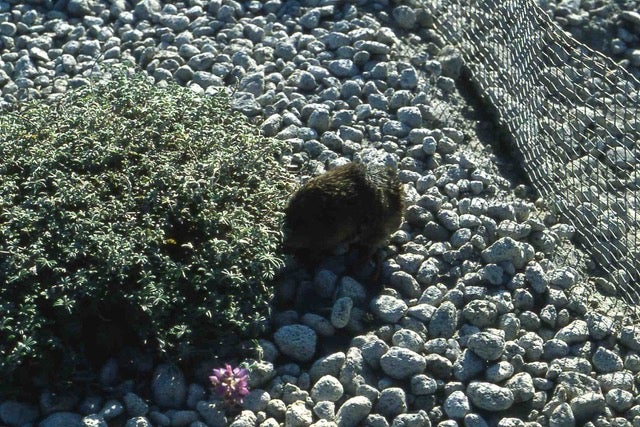
When Mount St. Helens erupted in 1980, lava incinerated anything living for miles around. In a 1983 experiment, scientists dropped gophers onto parts of the scorched mountain for a mere 24 hours. The benefits from that single day were undeniable — and are still visible 40 years later.
Once the blistering blast of ash and debris cooled, scientists theorized that, by digging up beneficial bacteria and fungi, gophers might be able to help regenerate lost plant and animal life on the mountain.
They helicoptered to an area where the lava had turned the land into collapsing slabs of porous pumice. At that time, there were only about a dozen plants that had learned to live on these slabs. A few seeds had been dropped by birds, but the resulting seedlings struggled.
The scientists dropped a few local gophers on two pumice plots for a day, and the land exploded again with new life. Six years post-experiment, there were 40,000 plants thriving on the gopher plots. The untouched land remained mostly barren.
All this was possible because of what isn’t always visible to the naked eye. Mycorrhizal fungi penetrate into plant root cells to exchange nutrients and resources. They can help protect plants from pathogens in the soil, and, by providing nutrients in barren places, they help plants establish themselves and survive.
But the scientists did not expect the benefits of this experiment would still be visible in the soil today, in 2024. A paper in the journal Frontiers in Microbiomes details an enduring change in the communities of fungi and bacteria where gophers had been compared to nearby land where they weren’t introduced.

A second aspect of this study further underscores how critical these microbes are to the regrowth of plant life after a natural disaster. On one side of the mountain was an old-growth forest. Ash from the volcano blanketed the trees, trapping solar radiation and causing needles on the pine, spruce, and Douglas firs to overheat and fall off. Scientists feared the loss of the needles would cause the forest to collapse.
That is not what happened. The trees have their own mycorrhizal fungi that picked up nutrients from the dropped needles and helped fuel rapid tree regrowth.
On the other side of the mountain, the scientists visited a forest that had been clearcut prior to the eruption. Logging had removed all the trees for acres, so naturally there were no dropped needles to feed soil fungi, and there still isn’t much growing in this area, 44 years later.
“We cannot ignore the interdependence of all things in nature, especially the things we cannot see, like microbes and fungi,” said mycologist Mia Maltz.
AI Can Help Detect Contamination or Unauthorized Additives in Milk
By combining the genetic sequencing and analysis of the microbes in a milk sample with artificial intelligence, researchers were able to detect anomalies in milk production, such as contamination or unauthorized additives. The new approach could help improve dairy safety, according to the study authors from Penn State, Cornell University and IBM Research.
In findings published in mSystems, a journal of the American Society for Microbiology, the researchers reported that using shotgun metagenomics data and AI they were able to detect antibiotic-treated milk that had been experimentally and randomly added to the bulk tank milk samples they collected. To validate their findings, the researchers also applied their explainable AI tool to publicly available, genetically sequenced datasets from bulk milk samples, further demonstrating the untargeted approach’s robustness.
The study’s findings suggest that AI has the potential to significantly enhance the detection of anomalies in food production.
Plant Diversity Enhances Soil Carbon Retention
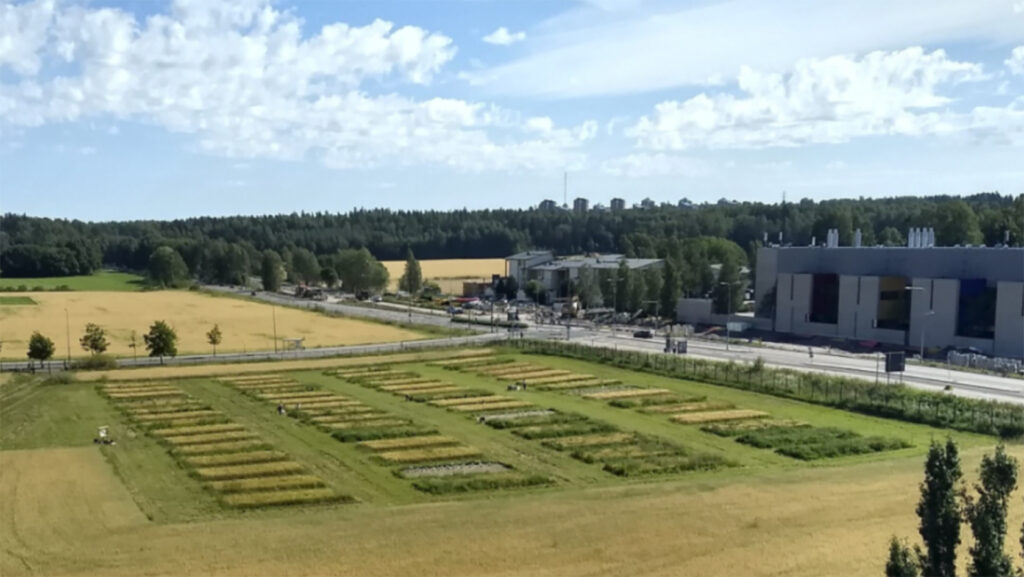
A new study shows that increasing plant diversity in agriculture can be used to improve the carbon sequestration potential of agricultural soils.
The researchers conducted their study using the TwinWin experiment, located in Finland, which explores how different levels of plant diversity, combined with barley, affect microbial processes in the soil. Barley was grown either alone or undersown with up to eight different plant species, including nitrogen-fixing and deep-rooting varieties selected for their potential to improve soil health.
As a measure of how effectively microbes convert carbon inputs into new biomass rather than releasing it as CO2, the researchers measured microbial carbon use efficiency. By analyzing microbial growth, soil respiration and community dynamics through molecular sequencing and stable isotope tracking, they traced the movement of carbon through the soil microbial communities.
“We found that higher plant diversity fostered stronger positive interactions between microbes in the rhizosphere — the area around plant roots — which ultimately improved the community carbon use efficiency,” explained researcher Luiz Domeignoz-Horta.
Notably, plant diversity also increased overall plant biomass production without reducing barley yields, making the practice viable for maintaining crop output while simultaneously improving soil carbon retention.
Investigating Fungal-Bacterial Interaction
The rice blast fungus Pyricularia oryzae poses a significant threat to rice crops, causing extensive damage and leading to substantial yield losses. Traditional methods of controlling this pathogen often rely on chemical fungicides.
In a recent study from the Tokyo University of Science, a team of researchers aimed to investigate the relationship between P. oryzae and the beneficial soil bacterium Streptomyces griseus. The team conducted a series of experiments involving cocultures of P. oryzae and S. griseus. They measured the pH changes in the growth medium and observed the effects on S. griseus growth under various conditions.
Their findings revealed that the presence of P. oryzae significantly increased the pH of the medium, which, in turn, promoted the growth of S. griseus. Notably, this growth enhancement was independent of direct contact between the two microorganisms, suggesting that P. oryzae produced non-volatile alkaline compounds responsible for this effect.
The study also highlighted that other pathogenic fungi, such as Fusarium oxysporum and Cordyceps tenuipes, did not induce similar growth in S. griseus, indicating that the observed interaction is specific to P. oryzae. Additionally, the researchers ruled out ammonia as the compound responsible for pH increase, leading them to propose that polyamine produced by P. oryzae might be the active growth-inducing agent.
S. griseus is known for its ability to produce antibiotics, which can suppress the growth of pathogenic microorganisms. By promoting the growth of S. griseus, P. oryzae may inadvertently create conditions that could be harnessed to control its own spread.
Loss Of Nitrogen Fixers Threatens Biodiversity, Ecosystems
In a study published in Science Advances, scientists showed that increased nitrogen deposition from human activity is reducing the diversity and evolutionary distinctiveness of nitrogen-fixing plants. Excessive nitrogen from agriculture and industry makes nitrogen fixers less competitive, leading to simplified plant communities with fewer species of nitrogen fixers.
The logical conclusion of anti-ecological thinking — i.e., where The Experts want to take us
With “Electro-Agriculture,” Plants Can Produce Food in the Dark, with 94 Percent Less Land
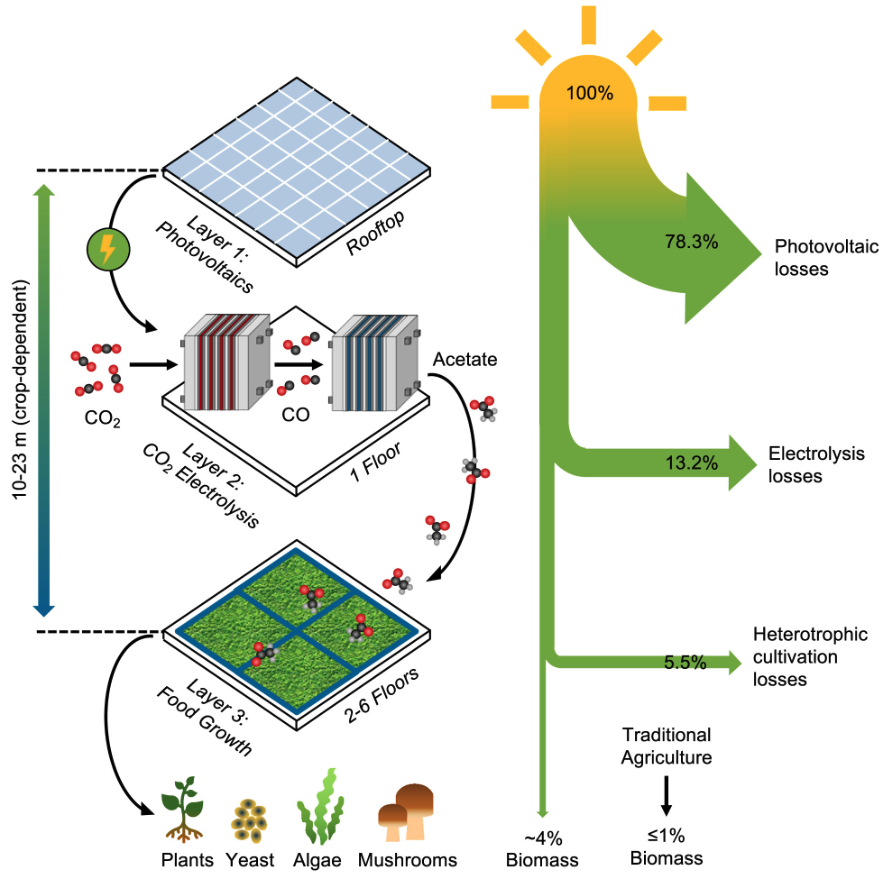
Photosynthesis, the chemical reaction that enables almost all life on Earth, is extremely inefficient at capturing energy — only around 1 percent of light energy that a plant absorbs is converted into chemical energy within the plant. In a paper in the journal Joule, bioengineers propose a radical new method of food production that they call “electro-agriculture.” The method essentially replaces photosynthesis with a solar-powered chemical reaction that more efficiently converts CO2 into an organic molecule that plants would be genetically engineered to “eat.” The researchers estimate that if all food in the US were produced using electro-agriculture, it would reduce the amount of land needed for agriculture by 94 percent. The method could also be used to grow food in space.
“If we don’t need to grow plants with sunlight anymore, then we can decouple agriculture from the environment and grow food in indoor, controlled environments,” said biological engineer Robert Jinkerson of University of California, Riverside. “I think that we need to move agriculture into the next phase of technology, and producing it in a controlled way that is decoupled from nature has to be the next step.”
Electro-agriculture would mean replacing agricultural fields with multi-story buildings. Solar panels on or near the buildings would absorb the sun’s radiation, and this energy would power a chemical reaction between CO2 and water to produce acetate — a molecule similar to acetic acid, the main component in vinegar. The acetate would then be used to feed plants that are grown hydroponically. The method could also be used to grow other food-producing organisms, since acetate is naturally used by mushrooms, yeast, and algae.
“The whole point of this new process is to try to boost the efficiency of photosynthesis,” said senior author Feng Jiao, an electrochemist at Washington University. “Right now, we are at about 4 percent efficiency, which is already four times higher than for photosynthesis, and because everything is more efficient with this method, the CO2 footprint associated with the production of the food becomes much smaller.”
To genetically engineer acetate-eating plants, the researchers are taking advantage of a metabolic pathway that germinating plants use to break down food stored in their seeds. This pathway is switched off once plants become capable of photosynthesis, but switching it back on would enable them to use acetate as a source of energy and carbon.
“We’re trying to turn this pathway back on in adult plants and reawaken their native ability to utilize acetate,” said Jinkerson. “It’s analogous to lactose intolerance in humans — as babies, we can digest lactose in milk, but for many people, that pathway is turned off when they grow up. It’s kind of the same idea, only for plants.”
The team is focusing their initial research on tomatoes and lettuce but plans to move on to high-calorie staple crops such as cassava, sweet potatoes, and grain crops. Currently, they’ve managed to engineer plants that can use acetate in addition to photosynthesis, but they ultimately aim to engineer plants that can obtain all of their necessary energy from acetate, meaning that they would not need any light themselves.