Acres U.S.A.® Magazine
  • Articles
    • News
    • Ecological farming
      • Climate
      • Environmental Issues
      • Farm management & planning
      • Human health
    • Livestock
    • Farm
    • Crop
      • Crop management practices
        • Ag technology
        • Cover crops
        • Crop nutrition
          • Crop protection
          • Diseases
        • Crops
        • Fruits
    • Soil
    • Opinion
  • Resources
    • Magazine
    • Online Learning
    • Newsletters
    • Free Articles
    • Blog
  • Magazine Issues
    • 2026
      • February 2026
      • January 2026
    • 2025
      • December 2025
      • November 2025
      • October 2025
      • September 2025
      • August 2025
      • July 2025
      • June 2025
      • May 2025
      • April 2025
      • March 2025
      • February 2025
      • January 2025
    • 2024
      • December 2024
      • November 2024
      • October 2024
      • September 2024
      • August 2024
      • July 2024
      • June 2024
      • May 2024
      • April 2024
      • March 2024
      • February 2024
      • January 2024
    • 2023
      • December 2023
      • November 2023
      • October 2023
      • August 2023
      • July 2023
      • June 2023
      • May 2023
      • April 2023
      • March 2023
      • February 2023
      • January 2023
    • 2022
      • December 2022
      • November 2022
      • October 2022
      • September 2022
      • August 2022
      • July 2022
      • June 2022
      • May 2022
      • April 2022
      • March 2022
      • February 2022
  • About Us
    • Our History
    • Our Staff
    • Contact Us
    • Community
      • Soil Health Primer Resources
  • Events
    • Eco-Ag Conference
    • Farm Weird Event
    • Viroqua On Farm Event
  • Subscribe
  • Login
  • Register
No Result
View All Result
  • Articles
    • News
    • Ecological farming
      • Climate
      • Environmental Issues
      • Farm management & planning
      • Human health
    • Livestock
    • Farm
    • Crop
      • Crop management practices
        • Ag technology
        • Cover crops
        • Crop nutrition
          • Crop protection
          • Diseases
        • Crops
        • Fruits
    • Soil
    • Opinion
  • Resources
    • Magazine
    • Online Learning
    • Newsletters
    • Free Articles
    • Blog
  • Magazine Issues
    • 2026
      • February 2026
      • January 2026
    • 2025
      • December 2025
      • November 2025
      • October 2025
      • September 2025
      • August 2025
      • July 2025
      • June 2025
      • May 2025
      • April 2025
      • March 2025
      • February 2025
      • January 2025
    • 2024
      • December 2024
      • November 2024
      • October 2024
      • September 2024
      • August 2024
      • July 2024
      • June 2024
      • May 2024
      • April 2024
      • March 2024
      • February 2024
      • January 2024
    • 2023
      • December 2023
      • November 2023
      • October 2023
      • August 2023
      • July 2023
      • June 2023
      • May 2023
      • April 2023
      • March 2023
      • February 2023
      • January 2023
    • 2022
      • December 2022
      • November 2022
      • October 2022
      • September 2022
      • August 2022
      • July 2022
      • June 2022
      • May 2022
      • April 2022
      • March 2022
      • February 2022
  • About Us
    • Our History
    • Our Staff
    • Contact Us
    • Community
      • Soil Health Primer Resources
  • Events
    • Eco-Ag Conference
    • Farm Weird Event
    • Viroqua On Farm Event
  • Subscribe
No Result
View All Result
Acres U.S.A.® Magazine
No Result
View All Result
Home Magazine issues July 2022

Covering Your Assets

Jennie Love by Jennie Love
November 1, 2024
in July 2022
0
Covering Your Assets

A cover crop of buckwheat grows on Love ‘n Fresh Flowers in Philadelphia.

0
SHARES
4
VIEWS
Share on FacebookShare on Twitter

Incorporating cover crops onto diversified flower farms

Jennie Love

Rarely in the complex world of agriculture is there one silver bullet for every single farm. But when it comes to soil health and regenerating the whole farm ecosystem, there is: never leave the soil bare. 

Even small patches of bare ground are vast wastelands for the microorganisms we try to foster on our farms. Because of this, every flower farm has a big role to play in balancing its local biome through cover cropping.

Cover crops and green manures are most often discussed in terms of soil health. Equally important, if not more so, is the potential for supporting the farm’s complex ecosystem above ground. Cover crops create and maintain habitat for beneficial insects, including voracious hunters like minute pirate bugs, syrphid flies, lacewings, parasitoid wasps, spiders and ground beetles. They also shelter reptiles and amphibians who patrol at night for slugs and rodents. Birds adore taller cover crops that provide safety and rich hunting grounds for insects and seeds. The elevated level of photosynthesis and respiration in a dense bed of cover crop supports better water cycling in the immediate area. With all this richness and life comes less pest pressure and less need to irrigate. 

Cover crops are the single most powerful tool farmers of any size have for regenerating our fields and Earth. 

There are several key considerations when choosing exactly which cover crops to incorporate into a diversified farm. Much has been written on cover cropping for large farms with big equipment and forage needs. But few guides on cover crops for flower farming exist. It can be daunting to sort this all out on your own!

When I am choosing cover crops here at my own regenerative flower farm in Philadelphia, I focus on the following three considerations:

  1. Window for sowing/growing
  2. Termination method
  3. What the soil needs

Window of Sowing/Growing

Cover crops are always direct sown. As such, the soil’s temperature at the time of seeding is critical to successful germination. Some types of crops germinate well in cooler soils, while others would simply rot away in such conditions. For this reason, you will want to first determine if the crop you have in mind is a cool-season or a warm-season crop and plant accordingly.

Additionally, how long do you have before you want something else to grow in that same spot? Cover crops growing over the winter are easy to schedule. But if you’re plugging in green manures to your summer planting schedule, you will need to carefully consider how long a given crop needs to do its thing. For this reason, buckwheat is a big favorite around my farm; it loves our hot, humid summers and reaches peak biomass in just 30-40 days. 

If you do not have a tractor or seeder, you will be relying on broadcasting. Tips for success include watching the forecast for rain and sowing just before a good soaking, using a heavier seeding rate than recommended and covering the newly seeded area with frost cloth (even in summer) to keep birds from eating the seed and to help regulate moisture at the soil surface. The frost cloth can come off after a week or two. 

Termination Method

Coupled with when to sow and how long it takes to grow is determining how the crop will be terminated. Essentially, how are you going to kill this stuff so you can go back to growing a cash crop? If you’ve got a tractor and a flail mower, you can handle just about any crop. But many flower farms are smaller, with a bed layout that is not conducive to bringing a tractor into the middle of the field at the height of summer. In this case, you’ll want to use tarps and/or a smaller piece of equipment like a push mower or string trimmer.

The following steps are used at my farm to terminate a cover crop or green manure without a tractor:

  1. Tall, dense crops like winter rye are first knocked down with a string trimmer. If the crop is not very tall or dense, we skip this step.
  2. Tender crops like buckwheat or the tougher crops that were already trimmed down get mowed super low with a mulching push-mower so the biomass is deposited on the bed surface.
  3. Depending on the size of the space/bed, landscape fabric or tarps are placed over the area and left in place for about 10-15 days, depending on the weather and our planting schedule. This excludes light and weakens/kills the cover crop. You can leave the tarp on longer if desired. I choose to take it off as soon as feasible so we can get the bed replanted with new living roots to keep feeding the soil community and to keep the farm as profitable as possible.
  4. Prep the bed for planting as you normally would. 

What the Soil Needs

The third major consideration is what exactly you’re trying to accomplish. What does your soil need? 

If you have sandy soil and struggle with getting your organic matter percentage up, you’ll want to choose a crop that is known for its biomass. If you have compacted clay soil and struggle with drainage, you’ll want to choose a crop that is known for having a large and fibrous root system. If you want to capture nitrogen naturally, you’ll choose a legume crop that can form nitrogen-gathering nodules on its roots. If you want to combat a fungal disease or pest build up, you’ll want to choose a crop known for disease suppression or beneficial insect habitat. 

Mixing and matching is encouraged! Try to include some plant families that are different from any of your cash crops to further increase diversity on your farm. Each farm’s context will be unique, so this part will require a little research on your behalf. SARE and many agriculture seed retailers provide excellent reference materials for cover crop selection. 

My Favorite Cover Crops for Flower Farming
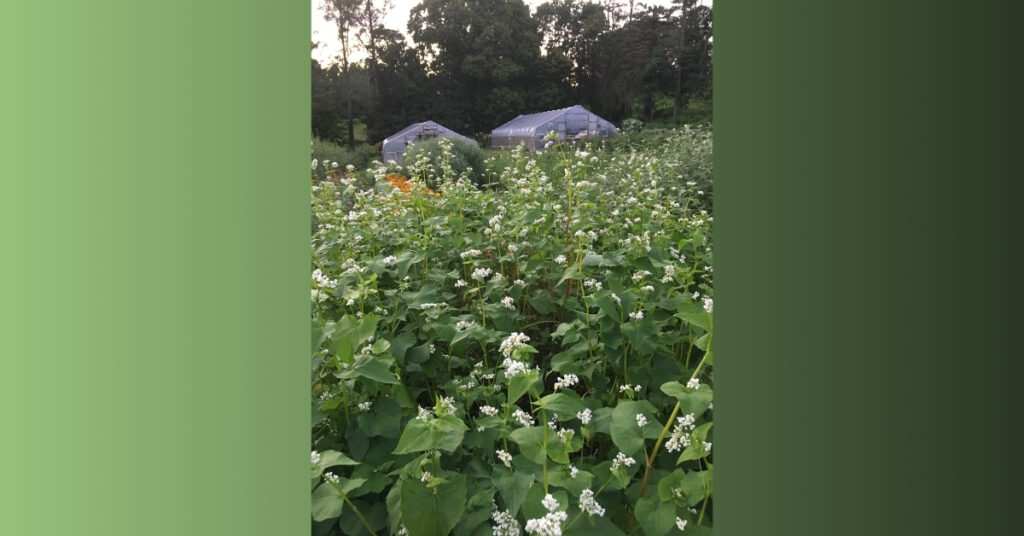
Buckwheat is fast growing and great for beneficial insects, and it breaks down quickly for rapid bed flips.

At my farm, I have settled on the following favorite cover crops. All of these are relatively easy to sow and terminate without a tractor or tillage. Several on the list can be used as cut stems for bouquet work. Use this list as a jumping off point to get started. I encourage you to do additional research beyond this article to dial in your own mixes for optimum soil health and farm fertility.

Some quick data on my farm, since context is everything: 5 acres, Zone 7, sandy loam, organic matter about 5 percent, no-till, no tractor.

Cool-season cover crops:

Winter rye: excellent for loosening clay soils and encouraging mycorrhizae; great biomass

Barley: great biomass, super cold hardy, improves soil tilth*

Triticale: soil life loves this stuff; excellent root system and very cold hardy

Oats: nutrient accumulator to prevent leaching, excellent biomass, smothers weeds, winter-kills for easier early-spring plantings (Zone 7 or colder)

Vetch: fixes nitrogen, good biomass, good companion for the above grains

Tillage/daikon radish: busts up compacted soil, improves drainage, quick to grow

Phacelia: good biomass, great weed suppression in spring, highly attractive to beneficial insects*

Bell beans: fixes nitrogen, good biomass, nice in a mix of some of the above; germinates well in cold soil

Mustard: fights soilborne diseases, great weed suppression, attractive to beneficial insects* 

Warm-season green manures / cover crops

Buckwheat: fast growing, great for beneficial insects, breaks down quickly for rapid bed flips

Cow peas: good biomass, good weed suppression (claims it can outcompete Bermuda grass), fixes nitrogen, loosens clay soils

Annual summer alfalfa: deep root to break up compaction and mine minerals, fixes nitrogen, great for beneficial insects

Dwarf sorghum: phenomenal biomass, excellent weed suppression, bird bonanza*

*These cover crops make great material for bouquets too! They’re great if your farm is small and has no room to spare to let beds rest.

Sources for Cover Crop Seeds

There are many seed suppliers out there. Green Cover, Deer Creek Seed, King’s AgriSeeds, Johnny’s and Peaceful Valley are just a few. I would encourage you to shop around for the best pricing by the pound, but to also carefully consider shipping rates. Purchasing closer to home — especially if you can pick it up — will help cut down on costs considerably. Local feed stores often have grain crops for a reasonable price. 

I hope this article leaves you feeling empowered to tackle building your farm’s ecosystem through cover cropping. Nothing is quite so rewarding as looking out over a swath of green and lush cover crop, knowing it is doing so much good for your farm!

Jennie Love owns and operates Love ‘n Fresh Flowers in Philadelphia, a five-acre Certified Naturally Grown regenerative flower farm. She is the host of the No-Till Flowers podcast. 

← Previous Is Regenerative Agriculture Profitable? Next A Possible Farm Labor Solution →
Tags: July 2022
Jennie Love

Jennie Love

Jennie Love owns and operates Love ‘n Fresh Flowers in Philadelphia, a five-acre Certified Naturally Grown regenerative flower farm. She is the host of the No-Till Flowers podcast.

Next Post
Regenerating Soil with Betsy Ross

Regenerating Soil with Betsy Ross

  • Trending
  • Comments
  • Latest
The Most Important Livestock in Our Fields

The Most Important Livestock in Our Fields

July 1, 2024
Glyphosate Does What It’s Designed to Do — Kill

Glyphosate Does What It’s Designed to Do — Kill

February 19, 2025
The Take-Half, Leave-Half Fallacy

The Take-Half, Leave-Half Fallacy

July 1, 2025
USDA organic seal over American farm land

Losing Organic Farms

January 27, 2026
We Don’t Need Another Bridge — We Need an Off-Ramp

We Don’t Need Another Bridge — We Need an Off-Ramp

3
Under One Roof

Under One Roof

3
A Rose By Any Other Name

A Rose By Any Other Name

2
Terra Preta’s Biological Advantage

Terra Preta’s Biological Advantage

2
Destroying Farmland for AI

Destroying Farmland for AI

March 12, 2026
Roundup glyphosate herbicide referenced in debate over national security executive order

ROUNDUP PIE

March 5, 2026
What Does “Cutting Red Tape” Mean for Eco-Ag?

What Does “Cutting Red Tape” Mean for Eco-Ag?

March 4, 2026
March 2026 • Issue #657

March 2026 • Issue #657

March 1, 2026

Recent News

Destroying Farmland for AI

Destroying Farmland for AI

March 12, 2026
Roundup glyphosate herbicide referenced in debate over national security executive order

ROUNDUP PIE

March 5, 2026
What Does “Cutting Red Tape” Mean for Eco-Ag?

What Does “Cutting Red Tape” Mean for Eco-Ag?

March 4, 2026
March 2026 • Issue #657

March 2026 • Issue #657

March 1, 2026

About ACRES USA

Acres U.S.A.® Magazine

Acres U.S.A.® is North America’s oldest publisher on production-scale organic and regenerative farming. For more than 50 years, our mission has been to help farmers, ranchers and market gardeners grow food profitably and sustainably, with nature in mind.

Magazine Issues

  • News
  • 2025
    • June 2025
    • May 2025
    • April 2025
    • March 2025
    • February 2025
    • January 2025
  • 2024 Articles
    • December 2024
    • November 2024
    • October 2024
    • September 2024
    • August 2024
    • July 2024
    • June 2024
    • May 2024
    • April 2024
    • March 2024
    • February 2024
    • January 2024
  • December 2023
    • December 2023
    • November 2023
    • October 2023
    • August 2023
    • July 2023
    • June 2023
    • May 2023
    • April 2023
    • March 2023
    • February 2023
    • January 2023
  • December 2022
    • November 2022
    • October 2022
    • September 2022
    • August 2022
    • July 2022
    • June 2022
    • May 2022
    • April 2022
    • March 2022

Contact Acres U.S.A

  • Contact Us
  • About Us
  • Advertise With Acres U.S.A.
  • My Subscription

Learn

  • Resources
  • Events
  • Magazine
  • Newsletters
  • Free Articles
  • Webinars
  • Online Courses
  • Bookstore

Our All Socials

Follow With Us...

  • My account
  • News
  • Ecological farming
  • Refund and Returns Policy
  • Privacy & Policy

© 2024 Acers USA Magazine

Welcome Back!

Login to your account below

Forgotten Password? Sign Up

Create New Account!

Fill the forms below to register

All fields are required. Log In

Retrieve your password

Please enter your username or email address to reset your password.

Log In
No Result
View All Result
  • HOME
  • ARTICLES
    • News
    • Farm
    • Ecological farming
    • Livestock
    • Crop
      • Crop management practices
      • Cover crops
      • Crop nutrition
      • Crop protection
      • Crops
      • Ag technology
    • Soil
    • Opinion
  • RESOURCES
    • Magazine
    • Online Learning
    • Newsletters
    • Blog
    • Free Articles
  • MAGAZINE ISSUES
    • 2025
      • June 2025
      • May 2025
      • April 2025
      • March 2025
      • February 2025
      • January 2025
    • 2024
      • December 2024
      • November 2024
      • October 2024
      • September 2024
      • August 2024
      • July 2024
      • June 2024
      • May 2024
      • April 2024
      • March 2024
      • February 2024
      • January 2024
    • 2023
      • December 2023
      • November 2023
      • October 2023
      • August 2023
      • July 2023
      • June 2023
      • May 2023
      • April 2023
      • March 2023
      • February 2023
      • January 2023
  • ABOUT US
    • Our History
    • Our Staff
    • Contact Us
    • Community
      • Soil Health Primer Resources
  • EVENTS
    • Eco-Ag Conference
    • On-Farm Viroqua Event
    • Farm Weird
  • SUBSCRIBE
  • Login
  • Sign Up
  • Cart

© 2024 Acers USA Magazine

Are you sure want to unlock this post?
Unlock left : 0
Are you sure want to cancel subscription?