
Acres U.S.A.® Magazine
  • Articles
    • News
    • Ecological farming
      • Climate
      • Environmental Issues
      • Farm management & planning
      • Human health
    • Livestock
    • Farm
    • Crop
      • Crop management practices
        • Ag technology
        • Cover crops
        • Crop nutrition
          • Crop protection
          • Diseases
        • Crops
        • Fruits
    • Soil
    • Opinion
  • Resources
    • Magazine
    • Online Learning
    • Newsletters
    • Free Articles
    • Blog
  • Magazine Issues
    • 2026
      • June 2026
      • May 2026
      • April 2026
      • March 2026
      • February 2026
      • January 2026
    • 2025
      • December 2025
      • November 2025
      • October 2025
      • September 2025
      • August 2025
      • July 2025
      • June 2025
      • May 2025
      • April 2025
      • March 2025
      • February 2025
      • January 2025
    • 2024
      • December 2024
      • November 2024
      • October 2024
      • September 2024
      • August 2024
      • July 2024
      • June 2024
      • May 2024
      • April 2024
      • March 2024
      • February 2024
      • January 2024
    • 2023
      • December 2023
      • November 2023
      • October 2023
      • August 2023
      • July 2023
      • June 2023
      • May 2023
      • April 2023
      • March 2023
      • February 2023
      • January 2023
    • 2022
      • December 2022
      • November 2022
      • October 2022
      • September 2022
      • August 2022
      • July 2022
      • June 2022
      • May 2022
      • April 2022
      • March 2022
      • February 2022
  • About Us
    • Our History
    • Our Staff
    • Contact Us
    • Community
      • Soil Health Primer Resources
  • Events
    • Eco-Ag Conference
    • Farm Weird Event
  • Subscribe
  • Login
  • Register
No Result
View All Result
  • Articles
    • News
    • Ecological farming
      • Climate
      • Environmental Issues
      • Farm management & planning
      • Human health
    • Livestock
    • Farm
    • Crop
      • Crop management practices
        • Ag technology
        • Cover crops
        • Crop nutrition
          • Crop protection
          • Diseases
        • Crops
        • Fruits
    • Soil
    • Opinion
  • Resources
    • Magazine
    • Online Learning
    • Newsletters
    • Free Articles
    • Blog
  • Magazine Issues
    • 2026
      • June 2026
      • May 2026
      • April 2026
      • March 2026
      • February 2026
      • January 2026
    • 2025
      • December 2025
      • November 2025
      • October 2025
      • September 2025
      • August 2025
      • July 2025
      • June 2025
      • May 2025
      • April 2025
      • March 2025
      • February 2025
      • January 2025
    • 2024
      • December 2024
      • November 2024
      • October 2024
      • September 2024
      • August 2024
      • July 2024
      • June 2024
      • May 2024
      • April 2024
      • March 2024
      • February 2024
      • January 2024
    • 2023
      • December 2023
      • November 2023
      • October 2023
      • August 2023
      • July 2023
      • June 2023
      • May 2023
      • April 2023
      • March 2023
      • February 2023
      • January 2023
    • 2022
      • December 2022
      • November 2022
      • October 2022
      • September 2022
      • August 2022
      • July 2022
      • June 2022
      • May 2022
      • April 2022
      • March 2022
      • February 2022
  • About Us
    • Our History
    • Our Staff
    • Contact Us
    • Community
      • Soil Health Primer Resources
  • Events
    • Eco-Ag Conference
    • Farm Weird Event
  • Subscribe
No Result
View All Result
Acres U.S.A.® Magazine
No Result
View All Result
Home Magazine issues March 2026

Not a Disturbing Trend

Jay Fuhrer by Jay Fuhrer
March 1, 2026
0
Jason Bosch & Jeremy Saeman — North Dakota farmers Jason Bosch and Jeremy Saeman have worked hard over time to incorporate the soil health principles.

Jason Bosch & Jeremy Saeman — North Dakota farmers Jason Bosch and Jeremy Saeman have worked hard over time to incorporate the soil health principles.

0
SHARES
192
VIEWS
Share on FacebookShare on Twitter

Disturbance of all types — physical, biological and chemical – is gradually being reduced in American agriculture

Jay Fuhrer

Editor’s note: This is the second in a series of five explanations of the principles of soil health, as described by Jay Fuhrer, who was one of the first to define these principles as a whole. Each article will include a description of the principle along with a profile of a farm that is successfully implementing it.

Driving through a landscape allows you to observe fields with and without soil disturbance. Physical disturbance or tillage is the easiest to see. Biological soil disturbance — limited photosynthetic time and limited plant diversity, along with chemical soil disturbance or pesticide use — is more difficult to see. 

Let’s look at a few terms we’ve used to describe how we manage soil over the years. These are listed in roughly chronological order, although there is of course much overlap.  

Tillage
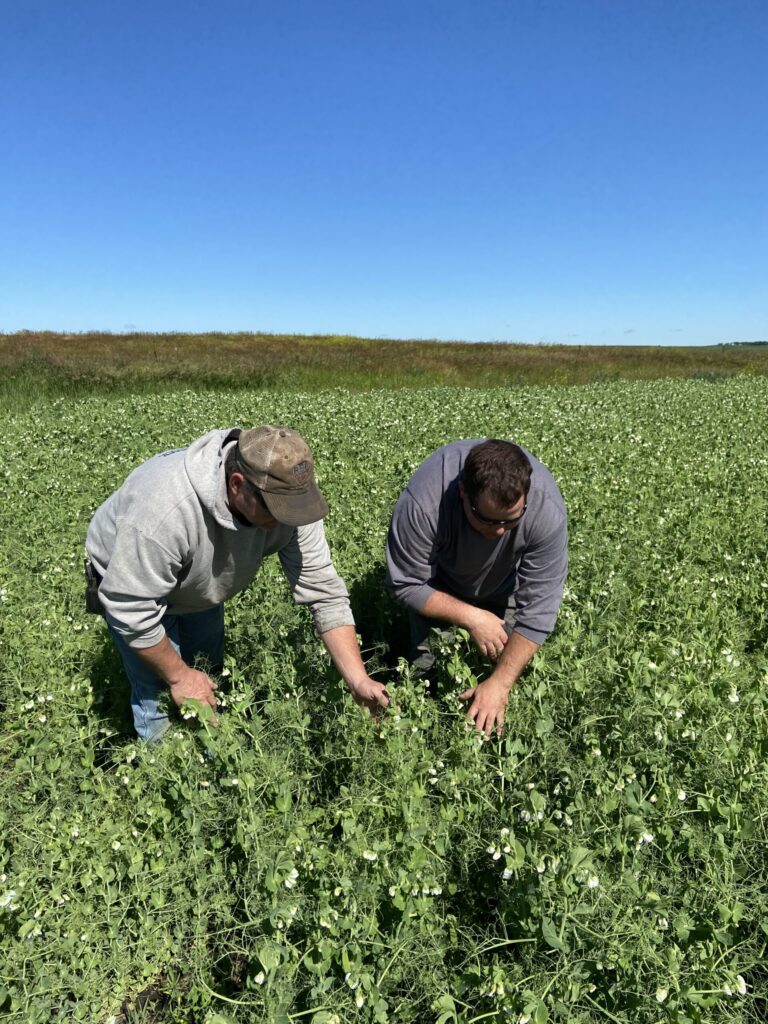
Yellow Pea Field — Cover crops have helped reduce the farm’s biological disturbance component.

Tillage is as old as crop production and is well recorded in historical documents. Now fast forward to the present and ask yourself a simple question: How much soil loss can you tolerate per acre or per bushel you produce? For myself, as a long-time conservationist, the answer is zero. 

The reasons people give for tillage are lengthy, but they usually have little to do with managing wind and water erosion, water quality and quantity, building soil aggregates, or carbon. Early best management practices for erosion control consisted of strip cropping, contour cropping, windbreaks, terraces, diversions and waterways, to name a few. These were attempts to slow soil degradation with narrow fields and structural practices — basically treating symptoms instead of the problem. For example, the government might install a waterway to reduce water erosion, instead of helping farmers improve water infiltration in the drainage area. That said, this was the early start of natural resource conservation. 

Biological disturbance was lower during this period, as we had more plant diversity, perennials and livestock on the landscape. Chemical disturbance was lower during this period, too, but was starting to increase. Overall, soil degradation was significant during this era. 

Conservation tillage

This agricultural term was commonly used for decades. Usually, this effort consisted of tillage implements that left more residue on the soil surface and used less plowing. Field size expanded, and tractor speeds increased. 

Biological disturbance increased due to a loss of plant diversity, perennials and livestock, resulting in less photosynthesis and less plant exudate diversity. Chemical disturbance also increased, with more fertilizer and pesticide use. However, it was a step in the right direction from the viewpoint of emphasizing the importance of conservation. Soil degradation slowed but continued. 

No-till

When no-till was introduced, we started to see a significant drop in erosion and related natural resource concerns. My first monitored soil organic matter gain was recorded in an early 1990s no-till cropping system. More farms soon followed. Thanks to the work of scientists like Dr Dwayne Beck, the retired research manager at Dakota Lakes Research Farm in Pierre, South Dakota, we also started to understand that no-till systems are designed to work with diversified crop rotations. 

While physical disturbance decreased in this time period, biological and chemical disturbance continued to increase. Simplified crop rotations used chemical disturbance to offset limited plant diversity. Conservation was now a partner with the no-till planting concept. While imperfect, this was another step in the right direction. 

Soil health

In the soil health era, dynamic soil properties became important indicators — soil aggregates, infiltration, soil organic matter, water and nutrient holding capacity, and bulk density, to name a few. Plant physiology helped further unravel the carbon cycle. Soil demonstrations like slake, the wind erosion model, and the rainfall simulator were commonplace. 

Again, physical disturbance decreased, but biological disturbance also decreased with the use of cover crops, which restored photosynthesis activity and plant diversity. Chemical disturbance continued to increase, though. Conservation was now a partner with soil health. 

Ladybugs — Diversity has returned to the farm.

Regeneration

Here today, greenhouse gases (carbon dioxide, methane, and nitrous oxide) are in the forefront. The soil health principles are used to rebuild our soils. Farmers and agronomists are starting to focus on carbon (the food) and are asking whether more carbon is coming into our system than is leaving it, understanding that an overall balance is needed to regenerate or rebuild the soil. 

More emphasis is now placed on nutrient density, both in crop production and in grass-finishing meat. People are realizing that agriculture is an extraction business and are asking what we are willing to do to offset nutrient export. Physical disturbance is decreasing, biological disturbance is improving, and even chemical disturbance is decreasing due to some amount of pesticide reduction. 

Featured Farm: Saeman-Bosch Farm
Wing, North Dakota
Farm managers: Jeremy Saeman and Jason Bosch

The Saeman-Bosch Farm is located in northern Burleigh County, near Wing, North Dakota. The farm was originally operated by Jeremy Saeman’s parents, Doris and the late James Saeman, who helpfully allowed Jeremy to experiment with new methods. Jason isn’t opposed to new things, either; together they try things out on a small scale and then observe. 

What does this mean for minimizing soil disturbance? Their physical disturbance has certainly lessened over time. They moved from full tillage with shank seeding openers to disc openers with minimum soil disturbance. The biological disturbance component has improved by adding additional photosynthetic time and plant diversity. The farm’s plant diversity has increased and now includes oat, wheat, barley, soybean, sunflower, corn, flax, yellow pea, pinto bean, annual and biennial cover crops, and alfalfa/hay. They utilize all four crop types, from warm season grasses and broadleaves to cool season grasses and broadleaves. 

The chemical disturbance component has improved by addressing pesticide use. They always had very minimal use of fungicides and insecticides, and in the last seven years they haven’t used any. Herbicides are used prudently and are reduced when conditions allow. 

In addition to minimizing soil disturbance, the farm has worked hard over time to incorporate the remaining four soil health principles (armor, diversity, continual live plants, and livestock integration). Jeremy recently attended two Holistic Resource Management courses to further his goal of using the principles in a systems approach. 

Over time, Jeremy and Jason have observed that wind and water erosion have been significantly reduced, bird populations have rebounded, and worm populations in the soil have increased. Expired CRP land they converted without tillage strongly supports soil life. Wildlife numbers have increased, and rotational grazing has allowed grass banking for early spring. In addition, Jeremy adds, “When we stopped tilling — no more rock picking!”

Jeremy and Jason intend to place more emphasis moving forward on biologicals, worm castings, and carbon, while continuing to reduce inputs. They agree it is important to continue installing water pipelines and tanks to allow for more livestock integration for both the grasslands and the cropland. 

Saeman – Bosch Farm Timeline

Mid-1990s: Began using sweep openers

Late-1990s: Minimum till points 

2006: Jeremy starts farming full-time

2007: Partnered on a cover crop plot with the Burleigh County Soil Conservation District

2008: Jeremy attended a Phil Needham management session in Jamestown, North Dakota; started using a no-till drill and planter, and added biological amendments; a rotational grazing system was installed, eventually increasing the herd from 120 to 400 mother cows, utilizing native rangeland, crop aftermath, and cover crops

2013: Jason starts farming full-time; all acres are seeded no-till

2014: Added humic acid as a soil amendment

2018: Began integrating forage cover crops, usually four- to eight-way mixes; last use of fungicides and insecticides; Jeremy joined the Burleigh County Soil Conservation District board of supervisors 

2019: Attended two Holistic Resource Management courses

2020: Planted green with soybean and pinto beans into a standing cover crop, such as cereal rye; fertility management moved from anhydrous to slow-release nitrogen foliar applications with sugar

2023: Host site for Crops-Covers-Cows soil health event 

2024: Plant diversity emphasis
← Previous Design It Right and Let Your Sprayer Collect Dust Next Ground Truth →
Tags: Soil disturbance
Jay Fuhrer

Jay Fuhrer

Jay Fuhrer is a conservationist with the Burleigh County Soil Conservation District in North Dakota.

Next Post
Matt Powers at the 2025 Acres U.S.A. Eco-Ag conference

Ground Truth

  • Trending
  • Comments
  • Latest
The Most Important Livestock in Our Fields

The Most Important Livestock in Our Fields

July 1, 2024
Glyphosate Does What It’s Designed to Do — Kill

Glyphosate Does What It’s Designed to Do — Kill

February 19, 2025
USDA organic seal over American farm land

Losing Organic Farms

January 27, 2026
The Take-Half, Leave-Half Fallacy

The Take-Half, Leave-Half Fallacy

July 1, 2025
We Don’t Need Another Bridge — We Need an Off-Ramp

We Don’t Need Another Bridge — We Need an Off-Ramp

3
Under One Roof

Under One Roof

3
A Rose By Any Other Name

A Rose By Any Other Name

2
Terra Preta’s Biological Advantage

Terra Preta’s Biological Advantage

2
Running Dry

Running Dry

September 10, 2026
What Are Lactating Steers Trying to Tell Us?

What Are Lactating Steers Trying to Tell Us?

September 3, 2026
Remembering Wendell Berry

Remembering Wendell Berry

September 2, 2026
Manure spreader

ECO-GRAPHIC

September 1, 2026

Recent News

Running Dry

Running Dry

September 10, 2026
What Are Lactating Steers Trying to Tell Us?

What Are Lactating Steers Trying to Tell Us?

September 3, 2026
Remembering Wendell Berry

Remembering Wendell Berry

September 2, 2026
Manure spreader

ECO-GRAPHIC

September 1, 2026

About ACRES USA

Acres U.S.A.® Magazine

Acres U.S.A.® is North America’s oldest publisher on production-scale organic and regenerative farming. For more than 50 years, our mission has been to help farmers, ranchers and market gardeners grow food profitably and sustainably, with nature in mind.

Visit Our Advertisers

Magazine Issues

  • News
  • 2025
    • June 2025
    • May 2025
    • April 2025
    • March 2025
    • February 2025
    • January 2025
  • 2024 Articles
    • December 2024
    • November 2024
    • October 2024
    • September 2024
    • August 2024
    • July 2024
    • June 2024
    • May 2024
    • April 2024
    • March 2024
    • February 2024
    • January 2024
  • December 2023
    • December 2023
    • November 2023
    • October 2023
    • August 2023
    • July 2023
    • June 2023
    • May 2023
    • April 2023
    • March 2023
    • February 2023
    • January 2023
  • December 2022
    • November 2022
    • October 2022
    • September 2022
    • August 2022
    • July 2022
    • June 2022
    • May 2022
    • April 2022
    • March 2022

Contact Acres U.S.A

  • Contact Us
  • About Us
  • Advertise With Acres U.S.A.
  • My Subscription

Learn

  • Resources
  • Events
  • Magazine
  • Newsletters
  • Free Articles
  • Webinars
  • Online Courses
  • Bookstore

Our All Socials

Follow With Us...

  • My account
  • News
  • Ecological farming
  • Refund and Returns Policy
  • Privacy & Policy

© 2024 Acers USA Magazine

Welcome Back!

Login to your account below

Forgotten Password? Sign Up

Create New Account!

Fill the forms below to register

All fields are required. Log In

Retrieve your password

Please enter your username or email address to reset your password.

Log In
No Result
View All Result
  • HOME
  • ARTICLES
    • News
    • Farm
    • Ecological farming
    • Livestock
    • Crop
      • Crop management practices
      • Cover crops
      • Crop nutrition
      • Crop protection
      • Crops
      • Ag technology
    • Soil
    • Opinion
  • RESOURCES
    • Magazine
    • Online Learning
    • Newsletters
    • Blog
    • Free Articles
  • MAGAZINE ISSUES
    • 2026
      • June 2026
      • May 2026
      • April 2026
      • March 2026
      • February 2026
      • January 2026
    • 2025
      • December 2025
      • November 2025
      • October 2025
      • September 2025
      • August 2025
      • July 2025
      • June 2025
      • May 2025
      • April 2025
      • March 2025
      • February 2025
      • January 2025
    • 2024
      • December 2024
      • November 2024
      • October 2024
      • September 2024
      • August 2024
      • July 2024
      • June 2024
      • May 2024
      • April 2024
      • March 2024
      • February 2024
      • January 2024
    • 2023
      • December 2023
      • November 2023
      • October 2023
      • August 2023
      • July 2023
      • June 2023
      • May 2023
      • April 2023
      • March 2023
      • February 2023
      • January 2023
  • ABOUT US
    • Our History
    • Our Staff
    • Contact Us
    • Community
      • Soil Health Primer Resources
  • EVENTS
    • Eco-Ag Conference
    • Farm Weird
  • SUBSCRIBE
  • Login
  • Sign Up
  • Cart

© 2024 Acers USA Magazine

Lost Password?