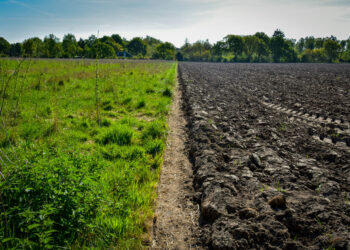

Eco-agriculture — an idea that makes “uncommon good sense” — is no longer an underground movement
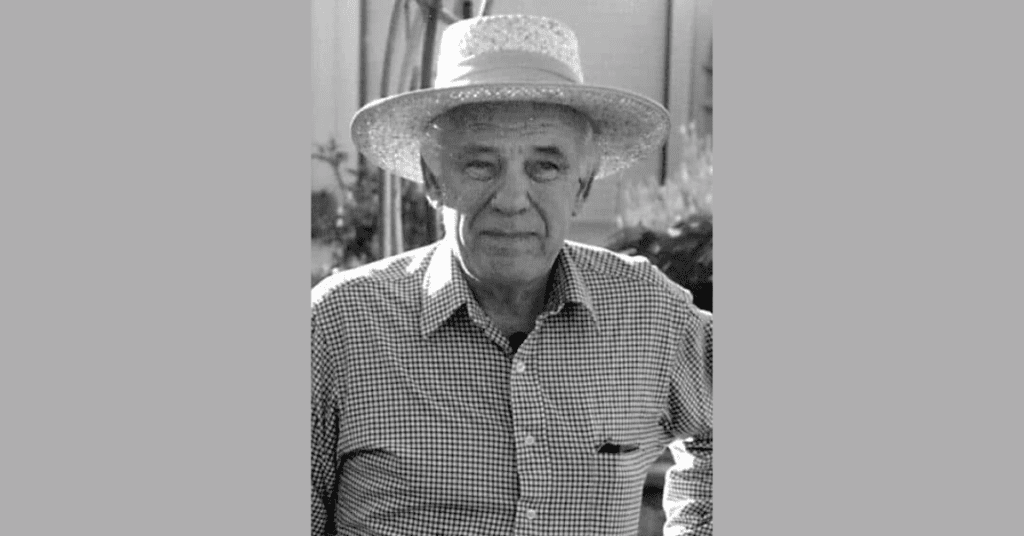
Editor’s note: This is a portion of an address given by Charles Walters, founder of Acres U.S.A., in 1991, in which Walters highlights his dream that life will emerge as the ultimate objective of our nation.
This and many other conference talks by Charles Walters and other Acres U.S.A. luminaries — whose messages are just as true, helpful and inspirational now as back then — are now available through an Acres U.S.A. membership. Memberships also include the magazine and discounts on our books, online courses and events. Visit eco-farming.com to learn more.
Twenty years ago, in my promotional letter [for the first issue of Acres U.S.A. magazine], I said, “Look, people — do you really think that the same agencies that lied to you through their teeth about economics, turned around and told you the truth about technology? Do you really think that happened?” Horrors of horrors, did I catch it from that! There’s one professor down at the University of Oklahoma who used to go into a frothing rage if Acres was mentioned by one of his students.
Some of the people I knew positively rolled in the aisle with laughter. How could toxic technology possibly be wrong? Earl Butts was telling everybody that without chemicals, 50 million people would starve, and we better get busy picking who the 50 million would be. What greater good could there possibly be in this world than to keep people from starving?
I have to admit, many of my best friends merely smiled. Radiocasters who I’d known well — because we had some 800 radio programs going at the time — just hung up on me. Some professors really had a field day. Incredibly, many readers continued to accept raw materials economics but ignored everything we had to say about eco-agriculture. It became apparent soon enough that the arrival of synthetic economics wasn’t all that gushed out of the colleges following World War II. We studied this out and we reported it.
At the time I was writing Unforgiven, the “republics of learning” were constructing and cementing into place the good of simplified and simplistic salt fertilizers and the even greater good of toxic rescue chemistry. Those people who pointed a damning finger for degenerative metabolic diseases like cancer at polluted streams and aquifers — why, they were simply evil and ignorant or just plain non-scientific, as everyone knows. Science was good and anything else was evil, because science was credentialized and the others were simply peasants up to their armpits in mud.
No, my friends, the people who gave all that bad economic advice did not flip flop and hand out good agronomic advice, as these 15 conferences have shown to you and as 20 volumes of Acres U.S.A. have attempted to demonstrate. That is why 20 years ago we heard so little about the fact that good soil is alive with bacteria and fungi and spores and yeasts and worms and insects and microorganisms. Why so little mention was made of the fact that good soil contained trace minerals — copper and boron and manganese and magnesium, to mention some of the things Dr. Skow mentioned the other night. Forgotten was the fact that people needed these trace mineral keys in their enzymes to function.

Downgraded was the requirement for organic matter in the soil and the fact that without organic matter it takes bigger and bigger tractors to turn the soil and more dams to hold the runoff from dying soil. We joined that fray a long time ago, with Century 21 a long way off. Now Century 21 is just around the corner, and I think we’re winning. Maybe George Bush can still keep a straight face when he points to the evil of protectionism, but not even an aging school man defending his worthless bibliography can make much of a case for bad botany that relies on manmade molecules of poisons.
One thing is quite clear: organics or eco-agriculture, whatever you want to call it, has moved out of its enclave status. It no longer is an underground movement. It has tiptoed into the mainline of agriculture, and the fallout of its principles have invaded the city scene, with its mandate for recycling leaves and limbs, sewage and organic waste. By Century 21, the compost pile will be a feature of most communities in America.
I’ve used the term “mainstream.” One of my associates tells me, “Walters, you’ll never enter the mainstream because you’re speaking uncommon good sense.” Well, never is a long time, and as for uncommon good sense, lots of people speak that language. Over 20 of them will and have addressed you at this conference. In the future, these people of uncommon good sense will require a constitutional amendment limiting terms of office. These people of uncommon good sense in the near future will demand an informed jury amendment, so the judge is required to tell the jury what it can and cannot decide and have to tell it in terms of the Constitution.
Others will say, we will again make mandatory a balanced physical economy and sweep away the baggage called the Federal Reserve, and you name the rest. Another may say, we will restructure agriculture and its technology. We are what our farms produce, and there is no such thing as a state that does not depend on agriculture. The course of human events has ordered change, and yet change is fought by lesser men.
So we wait at a crossroad for economic and political change, but it is change in technology that must lead the way and not the other way around. Because when living life emerges into an ultimate objective of our nation, only then can we begin to construct the understanding of the ecology of the soil and be able to benefit from the minuteness and the wondrous patience of the soil. Because nature has no limit on time; she’s patient and forgiving. She’s able to repair herself from the ignoble treatment of man, in spite of his great and tremendous physical capacity for destruction.
If we continue to replace nature, we assuredly prevent the development of our mental capacity, our mental acuity needed to learn and fully compliment nature, a requirement expected from us in permission for life. This knowledge we’ve published over the last 20 years to the introverted and integrated industrial absconders of our most precious heritage.
We are in a revolution, but it is revolution in which the side that fires the first shot loses. We’ll not fire any shots, because our weapon is uncommon good sense. We cannot be stopped successfully, and we cannot be resisted.