

Dr. Pottenger’s work highlights how our farming methods and dietary choices today can affect our future
In the 1930s and ’40s, a medical doctor named Frances M. Pottenger, Jr., conducted a 10-year series of experiments, today known collectively as the Pottenger cat studies, with important implications for our modern diets. His findings are broadly known and respected in contemporary nutrition circles, but their relevance to human dietary needs is sometimes misinterpreted. Fortunately, he left behind a comprehensive body of work that documents his research in detail and explains his conclusions.
While working at the Pottenger Sanatorium — a world-renowned tuberculosis center in Monrovia, California, founded by his physician father, Francis M. Pottenger, Sr., and two uncles — the young Dr. Pottenger took on the task of standardizing adrenal extracts that would be used to treat the center’s patients. Because there were no chemical methods for standardizing biological extracts at that time, he calibrated their potency by adrenalectomizing cats (removing their adrenal glands) and then determining the amount of extract necessary to keep the cats alive.
He was surprised to find that many of the cats did not survive the operation, despite his efforts to maintain them in the best possible health beforehand by providing foods that were believed to meet all their dietary needs. Pottenger fed the cats raw milk, cod liver oil, and scraps of cooked meat from the sanitorium’s kitchen, including liver, tripe, sweetbreads, brains, heart and muscle. While investigating why so many of them were dying in surgery, he noticed that the cats showed various deficiencies, such as low reproductive rates, and skeletal deformities and organ malfunctions in the kittens.
Meanwhile, more and more cats were being donated to the center, and eventually the demand for meat exceeded the sanitorium’s supply of scraps. At that point, Pottenger began to purchase additional meat, which he fed raw to a group of cats kept in one particular pen. Within a few months, he discovered that the cats that were fed raw meat scraps not only had a much higher survival rate during the surgery but also seemed to have greater vigor and significantly better health in comparison to the others. He noted that the change in that group of cats was “almost unbelievable” and set out to investigate the reason for it by undertaking a controlled feeding experiment.
Pottenger’s Experiments
Over the next 10 years, Pottenger conducted a series of studies that documented in great detail the profound — and progressive — effects over several generations of providing the cats with optimal or deficient diets, mostly focused on raw vs. heat-processed foods. In total, 900 cats were included in these studies. For the first set of experiments, he fed one group of cats a diet consisting of two-thirds raw meat, one-third raw milk, and sufficient cod liver oil to ensure an adequate amount of vitamins A and D. A second group of cats was given cooked meat instead of raw while the rest of the diet remained the same.
The results were nothing less than dramatic. The cats that ate the completely raw diet showed normal development and functioning, and they reproduced successfully with no evidence of deterioration in their young. They had good resistance to infections, excellent equilibrium, and predictable behavior. In contrast, the previously healthy cats whose diets were modified to include cooked meat—known as first-generation deficient cats—were subject to vermin and parasitic infection, often developed skin lesions or allergies, had decreased skeletal calcium, and suffered from a variety of degenerative health conditions. The females became aggressive or even dangerous, while the males became unusually docile. Miscarriage was common, and mothers frequently died in labor.
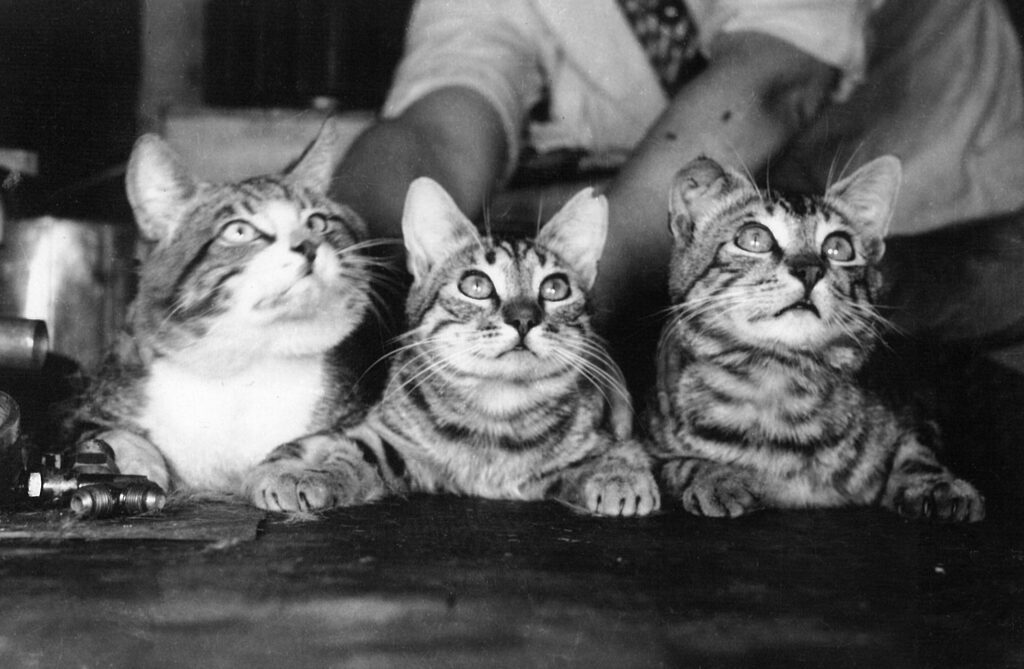
There were high mortality rates among the kittens of these first-generation deficient cats, often due to maternal failure to produce milk. Those kittens who survived had lower than normal birth weights and poor dentofacial development. If they in turn were given the cooked meat diet after weaning, they were called second-generation deficient cats; these cats were subject to dental problems and porous bones, and they increasingly suffered from the types of adverse health conditions seen in the first-generation deficient cats, including bone infections, arthritis, cardiac lesions, thyroid disease, paralysis, meningitis and much more.
In fact, the amount of degeneration increased with each subsequent generation of deficient cats who were born to mothers fed cooked meat during the entire period of gestation and nursing, and who themselves were given the cooked meat diet after weaning. Physical deformities and developmental deficits became increasingly common in successive generations, and both skeletal and soft tissue changes progressed. By the third generation, if they had been maintained consistently on the cooked food diet, they lost their ability to reproduce. None of the third-generation deficient cats survived more than six months, and there were no fourth-generation deficient cats.
Reversing the Damage?
Pottenger wanted to know if the degenerative changes he observed in the deficient cats were reversible with a return to an all-raw diet. He found that once a previously healthy cat had been placed on a deficient diet for six months, putting it back on an all-raw diet gradually improved its health to a point, but the decreased skeletal calcium levels and reproductive efficiency would not return to normal. Kittens born to such cats (which he called first-generation regenerating cats) would have low birth weight, skeletal and soft tissue deficiencies, and impaired vitality. Deficiency symptoms would decrease progressively over successive generations of regenerating cats if the offspring were fed an entirely raw food diet, but rarely would they resolve completely. By the fourth generation of regenerating cats, only some had returned to apparently normal health.

Pottenger also conducted a second series of cat feeding experiments, in which he compared various types of raw versus heat-processed milks. In this series, the cats were given either raw milk, metabolized vitamin D milk, pasteurized milk, evaporated milk, or sweetened condensed milk for two-thirds of the diet; the remaining third consisted of raw meat and cod liver oil. In brief, the results corresponded roughly with those described above. The cats given raw milk were generally healthy and reproduced normally, while those fed either pasteurized milk or metabolized vitamin D milk from cattle fed irradiated yeast showed skeletal changes, reduced reproductive efficiency in the females, and developmental deficiencies in the kittens. (Males given metabolized vitamin D milk from cattle fed irradiated yeast also died at unusually young ages, with young kittens not surviving past two months.) Those fed on evaporated milk had even greater symptoms of deficiency than the pasteurized milk group, and those given sweetened condensed milk had the most marked adverse effects of all, developing heavy fat deposits and extreme skeletal deformities.
To summarize Pottenger’s results, feeding the cats either cooked meats or heat-processed milks resulted in physical degeneration that worsened with each succeeding generation. The incidence of skin diseases and allergies progressively increased, susceptibility to infection rose dramatically, and severe osteoporosis became rampant. The deficient cats suffered from most of the degenerative diseases affecting humans on deficient diets. Moreover, the changes were seen not only in the specific generation of cats given cooked meats or heat-processed milks, but in multiple generations of their offspring, even if these were fed on raw meat and raw milk diets.
Soil Health Effects
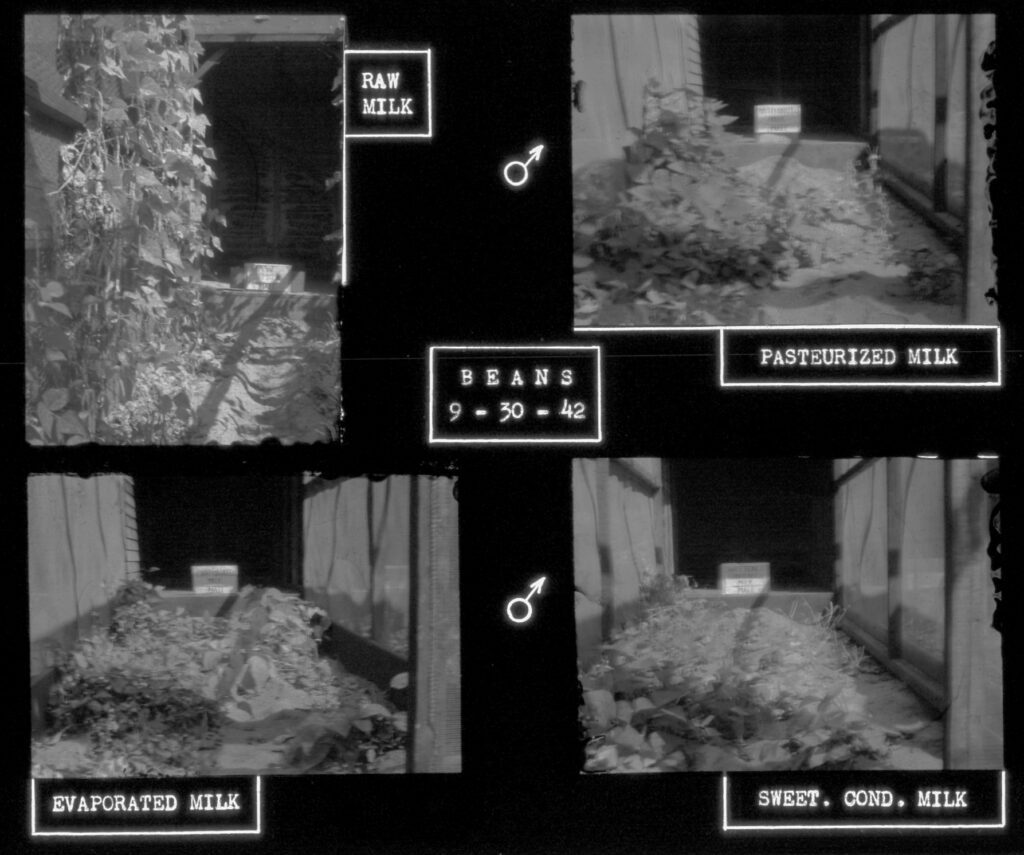
Interestingly, even the health of the soil in the pens where the cats were kept reflected their diets. After the various experiments concluded and the pens were left to lie fallow, it was noticed that the weeds that grew were more numerous and vigorous in those pens that had housed healthy cats. Later, navy beans were planted in the pens, and their growth patterns also showed a relationship to the health and vigor of the cats that had been kept there. Pottenger suggested that the healthy cats (fed on raw meat or raw milk) had returned to the soil substances that promoted the healthy growth of plants, while the deficient animals returned substances that were inadequate for — or even harmful to — optimal plant growth.
It was clear from Pottenger’s cat studies that heat-processing their food resulted in a deficient diet that could not sustain health; however, he was not able to determine exactly what vital element or elements destroyed by cooking were causing their severe degeneration. He brought up a number of potentially problematic factors; for example, that cooking can precipitate proteins, that enzymes are heat labile, and that vitamin C and some members of the B-complex are damaged by heat.
Today, it has been suggested that the amino acid taurine was the critical missing element in Pottenger’s cooked food diets. At the time of his experiments, the vital role of taurine in feline nutrition was not yet known. Taurine is an essential nutrient for cats; in other words, they do not manufacture sufficient quantities of it in their bodies and thus must obtain it from foods. It is water soluble and can be destroyed to varying degrees by different methods of food preparation. Taurine deficiency in cats is now known to result in many of the same symptoms Pottenger observed in his cooked-food animals, including retinal degeneration, impaired reproduction, developmental abnormalities and cardiomyopathy.
Relevance for Humans
For humans, taurine is not an essential nutrient; we make enough of it within our bodies. However, the findings of Pottenger’s studies are still highly relevant to us. In his extensive body of published work, Pottenger showed that children with inadequate diets that don’t meet their nutritional needs develop many of the same problems he saw in the deficient cats, such as dentofacial abnormalities, poor bone mineralization, metabolic problems, and impaired immunity.
It should be noted that Pottenger did not advocate for a totally raw diet in humans, although he was a proponent of raw milk and breastfeeding, and he stressed the need to include sufficient raw and fresh foods in the diet to provide an adequate amount of hormones, enzymes and vitamins. These, he explained, could be destroyed by modern methods of milling, heating and processing food.
He also pointed out how modern industrial farming methods were depleting the soil of nutrients and consequently reducing the quality of the plant- and animal-based foods grown on that soil. He stressed the reciprocal relationship between the health of the soil, the plants that grow upon it, and the animals and humans that feed on them. Clearly, this is an even more critical issue today.
Pottenger’s work also illustrates how our health is influenced by that of preceding generations, and how our development in infancy and childhood depends to a large extent on the nutrition of our ancestors, as well as on our own nutrition. He explained that “people can be healthy only if the stock from which they come is healthy and the food which they eat is adequate.”
In essence, his work highlights how our dietary choices today can affect our future children and subsequent generations of our descendants. Roberta Louis is managing editor of the Journal of Health and Healing, published by Price-Pottenger.