

Nutrient-Rich Soil Deters Swarming Insects
Insect swarms evoke images of ancient plagues, but the danger is still very real today. Around the world, swarms can devastate crops across vast regions and wipe out livelihoods. A single swarm can span hundreds of square miles — roughly the size of a major city such as New York or Phoenix.
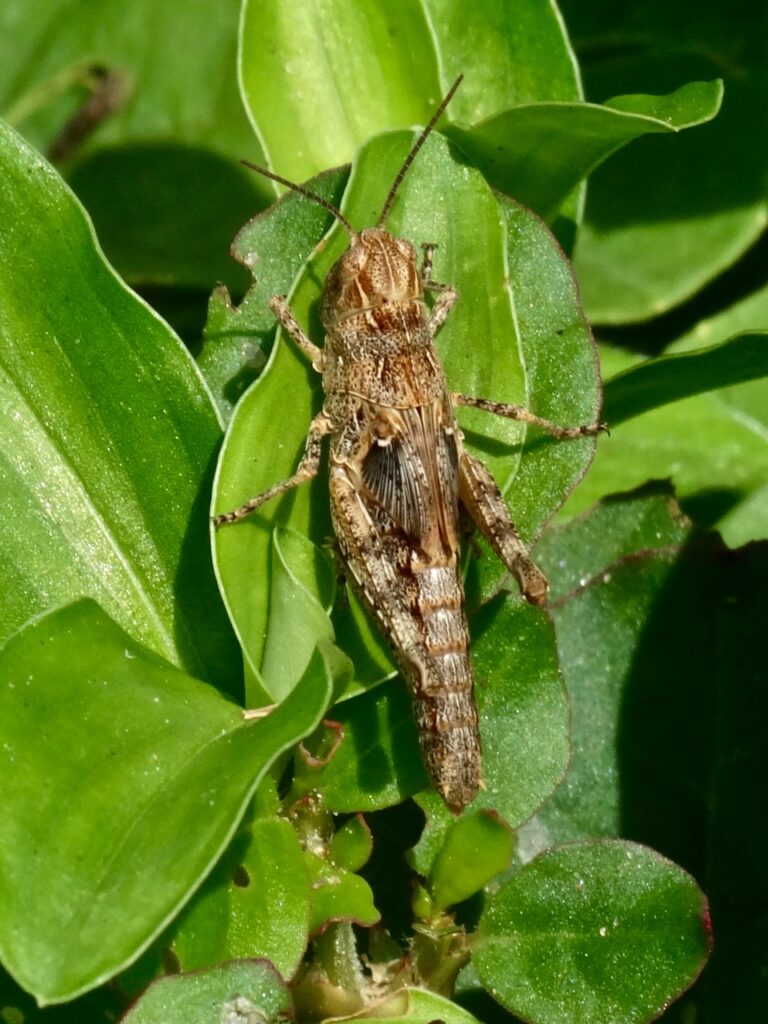
Now researchers from Arizona State University have partnered with farmers in Senegal who regularly face outbreaks of the Senegalese grasshopper. Unlike the desert locust, this species does not form massive swarms, but its frequent appearances and smaller groupings can cause even greater harm to local farmers.
Each farmer planted two plots of millet — one treated with nitrogen fertilizer and one left untreated. The contrast was clear. Fertilized plots had fewer grasshoppers, reduced crop damage, and harvests that were twice as large as those from untreated fields. The study was published in the journal Scientific Reports.
After more than 15 years of research, researcher Arianne Cease realized that crops grown in nutrient-poor soil tended to encourage locust outbreaks because those plants contain high levels of carbohydrates and very little protein. “This carbohydrate bias, or the ‘donut diet,’ is optimal for populations of locusts and swarming grasshoppers,” Cease said. Much like endurance athletes who rely on carbohydrates for energy, locusts depend on carb-heavy plants to fuel their long-distance movement.
Plants grown in nitrogen-rich soil tell a different story. They contain more protein and fewer carbohydrates, making them difficult food for locusts. Their bodies struggle to process the excess protein and fail to get enough energy to thrive.

Although nitrogen fertilizer was supplied for the study, it is not a realistic long-term option for many farming communities. Sustainable control requires affordable methods that also protect soil health. “Ongoing work is focused exclusively on compost, and we seem to be getting the same results,” Cease said. The farmers no longer burn their crop residues, instead composting them.
The U.S. currently has no native locust species, but range of the Central American locust reaches within about 200 miles of the U.S. border. Texas and other border states may become suitable habitats for locusts within the coming decades.
Even without locusts, grasshoppers already pose major challenges across the U.S. There are 12 species of rangeland grasshoppers (plus one cricket) that are among the most serious pest threats in the western United States. When they swarm, they can strip grazing land and outcompete livestock for food, creating serious problems for ranchers.
Manganese Helps Reduce Agricultural Nitrogen Pollution in Air and Water
Nitrogen pollution is a serious concern for the agriculture industry. New research from the University of Connecticut shows that adding manganese to soil can help reduce nitrogen runoff. The results were recently published in Applied Soil Ecology.
The team compared soil that had been treated with nitrogen fertilizer for the past 27 years and soil that had had no nitrogen input in that period. They tested three different levels of manganese: 0, 50, and 250 milligrams per kilogram of soil.
They observed that adding manganese lowered plant-available nitrogen in the soil, specifically ammonium (NH4+) and nitrate (NO3–). With less of these readily usable nitrogen forms present, nitrous oxide (N2O) emissions dropped significantly, and nitrate levels also declined, reducing the risk of nitrate leaching into waterways. Specifically, there was a 42 percent reduction in N2O emissions with 250 milligrams per kilogram of manganese, and 32 percent with 50 milligrams per kilogram of manganese after 51 days.
The team also found that the addition of manganese reduced the expression of the amoA gene, which converts ammonia to nitrate, by 2.5 times.
While this was only a laboratory study, the results are promising. Researchers at the University of Tennessee are working on a field experiment to better understand how these findings can be applied in the real world.
Tracking Global Water Circulation Using Atomic Fingerprints
Water is made of hydrogen and oxygen, and some of these atoms naturally exist in slightly heavier forms — because of additional neutrons — called isotopes. As water evaporates, forms clouds, and moves through the atmosphere, the proportion of these isotopes shifts in consistent and measurable ways. Those shifts act like a fingerprint, helping researchers map how water travels on a global scale.
When this isotope data is combined with hydrological models, it becomes a powerful tool. Scientists can use it to better understand extreme weather events such as storms, flooding and droughts, and to improve projections of how climate change may alter future weather patterns.
Some climate models already account for isotopic processes, but no single model can perfectly capture the complexity of Earth’s water cycle. In a study published by Journal of Geophysical Research: Atmospheres, researchers at the University of Tokyo used a method known as an ensemble, which combines multiple models at the same time. Their ensemble brought together eight isotope-enabled climate models and covered a 45-year period, from 1979 to 2023.
Each model was driven by the same wind and sea-surface temperature data. This setup allowed the team to evaluate how individual models handled water-cycle physics and to compare the combined ensemble average with real-world climate observations.
“Changes in water isotopes reflect shifts in moisture transport, convergence, and large-scale atmospheric circulation. Although we know, at a simple level, that isotopes are affected by temperature, precipitation and altitude, the variability of current model simulations makes it difficult to interpret the results,” said senior author Kei Yoshimura.
Looking at the past 30 years, the ensemble simulations showed an overall rise in atmospheric water vapor linked to increasing global temperatures. The results also revealed strong connections to major interannual climate patterns, including the El Niño-Southern Oscillation, the North Atlantic Oscillation, and the Southern Annular Mode. These large-scale systems influence global water availability over multiple years and affect billions of people worldwide.
This research represents the first time multiple isotope-enabled climate models have been integrated into a single unified framework. The resulting ensemble closely aligns with observed data, providing a more reliable picture of how water moves through the global climate system.
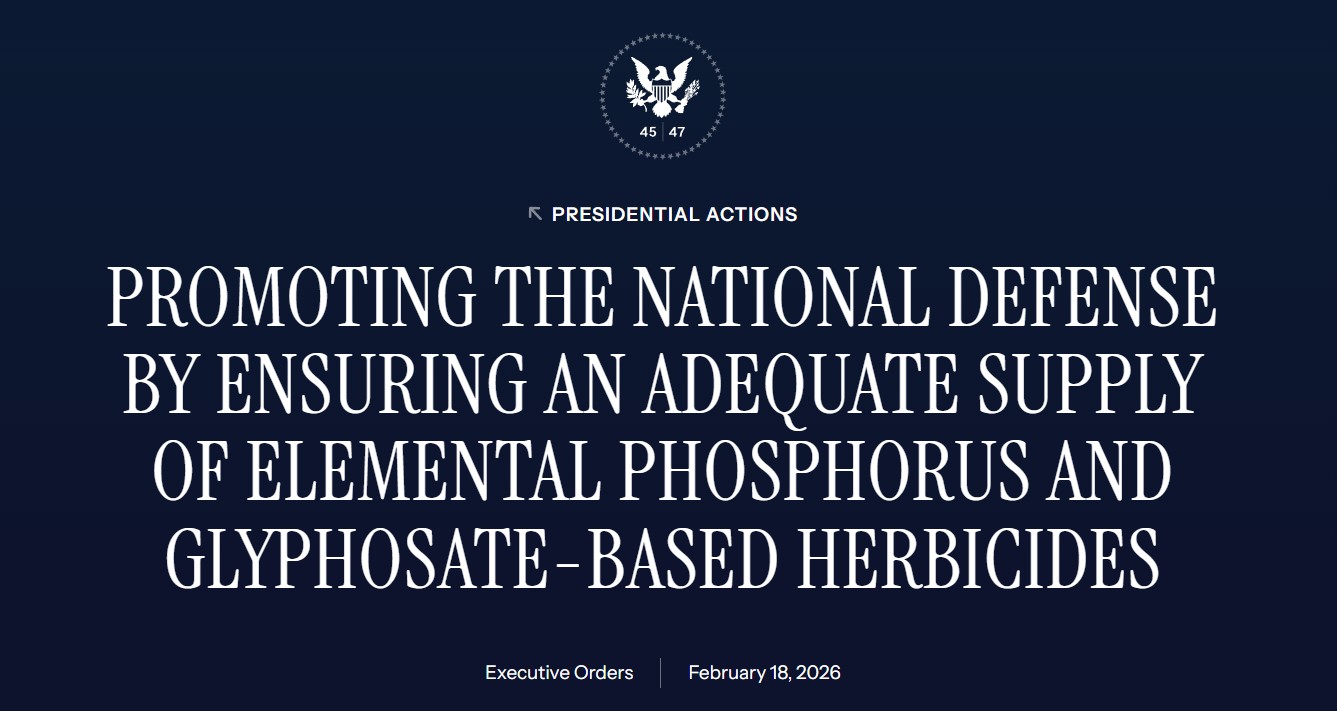
| This Trumps Them All: Glyphosate Is Essential for National Defense The Make America Healthy Again (MAHA) movement has been in turmoil since February 18, when President Donald Trump signed an executive order that declared glyphosate essential for national defense. The order starts out reasonably enough, explaining that elemental phosphorus is critical for manufacturing “numerous defense technologies.” But then it goes on to claim that glyphosate is also critical for national defense. “As the most widely used crop protection tools in United States agriculture, glyphosate-based herbicides are a cornerstone of this Nation’s agricultural productivity,” the executive order states—using language that food activist Vani Hari notes “reads like it was drafted in a chemical company boardroom.” “Lack of access to glyphosate-based herbicides would critically jeopardize agricultural productivity,” the order continues. “Any major restrictions in access to glyphosate-based herbicides would result in economic losses for growers and make it untenable for them to meet growing food and feed demands. ”Not surprisingly, Bayer applauded the order, saying that they would “comply with this order to produce glyphosate and elemental phosphorus. ” Much more troubling to MAHA advocates, Secretary of Health and Human Services Robert F. Kennedy, Jr. is supporting Trump’s executive order. In a post on X, Kennedy wrote, “Unfortunately, our agricultural system depends heavily on these chemicals…. If these inputs disappeared overnight, crop yields would fall, food prices would surge, and America would experience a massive loss of farms even beyond what we are witnessing today. The consequences would be disastrous.” His post later promised a shift to reduce chemical dependence in agriculture, though: “We are now changing course — without destabilizing the food supply. ”As Kennedy told the New York Times, “Donald Trump’s executive order puts America first where it matters most — our defense readiness and our food supply…. We must safeguard America’s national security first, because all of our priorities depend on it.” “I can’t envision a bigger middle finger to every MAHA mom than this,” Environmental Working Group President Ken Cook commented. “By granting immunity to the makers of the nation’s most widely used pesticide, President Trump just gave Bayer a license to poison people. ”On February 19, US Representative Thomas Massie (R-KY) introduced the “No Immunity for Glyphosate Act,” which would “prohibit the use of federal funds” to implement Trump’s executive order, essentially rendering it toothless. While concern about glyphosate’s toxicity is important, it doesn’t address the underlying problem of how Trump’s claim that glyphosate is essential for national security has basically gone unquestioned. His executive order is based on the assumption that agricultural chemicals — especially glyphosate — are essential to feed the world. Eco-farmers know that it’s possible, practical, and affordable to grow good-quality crops without glyphosate or any other herbicide. Agricultural systems that don’t rely on any manufactured inputs are a much more secure form of national defense than propping up a floundering, lawsuit-embroiled, and foreign-owned chemical company. Read ag news summaries like this — with an eco-ag perspective — posted new every week at members.acresusa.com. |