
Cover cropping — but with revenue
Relay cropping is a variation of companion cropping I stumbled upon back in about 2012 through several conversations with John Kutz of Fort Atkinson, Wisconsin, and Shane Grieving of Fowl Creek Farms in Nebraska. We had been exchanging ideas about interseeding cover crops into corn — a practice I was very familiar with, since I had started doing that in 2006.
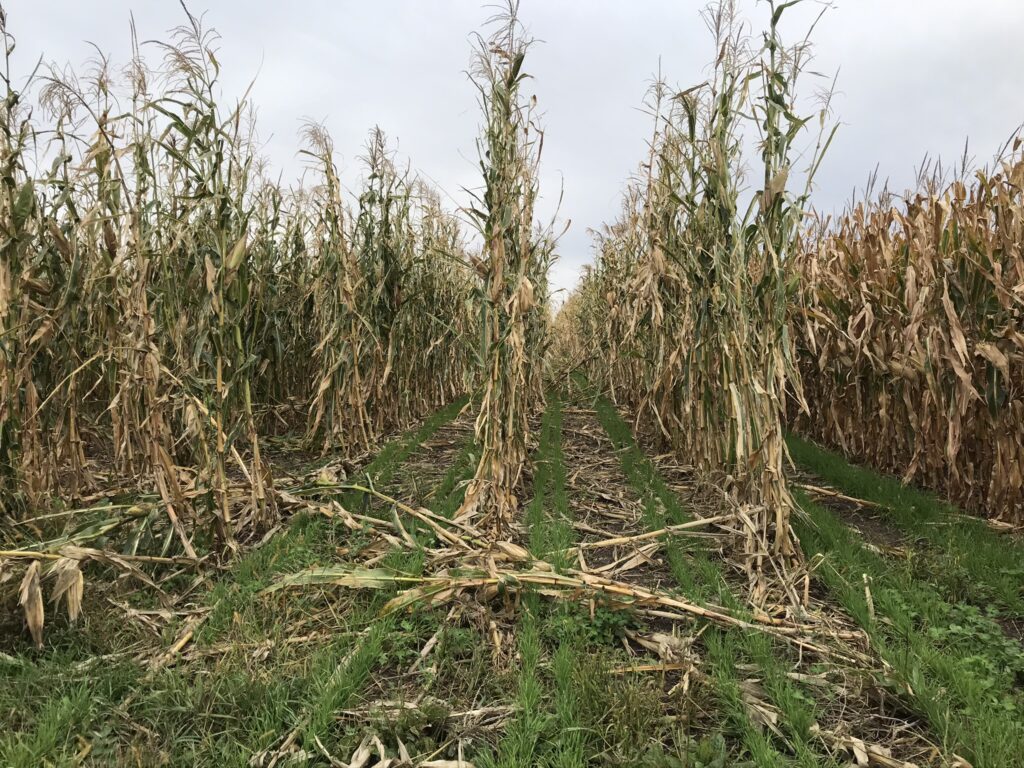
Interseeding covers into corn is a variation of companion cropping. The key difference is that in interseeding, the covers are strictly providing soil health benefits to existing or future crops; with full-blown relay or companion cropping methods, we can actually turn the cover crop into a cash crop, thereby creating more revenue streams.
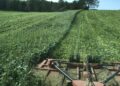
Relay cropping is the act of planting two or more crops in the same field at different times and managing them separately and even harvesting them separately. Some growers are doing this by either planting rows of different seeds separately or mixing seeds in a single row, and then harvesting the entire field at one time and separating the grain. Some folks are even using paired rows for disease suppression, helping them reduce fungicide use.
Rotation-wise, we are pretty fluid. I am constantly looking forward and monitoring market signals and what the soil is telling us it wants. That’s the beauty of this system — we have options to keep adapting and implementing.
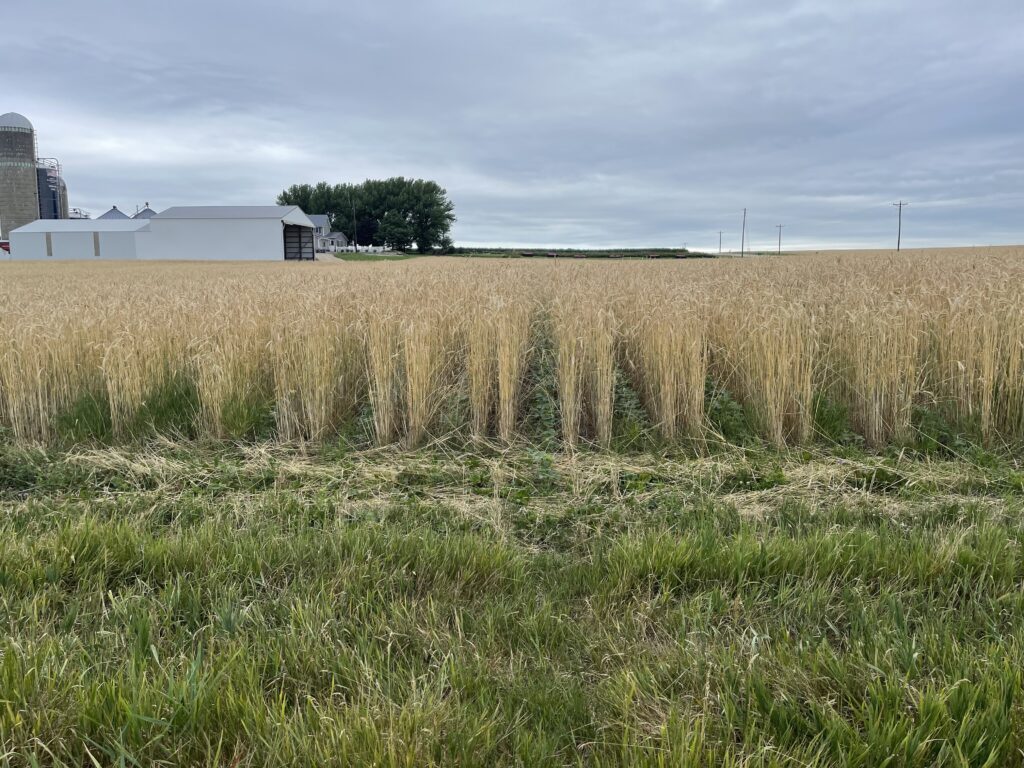
Thanks to our interseeding experience, we already had the equipment we needed to start relay cropping. I was using a twin-row setup to plant covers into corn at the V4 stage and was already seeding fall covers ahead of corn and beans.
The easiest practice right now is to plant an early soybean, which allows us to get our cereals in early in the fall. We twin-row drill the cereal in the fall. Then in the spring, as early as conditions are fit, we plant the soybean. About mid- to late-July we remove the cereal crop to give the soy crop room to thrive; if it’s early enough, we can sneak in buckwheat. Days-to-frost is our determining factor. If it works, great; if not, it’s a cover crop.
When this cycle is complete, we can either go back to corn or early beans and then repeat. Chances are we would have a nice volunteer cover crop of rye to plant into the following spring.
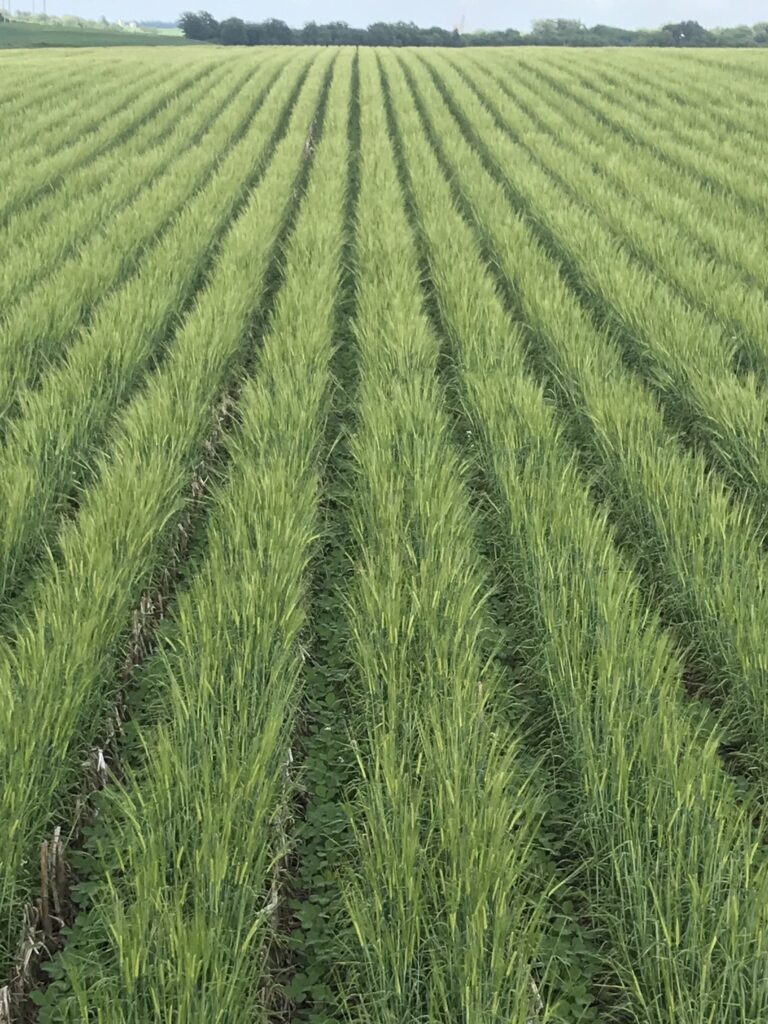
The original drill I had converted for twin-row seeding was a modified Hiniker no-till. I completely overhauled it and revamped it to my liking, only to find out some of its true weaknesses — the row units. So I set forth to build an all-new drill in 2016, working with Dawn equipment and Montag manufacturing. The DuoSeed row unit gave us a solid row unit in a very compact package, yet with very minimal disturbance, which in my mind is critical to avoid weeds in this system.
Once we recognized we had all the pieces in place, we started testing and took some of the cereal crops to harvest. It all seemed too easy … those famous last words.
The very first lesson we learned was probably the hardest: soybean maturity. We realized we needed to go a full-maturity group. That’s a tall hurdle — the pucker factor is pretty high, since here in Iowa a frost in the fall is probably our biggest concern. We crossed that obstacle, though, and we’re now comfortable enough to go almost two full maturity groups later, and it seems to be working.

Another thing we’ve learned along the way is that no two years will ever be the same. One year the cereal will thrive and be tall and the beans will be short. The next year the beans will thrive and the cereal might be short. You will need to be able to adapt your harvest equipment for this.
We started with a simple lifter-type blocker guard with a pipe out front to push the soybeans down. They worked great, but the thought of steel in front of my combine on our undulating terrain scared me. The following year I used some cheap drain tile, cut to length and then slit down the side, to fit over the cutter bar, and that worked great. The best part was that if you hit a waterway or berm and one happened to go through the machine, it didn’t do any damage. Our third version of this became a bit more refined — we took hard plastic and made a loop, similar to the original steel version, that actually bolts in place. This works very well, and now I see companies offering similar products. But I advise folks to focus on the fundamentals and tweak. Even the folks who buy the fancy equipment have to tweak it.
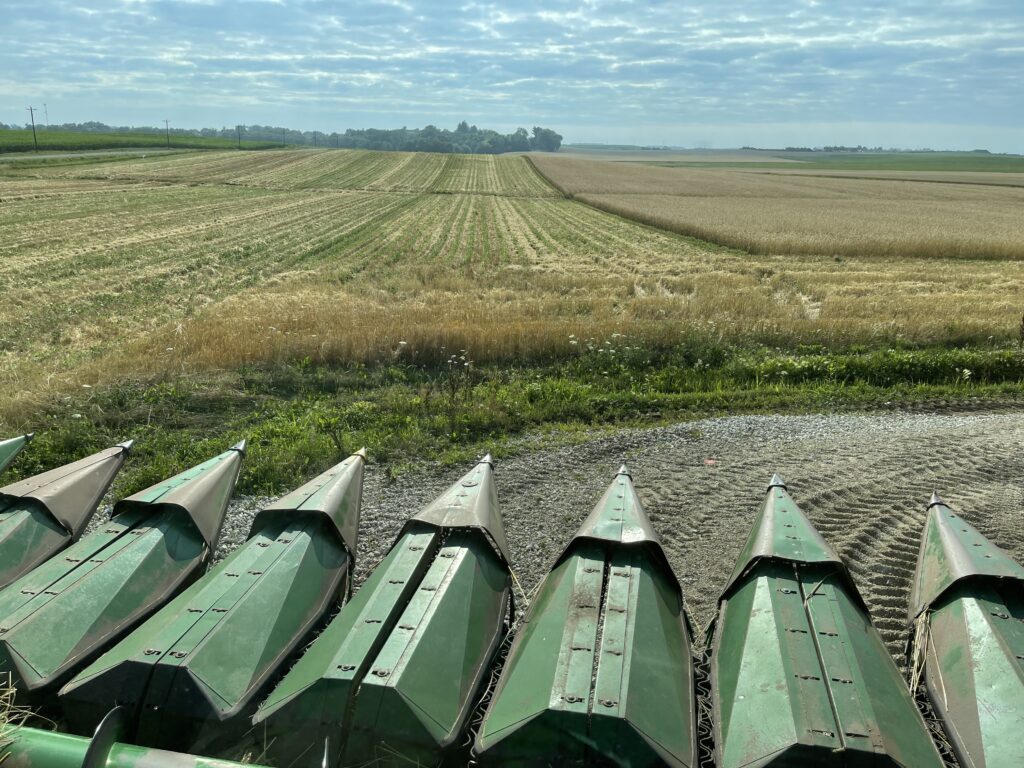
Today we’ve evolved to the Deere Row Crop head, which is the Cadillac. It allows you to do minimal damage to the adolescent crop while harvesting the mature crop. John Kutz pioneered the use of the Row Crop head years before many of us did. The biggest change I made was instead of shifting the track on the combine, I shifted the window in the header so we could essentially use whatever machine was available, set up on 120-inch spacing.
Weed management is somewhat simple, yet complicated, in this system. On a conventional farm I watch to see what winter annual is present in the fall and hit that with a cheap program. I generally then do nothing until after the cereal crop is removed; then we step in and clean up what is present, if needed.
I do have my first field of organic relay this year, and that will be a bit of an education. The first lesson learned is that we should not have upped the rye rate, as one normally would in an organic situation. A month before harvest I thought we had smothered the soybeans, but to my surprise they did survive on most of the field; yet now some weeds are coming, so I will be pressed to learn some new tricks. Hopefully I can sneak in with the Dawn InRowl and clean up a bit.
Planting-wise, we started out using the same drill as the cereal crop but then reverted back to a simple, cheap, mounted planter. At first I put it on a sliding hitch, but now I’ve just set one tractor on 90 inches to get it spaced right. This step has minimized headaches in setting offsets in the GPS. Folks ask if they need RTK (Real-Time Kinematics) to do this. Yes, it makes it nice, but is it 100 percent needed? No. No matter how good we set things, we are always shifting or doing something to stay on track — even hand-driving sometimes.
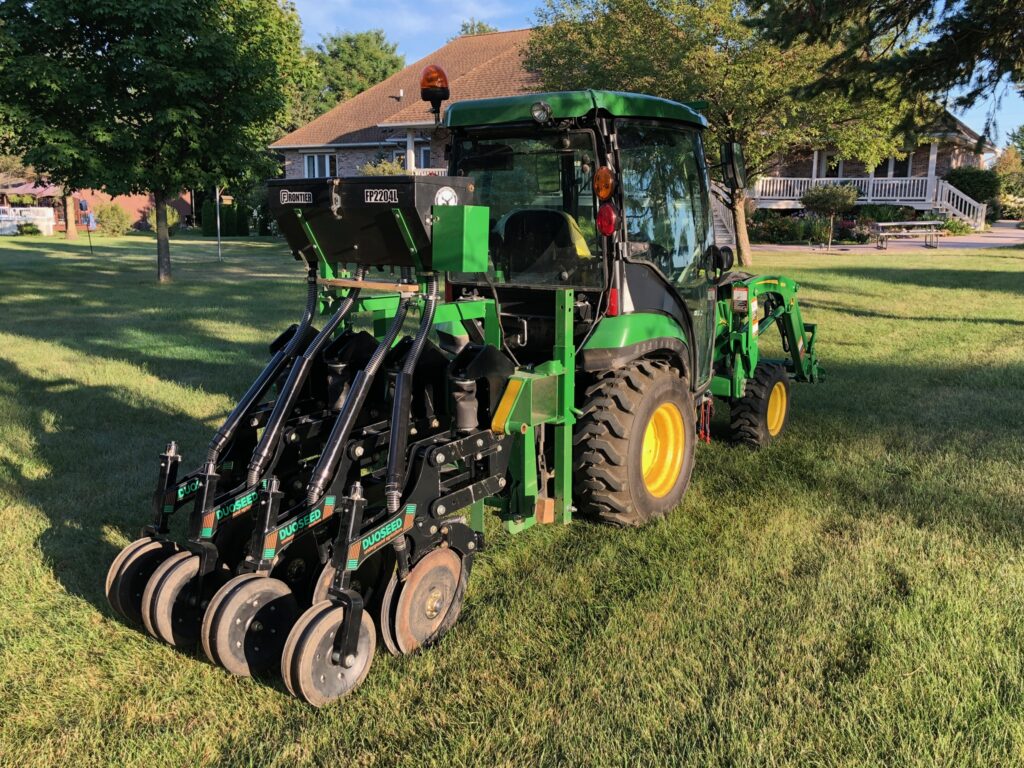
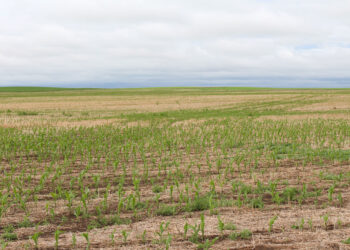
One of the ways we have really attempted to push the envelope is in 60-inch corn. We have used a miniature version of the DuoSeed drill to get our cereal crops in early. The reason we are trying to do this is that at our given latitude, one of our biggest challenges is getting consistent stands on winter cereal crops.
So why do all this? Is relay cropping really worth it? It’s definitely improved our cash flow. I’m in an area where a cereal crop alone won’t pay rent very well without straw removal or producing a feed-grade crop. We can generally generate a full cereal crop with as good or better a soybean crop. We have done winter wheat, cereal rye, malt barley and oats — all with soybeans. If the season allows, we also like to chase the combine with the planters, putting buckwheat in where the cereal crop was (as a companion crop) and then harvesting that with the soybeans.
Relay cropping has also improved our soil health. A group called Multi-Cropping Iowa was founded based on what we are doing to help with research and to collect data. Hydro stations were installed in a relay cropping field with history of regenerative management and an adjacent field with “conventional” corn production. The hydro stations collected soil moisture at 15, 30, 60 and 100 cm, along with precipitation. Here are some of the results:
- When increased evapotranspiration corresponds with a peak flow event during the months of the year where crops are growing at a high rate, modeling showed a range of 8 to 50 percent reduction in annual peak flows for relays. As annual peak flows go up, reductions corresponding from relays were lower. This pattern holds true for other flood mitigation studies and modeling results because after a certain point, storage volumes in infrastructure and soil capacity are overwhelmed. Peak annual flows in northeast Iowa commonly occur in May and June, prior to significant emergence of corn and soybeans.
- Soil sampling showed improved soil structure and increased water infiltration in relay-cropped and cover-crop systems versus fields with conventional management. Soil health metrics in relay-cropped/cover-crop fields were nearing numbers measured in perennial vegetation systems of forest and native tallgrass prairie. This translates into higher infiltration rates and storage capacity in the soil when it rains.
- Evaluating full field performance, where all input costs and yield profits are taken into account, showed that relay cropping averaged $50.90 higher net profit per acre than sole crop soybeans.
Where do I see this going in the future? I see us adding other crops, as we get more support and as researchers join us, to help mitigate the risk of learning what crops will compliment and work well in the system. I foresee a day when we develop a strategy in which we are constantly planting one crop into the next and never having fallow periods. It will take creative minds to accomplish this, but if we can figure out the right sequence, it will ease weed control and environmental concerns.
Loran Steinlage is a lifelong farmer, systems thinker and fabricator. He is part of the engineering team at Dawn Equipment, and his farming practices have earned him environmental leadership awards and the 2020 No-Till Farmer Innovator award.