• Home
  • Events

    Upcoming Events

    • Menoken Farm Field Day
    • Eco-Ag Conference
    • View all events →

    Recent Webinars

    • Kyle Richardville
    • David Montgomery
    • Gary Zimmer
    • Taylor Henry
    • Fernando Falomir
    • Megan Neubauer
    • David Knaus
    • View more webinar replays →
  • Bookstore

    Books by Category

    • Soil Health
    • Livestock & Animals
    • Gardening & Homesteading
    • Farm Business
    • Health & Food

    Books by Collection

    • New Releases
    • The Albrecht Volumes
    • Acres U.S.A. Published
    • Eco-Ag Speakers
    • Soil Health Educators

    Books by Level

    • Beginner
    • Intermediate
    • Advanced
    • Kids

    Featured

    • Explore Jon Stika's New Book →
  • Resources

    Continue Learning

    • White Papers
    • Online Courses

    Where to Find Us

    • Acres U.S.A. Podcast
    • YouTube Channel
    Facebook Instagram X-twitter Linkedin
    • Join our Newsletter →
  • Articles

    Articles by Topic

    • News
    • Ecological Farming
    • Livestock
    • Soil Health
    • Opinion

    Articles on Crops

    • Cover Crops
    • Crop Nutrition
    • Disease & Pests
    • Fruits & Nuts
    • Ag Technology

    Magazine Issues

    2026
    • January
    • February
    • March
    • April
    • May
    • June
    • July
    • August
    2025
    • January
    • February
    • March
    • April
    • May
    • June
    • July
    • August
    • September
    • October
    • November
    • December
    2024
    • January
    • February
    • March
    • April
    • May
    • June
    • July
    • August
    • September
    • October
    • November
    • December
    • Explore the archives →
    • Subscribe to the magazine →
  • About

    About Us

    • About Acres U.S.A.
    • Meet Our Team
    • Our History
    • Eco-Ag Achievement Award

    Contact Us

    • 970-392-4464
    • support@acresusa.com

    Acres U.S.A. LLC
    PO Box 351
    Viroqua, WI 54665

    • A New Era of Eco-Ag →
Subscribe
HOME
Events
  • Upcoming Events
  • Menoken Farm Field Day
  • Eco-Ag Conference
View all events
  • Webinars
  • Kyle Richardville
  • David Montgomery
  • Gary Zimmer
  • Taylor Henry
  • Fernando Falomir
  • Megan Neubauer
  • David Knaus
Bookstore
  • Books by Category
  • Soil Health
  • Livestock & Animals
  • Gardening & Homesteading
  • Farm Business
  • Health & Food
  • Books by Collection
  • New Releases
  • The Albrecht Volumes
  • Acres U.S.A. Published
  • Eco-Ag Speakers
  • Soil Health Educators
  • Books by Level
  • Beginner
  • Intermediate
  • Advanced
  • Kids
Resources
  • Continue Learning
  • White Papers
  • Online Courses
  • Where to Find Us
  • Acres U.S.A. Podcast
  • YouTube Channel
Facebook Instagram X-twitter Linkedin
Join our Newsletter
Articles
  • Articles by Topic
  • News
  • Ecological Farming
  • Livestock
  • Soil Health
  • Opinion
  • Articles on Crops
  • Cover Crops
  • Crop Nutrition
  • Disease & Pests
  • Fruits & Nuts
  • Ag Technology
  • Magazine Issues
2026
  • January
  • February
  • March
  • April
  • May
  • June
  • July
  • August
2025
  • January
  • February
  • March
  • April
  • May
  • June
  • July
  • August
  • September
  • October
  • November
  • December
2024
  • January
  • February
  • March
  • April
  • May
  • June
  • July
  • August
  • September
  • October
  • November
  • December
Explore the archives
Subscribe to the magazine
About
  • About Acres U.S.A.
  • Meet Our Team
  • Our History
  • Eco-Ag Achievement Award
SUBSCRIBE

The Nature of (Hu)man-Made Disasters

Charles Benbrook by Charles Benbrook
September 1, 2025
0
Home Magazine features Opinion
3
SHARES
304
VIEWS
Share on FacebookShare on Twitter

When will Americans have the will to alter the course of the slow-moving, human-made natural disaster our food system has become?

Charles Benbrook

The horrific outcome of the flash flood in Texas Hill country will hopefully trigger some long overdue changes in preparedness for the next flood. 

The difference between a true natural disaster and a human-made natural disaster boils down to the presence or absence of meaningful actions to reduce property damage, environmental degradation, and human health impacts. “Meaningful” actions include things like installing sirens linked to real-time sensors placed along parts of flood-prone rivers where lots of people sleep at night. 

Increasingly, the nation will face decisions about what comes next in the wake of human-made disasters. How should we rebuild the Los Angeles communities ravaged in last year’s fires; what comes next in the cost and availability of homeowners insurance in Florida; how can we save lives and property when hurricanes rip through landscapes? 

As a nation, and in most communities, after the sting and heartache of the latest human-made disaster wears off, the remedial response typically struggles to move beyond wishful thinking and half-measures. In the interim, the underlying factors exposing humans to natural disasters deepen and spread (e.g., climate change, population growth, desire to build homes and recreate along live water).

Yet some of the most consequential human-made natural disasters unfold slowly and are hard to see. They arise from complex combinations of factors, like the flash floods in Texas (very unusual weather pattern, first warnings after midnight, impacted areas with no way to spread warnings, delays in getting warnings out, inadequate responses to the warnings, etc.). 

There are several consequential, human-made natural disasters now unfolding that are rooted in how most farmland is managed and, consequently, in the poor quality of the American food supply and diet. 

Food-driven metabolic syndrome is driving the most serious collapse in U.S. public health since our birth as a nation. Farmers are caught on a variety of chemical and animal-drug treadmills. A range of policies, corporate power, and the need to deliver profits to shareholders make it hard for farmers to find the off ramp. It hurts to admit it, but we have the kind of food and ag system that we, as a nation, have chosen to support and invest in.

I often wonder what it will take to wake people up and convince a majority of the need for substantial changes in our food and farming systems. But that is just Step 1. Step 2 is creating the political will, and ability, to overcome the lock that conventional ag and agribusiness have on all forms and levels of policy with the potential to drive and underwrite constructive change.
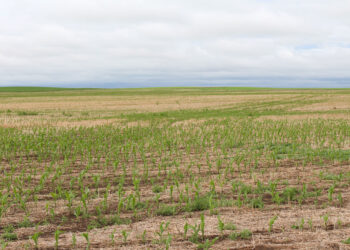
Take Iowa for example. A majority of Iowans clearly recognize that corn-soy farming plus CAFOs degrades water and air quality and are almost certainly contributing to adverse reproductive problems and chronic diseases. But the political will required to bring about change is nowhere in sight. Why? What is missing? 

Do people really believe that Iowa farmers cannot do better, and that both Iowans, and the country as a whole, need to accept the downsides of “modern” ag as an inevitable and unavoidable cost of life as we know it?

Many have wondered whether the current interest in making America healthy again might make a difference. Perhaps the harsh economic realities arising from the aging of the increasingly unhealthy baby-boomer generation will force a reckoning. Until we invest much more in health promotion, and do so wisely and continuously, the country will be unable to provide all available medical technologies and interventions to keep us boomers alive as long as possible. 

I fear that the adverse consequences of the way much of the farmland is managed in America, and our remarkably unhealthy food system, will have to become even more obvious before meaningful change can begin to take root. Instead on investing in solutions to crystal-clear problems, the stewards of American ag and the food industry continue to perfect the art of denial. 

I worry about a perfect storm of conditions occurring in the Midwest some summer that triggers toxic algae blooms that rapidly overwhelm the treatment and filtration systems in some municipal drinking water plants, leading to hundreds, or thousands, or tens of thousands of people ingesting enough bacteria to get sick, with some suffering serious health problems as a result. 

Might such a tragic event serve as the long-needed wake-up call to trigger the changes needed to reduce “non-point” pollution from farms and CAFOs? Maybe, but not likely, since defenders of all-things conventional ag will point out the unusual, uncontrollable natural circumstances that brought about such an episode and will claim that effective systems and policies are in place elsewhere.

Until it happens again. But then the same arguments and excuses will be rolled out, likely refined by experience gained during the last episode, and now amplified by various industry-funded communication and political-action organizations created to “get ag’s message out.”

I started a career focused on food and farming, the environment, and public health in the late 1970s. Over the past nearly 50 years, remarkable and steady progress has been made in understanding how food and farming systems, technology, and policy are impacting farmers and ranchers, rural communities, and everyone who sits down to enjoy a meal day in and day out. 

Yet the adverse environmental and public health footprints left by how we farm and feed America have steadily deepened and are dragging us down as a nation, and with no end in sight. This is perhaps the most consequential human-made natural disaster of this century, and one that seems baked into the DNA of how we do business, make policy and feed America. 

← Previous View from the Country Next Eco-update →
Tags: Natural disasters
Charles Benbrook

Charles Benbrook

Charles Benbrook is an advocate for health-driven transformation in all things food and ag. He has served as an expert witness in recent litigation against Bayer/Monsanto.

Next Post
USDA Defunds Solar Panel Development on Farmland: Agricultural Community Responses Are Mixed

USDA Defunds Solar Panel Development on Farmland: Agricultural Community Responses Are Mixed

  • Trending
  • Comments
  • Latest
The Most Important Livestock in Our Fields

The Most Important Livestock in Our Fields

July 1, 2024
Glyphosate Does What It’s Designed to Do — Kill

Glyphosate Does What It’s Designed to Do — Kill

February 19, 2025
USDA organic seal over American farm land

Losing Organic Farms

September 18, 2026
The Take-Half, Leave-Half Fallacy

The Take-Half, Leave-Half Fallacy

July 1, 2025
Author photo (Wikimedia)

A Food Emancipation Proclamation

3
We Don’t Need Another Bridge — We Need an Off-Ramp

We Don’t Need Another Bridge — We Need an Off-Ramp

3
Under One Roof

Under One Roof

3
A Rose By Any Other Name

A Rose By Any Other Name

2
You First

You First

September 22, 2026
Blaming the Wolves

Blaming the Wolves

September 18, 2026
Running Dry

Running Dry

September 18, 2026
What Are Lactating Steers Trying to Tell Us?

What Are Lactating Steers Trying to Tell Us?

September 18, 2026

Recent News

You First

You First

September 22, 2026
Blaming the Wolves

Blaming the Wolves

September 18, 2026
Running Dry

Running Dry

September 18, 2026
What Are Lactating Steers Trying to Tell Us?

What Are Lactating Steers Trying to Tell Us?

September 18, 2026

Don't miss an update!

Stay informed on what's new in the Acres U.S.A. community: new articles, upcoming events and resources for regenerative farmers.

Acres U.S.A. is North America’s oldest publisher on production-scale organic and regenerative farming. For more than 50 years, our mission has been to help farmers, ranchers and market gardeners grow food profitably, regeneratively, and with nature in mind.

Facebook Instagram X-twitter Youtube Linkedin Spotify

SHOP

  • Bookstore
  • Online Courses
  • Giftcards

ABOUT

  • About Acres U.S.A.
  • Our Team
  • Eco-Ag Acheivement

LEARN

  • Events
  • Magazine
  • Newsletter
  • Webinars
  • Free Articles
  • Online Courses

Contact Us

Acres U.S.A. LLC
PO Box 351
Viroqua, WI 54665​
info@acresusa.com
970-392-4464
  • Manage My Subscription
  • Advertise with Us
No Result
View All Result
  • HOME
  • ARTICLES
    • News
    • Farm
    • Ecological farming
    • Livestock
    • Crop
      • Crop management practices
      • Cover crops
      • Crop nutrition
      • Crop protection
      • Crops
      • Ag technology
    • Soil
    • Opinion
  • RESOURCES
    • Magazine
    • Online Learning
    • Newsletters
    • Blog
    • Free Articles
  • MAGAZINE ISSUES
    • 2026
      • June 2026
      • May 2026
      • April 2026
      • March 2026
      • February 2026
      • January 2026
    • 2025
      • December 2025
      • November 2025
      • October 2025
      • September 2025
      • August 2025
      • July 2025
      • June 2025
      • May 2025
      • April 2025
      • March 2025
      • February 2025
      • January 2025
    • 2024
      • December 2024
      • November 2024
      • October 2024
      • September 2024
      • August 2024
      • July 2024
      • June 2024
      • May 2024
      • April 2024
      • March 2024
      • February 2024
      • January 2024
    • 2023
      • December 2023
      • November 2023
      • October 2023
      • August 2023
      • July 2023
      • June 2023
      • May 2023
      • April 2023
      • March 2023
      • February 2023
      • January 2023
  • ABOUT US
    • Our History
    • Our Staff
    • Contact Us
    • Community
      • Soil Health Primer Resources
  • EVENTS
    • Eco-Ag Conference
    • Farm Weird
  • SUBSCRIBE
  • Login
  • Sign Up
  • Cart

© 2024 Acers USA Magazine

Lost Password?