
The importance of developing processing and distribution networks to help regenerative farmers
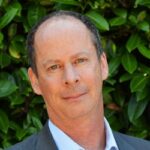
| Despite billions of investment dollars flowing into agriculture today, very little goes into regenerative systems. Even though awareness of regenerative agriculture is increasing and capital investment into it is rising, there is a large deficit in investment in the middle the food system: the processing and distribution infrastructure that helps get regenerative products from the farm to retailers and consumers. This article is an edited transcription of Tim Crosby’s talk from a recent Regenerative Food Systems Investment (RFSI) virtual program focusing on this “invisible middle” of food systems. Tim is the principal director of the Thread Fund, which focuses on investing multiple forms of capital to generate social, environmental and financial returns. He has many years of experience investing in and funding regenerative food systems. He is a steering committee member of the Global Alliance for the Future of Food, a member of Agroecology Fund, chair of Transformational Investing in Food Systems Initiative, a member of the Seattle Impact Investing Group and a board member of the Center for Inclusive Entrepreneurship. Most recently, Tim has worked on developing the Regenerative Harvest Fund with Mission Driven Finance, which aims to fix the bottlenecks in our food system that limit processors’ and producers’ ability to achieve scale. |
The “invisible middle” of agriculture — or the “messy middle,” as some people say — includes the processing, distribution and storage parts of our food system. It’s everything between the farm and the plate.
Most consumers don’t know much about this vital space, but I like to look at it as the plumbing or electrical wiring of a house. You know it’s there, but you don’t want to see it, and you don’t care about it as long as it works. But when it doesn’t work, everything falls apart.
The demand for sustainable and organic products is in growing demand — not just in smaller, direct-to-consumer markets, but also in middle positions and for large buyers. How do we get regeneratively grown products to market when the processing is invisible and its importance is not understood? There’s a pressing need for more people to recognize this issue.
I’d like to frame this conversation in terms of the principles of risk and return, efficiency and scale.
Risk and Return
We don’t need to spend much time discussing what we all lived through in the last two years with COVID. Our global supply chains broke down, and they still haven’t fully recovered. We had shortages — most visibly in meat processing capabilities. There was extreme pressure on food banks. Our whole food production system has moved into a global marketplace, and we don’t have the redundancy built into the system to keep things going when the market breaks down.
But there’s a silver lining — the pandemic at least got the attention of the federal government to change things around. USDA is already working to invest a billion dollars in meat processing. This is something that the government has been working on for years — to try to reduce the concentration among the top four or so companies — but they had not had much luck until COVID demonstrated the need to change direction. There’s a lot more money being put toward the meat and processing capabilities, and government’s work here is critical.
A trillion dollars in global ag subsidies are disbursed annually, but only about 1 percent goes toward supporting regenerative systems. When we get a billion, that means there’s 99 billion going elsewhere, in essence. We need policy incentives to really move the needle; I just hope we don’t have to go through another pandemic to do that.
How can we learn how to better assign risk in regenerative investment decisions so that the borrowing rate will start to move lower? As an example, I’m an investor in the largest organic distributor on the West Coast. Like a lot of other distributors, this company pivoted during COVID to help the food in their supply chain get to local markets. This is not the norm for wholesale distributors, but this company is very grounded in its community.
In the impact-investing space, investors are looking for both financial and non-financial returns. One of the tough things is that the market rate of returns in agriculture are nothing compared to tech. Returns are generally in the single digits. That’s what makes it hard for a traditional investor to invest in this space — the returns just aren’t there. Plus, investors don’t understand the space, because it’s invisible. But it’s necessary. It’s one of the impact points that becomes critical, especially in a regenerative system. It’s not just about the money, in my view — it’s about all the other aspects.
Efficiency
There are also issues with efficiency in the invisible middle. One great example of this came to me from Eddie Mukiibi, who’s the vice president of Slow Food International. He told me about a processing center recently built in Uganda. The goal of the processing center was to process heirloom mangos, so they set out to raise $20 million and built the factory.
To show how the factory operated on day one, though, they had to use imported mangos. Why were they using imported mangos for their heirloom mango processing facility? Because the equipment that is out there — especially the cheaper equipment — is built for uniform sizes of mangos. It’s designed for efficiency of throughput and yield — how many units per minute it can process — but, as you know, heirloom is anything but uniform in size, so the machinery could not handle the variability of their local product.
This for me really highlights how we have to revisit the definition of efficiency. If our goal is to produce as many units as possible, you need to have units of a uniform size going through that machinery so we can hit those numbers. But if our goal includes biodiversity, culture, taste, quality, etc. — then the definition of efficiency is more than to just optimize or maximize throughput.

We have to reexamine what we mean when we talk about efficient processing infrastructure. We have to be open to the fact that the equipment’s probably going to cost more right now — although it hopefully won’t in the future. This may be particularly difficult here in the U.S., where manufacturers are mostly building processing systems for large-scale businesses. On-farm or small- to mid-scale processors may be forced to procure machinery from developing nations because it isn’t made in the U.S. anymore. Less-than-large-scale processors need equipment that’s not maximized for efficiency on throughput alone.
Scale
The regional, organic, sustainable food movement really took off in the ’90s with the growth of farmers markets and community supported agriculture programs. The number of farmers markets in the U.S. grew from fewer than 2,000 in the mid-’90s to over 8,000 by 2015. People are getting food that connects them with farms; they are starting to see products that are heirloom and are not uniform size.
But consumers don’t want to just shop on Saturday morning; they want that quality of food at their grocery stores all week long. This puts pressure on larger retail establishments — and even some institutional buyers — to answer these customers’ wishes. What happens is that Costco helps organic farmers buy land to grow organic chicken. We get non-GMO Cheerios. Kroger starts advertising local-grown products. Large players are recognizing that they need to start producing larger quantities of these types of products. Today the largest sellers of organic products are Costco and Walmart.
Investing in the Middle
How can we improve this middle space for regenerative growers and consumers? I work at the intersection of food, finance and philanthropy. I try to use whatever capital is necessary to advance the issue of processing capacity for regenerative systems, which I believe is critical.
If the goal and the mission of investments were to open markets, then maybe taking a loss to open up the market could be a way to do it. I wouldn’t recommend that for everybody, but it depends on the goal of your investments. With a philanthropic lens, every grant investment is a 100 percent financial loss. If the goal of your investments is to transform markets, which is more of a philanthropic goal, then losing money while succeeding on your goal is somewhat normal.
Two different investments I was a part of in this space have done this. One was trying to scale up organic, grassfed beef in the Northwest; the other was in fair-trade, organic, greenhouse peppers and cucumbers in Mexico for the U.S. market. Both succeeded in opening the market, but the companies themselves got squeezed out.
As an investor, a really interesting aspect of this — especially on an individual basis — is that an investment loss is more valuable on a tax return than a charitable deduction. It comes down to how investors think about properly placing concessionary money.
I was asked by Mission Driven Finance to help set up a fund focusing on investing in processing for regenerative systems, and I’m now an investor in the fund. One example of an investment we made that’s really helping regenerative farms is Cairnspring Mills in northwest Washington. Kevin Morse, Cairnspring’s founder, is a heritage pig farmer and had worked at the Nature Conservancy, and he saw that farms in the region were growing grain as part of their rotation with potatoes, but they weren’t profiting from the grain. By starting the mill, he helped farmers stabilize their income; they were able to open up and diversify their revenue channels by making money on the grain. They couldn’t have done that without somebody there to accept smaller-volume orders coming into the mill.
As Cairnspring Mills grew, it realized it needed to secure the harvest from the farmers. This is a specialty crop — as most in this space are — and as a processor, you can’t just turn to a commodity silo or a feedlot. What really helps a mill like Cairnspring is to buy the harvest at the beginning of the season so they know they have inventory at harvest time — and that requires infrastructure.
To help with situations like this, Mission Driven Finance has developed a harvest note. The financial disclosure for the note makes clear that the goal is to support the shift to regenerative agriculture. This isn’t just to make money. This is about helping regenerate soil, helping producers, helping the environment and helping marginalized rural communities.
The interesting thing with the fund is that it’s structured around a three-year commitment for the investor, and the investor chooses their return. They can choose anywhere between 0 and 7 percent return — it’s up to the investor. This is a pretty innovative step. And I can tell you that the first note went out at 6 percent — so there is an interest among investors to not simply maximize financial return, if they know it’s doing something important.
The other beautiful thing with this system is that by investing in the processor — giving them working capital — they can then offer a purchase order or contract to the producer at the beginning of the season. This means that the producer has collateral that they can use for their own working capital needs, and they can therefore reduce their own borrowing rate. And it has played out that way.
By working in the processing space, you’re not just helping product flow — you are helping open up, secure and stabilize revenue for regenerative farmers. This part of the food system is not well understood. But when you start working on the plumbing in the walls, you start to help the whole system function properly.