

Improving soil carbon is at the heart of regenerative agriculture — and regenerative supply chains
Soil carbon plays a pivotal role in mitigating climate change, improving soil health and enhancing agricultural productivity. However, long-term conventional farming practices have proven detrimental to both soil health and soil carbon storage, exacerbated by global supply chain demands.
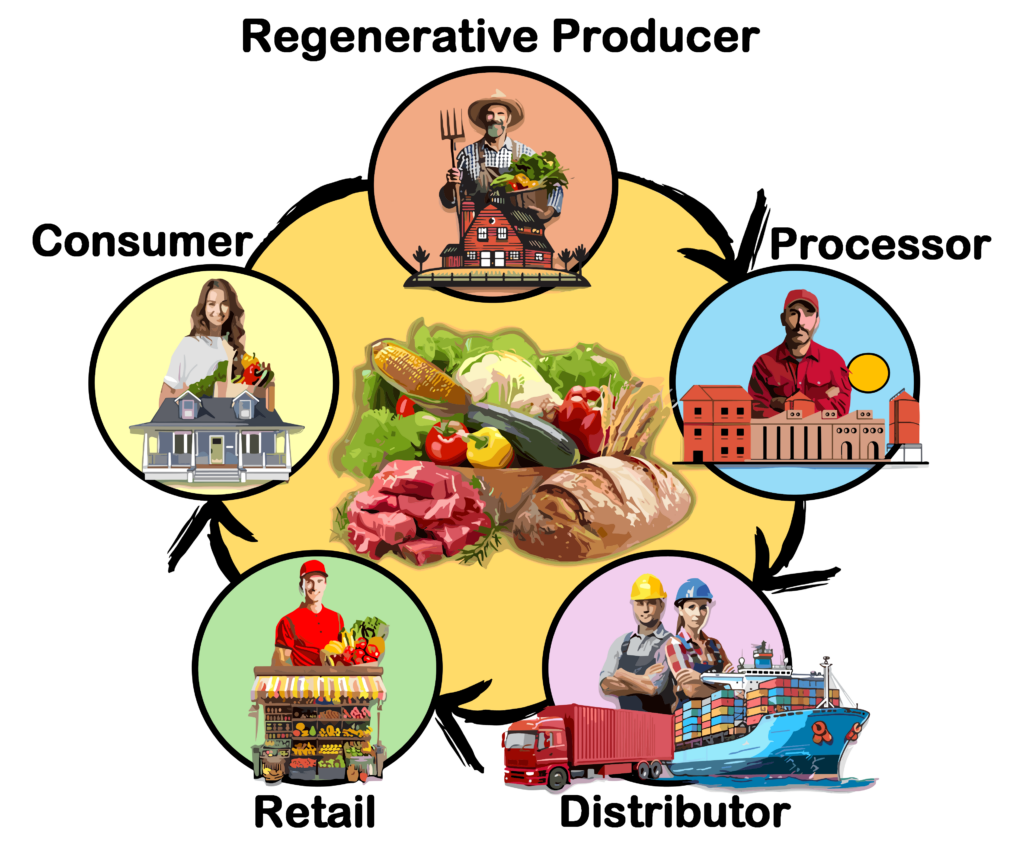
But regenerative agriculture offers a multi-benefit approach from producer to consumer. Its practices enhance soil carbon (see Figure 1) and foster regenerative supply chains that promote sustainability from production to consumption (see Figure 2). This article will explore various regenerative practices that improve soil carbon and will examine their role in forming sustainable supply chains.
Soil Carbon Benefits
Soil carbon, a key component of soil organic matter, is crucial for maintaining soil health and fertility. It plays a significant role in the global carbon cycle, acting as both a sink and source of carbon dioxide (CO₂). Increasing soil carbon sequestration can mitigate greenhouse gas emissions, enhance soil structure and improve water retention. Most soil carbon is in organic form, and it is this form that is most influenced by agricultural practices. Enhancing soil organic carbon can significantly contribute to climate change mitigation efforts. Research shows that soil can store three times more carbon than the atmosphere, emphasizing its importance as a carbon sink.
Increasing soil carbon content not only helps in reducing atmospheric CO₂ levels but also improves soil fertility, leading to higher agricultural productivity and a better return on investment for the producer. This can be in the form of reduced inputs during production or at market, where a premium for regeneratively produced goods may be applied.
Regenerative agriculture focuses on restoring and enhancing soil health through a variety of practices — each of which helps in building soil carbon. For example, research indicates that cover cropping can increase soil organic carbon by 0.24 to 0.48 tons per hectare per year. This increase in soil carbon can significantly contribute to climate change mitigation and can improve soil health.
Similarly, rotating crops with different rooting depths and nutrient requirements can prevent nutrient depletion and improve soil structure. Studies show that crop rotation can increase soil organic carbon by 0.3 to 0.5 tons per hectare per year.
Minimizing soil disturbance through reduced plowing and tilling preserves soil structure and reduces carbon loss. Reduced tillage helps maintain soil organic matter and enhances microbial activity. No-till farming, depending on the context, can sequester 0.2 to 0.4 tons of carbon per hectare per year. This practice also reduces soil erosion, conserves water, and improves soil fertility.
Adding compost and organic materials boosts soil organic matter and nutrient content. Composting converts organic waste into valuable soil amendments that improve soil structure and fertility. Studies indicate that compost application can increase soil organic carbon by 0.5 to 1.0 tons per hectare per year.
Finally integrating livestock into crop production systems can significantly enhance soil health. Properly managed grazing can sequester 0.3 to 0.6 tons of carbon per hectare per year, while proper manure management can increase soil organic carbon by 0.4 to 0.8 tons per hectare per year. And combining livestock with crop production creates a synergistic system that maximizes resource use and improves overall farm productivity. Integrated crop-livestock systems can sequester 0.5 to 1.0 tons of carbon per hectare per year.
The benefits of more soil carbon extend past the soil, too. Research indicates that the adoption of cover crops can provide a net economic benefit of $45 to $85 per hectare annually, while no-till practices can save $25 to $65 per hectare in reduced fuel and labor costs.
As an indirect benefit, improving soil organic carbon strengthens communities through sustainable farming practices and enhances food security. Regenerative agriculture supports rural livelihoods by providing diverse income sources and improving farm profitability. Sustainable practices enhance food security by increasing crop yields and resilience to climate change. Community engagement in regenerative practices fosters collaboration, knowledge sharing and social cohesion.

Soil Carbon and Regenerative Supply Chains
Regenerative practices extend beyond the farm to influence the entire supply chain, creating regenerative supply chains that promote sustainability from production to consumption.
Integrating regenerative practices into supply chains ensures that sustainability is maintained at every stage, from producer to consumer. Regenerative supply chains prioritize soil health, biodiversity and carbon sequestration, leading to environmentally sustainable products. Companies that adopt regenerative practices can enhance their brand reputation, meet consumer demand for sustainable products and contribute to climate change mitigation.
Successful implementation of regenerative practices by farms and companies demonstrates the feasibility and benefits of these approaches. For example, a study on a regenerative farm in Vermont showed that adopting practices such as cover cropping, reduced tillage, and rotational grazing increased soil organic carbon by 1.2 tons per hectare per year. Similarly, companies like General Mills are incorporating regenerative practices into their supply chains to promote sustainability and improve soil health. Promoting local and regional food systems can also reduce food miles by 50%, significantly cutting transportation emissions.
Measuring and Monitoring Soil Carbon
Quantifying soil carbon is crucial for assessing the impact of regenerative practices. Techniques include soil sampling, remote sensing and the use of carbon models. Soil sampling involves collecting soil cores and analyzing them for carbon content. Remote sensing uses satellite imagery to estimate soil carbon levels over large areas. Carbon models simulate carbon dynamics in the soil based on various management practices.
Technologies such as Geographic Information Systems (GIS) and data analytics enhance the precision and efficiency of soil carbon monitoring. GIS allows for spatial analysis of soil carbon data, helping farmers identify areas with low carbon levels and target interventions. Data analytics can process large datasets to identify trends, assess the effectiveness of practices, and inform management decisions.
Market Benefits and Profitability
Regenerative agriculture certifications play a crucial role in promoting and validating sustainable farming practices. Certifications such as the Regenerative Organic Certification and Regenified provide standards and benchmarks for regenerative practices. These certifications help consumers identify products produced using sustainable methods, ensuring transparency and accountability within the supply chain.
Certified products often command premium prices, offering economic incentives for farmers to adopt regenerative practices. For instance, regeneratively farmed beef can fetch a premium of up to 30 percent above the average market price. By adhering to these certification standards, farmers can contribute to environmental stewardship while enhancing their market opportunities.
Challenges and Solutions
Adopting regenerative practices can be challenging due to cost, knowledge gaps and policy constraints. For example, implementing regenerative practices may require initial investments in equipment, seed and labor, and the benefits may not manifest for several growing seasons. Government and private sector support for regenerative agriculture can make it more accessible to producers providing financial incentives such as subsidies, grants and low-interest loans to help offset these costs.
In many cases, farmers may lack knowledge and skills to implement regenerative practices effectively or confidently. Education and training programs can provide farmers with the necessary information and techniques. Collaborations between researchers, agricultural extension agents and farmers can also facilitate the exchange of knowledge and experiences.
| Practice | Description | Carbon Sequestration Potential (tons/acre/year) | Economic Benefits | Economic Costs | Environmental and Social Benefits |
| Cover Cropping | Planting cover crops to protect soil between main crops | 0.1 – 0.19 | Increased yields by 10-20%, reduced input costs by 15-20% | Seed costs ($30-40/acre), increased labor for planting and termination | Prevents erosion, improves soil structure, increases organic matter, enhances biodiversity |
| Crop Rotation | Alternating different crops in the same field over time | 0.12 – 0.2 | Increased yields by 10-15%, reduced pest and disease pressure | Possible initial yield reduction due to new crop establishment | Breaks pest cycles, improves soil fertility, enhances biodiversity |
| Reduced Tillage | Minimizing soil disturbance through reduced plowing and tilling | 0.08 – 0.16 | Reduced fuel costs by 20-30%, increased long-term yields | Initial investment in no-till equipment, possible short-term yield reduction | Preserves soil structure, reduces carbon loss, improves water retention, reduces erosion |
| Composting | Adding compost and organic materials to the soil | 0.2 – 0.4 | Reduced fertilizer costs by 25-30%, improved crop yields | Costs of compost production or purchase, labor for application | Boosts soil organic matter, enhances nutrient content, reduces waste, improves soil health |
| Rotational Grazing | Moving livestock between pastures to prevent overgrazing | 0.12 – 0.24 | Increased livestock productivity by 20-25%, reduced feed costs | Investment in fencing and water systems, increased management effort | Maintains soil cover, improves soil organic matter, enhances pasture biodiversity |
| Manure Management | Using livestock manure as a natural fertilizer | 0.16 – 0.32 | Reduced fertilizer costs by 20-25%, improved soil fertility | Costs associated with manure collection, storage, and application | Adds nutrients and organic matter to soil, improves fertility and carbon content, reduces waste |
| Livestock Integration | Combining livestock with crop production | 0.2 – 0.4 | Diversified income sources, improved farm productivity by 15-20% | Costs of integrating livestock operations with crop production | Maximizes resource use, improves farm productivity, enhances soil health, reduces erosion |
Improving soil carbon through regenerative agriculture is essential for sustainable farming and resilient supply chains. By adopting practices such as cover cropping, crop rotation, reduced tillage and livestock integration, farmers can enhance soil health, mitigate climate change, and create sustainable supply chains.
The benefits of improved soil carbon extend beyond the farm, contributing to environmental sustainability, economic viability and social well-being. It is crucial for stakeholders to support and implement regenerative practices to achieve a sustainable agricultural future.
Patrick Freeze is a soil health scientist, research and development manager, and technical specialist at Ward Labs. He earned his Ph.D. in soil chemistry from Washington State University where he studied soil health and heavy metal chemistry as a USDA NIFA Needs Fellow and in Thailand as a U.S. Fulbright Scholar.