
Adapting sprayers and planters to regenerative inputs can help farmers support living systems on operations of any size
If there is one commonality between the American farmer and the American agricultural machinery industry, it’s that equipment is built for convenience, comfort, and maximum acres per day. With farms getting larger and larger, equipment has obviously gotten larger too.
Some people think that this means that regenerative can’t work at scale — particularly when it comes to the different types of products regenerative production requires for foliar application. This isn’t true, though. Regenerative works on large operations, and farmers can adapt their spray equipment to be used with regenerative products. You just have to keep a few important things in mind.
Let’s first define what a regenerative input is. This may be an oversimplification, but a regenerative input is generally a naturally occurring input that fosters the life of the plant and soil. One could argue that some synthetics fall under the category of a regenerative input, but for the most part we are discussing fish hydrolysate, manures, micronized rock fertilizers, living biology, and enzymes. And these products all have one very important thing in common: they are perceived as being difficult to apply.
The types of products we use in regenerative agriculture are supposed to help promote a living system, and thus many of these products are themselves alive. How we work with those products has an impact on both the efficacy of the product and the ease of application. Let’s first talk about how to keep this living component alive and effective.
Keeping the Biology Alive
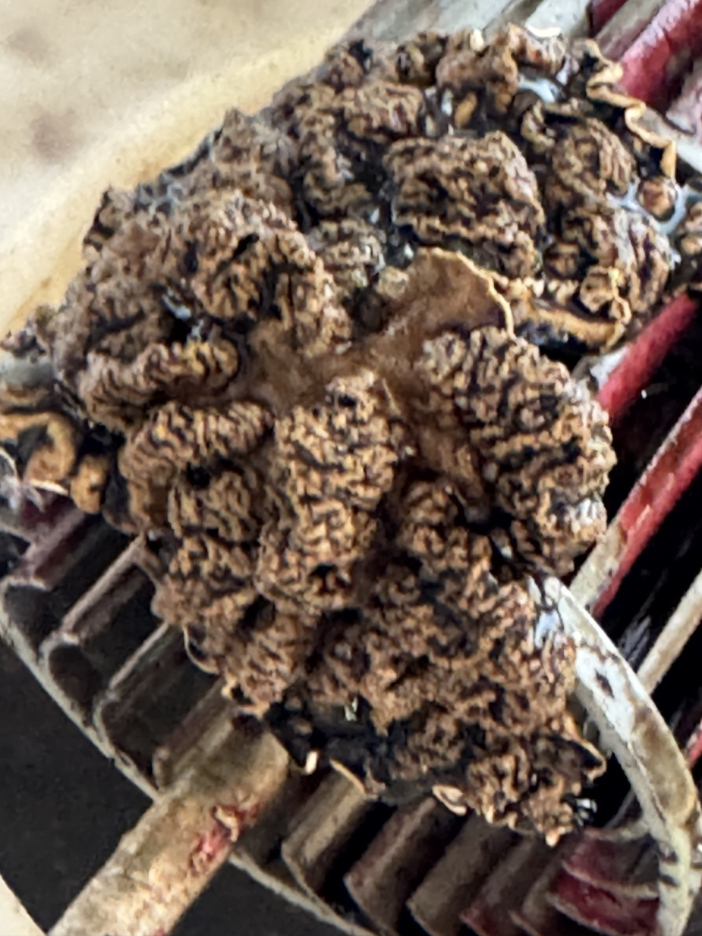
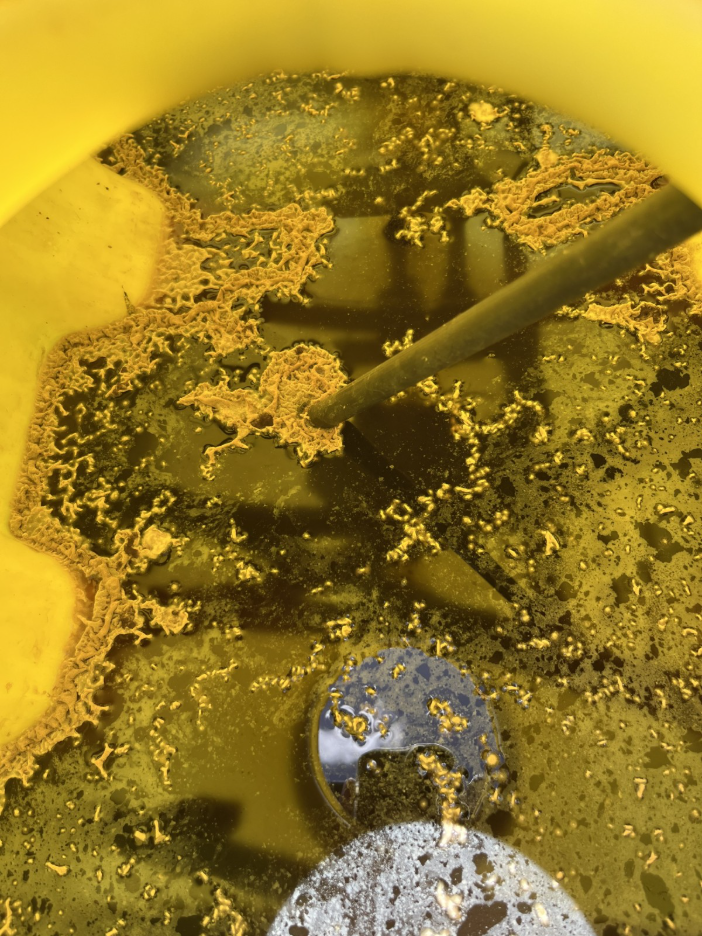
Biological products can either come in a shelf-stable, dormant form or in a live form. The shelf-stable forms usually just need to be kept at room temperature and can have shelf lives of around two years. The living, nonstable products — often compost extract — can have shelf lives of a few hours to a few months and require refrigeration or immediate application. This can obviously become a problem when navigating thousands of acres at a time. Larger operations spray over 1,000 acres a day with a single machine; this requires large volumes of product to be ready to go at a moment’s notice.
Biology in either form must be protected. Even with a dormant product, once it is mixed with water, the clock starts ticking. You have hours to apply it, not days. I always advise growers to only mix tank by tank with biology so that if they have an unexpected stop, the entire bulk tank is not wasted. Biology will die if it stays in the tank and goes anaerobic.
Manures come with their own set of challenges. If you are applying manure, then you already know that you have to have the appropriate equipment. Chicken litter will of course require a different set of equipment than dairy or hog manure.
Fish hydrolysate is probably my favorite biological product to help farmers navigate. Not only does it stink, but it can plug things up faster than you can blink. Fish does marvelous things in the field and is fantastic in-furrow fertilizer, but make sure to have a supply of yucca soap on hand so that your better half will allow you in the house. Whether you run fish through a planter or a sprayer, make sure you have properly agitated all the components back together and are using the recommended filter size so that you have an easy application experience.
Micronized rock fertilizers can either be very easy or very difficult to apply. These are rock particles suspended in a liquid to form a liquid application product. The longer these types of products sit, the longer they have to fall out of suspension. There can be many variations of these products that may contain chelating agents and other additives not included on the label.
Finally, there are humates, which come in a variety of options and qualities. While some companies separate everything into fulvic and humic acids, there are a few products out there that still contain the entire humate parent material. These products can create their own unique set of handling requirements that sometimes shorten the amount of time you want them in storage. Understanding the product you are working with will make your life much easier, and you will have fewer complaints from your workers.
We could add another category and talk about sugar, but there are too many different forms to discuss. The main consideration is that when utilizing any type of product such as sugar, or even soluble urea, allow yourself either time or heated water for the product to dissolve.
Keeping the Sprayer Spraying
Let’s shift gears now to specific types of equipment. We will assume that the operator is on the medium to large scale, but these pointers will be valuable for any size of farm — even gardens.
Modern planter technology has come a long way since the days of the old International 295 and John Deere Flex 71, units that I grew up with. These are still great planters for certain operations, and Flex 71 units are still produced brand new today by Yetter. My personal market-farm planter is a two-row Flex 71 with a starter fertilizer system added to it. Critically, this is an open system, meaning there are no choke points. Live biology, organic materials, and even tiny crushed rock are going through any choke point or orifice in the system — we are not talking about a soluble fertilizer that flows like water.
When selecting a new in-furrow system or making modifications to an existing one, it is important that growers pay attention to the spec sheet and ask a simple question: “Will this system allow fish heads to flow through it?” There are older systems that would even plug with clean water, so don’t be afraid to ask questions.
Metering tubes are the absolute best option for in-furrow systems. Every grower I work with that has switched to tubes says it has solved all of their application issues. Why is the planter pass so important? Recent field data from an Iowa producer show a 25-bushel yield advantage utilizing a biology-focused in-furrow over a 2×2 application of nitrogen at 40 units for the 2026 growing season. Biological in-furrow applications built for your operation perform.
Now let’s look at sprayers. This discussion can become complicated quickly, and there is no way to cover everything in this article due to the vast number of variations in technology between companies and even the different types of sprayers. Drones, ground rigs, and planes all require their own special considerations.
Drones are the new toy everyone seems to want to own these days. They are definitely cool and have their place in modern production agriculture — and, believe it or not, they are a great fit for regenerative agriculture. A properly fitted drone can apply higher-viscosity products quite well and can avoid some of the plugging issues other sprayers have simply due to larger nozzles. This nozzle size must be confirmed, though, because some drones are fitted with more of an atomizer nozzle. Drone technology is rapidly changing, and I will not pretend to be an expert, but when testing drone application we intentionally used some of the least-user-friendly products, and the test was a complete success.
When it comes to large ground rigs, pay attention to the setup of the sprayer to ensure maximum ease of product use. The newer the sprayer, the more acres it was designed to cross in a day, and it therefore has many more points of potential failure due to all of the electronics. Modern technology also requires the sprayer to be throttled down to a 50- or 80-mesh filter. An older sprayer can be better equipped for high-viscosity products. However, regardless of the sprayer, run a larger mesh screen, eliminate extra filters (including tip screens), run larger nozzles (this is both for preventing plugging and also to keep biology from being shredded), use higher water volumes, and don’t forget to run lower pressures when applying biology. You can still cover the acres while minimizing filter issues if you just set the equipment up correctly and premix and prefilter the products you are using as suggested by the manufacturer.
The top must-haves for hassle-free application at scale include the following:
- Proper mixing and agitation
- Proper filtration, both during mixing and on the applicator
- Large filter mesh — not even 50 mesh is good enough
- Make any changes needed to open the system up
- Don’t allow biologically active mixes to sit an extended time
- Plan ahead
- Slow down!
Filtration and agitation are the top considerations for success, regardless of the equipment. Pay attention to manufacturer recommendations and labels. Tote mixers, circulation pumps, and air wands are all examples of potential tools that can be used. Some products will require agitation while in storage to make application time easier; some will literally react if you add air as agitation. Follow the directions, and your application will be a success.
Applications of regenerative products do not have to be scary or difficult. They are generally not as user-friendly as a water-soluble synthetic product, though. Plan your setup before you start your planter or sprayer, and make sure it’s a system that works for your scale of operation.
Regenerative can work at scale. You just have to make the infrastructure and application system work for you.