

Three operations that have helped create fair and regenerative supply chains
In the past ten years, there’s been a surge of interest in regenerative agriculture. Buyers fly to farmers’ fields to access regenerative food and fiber and to gather farmers’ stories. Corporations’ carbon programs, aimed at lowering their greenhouse gas emissions, commoditize soil health gains across their supply chains. Farmers hesitantly enroll in these programs, worried about being treated fairly and whether they’ll see real benefits. There are justifiable concerns about these trends — namely how much of the proverbial “pie” of regenerative supply chain profits will be received by farmers.
To better understand these concerns, we explored how some farmers are thinking about regenerative supply chains and how they’re taking steps to reframe or replace the corporate regen-agri-food model.
Efforts to transition to so-called “regenerative” agriculture often operate in the same figurative silos as the status quo agriculture system —- isolated commodities or sectors that do not reflect the diverse farm landscapes that define a biodiverse, regenerative system. Farmers are being asked to take on debt to finance transitioning their entire management systems while adhering to the requirements of regen certification programs. The burden and risk is being downshifted to farmers while the profits are accelerated to the corporations and investors.
How can we make this system less risky and more fair to the farmer? According to Valentina Toledo of the Regenerative Value Network, we need to “reimagine the process of buying and selling regenerative products, envisioning a decentralized, collaborative and regenerative model,” shifting relationships from transactional to collaborative partnerships to foster the creation of a resilient and fair food system (forumforthefuture.org/blog).
But how do we do this in practice? What strikes us with RVN’s model is the role of relationships, shared value creation and transparency. Through our research on regenerative agriculture, we add to this: 1) fairness between the “links” of supply chains, 2) regionality of distribution and processing, and 3) local and informed consumers. To illustrate these important components of regenerative supply chains, we present three cases of farmers striving for fairer regenerative food systems in New York, Virginia and Nebraska.
A Time-Tested Model for Fair and Profitable Dairy Supply Chains
Out of necessity, there are many farmers building vertically integrated companies from the farm to the retailer. One example is Maple Hill Creamery, based in Kinderhook, New York, which provides an alternative market for local dairies.
“Our farms and milk supply are what make Maple Hill special,” said Tim Joseph, founder of Maple Hill Creamery, a family farm founded in 2009. They started to create their own value-added products, selling from a small retail storefront in Little Falls, New York, milking cows by day, and making yogurt by hand at night.
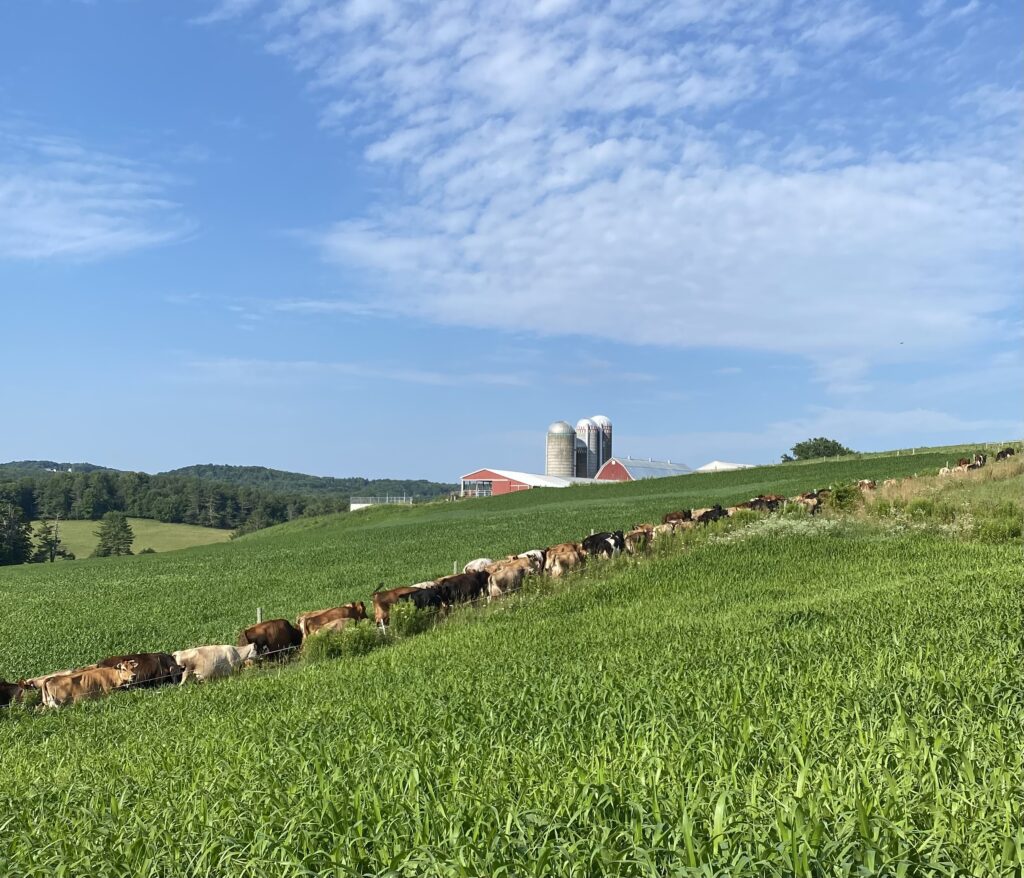
As consumers and retailers began to understand the 100 percent grassfed organic value proposition, their “milkshed grew from two farms to over 130 farms in 2017.” What started as a specialty regional yogurt company has become a national dairy brand that consumers can find in over 6,000 retailers across the U.S.
“We were ‘regenerative’ before it was a thing,” says Joseph. They pioneered the first 100 percent grassfed dairy certification in 2013, which evolved into the Organic Plus Trust Grass-fed Certification — used by Maple Hill, Organic Valley, Alexandre Farm and others. “Without this as a foundation, our brand would mean nothing and just be another brand cooked up by marketing.” Joseph cites the need for certifications to ensure the customer is getting what they paid for. “There is a liability for brands and retailers selling products that make claims that are not true.”
The development of a nationally trusted and certified brand enabled them to pay a premium to their farmers, even when dairies were closing in record numbers. “100 percent grassfed organic dairy farming is literally the hardest way to make milk. It takes a lot of skill, time and investment to make it work. If we did not pay a premium, very few farmers would be able to afford to make the changes necessary.” This focus on maintaining a living wage for farmers continues to be central to their model, even as they have grown as a brand and cooperative.
Dreaming of Regional Processing in Western Nebraska
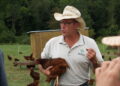
Having spent nearly 35 years farming his grandfather’s land in the dry and rural western Nebraska plains, Steve Tucker knows how difficult it is to connect regenerative farmers to buyers. Pointing out the railroad tracks that mark the border to his land, Tucker emphasized, “I have this vision of small, diversified grains being transported to city centers along these tracks.” But getting to this vision requires more capacity for regional, diversified processing.
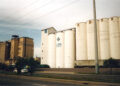
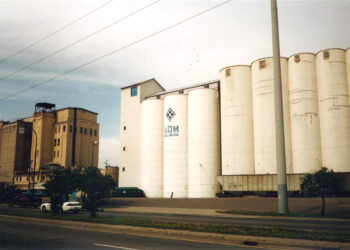
His vision also stands in contrast to the looming grain elevators that tower over nearly every rural Nebraska town. The elevators represent the status quo — commodity production systems measured in bushels, which often deprive the farmer of a living wage. By first finding out what the market is demanding, producing that, and providing grains directly to the buyer, Steve has shifted away from the elevator and is helping others to do the same — to de-commoditize western Nebraska farms.
To transition his production system, he began by (sometimes fruitlessly) attending agri-industry conferences, investment fora, and expos around the U.S. He’d go not just to find buyers to whom he might sell his small grains, but also to feel out what products are seeking to make things regeneratively. From this research, he found that there are a lot of companies looking to make connections with regenerative farmers, but they were having trouble finding them.
When building connections, he often faced hurdles. He grew a new crop only to find that the interested vendor had disappeared at harvest time. Yet, he persisted to forge new relationships, learn new production systems, and harbor a “if you grow it, they will come” mindset. These encounters led him to Kristy Lewis, founder of Quinn Foods (an ecologically conscious snack company) in 2019. Kristy not only began purchasing white milo from Steve, which he grows regeneratively, but she also featured his farm in Quinn’s promotional video.
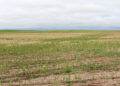
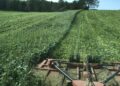
Despite receiving a mere 14-18 inches of rainfall annually, Tucker farms regeneratively with minimal chemical inputs. To retain water and build soil health, he employs rotations of wheat, corn, chickpeas, flax, mung beans, non-GMO soy, five types of millet, oats, barley, rye, triticale and milo, as well as livestock rotations. He sells 80 percent of his production “by the pound” — not by the bushel. He has a seed cleaner, a gravity table and a color sorter, which increases the value of what he has — although such equipment “costs as much as a house,” according to Tucker. Getting to the value-added, food-safe condition for the per-pound market is difficult. As he moves in that direction, he sells cover crop seed and chicken feed, and he continues to broaden his network of regenerative farmers and buyers.

“Not all farmers want to do what I’m doing, but they do want to find better value for their [higher-quality] products.” If he can expand small-grain processing, Tucker hopes that farmers will eventually be able to name their price — not the other way around. Steve’s current partnership is AgriForce, a pulse seed business that grows specialty crops in Nebraska. His plan is to gain support to build small-grain processing facilities in western Nebraska that will support a network of regenerative farmers. The goal is to work with food companies to produce the “regen” products they want.
“What I need is some rain — and a building, [and the] money to build it …. There’s plenty of money out there. I just gotta go find it.” According to Tucker, the path of de-commoditization is forged through relationships.
Local Meat to Local Consumers in Southwest Virginia
Having seen the benefits of regeneration on his 400-acre, diversified farm, Daniel Griffith is concentrating on practicing and imparting regenerative agriculture to the southwest Virginia community. He sees regeneration as a process “from the soul to the soil” in which farmers and consumers work together to create “communities of abundance.”
To facilitate this, Griffith co-founded a community-led initiative called Common Provisions, described as “a local and flagrantly decentralized network of co-owning and collaborating farmers that serve its local community collectively.” The goal is to reinvent the food system to do good for consumers, farmers and the environment. CP puts farmers at the center of the system and brings local, regenerative food to local consumers at low cost, with high returns to farmers.
At first glance, Griffith’s model seems utopian, but the business model, as Griffith put it, was based on “common” sense. “We do not have a supply chain. Instead, we have nurtured an expansive and diverse network of hyper-local, verified regenerative, and human-scale farms.”
It starts with informed consumers who are seeking local, regenerative meats. They join CP’s network and buy food. When an order comes through (based on local supply), it comes to a consumer’s door from a local center, which is distributed from fulfillment centers that are stationed around producers and processors. When a farm sells their animals, they bring them to the processor and then the fulfillment center. Fulfillment centers are interspersed around the region, currently within a 150-mile radius across which food is produced, marketed, delivered and consumed. Their goal is to reduce the radius to 30 miles by 2025 by expanding the number of consumers and farmers and becoming more hyper-local.
Common Provisions keeps costs low and pays farmers $0.84 on the dollar, compared to an equivalent grassfed product from Whole Foods of $0.14 or at National Wholesale markets of $0.10. By keeping transportation costs low (local producer to local consumer), maintaining the farmer’s original packaging, and selling the bone and leather from animal processing, they run a business on 16 percent margins and pay a “thriving” wage to farmers. “There’s no need for [grassfed beef] to travel 80,000 miles [from Australia to the U.S.] when we have it in our neighborhood.”
Consumers can purchase from CP through their online portal. The majority of livestock that consumers buy is grazed from birth to slaughter on pasture, with poultry and pigs receiving some supplemental feed. Raising animals on pasture has ecological benefits, which they measure using the Savory Ecological Outcome Verification method, which quantifies outcomes on the landscape from farming methods. They have seen increased biodiversity and have sequestered 3.5 tons of carbon in the soil on the 35 farms that are a part of Common Provisions.
What drives this system, Griffith believes, is that people feel “free” when they are connected to their neighbors. As their system develops, they hope to decrease prices of their regenerative-verified meats, creating more opportunities for consumers to buy healthy and regenerative food. “Many [corporations] today are constructing these ‘regional and regenerative’ programs that inherit the worst of colonialism.” By strengthening farmer-to-farmer relationships and building community support for local, regenerative farms, Common Provisions moves beyond a control-based food system and toward decentralized, dispersed control. “We are not bringing abundance into the community, we’re facilitating [its] emergence …. We are empowering southwest Virginia to feed southwest Virginia.”
The “Healthy Tension” of Fair Supply Chains
If corporations want to profit from increased engagement with regenerative producers, they embrace and prioritize the values of farmers who are regenerating the soil, soul and community. As we’ve demonstrated, this requires not only relationships, shared value creation, and transparency, but also reasonable and fair sharing of benefits, strong regional distribution and processing, and a knowledgeable and care-full consumer base.
To align these elements in ways that also meet the demands of our largely corporatized food system will demand an adaptive approach to supply chains. Former sustainability lead at Timberland Zachery Angellini acknowledges that collaborations will be required across value chains and corporations to transition supply chains and to reduce waste streams. In his work aggregating producers in California to meet volume specifications required by major brands, Angellini has observed a “healthy tension” emerging in his discussions with regional producers, processors, smaller brands and restaurants. This tension is also emergent in our discussions about seasonality, processing and farmer pay price, depicted above and beyond.
Stated plainly, the requirement is to abandon a top-down model of decision-making and supply-chain logistics and to move toward the adaptive governance inherent in self-organizing systems. Initially, there are needs for new infrastructure and strains on efficiency, but resilience will build over the long-term, prioritizing community and agroecological health.
As the farmers profiled above have built relationships with farmers, regen-focused brands, and consumers, they’ve been able to eliminate the middlemen, diversify their crops and revenue streams, and increase profits. These are efforts we expect to increase should there be a true regenerative farming evolution.
Julie Davenson is an accredited professional with the Savory Institute with experience managing regenerative organic farms and supply programs for businesses in the northeast, where she lives with her family and goats in New Hampshire. She serves as the board president for the Northeast Organic Farming Association of NH and on the Regenerate America campaign’s National Steering Committee.
Dr. Julie Snorek studies agricultural transitions in the United States and Sub-Saharan Africa as a social ecologist at Dartmouth College. Her current work examines multiple perspectives of regenerative agriculture in the Great Plains and New England as part of a National Science Foundation grant.