
Soil health management is a farm management decision
Change requires investment and time — there are no miracle cures.
Every farmer has many things to manage, from equipment and rentals to labor, family, seeds, fertilizers, chemicals, marketing, government rules and regulations, financial partners and more. How can anyone be good at or knowledgeable about all of them? Farmers have to learn to depend on someone for advice, help and knowledge.
The good news today is that we have consumer, climate/environmental and economic pressure to do better (yes, that’s good news!). Pride, or desire, is slowly shifting agriculture toward an improved regenerative farming system. But farmers need ideas, examples, research, measurements and economic support to change. Many farmers — those in control of the land — are older, and change for them is harder. Many focus too much on money and are risk averse.
What if all the land that is rented or controlled by some agency came with farming management requirements — you either farm it this way or someone else will. Instead of a yearly high-bid rental for money, how about a long-term farm-it-this-way rental? The government is certainly putting a lot of money into a cleaner farming system. They see carbon sequestration as the future. And the consumer is going to need to create opportunities for local foods that taste good and are nutrient rich.
My son bought his first farm in the 1990s for $1,000 an acre, all debt financed. We went organic to reduce the risks of the market and milked cows for a steady income. His first new tractor cost $85,000. Today, land in our area is $6,000 to $8,000 an acre, with one-third of that woods and hills — not farmable. His new tractor is $300,000. How can anyone start farming today? Beginning farmers will either have to work with or for someone or be small, specialized and local, developing their own markets — another job not all farmers are able or qualified to do.
Today’s conventional systems don’t seem to be working like they used to. There are problems like the chemicals no longer working and insect and disease problems growing, and even bigger issues with soil health going downhill. Biotechnology was touted as a tool to save the planet, but that idea has proved to be short lived. I have always believed that corn/beans isn’t a farming system — it’s a failing system. There’s simply not enough plant diversity and not enough roots in the soil, and it’s way too chemical dependent. As the soils get tighter and lose structure, erosion becomes a bigger problem, and no-till won’t save that.
The good news is that there are alternatives — for example, improved farming systems like strip-till with cover crops. As fear and desire take over, the economics and failures will push farming to change.
Another positive that’s coming to help us with management is better measurements. Yield monitors and improved testing are among the things that will make changes easier and will reduce risks. Research too can give us new ideas and products, but you always have to ask, “Will this work on my farm and in my system?” Some of these innovations, such as biologicals, seed improvements, or product placement, can be easily tested at the farm level. These will certainly assist changes in how farms are managed as farmers learn what products are really needed and which crop varieties fit specific farms. Every year being different — and considering the time required to change soils — I believe trials need to run for at least three years.
The desire to change — wanting to do better — is one of the biggest requirements for change. Yes, you can pay people to manage their farms differently, but it’s not going to be effective unless the farmer has a reverence for the land and animal welfare. The market will also help, rewarding better yields and improved quality.
Another issue that will require change in agricultural is water — not only water quality, but also availability. Many places in the country are experiencing water shortages. We can farm with less, and we will need to be part of this — along with sequestering more carbon to hold nutrients and water. We also have to make sure that what water falls on the land stays on the land. This is another place where cover crops and soil structure work for farmers, and for everyone. This isn’t rocket science; it’s just plain common sense.

Forty years ago, when I was teaching agriculture and was introduced to biological farming, we didn’t seem to have these extreme weather events we’re experiencing today. I never heard of an eight-inch rainfall in one day. I’ve always believed that every spring we have 11 days to get our crops planted in my area (southern Wisconsin), but lately, in some years, we have had five days or less. I’ve been saying for years that any condition less than ideal at planting is unacceptable until June 1; after that you have to do what you have to do to get the crop in the ground.
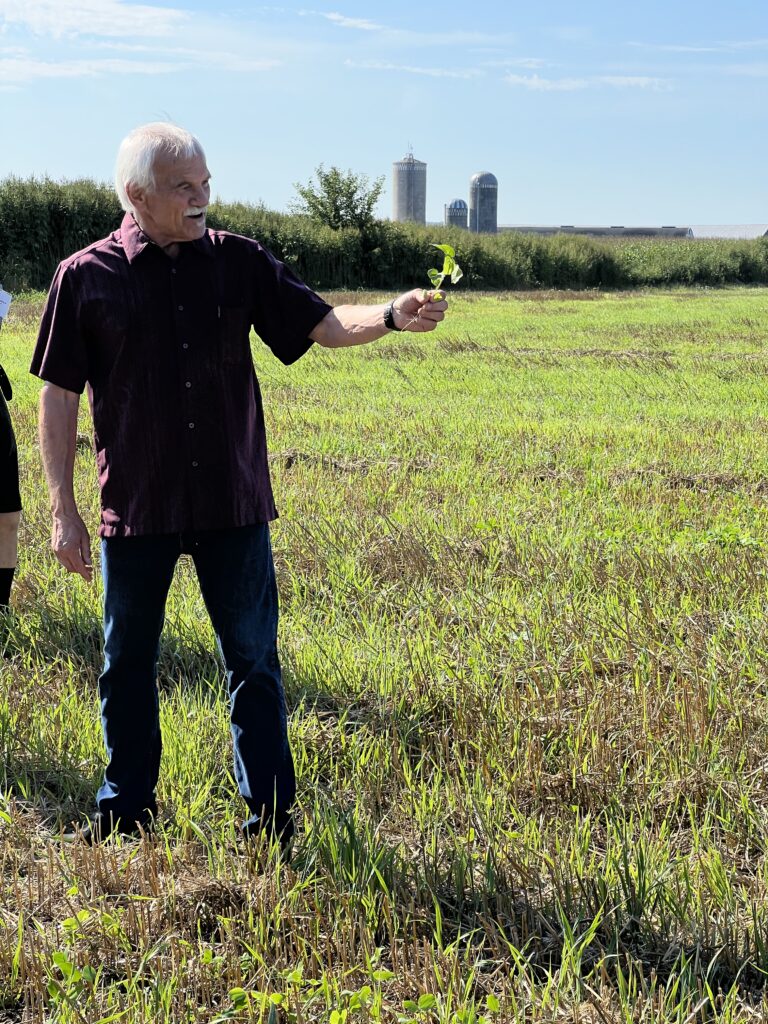
But these extreme weather events we see today have allowed us to change our management practices as a necessity. On our farm we put into place an extreme soil-building farming system and spread out our workload. It’s one year corn followed by one year rye-clover soil building. Rye is planted after corn harvest, with clover frost-seeded in early spring. After harvesting the rye in mid-summer, fields are clipped, compost and some minerals applied in the fall, and ripping done if necessary. When this clover cover crop gets about a foot tall in May, we shallowly incorporate and plant corn. (Corn and rye don’t compete on work schedules.) We also only haul the grain off the land, putting lots of residues/energy back into the soils.
This system spreads out the workload so well that my son and just one part-time employee can organically farm 1,500 acres within a 45-mile circle. Our input costs have gone way down, our risk is reduced and our resilience is up. Most importantly, our soils are radically changing for the better!
We now just need to find more rye markets. I work with a group called Rye Revival, as I firmly believe that rye is the plant that is here to save the planet. What other plant can you put in the ground later in the fall, grows major roots, tolerates tough conditions with low inputs and provides benefits for food, feed, distilleries and cover crops? Now if you live farther south than we do, you could plant wheat or some other small grain. I believe you can have productive, healthy soils with just three crops — up here, corn, beans and small grains with cover crops. On our farm we have chosen not to grow beans because, grown organically, they just add to the weed seed bank. This is a management decision that works for us.
As a farm manager, you have decisions to make, a plan to follow and examples to study. The desire to do better is a choice, just as management is a choice. It’s not just about which specific products to purchase but also about what systems you’ll use. There will be rules to follow in biological, regenerative, organic or any other farming system — rules to get soils healthy. It will take time and money — there are no shortcuts — but the rewards are many.
Measuring the success of your management system is also important, but not easy. It’s said that to manage you must measure results. And yes, you can do that — but results are not black and white. Yield alone may not be the only thing happening as a result of your system; you have to consider crop quality, soil and plant health, biology, soil structure, root growth, long-term mineral availability — many things not easily measured, but indicators that you are moving your farm in the right direction.
To manage, you need to know where you are going, measuring along the way and always leaving the land better — even if just in small steps, year by year. It takes knowledge, trust, good advice and partners that believe in and share your goals and desires. There are many tasks on the farm where you can get good advice and help when making decisions on chemicals, plant varieties, marketing, planting and harvesting.
Soil health management, though, is mostly a farm-management decision.
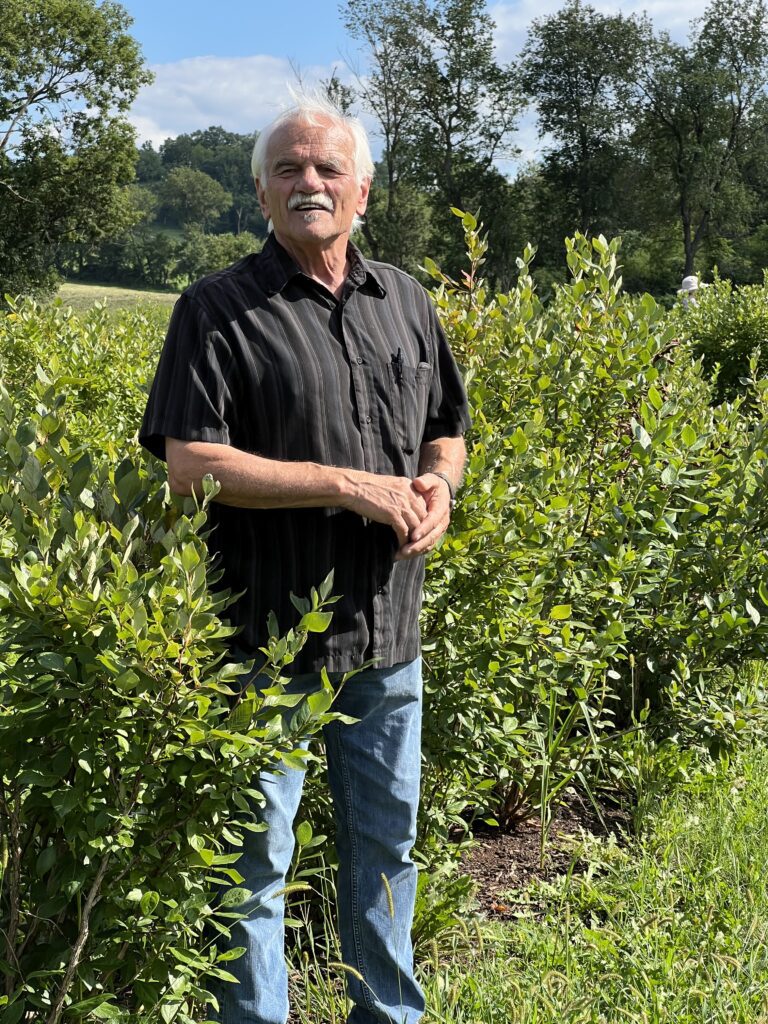
Gary Zimmer is the co-owner of Otter Creek Organic Farm in southcentral Wisconsin and the founder of Midwestern BioAg. He is the author, with his daughter, Leilani, of The Biological Farmer and Advancing Biological Farming.
Come see Gary’s farm in person this August at the Acres U.S.A. On-Farm Intensive with Zimmer Ag! Learn more and sign up at events.acresusa.com.