


Soil Microbes Could Rescue Crops from Salty Farmland
Researchers have uncovered an unexpected natural ally that could help farmers tackle one of agriculture’s fastest-growing challenges: salty soil.
The team found that naturally occurring soil bacteria can significantly improve plants’ ability to survive in saline conditions. The study, published in the journal Science Advances, also uncovered a previously unknown way these microbes protect crops. The researchers hope their findings could eventually help farmers grow food on land that has become too salty for conventional agriculture.
They examined root microbiomes from multiple crop species grown in different soil types. They discovered that a group of naturally occurring bacteria known as pseudomonads consistently gathered around plant roots exposed to salt stress. The same pattern appeared across several crops, including maize, tomato, and rapeseed, suggesting this is a widespread biological response rather than something unique to a single plant.
Genetic analyses also explained why these bacteria perform so well in salty environments. Pseudomonads have sodium transport systems and other stress-resistance mechanisms that help them tolerate high salt levels.
The team then introduced selected pseudomonad strains to soybean plants. In both greenhouse studies and field trials, the bacteria successfully colonized the roots and substantially improved plant growth, stronger roots, better development, and higher yields under salty conditions.
The researchers were surprised to discover that the bacteria were not helping plants by reducing salt levels inside their tissues. Rather, the microbes were stimulating the plants to produce more lignin, up to 30 percent more. Lignin is a strong, woody material that forms part of plant cell walls. It acts like a built-in support system, reinforcing plant tissues and helping them withstand environmental stress.
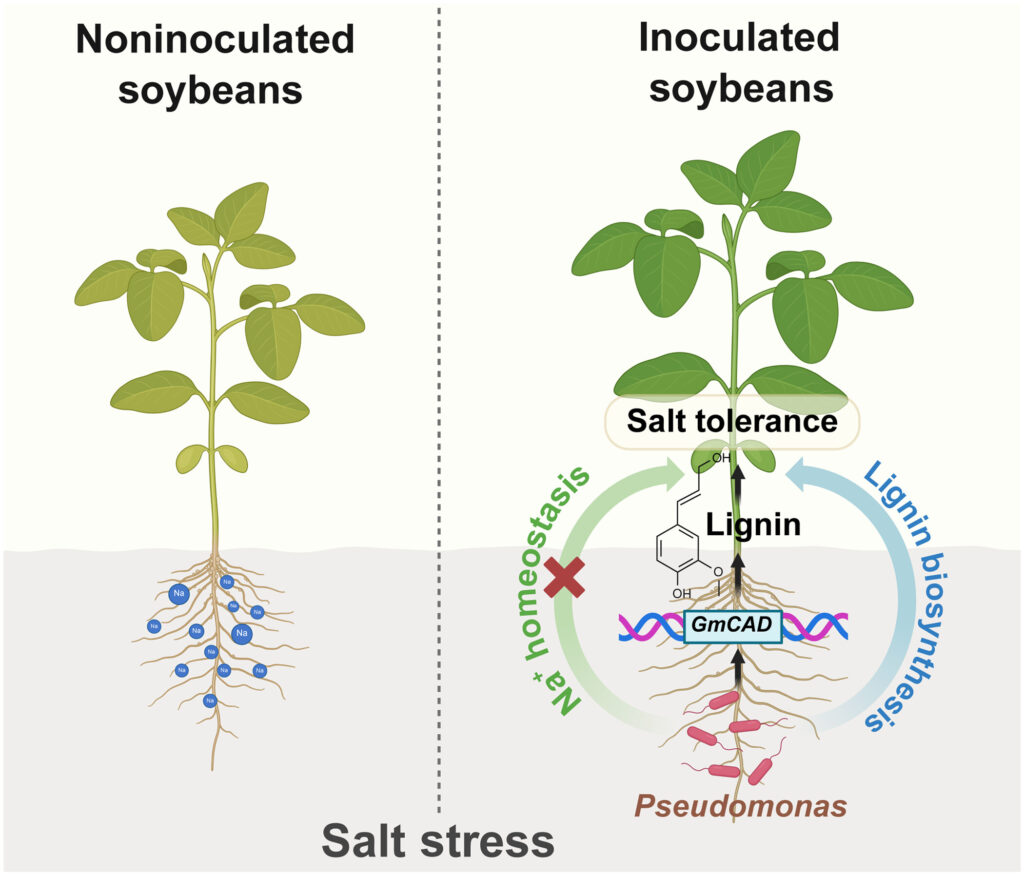
The researchers identified the key genes responsible for increasing lignin production. When those genes were artificially overexpressed, plants performed much better in salty soil. By contrast, plants that were unable to produce lignin did not benefit from the bacteria, showing that lignin production is essential to the newly discovered protective effect.
The results open the possibility of bio-based treatments to help more crops grow in saltier conditions.
Oak Trees Delay Spring to Starve Caterpillars
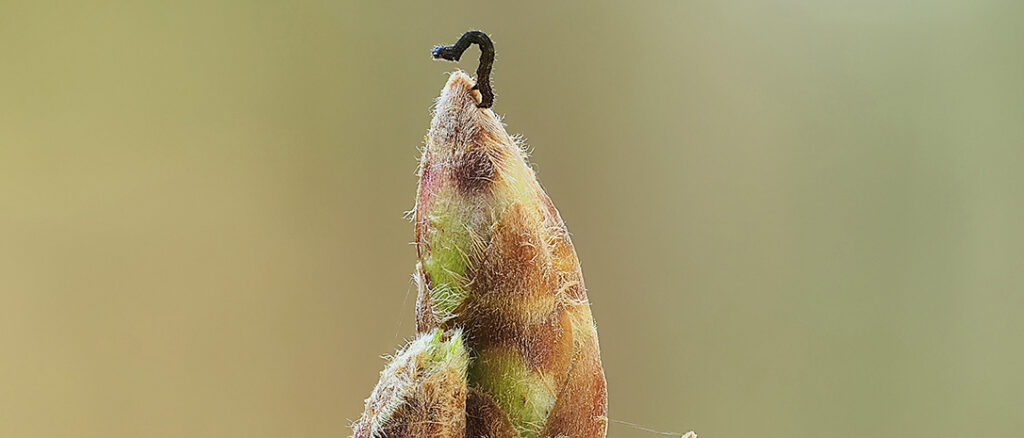
In spring forests, timing is everything. Many insects, especially caterpillars, hatch just as tree leaves are young, tender, and full of nutrients. This perfect alignment gives them immediate access to food, allowing them to begin feeding right away.
But oak trees have a surprising response when caterpillars become too abundant. If a tree experiences heavy infestation in one year, it shifts its schedule the next spring by delaying leaf emergence by about three days. For caterpillars, this small delay has big consequences. When they hatch, the leaves they depend on are still sealed inside buds, leaving them with nothing to eat.
This simple adjustment proves remarkably effective. A delay of just a few days sharply lowers caterpillar survival and cuts feeding damage to the trees by about 55 percent. These findings were reported by an international research team in the journal Nature Ecology & Evolution.
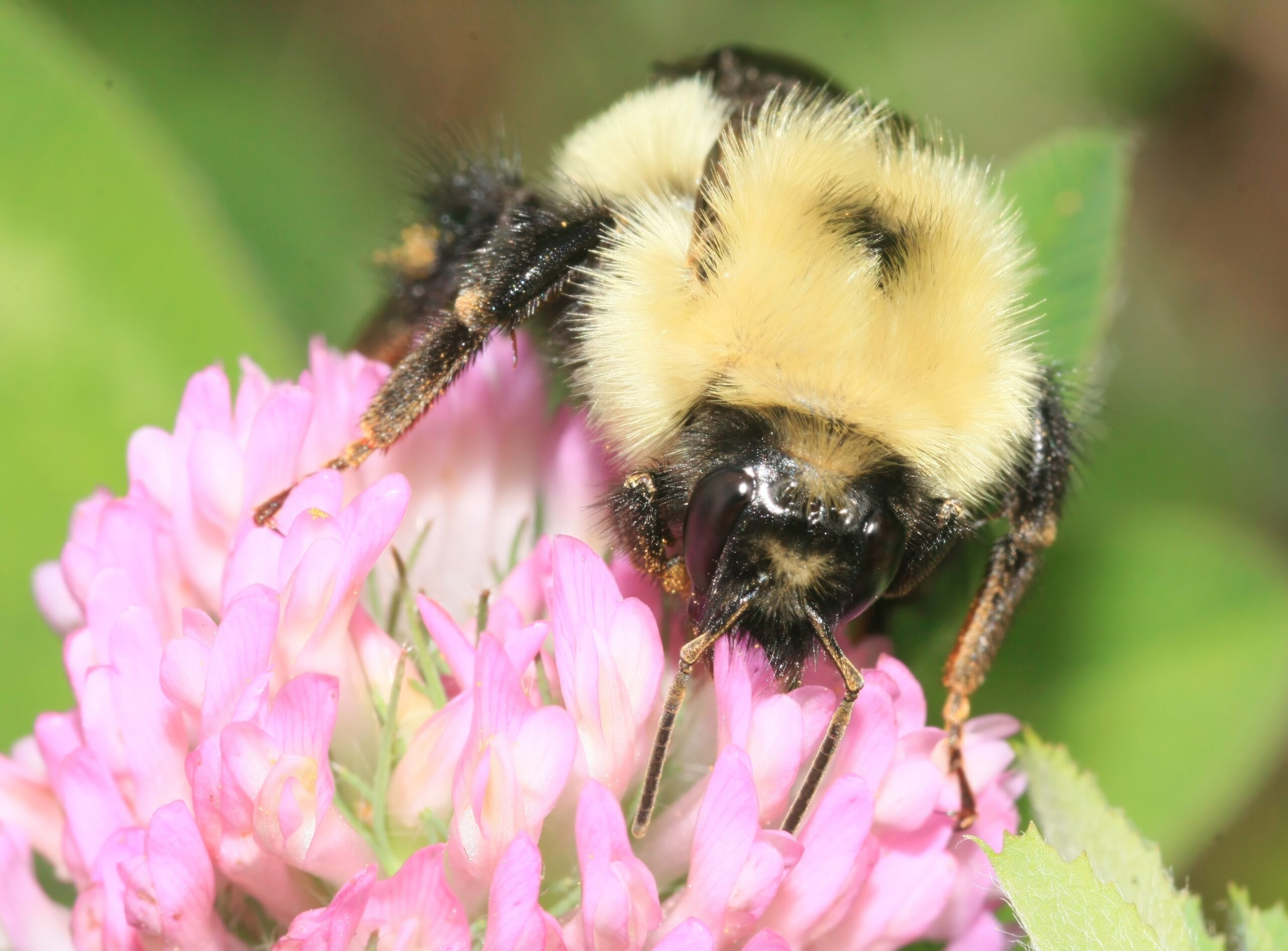
| Bumbling Along As noted in our article about cranberry farming in this issue, bumblebees can play an even more important role in pollination than honeybees. But, like their sugar-producing cousins, they face constantly changing environmental conditions. Bumblebees Collect Up to Seven Times More Toxic Metals Than Honeybees Bumblebees can accumulate dramatically higher levels of toxic heavy metals than honeybees, even when both species forage in the same area, according to new research from the University of Cambridge. As bees gather nectar and pollen, they are also exposed to contaminated soil, dust, and pollen that may contain heavy metals. Even relatively small amounts of these elements can interfere with learning and memory, making it harder for bees to navigate and find food. Previous studies have also linked metal exposure to lower reproductive success, fewer offspring, and disrupted brood development. The new study, published in Ecological Entomology, the journal of the Royal Entomological Society, shows that different bee species accumulate toxic metals in very different ways, with bumblebees appearing to be especially vulnerable. Honeybees typically nest above ground in hollow trees or managed hives, and their colonies usually contain between 30,000 and 60,000 bees. Bumblebees, by comparison, build nests underground in soil or leaf litter, and their colonies are much smaller, usually numbering between 50 and 500 individuals. Honeybees gather pollen from many different flower species, which may dilute contaminants across their food supply. Bumblebees collect smaller amounts of pollen from fewer plant species, making their exposure more dependent on whether those particular plants contain elevated metal levels. Honeybees also travel much farther while foraging, sometimes covering distances of up to 10 km from the colony. Their larger workforce allows them to spread across a wider area and potentially avoid contaminated locations. Bumblebees usually forage within about 1.5 km of their nests, giving them fewer opportunities to avoid local pollution. Another factor may be their appearance. Bumblebees have much hairier bodies than honeybees, making it easier for dust and airborne particles containing heavy metals to cling to them before being carried back to the nest with pollen. Common Pesticide May Be Quietly Wiping Out Future Bumblebees Sulfoxaflor is a next-generation pesticide introduced in 2013 to eliminate sap-feeding insects such as aphids on crops including soybeans and corn. Researchers at the Georgia Institute of Technology have recently found evidence that sulfoxaflor changes both gene activity and reproductive function in bumblebees. The largest changes appeared in ovarian tissue, suggesting that the pesticide may interfere with reproductive processes. According to the researchers, these genetic changes could reduce the number of offspring produced and, over time, contribute to declining bee populations. |
Study Finds Cover Crops Show Clearest Gains in Soil Health Across U.S. Long-Term Trials
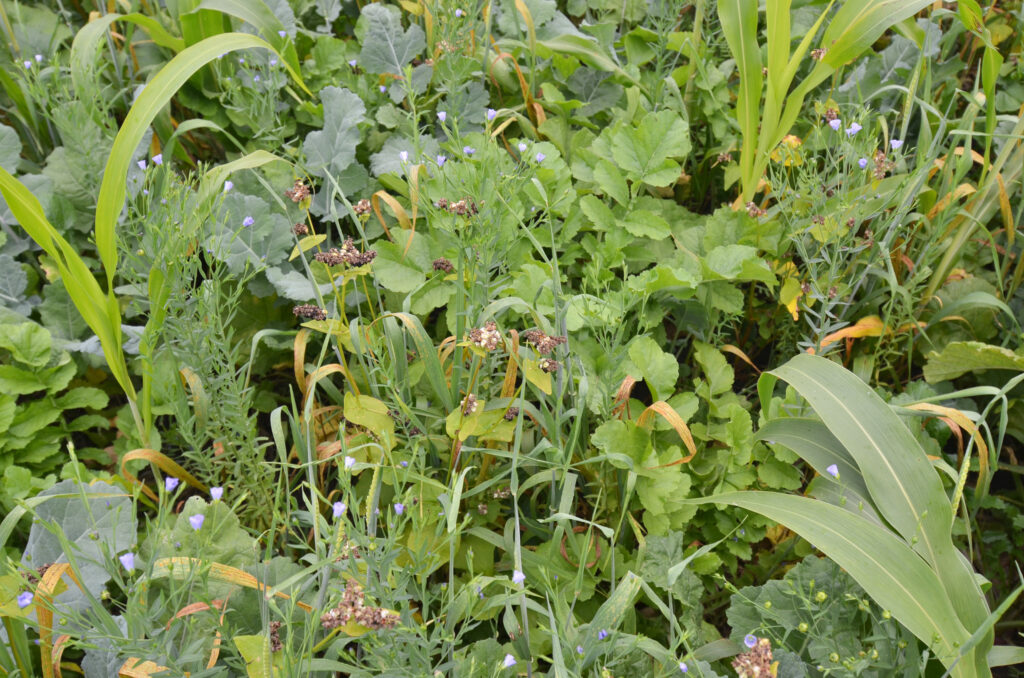
Farmers have long debated which practices do the most to keep their soil healthy. Now, after pulling data from 21 long-term field trials scattered across the United States, a multi-state research team has found cover crop use comes out on top.
The study, published in Agriculture, Ecosystems & Environment, examined trials ranging from four to 50 years old, all built around soybean-based cropping systems, and focused on the top 15 centimeters of soil. It compared four of the most common management decisions a farmer can make: crop rotation, tillage, cover cropping, and artificial drainage. The researchers then measured a suite of soil-health indicators tied to everything from biological activity and soil structure to nutrient levels and pH.
When the numbers were pooled, cover crops were the practice most consistently linked to improvements, specifically, higher levels of mineralizable carbon and water-extractable organic carbon, two markers that tell scientists the soil’s microbial community is active and its carbon cycle is humming along.
Two-crop rotations also made a difference, at least for one metric: They were associated with higher soil-test phosphorus compared to continuous monoculture. But beyond that, rotation diversity, tillage method, and drainage didn’t produce clear, consistent shifts in the indicators used, at least not when the results from all those different locations were combined.
One surprising result was that no-till was associated with more acidic soil (lower pH) than conventional tillage in the trials included in the dataset. This is likely because surface-applied fertilizers can concentrate acidity near the soil surface over time.
The national scope of the project helps explain why some practices did not “pop” as strongly as many farmers might expect. No-till, for example, is widely promoted for protecting soil, but it does not behave the same way in every region.
It’s worth noting what the study didn’t do. The researchers tracked soil-health indicators, not yield or profit. They couldn’t say directly whether the improvements they measured translate into better harvests or fatter bottom lines, though a growing body of parallel research is making that connection.
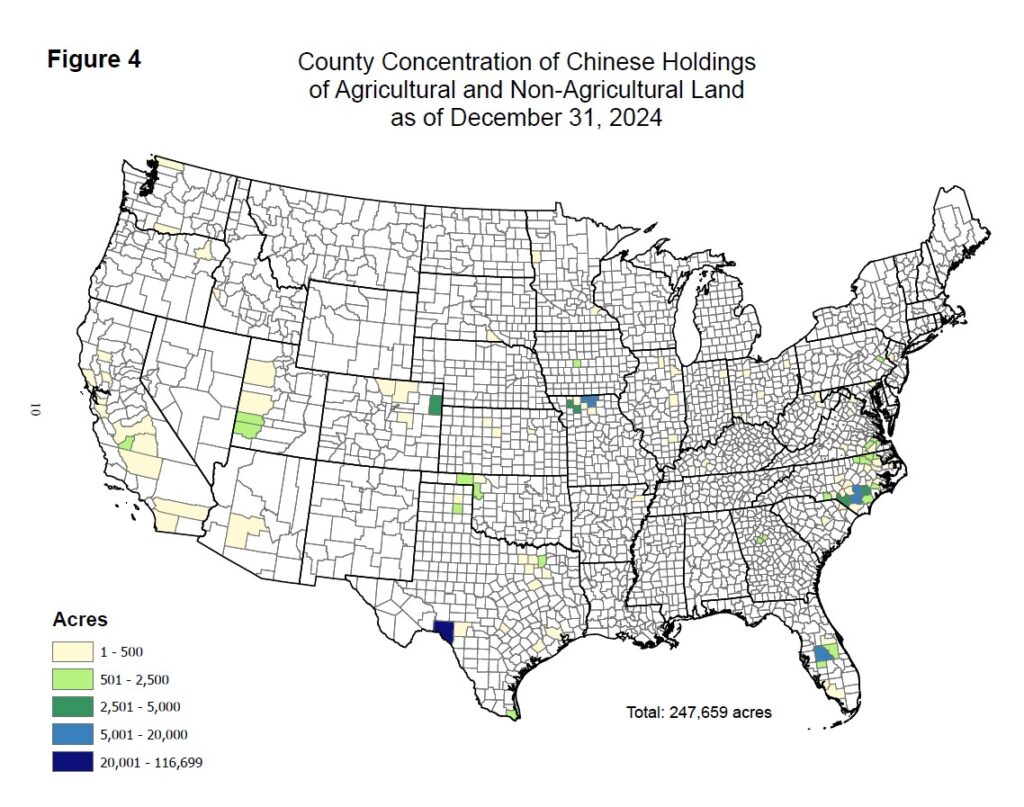
| Concerns About China Buying American Agricultural Land May Be Overblown By Anneliese Abbott During a trip to Beijing in mid-May 2026, President Donald Trump told Fox News host Sean Hannity that he was not in favor of restricting Chinese ownership of American farmland. “Do you want to see farm prices drop and farmers lose a lot of money?” Trump asked. “Then take that out of the market. They’ve had a lot of land for a long time.” Trump’s comment triggered a new wave of concerns about China buying up American farmland. “The purchase of U.S. farmland is a threat to our national security and our food security,” Wisconsin farmer Brian Reisinger told Newsweek. Should American farmers be worried? Are Chinese investments driving up land prices? Probably not, according to the most recent report by the USDA’s Farm Service Agency, “Foreign Holdings of U.S. Agricultural Land Through December 31, 2024.” Using data collected through the Agricultural Foreign Investment Disclosure Act of 1978 (AFIDA), FSA reports that 46.3 million acres of US agricultural land (5 percent of a total of 911 million acres) were foreign-owned in 2024, a 3 percent increase from 2023. Of those 46.3 million acres, 34 percent were owned by Canada, 10 percent by the Netherlands, 6 percent by Germany, 6 percent by Italy, and 6 percent by the United Kingdom. At least 10.6 million acres of this land aren’t actually owned by foreign entities at all. It’s only being leased to “foreign-owned wind turbine companies” for ten-year or longer leases. Again, Canada holds the majority of these leases, followed by Italy, Portugal, and the United Kingdom. China, it turns out, is a relatively minor player in the foreign land ownership market. Chinese investors only owned 247,659 acres at the end of 2024, less than 1 percent of foreign-owned acres and 0.03 percent of US farmland. Forty percent of those acres belong to Smithfield Foods, which has been owned by a Chinese company since 2013. Most of the rest are owned by Brazos Highland Properties, Harvest Texas, LLC, and U.S. Agri-Chemicals Corp. None are owned directly by the Chinese government. It seems that both Trump and his critics are misinformed; China does not own enough American land to make much difference either in land prices or food security. In fact, all foreign countries combined own only 16 percent of the 283 million acres of farmland “owned by nonoperator landlords.” It seems to be mainly American investors who are driving the rise in farmland prices. Bill Gates, for example, owns 275,000 acres, slightly more than every Chinese investor combined. While Chinese ownership of U.S. farmland remains relatively limited, many farmers are increasingly concerned about farmland being treated as a speculative asset by distant corporate and investment interests, whether foreign or domestic, instead of as a productive resource tied to local communities, food production, and the next generation of farmers,” Farm Action commented. High land prices are certainly making it difficult for beginning farmers to buy land. It’s a real problem that we need to address. But let’s stop blaming China. |