
News and Analysis on Developments in Agronomic Science
Chemicals from Corn Roots Influence Wheat Yield
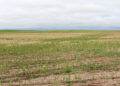
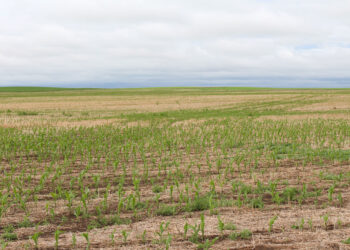
Corn roots secrete certain chemicals that affect the quality of soil. In some fields, this effect increases the yields of wheat planted after corn by more than 4 percent, as proven by researchers from the University of Bern in a recent study, published in the journal eLife. While the findings from several field experiments show that these effects are highly variable, in the long term they may yet help to make the cultivation of grains more sustainable, without the need for additional fertilizers or pesticides.
On the basis of earlier studies conducted by researchers at the Institute of Plant Sciences at the University of Bern, it was known that so-called benzoxazinoids — natural chemicals that corn plants release through their roots — change the composition of microorganisms in the soil on the roots and therefore influence the growth of the subsequent plants that grow in the soil. The present study investigated whether plant-soil feedbacks of this kind also occur under realistic agricultural conditions.
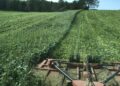
“Such field experiments are essential to test the transferability of basic research into practice and thus assess the potential agronomic benefit,” explained Valentin Gfeller, who worked on the project as a doctoral student at IPS. During a two-year field experiment, two lines of corn were initially grown, only one of which released benzoxazinoids into the soil. Three varieties of winter wheat were then grown in the differently conditioned soils. It was thus possible to demonstrate that the excretion of benzoxazinoids improves germination and increases tillering, growth, and crop yield.
In addition to the increased yield, lower levels of infestation by some pests were also observed. “A yield increase of 4 percent may not sound spectacular, but it is still significant considering how challenging it has become to enhance wheat yields without additional inputs,” explained Matthias Erb, a professor at IPS. “Whether effects of this kind actually make a significant difference for overall agricultural productivity and sustainability remains to be seen, however, as yield also depends on many other factors.” The study demonstrated the potential of using specialized plant compounds to improve crop productivity through variety-specific rotations.
To better understand the underlying mechanism, the researchers completed a variety of analyses of the soil and roots. The benzoxazinoid-producing plants accumulated these chemicals and their degradation products in the soil close to their roots. Furthermore, it was confirmed that benzoxazinoids influence the community of bacteria and fungi in and on maize roots. However, soil nutrients were not altered. Benzoxazinoids also proved to be particularly persistent in the soil. The extent to which wheat growth and overall yield are directly or indirectly affected by benzoxazinoids through soil microorganisms will be subject to further investigation.
Bat Populations Dip, But Then Increase, When Farms Transition to Organic
Organic farming is better for biodiversity than conventional farming, which relies heavily on synthetic pesticides, herbicides, and fertilizers. However, little research has been conducted on how wildlife is affected by the transition period when a farm goes organic.
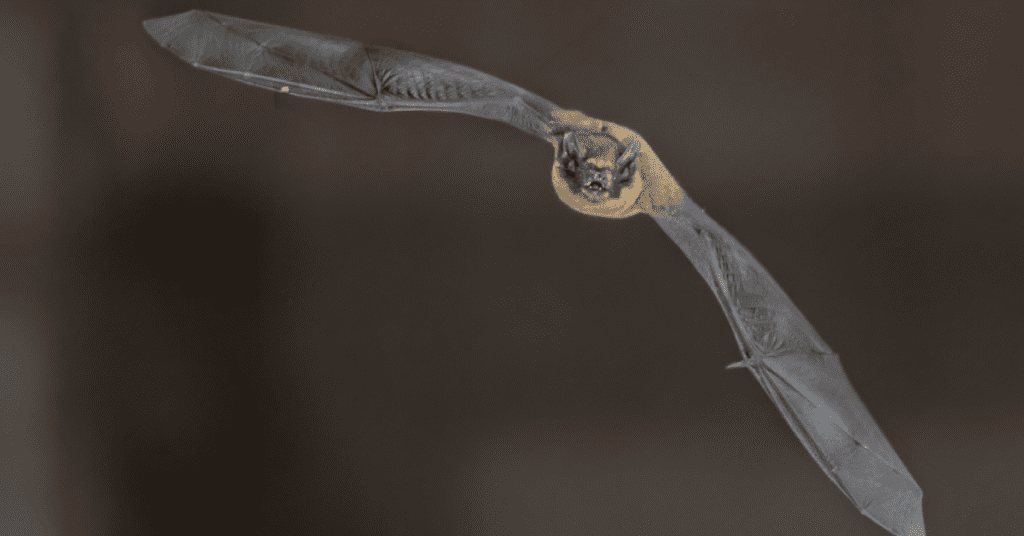
A new study, led by the universities of Bristol, Göttingen, and Exeter, assessed the effects of organic farming by monitoring insect-eating bats at citrus orchards in Cyprus. The activity of three of the four species included in the study was significantly lower at farms in the transition period, compared to conventional farms. However, activity increased on established organic farms — suggesting a time-lag before the organic biodiversity boost for the most abundant bat species.
“We were surprised by our results — we expected the transition to organic farming to bring positive effects from the start,” said Penelope Fialas, from the University of Exeter. “We can’t be certain why bats are negatively affected, but previous research suggests soil can suffer — with knock-on effects for other wildlife — when fertilizers, pesticides and other aspects of conventional farming stop. The soil and the wider ecosystem may take time to recover.”
Fialas added, “Our findings suggest the transition to organic farming should be managed carefully, to limit any negative effects on biodiversity. For example, neighboring farms could avoid simultaneous transitions, allowing wildlife to find alternative habitats nearby while each farm switches its methods.”
Gareth Jones, from the University of Bristol, said, “We’ve long known that organic farms often harbor higher biodiversity than otherwise-similar conventional farms. The transition to organic farming has been little studied, however, and determining if the detrimental effects during transition observed here hold for other animals and plants would be an interesting future research project.”
The study examined 22 matched pairs of citrus orchards, comparing bat activity at certified organic farms with conventional farms, and organic-transition farms with conventional farms. The bat species included in the study were Kuhl’s pipistrelle (P. kuhlii), Savi’s pipistrelle (H. savii), common bent-wing (M. schreibersii), and common pipistrelle (P. pipistrellus). The findings showed:
- Activity of Savi’s pipistrelles was three times lower — and activity of Kuhl’s pipistrelles and common bent-wings was twice as low — on organic-transitional farms compared to conventional farms.
- Activity of Kuhl’s pipistrelles was twice as high on organic farms compared to conventional farms.
- Activity of Kuhl’s pipistrelles and Savi’s pipistrelles was higher on organic farms than on organic-transition farms (by threefold and twofold respectively).
- The presence of “semi-natural” areas surrounding the farms did not affect these differences.
Excess Fertilizer Leads to Parasitic Infections; Researchers Remove It (Instead of Solving the Root Problem)

It sounds like an elegant solution: Remove the habitat of a parasite-carrying aquatic snail and reduce the level of infection in the local community, all while generating more feed and compost for local farmers.
A collaboration of scientists from the United States and Senegal focused on doing just that by removing overgrown aquatic vegetation from areas upstream of the Diama Dam in northeastern Senegal. In doing so, they generated positive impacts on the local communities’ health and economies.
“It is rare and gratifying when we can find a potential win-win solution to both human health and livelihoods,” said UC Santa Barbara geography professor David López-Carr, co-author of the paper, which appears in the journal Nature. In it, the researchers provide proof for a hypothesis that agricultural activities, including the use of fertilizers, contribute to parasitic infections by fueling the growth of aquatic vegetation. “The results suggest a simple solution to positively impact society at the intersections of health, society, and economy of northern Senegal, with implications for the over 700 million people globally in schistosomiasis endemic areas.”
Since the construction of the Diama Dam in 1986, local farmers have had better access to fresh water to irrigate their fields. However, the presence of the new infrastructure also has increased the prevalence of the schistosoma parasite, a tiny freshwater flatworm commonly found in Africa, South America, and Southeast Asia. Nearly 250 million people around the world are estimated to be infected with this parasite.
As tropical diseases go, schistosomiasis (also known as bilharzia or snail fever) isn’t immediately fatal or even transmissible between people. But in the long term, the condition is debilitating. Long-term effects include increased risk for cancer and infertility, and those infected are less able to work and go to school, keeping them in the cycle of poverty.
Health agencies and organizations have been fighting these infections with drugs that work well; however, the medicine does not prevent reinfection, which can happen as soon as the individual reencounters contaminated water. Previous research has also focused on using the snails’ natural predators — prawns — which were cut off from their prey by the dam.
In their effort to get ahead of the disease, the collaboration took a close look at the habitat that supports the worms’ intermediate host — a small snail of the Biomphalaria species that lives in the Senegal River and its tributaries. They found that a common aquatic plant called Ceratophyllum demersum — also known as hornwort — can hold up to 99 percent of these snails, with which they have a mutualistic relationship.
Exacerbated by fertilizer runoff from agricultural operations farther upstream, hornwort and other aquatic plants tend to proliferate in local waterways, which impedes access for daily activities such as cooking, irrigation, and washing clothes.
For their experiment, the researchers conducted a three-year randomized control trial in 16 communities, to see if and how much nuisance vegetation removal in about half of the communities would affect the presence of the snails. They measured baseline infection rates, administered antiparasitic drugs, removed the vegetation, and then measured reinfection rates in more than 1,400 schoolchildren. In total, the research teams took out an estimated 430 metric tons (wet) of aquatic vegetation from water access points.
“In our randomized controlled trial, control sites — places where we didn’t remove submerged vegetation from water access points — had 124 percent higher intestinal schistosoma reinfection rates,” López-Carr said. In addition to lowered infection rates where they removed the vegetation, the researchers found that the removed material could be used to feed livestock or turned into compost for growing crops, lowering costs dramatically and increasing yields for local farmers. In this way, according to López-Carr, “the approach yielded an economic incentive to remove nuisance vegetation from waterways and return nutrients from aquatic plants back to the soil and for livestock feed, with the promise of severing poverty-disease traps while lowering infectious burden at the same time.”
“A broader benefit is the hope that this example can set for enhancing win-win planetary health research and solutions that improve livelihoods while also reducing infectious morbidity and mortality,” he added.
Having conducted these trials, the researchers hope that this study is implemented elsewhere in other similar regions to replicate the same kind of health and economic outcomes.
And, it might not be just a solution for developing countries. “Perhaps vegetation growth resulting from excess nutrients could also be used as livestock feed in more developed countries as well,” López-Carr said.