

Automated Drones Successfully Monitor Crops to Report Ideal Harvest Time
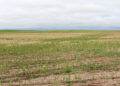
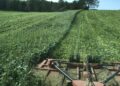
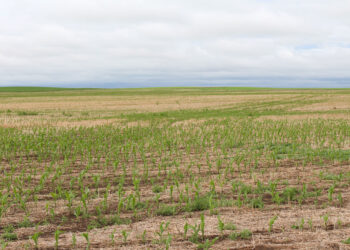
Crops grow inconsistently, so at harvest time there will inevitably be variations in the quality and size of individual plants. Finding the optimal time to harvest is therefore a priority for farmers. A new approach making use of drones and artificial intelligence demonstrably improves this estimation by carefully and accurately analyzing individual plants to assess their likely growth characteristics.
“The idea is relatively simple, but the design, implementation and execution is extraordinarily complex,” said associate professor Wei Guo of the University of Tokyo. “If farmers know the ideal time to harvest crop fields, they can reduce waste, which is good for them, for consumers and the environment. But optimum harvest times are not an easy thing to predict and ideally require detailed knowledge of each plant; such data would be cost and time prohibitive if people were employed to collect it. This is where the drones come in.”
Guo has a background in both computer science and agricultural science, so is ideally suited for finding ways cutting-edge hardware and software could aid agriculture. He and his team have demonstrated that some low-cost drones with specialized software can image and analyze young plants — broccoli in the case of this study — and accurately predict their expected growth characteristics. The drones carry out the imaging process multiple times and do so without human interaction, meaning the system requires little in terms of labor costs.
“Harvesting a field as little as a day before or after the optimal time could reduce the potential income of that field for the farmer by 3.7 percent, to as much as 20.4 percent,” said Guo. “With our system, drones identify and catalog every plant in the field, and their imaging data feeds a model that uses deep learning to produce easy-to-understand visual data for farmers. Given the current relative low costs of drones and computers, a commercial version of this system should be within reach to many farmers.”
The main challenge the team faced was in the image analysis and deep learning aspects. Collecting the image data itself is relatively trivial, but given the way plants move in the wind and how the light changes with time and the seasons, the image data contains a lot of variation that machines often find hard to compensate for. So, when training their system, the team had to invest a huge amount of time labeling various aspects of images the drones might see, in order to help the system learn to correctly identify what it was seeing. The vast data throughput was also challenging — image data was often on the order of trillions of pixels, tens of thousands of times larger than even a high-end smartphone camera.
Pesticides Choke Pathway for Nature to Produce Nitrogen for Crops
Many farmers applying pesticides to boost crop yields may instead be contributing to growth problems, scientists report in a new study.
According to years of research both in the test tube and, now, with real plants, a team of scientists reports that artificial chemicals in pesticides — through application or exposure to crops through runoff — disrupt natural nitrogen-fixing communications between crops and soil bacteria. The disruption results in lower yields or significantly delayed growth.
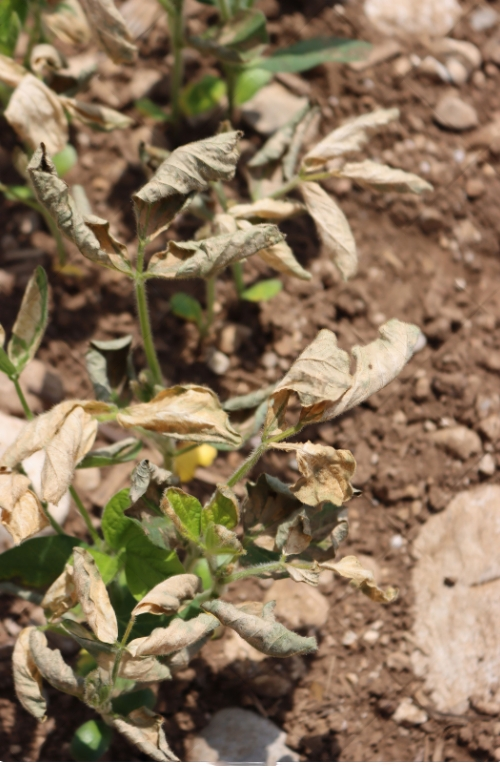
In a paper in Proceedings of the National Academy of Sciences, the five-member team reports that agrichemicals bind to and block connections to specific receptors (NodD) inside rhizobia bacteria living in root nodules in the soil. Rotation legume crops such as alfalfa and soybeans require such interaction to naturally replace nitrogen levels that, in turn, benefit primary market crops like corn grown after legume rotations.
Legume plants secrete chemical signals that recruit the friendly bacteria, which work with the plants to convert atmospheric nitrogen into ammonia that is then used as fertilizer by the plants.
“Agrichemicals are blocking the host plant’s phytochemical recruitment signal,” said the study’s lead author, Jennifer E. Fox, a researcher at the University of Oregon. “In essence, the agrichemicals are cutting the lines of communication between the host plant and symbiotic bacteria. This is the mechanism by which these chemicals reduce symbiosis and nitrogen fixation.”
Fox and colleagues tested more than 50 chemicals, including pentachlorophenol (PCP), in in-vitro assays. The paper in PNAS reports their in-vivo findings using real plants and bacteria.
None of the chemicals used in the research, including PCP, proved to be toxic to either the plants or bacteria, Fox said, “but PCP was unique in that it inhibited both seed germination and nitrogen fixation.” More than 20 commonly used agricultural chemicals shared the same mechanism of action as PCP, but with varying amounts of signal disruption.
The researchers pointed to two published studies from 2000 that had found significant declines in both crop yield per unit of synthetic nitrogen fertilizer added and also a significant decline in overall symbiotic nitrogen fixation.
The most common explanation for the observations is an overuse of agrichemicals applied to legume crops. That practice sets up “a vicious cycle,” Fox said, because it reduces a legume crop’s natural need for nitrogen fixation but leaves a shortage of natural nitrogen in the soil for the next year’s crop to use. Thus, she said, there is the need for yet more fertilizer.
Other reasons for poor yield and decreasing symbiotic nitrogen fixation include poor soil quality due to overuse, which strips nutrients such as nitrogen and phosphorus from the soil, and tillage, which interrupts root structures and disturbs the nitrogen-fixing bacteria when soil is turned.
“Our research provides another explanation for declining crop yields,” Fox said. “We showed that by applying pesticides that interfere with symbiotic signaling, the overall amount of symbiotic nitrogen fixation is reduced. If this natural fertilizer source is not replaced by increased application of synthetic nitrogen fertilizer, then crop yields are reduced and/or more growing time is needed for these crops to reach the yields obtained by untreated crops. We feel that this is a previously unforeseen factor contributing to declining crop yields.”
The researchers say that field-wide experiments now are needed, in addition to tests to determine the exact elements of pesticides that inhibit natural plant-bacteria interaction.
Lawsuit Alleges USDA Permits Large-scale Imports of Uninspected Certified Organic Products

Oregon organic hazelnut grower Bruce Kaser, a certified organic farmer and semi-retired attorney, filed a federal lawsuit on October 17 against the USDA, alleging a breach in the intent of Congress’ Organic Foods Production Act. Kaser had started looking into why organic hazelnut imports from Turkey were priced so low — close to conventional hazelnuts — and exposed efforts in Turkey and other countries to skip legally mandated annual inspections, including field inspections and audits of the documentation of all purchased inputs and commodity sales. These rigorous inspections are required of growers in the U.S.
Many U.S. organic farmers assume imports, under the USDA accreditation program, are held to the same rigorous and expensive process they are to ensure the products’ authenticity.
“What has American farmers seeing red is not just the fact that most, probably nearly all, foreign growers are being exempted from annual inspections — one of the vital requirements of organic certification,” said Kaser. “It’s a false representation that ‘group certification’ is supposed to assist small landholders who are part of compact indigenous communities or cooperatives. It’s actually economically aiding large agribusinesses and retailers.”
According to an investigation by OrganicEye, the only thing members of these groups had in common, exempting them from inspection by accredited certifiers in the eyes of the USDA, was being on the supplier list for a corporate agribusiness that was processing and/or exporting commodities.
Additionally, although purported to allow small landholders to participate in the organic industry, there seemed to be no scale limitations to members of the groups. And the USDA has no legal definition for “geographic proximity” within groups. One of the largest business enterprises in international certification submitted formal comments to the USDA on the subject: “ECOCERT is not in favor of a strict limitation or definition of the geographical proximity of a group – as long as all members of a group are located within the same country.”
Kaser first asked the U.S. International Trade Commission to investigate when he learned about cheap organic hazelnuts flooding the U.S. market but couldn’t find any certified Turkish organic growers on the USDA’s “Organic Integrity” database. The USITC found that USDA-accredited certifiers were issuing organic certificates directly to agribusiness food processors, which made the farmers invisible and untraceable (unlike organic crops produced in the US).
“This exemption, although not technically permitted under the law, was originally conceived to help low-income farmers access the organic marketplace,” said Mark Kastel, Executive Director of OrganicEye, who has monitored organic rulemaking and regulation for over three decades. “Group certification was originally structured to allow esteemed members, possibly elders, of these communities to act, in essence, as subcontractors for inspection, with certifiers overseeing and spot-checking their work. However, what the USDA referred to as a ‘scheme’ has turned into a racket, with agribusiness puppet masters in charge of inspections.”
In reality, for-profit certifiers, most based outside of the U.S., are contracting with agribusinesses to oversee their own suppliers, thus removing the independent “third-party” inspection that is part of the legally required process the industry has used to build credibility for the USDA organic seal and food packaging.
“In a convoluted misrepresentation, the agribusinesses themselves are then falsely listed as one of the group’s farmer-growers, typically producing nuts, bananas, chocolate or some other commodity,” Kastel added.

Under updated regulations, it appears that as few as 2 percent of growers in a group are annually spot-checked by the actual certifier. In a group of 100 farmers — and some groups are many times larger — only two growers would be inspected, and one of the two might be a faux grower (the agribusiness acting as what OrganicEye calls “the ringmaster”). With hundreds of groups worldwide, this equates to many thousands of uninspected farms illegally competing with fully inspected U.S. growers.
Even under newly enhanced regulations adopted after repeated incidents of major fraud, commonly known as the “Strengthening Organic Enforcement” rule, the USDA solely delegates the authority to for-profit certifiers working overseas to design their own group administrative systems and internal controls to prevent fraud by their customers.
Kastel added, “We’re trusting the certifiers, whose primary motivator is profit, to oversee their agribusiness ‘clients,’ who in turn are responsible for overseeing all their own suppliers (i.e., the group members).”
If successful, the lawsuit (Pratum Farm vs. USDA: Case 5 U.S.C. § 706), filed by Mr. Kaser’s Oregon-based certified organic operation, would result in a court judgment declaring grower group certifications illegal and directing the USDA federal officer in charge of the National Organic Program (currently Dr. Jennifer Tucker) to instruct certifiers to immediately cease grower group certifications.
“It’s an awful example of administration by the USDA. It’s frustrating and harmful to watch literally tons of imported hazelnuts and other high-value commodities flooding domestic markets from exporters and farmers who have been able to skirt the system,” Kaser stated.
One of the five foreign-based, for-profit certifiers targeted in the investigation and named in the administrative complaint filed in July was French-based EcoCert. The for-profit company certifies thousands of organic operations in 94 countries worldwide through its 21 subsidiaries. They have faced enforcement actions by U.S. and European Union regulators on a number of occasions yet are still entrusted with overseeing grower groups without annual inspections by qualified and trained staff.
Some processor/exporters involved in the group certification process in Turkey, a country that has been implicated in large-scale organic fraud in the past, have been traced using geo-tracking to at least one auto repair shop and one gas station. Both the repair shop and filling station were listed in the “Organic Integrity” database maintained by the USDA during the investigation but have since been quietly removed without explanation.
Scholarships Available for Plant Science Students
The Western Reserve Herb Society, an organization dedicated to sharing herbal knowledge, has several scholarships available for the coming academic year for undergraduates studying plant science. Two scholarships of $5,500 are open for students at any accredited institution in the United States, and there are two scholarships of $6,500 for students at Ohio schools. Preference will be given to applicants who demonstrate exceptional dedication and whose career goals involve work in advancing education and research in the plant sciences.
Learn more at westernreserveherbsociety.org/scholarships.