Acres U.S.A.® Magazine
  • Articles
    • News
    • Ecological farming
      • Climate
      • Environmental Issues
      • Farm management & planning
      • Human health
    • Livestock
    • Farm
    • Crop
      • Crop management practices
        • Ag technology
        • Cover crops
        • Crop nutrition
          • Crop protection
          • Diseases
        • Crops
        • Fruits
    • Soil
    • Opinion
  • Resources
    • Magazine
    • Online Learning
    • Newsletters
    • Free Articles
    • Blog
  • Magazine Issues
    • 2026
      • February 2026
      • January 2026
    • 2025
      • December 2025
      • November 2025
      • October 2025
      • September 2025
      • August 2025
      • July 2025
      • June 2025
      • May 2025
      • April 2025
      • March 2025
      • February 2025
      • January 2025
    • 2024
      • December 2024
      • November 2024
      • October 2024
      • September 2024
      • August 2024
      • July 2024
      • June 2024
      • May 2024
      • April 2024
      • March 2024
      • February 2024
      • January 2024
    • 2023
      • December 2023
      • November 2023
      • October 2023
      • August 2023
      • July 2023
      • June 2023
      • May 2023
      • April 2023
      • March 2023
      • February 2023
      • January 2023
    • 2022
      • December 2022
      • November 2022
      • October 2022
      • September 2022
      • August 2022
      • July 2022
      • June 2022
      • May 2022
      • April 2022
      • March 2022
      • February 2022
  • About Us
    • Our History
    • Our Staff
    • Contact Us
    • Community
      • Soil Health Primer Resources
  • Events
    • Eco-Ag Conference
    • Farm Weird Event
    • Viroqua On Farm Event
  • Subscribe
  • Login
  • Register
No Result
View All Result
  • Articles
    • News
    • Ecological farming
      • Climate
      • Environmental Issues
      • Farm management & planning
      • Human health
    • Livestock
    • Farm
    • Crop
      • Crop management practices
        • Ag technology
        • Cover crops
        • Crop nutrition
          • Crop protection
          • Diseases
        • Crops
        • Fruits
    • Soil
    • Opinion
  • Resources
    • Magazine
    • Online Learning
    • Newsletters
    • Free Articles
    • Blog
  • Magazine Issues
    • 2026
      • February 2026
      • January 2026
    • 2025
      • December 2025
      • November 2025
      • October 2025
      • September 2025
      • August 2025
      • July 2025
      • June 2025
      • May 2025
      • April 2025
      • March 2025
      • February 2025
      • January 2025
    • 2024
      • December 2024
      • November 2024
      • October 2024
      • September 2024
      • August 2024
      • July 2024
      • June 2024
      • May 2024
      • April 2024
      • March 2024
      • February 2024
      • January 2024
    • 2023
      • December 2023
      • November 2023
      • October 2023
      • August 2023
      • July 2023
      • June 2023
      • May 2023
      • April 2023
      • March 2023
      • February 2023
      • January 2023
    • 2022
      • December 2022
      • November 2022
      • October 2022
      • September 2022
      • August 2022
      • July 2022
      • June 2022
      • May 2022
      • April 2022
      • March 2022
      • February 2022
  • About Us
    • Our History
    • Our Staff
    • Contact Us
    • Community
      • Soil Health Primer Resources
  • Events
    • Eco-Ag Conference
    • Farm Weird Event
    • Viroqua On Farm Event
  • Subscribe
No Result
View All Result
Acres U.S.A.® Magazine
No Result
View All Result
Home Magazine features Eco-Farm

Discovering Photosynthesis

Charles Walters by Charles Walters
April 24, 2024
in Eco-Farm
0
Discovering Photosynthesis
0
SHARES
179
VIEWS
Share on FacebookShare on Twitter

Eco-Farm: An Acres U.S.A. Primer — Lesson 1: Photosynthesis, Part 1

Charles Walters

This is an excerpt from Charles Walters’ Eco-Farm — An Acres U.S.A. Primer, available from the Acres U.S.A. bookstore at bookstore.acresusa.com. Read more excerpts from this book using the category “Eco-Farm.”

Land, its management, its ownership, all dominate the lifespan of ecological systems, and therefore economic systems. Thus the primacy of agriculture and the labor of love agriculture requires. 

1. Margin of life 

“Long before man could make a plow or a test tube,” writes Gene Poirot in Our Margin of Life, “nature was creating life, including man, and providing an environment in which all life could live. She uses the resources of air, water, sunshine and soil plant food minerals to make life. If she had created only life, these resources would soon have been tied up in all living things. So she created death. This way resources could be recycled and used again and again. There is a basic law which says, All life forms must return at death what they took from the resources of the earth during their lifetime. For example, when any creature dies, the water it took returns to the environment. The air it used in terms of oxygen, nitrogen and carbon dioxide is recycled. And because death occurs either on the soil or in the water, these resources are held within reach of new life forms which also come from the soil surface and from close to water’s surface. So to live with the laws of life and death, we must follow a basic rule of nature.”

These laws say, return to the environment all that which is taken from it and made in growth, and hold these additions within reach of new life. 

There is wonder and awe in Poirot’s little story about Our Margin of Life. Everything that eats will be eaten. This is easy enough to understand whenever an owl swoops down to snag a field mouse, or a sharpshin hawk takes the life of a rabbit. But is the reverse true, that everything eaten must also eat? Do plants feed? Of course they do. Even the ancient Greeks knew that plants relied on nutrients in the soil. But they did not know how chemicals of the air contributed to plant bulk and food production. 

2. Jan Baptista van Helmont 

Jan Baptista van Helmont, a 17th century Flemish physician, started getting a handle on exactly what happens when he performed his now famous tree experiment. He simply wanted to know how soil matter was being displaced when plant life grew. No one could measure such a proposition in a field, or in a forest. So van Helmont planted a willow tree in a large earthen tub. The little sprig weighed in at 5 pounds. Soil used in the experiment scaled in at an even 200 pounds. The tub was then covered so that only a small hole for the tree trunk and one for watering remained. 

Five years later the tree was not only larger, it now weighed 164 pounds. Obviously, reasoned van Helmont, if the willow tree picked up the difference between 5 pounds and 164 pounds, then the soil remaining in the tub should weigh only 41 pounds, potting material having been reduced to oven dry soil for the postgrowth weighin. The results proved van Helmont hopelessly wrong. After contributing to the tree’s growth for five years, the 200 pounds of soil had lost only 2 ounces. Van Helmont pondered the problem in deep consternation. Could it be that all this growth came from the water he had given the tubbed tree all these years? Surely this was the answer. 

3. In contact with air 

No, said a scientist by the name of Nehemiah Grew. He had used the new tool called the microscope to study the tiny pores of a plant leaf. Here were openings not unlike those observed in the skin of an animal or a man, obviously for the elimination of perspiration. By this time it had be come uncomfortable to use the term obviously too much. Grew took a second look and this suggested another possibility. Perhaps the pores were for the admission of air. Van Helmont had completely overlooked air, and the willow tree had been in contact with air as well as water and soil. Even so, he didn’t pause to consider that air contained dust particles—debris from volcanoes, pollution from forest fires and industry, soot from town chimneys. 

It was one thing to have a vision of how nature works, another to test it out. How, indeed, could one determine whether air figured in the growth of a plant? An English preacher and scientist named Stephen Hales reasoned it out and constructed his famous peppermint plant experiment. 

The proposition was hellishly simple. A peppermint plant was potted in a small cistern. Next, a glass was clamped down over the plant to shut off outside air. The water level in the glass that surrounded the plant was regulated simply by siphoning away water in the cistern. Now if the plant made use of the air, why the water in the container would either rise or fall. Hales knew about atmospheric pressure, but his control would handle that variable. The control was a similar setup, except that it contained no peppermint plant. Atmospheric pressure would treat each vessel alike. If a difference developed, this would be sound scientific evidence that the plant had interacted with the air in the vessel. 

Hales tabulated his results and watched. One day the plant took on a noticeable wilt. Hales replaced this plant with another, taking care to preserve the old air in the vessel. It took less than five days for the new plant to fade away. Yet a plant introduced into the control vessel lived approximately as long as the first one. Apparently plants were taking something out of the air. Was this something food? 

Of course! Once the food in the first vessel had been exhausted, a second peppermint plant couldn’t live. Yet a peppermint plant placed in the stale air of the second vessel lived as long as the first plant. Being an astute observer. Hales reasoned that his mint plants were changing the air. How? He died without finding out. 
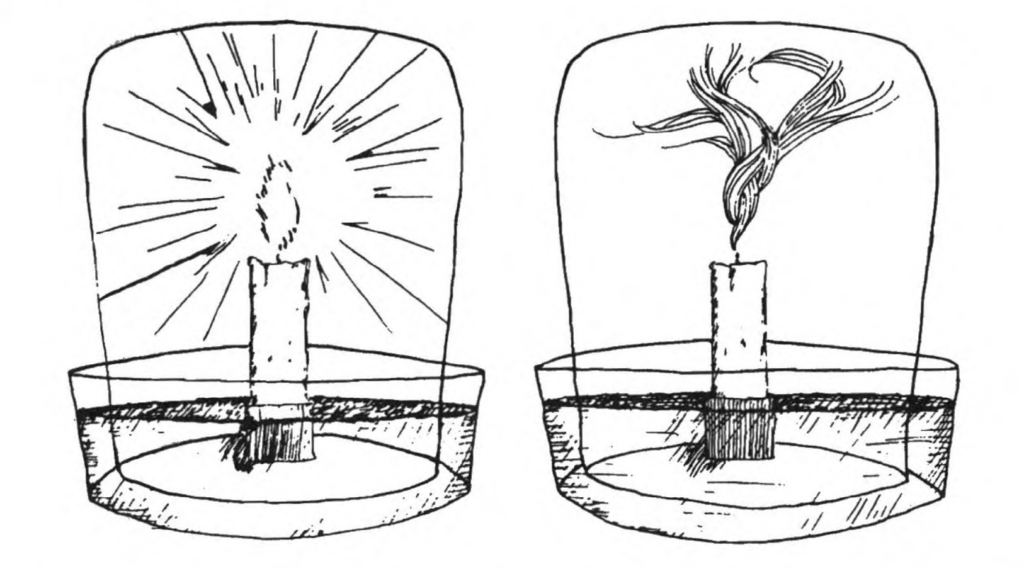
Priestley consumed the air in a chamber by burning a candle. After a candle had exhausted the air, a mouse could not live in it.

The idea of using inverted glass vessels to follow where logic led didn’t die with Hales, however. Joseph Priestley, the British chemist who was later to isolate and describe the properties of elemental oxygen, was fascinated by those trapped bodies of air. At one point in his experiments, he clamped such a glass vessel over a burning candle, and of course the flame went out in a short time. He did the same with a mouse and found it could live only a short time. 

A mouse and a candle! What could they possibly have to do with agriculture? Priestley continued his experiments and finally announced a serendipitous discovery. “I flatter myself that I have accidentally hit upon a method of restoring air which has been injured by the burning of candles, and that I have discovered at least one of the restoratives which nature employs for this purpose. It is vegetation.” 

Indeed, even a candle consumes a gallon of oxygen a minute. People and animals used air with reckless abandon even before the advent of the automobile and the industrial age. Something was renewing the air, and Priestley stumbled on some parts of the answer. The recorded date for this discovery was August 17, 1771. First Priestley consumed the air in a chamber by burning a candle. Then he inserted a peppermint plant. It lived. 

Moreover, after only ten days a candle would burn in that same air again. The same principle held for a mouse. Air that had been exhausted until a mouse died could be renewed by the mint plant so that ten days later another mouse could live in it. 
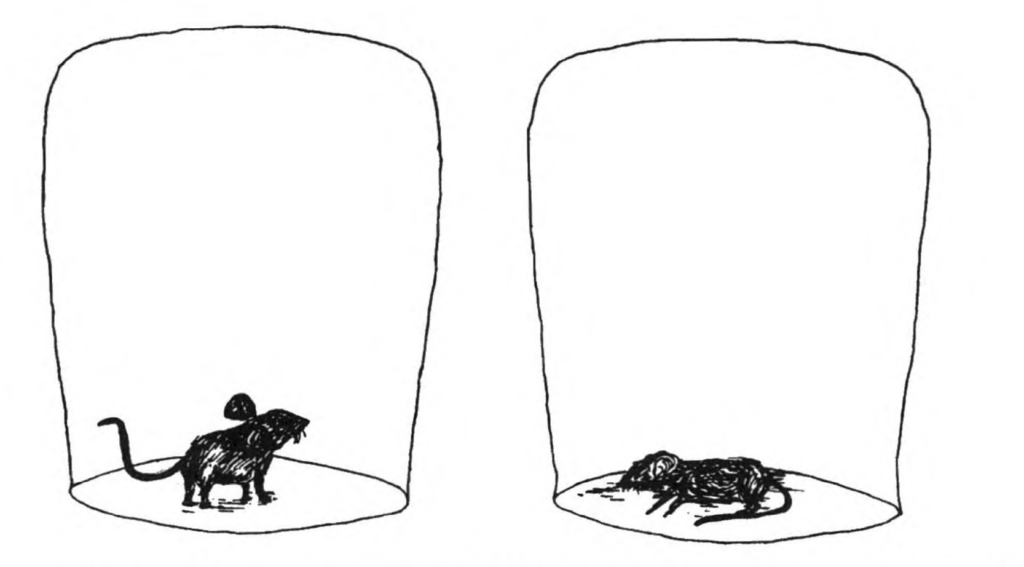
After a peppermint plant had renewed the air, a mouse could live in it until the air was again exhausted.

4. This strange miracle 

This seems so fundamental now that we wonder aloud how such complete simplicity could stand as a turning point in agricultural science. Certainly Priestley believed plant life was working this strange miracle, but he didn’t understand why. At the time he worked his candle/mouse experiments, he hadn’t isolated oxygen yet. As a matter of fact, Mendeleyeff’s periodic table of the elements wouldn’t be published for another hundred years. Because of this, perhaps, a final answer to the riddle being served up by Hales and Priestley had to wait well in excess of another hundred years for solution. 

In the meantime, there was Jan Ingenhousz of Holland, a pure scientist and a rare professional for any season in history. Working in a world that saw the ferment and chaos of an American revolutionary war, he first checked Priestley’s findings, then added to the existing body of knowledge. Yes, Priestley was right—as far as he went. Plants did purify air, albeit only in light. 

← Previous The Final Product of the Farm: Human Bodies with Minds Capable of Thought and Reason Next Why Go Beyond the Organic Label? →
Tags: Eco-Farm
Charles Walters

Charles Walters

Next Post
Why Go Beyond the Organic Label?

Why Go Beyond the Organic Label?

  • Trending
  • Comments
  • Latest
The Most Important Livestock in Our Fields

The Most Important Livestock in Our Fields

July 1, 2024
Glyphosate Does What It’s Designed to Do — Kill

Glyphosate Does What It’s Designed to Do — Kill

February 19, 2025
The Take-Half, Leave-Half Fallacy

The Take-Half, Leave-Half Fallacy

July 1, 2025
White snakeroot

Toxic Forages?

September 1, 2025
We Don’t Need Another Bridge — We Need an Off-Ramp

We Don’t Need Another Bridge — We Need an Off-Ramp

3
Under One Roof

Under One Roof

3
A Rose By Any Other Name

A Rose By Any Other Name

2
Terra Preta’s Biological Advantage

Terra Preta’s Biological Advantage

2
Don’t You Dare Disparage Sugar!

Don’t You Dare Disparage Sugar!

February 3, 2026
February 2026 • Issue #656

February 2026 • Issue #656

February 1, 2026
Fungal Exchange Capacity

Fungal Exchange Capacity

February 1, 2026
ECO-MEETINGS

ECO-MEETINGS

February 1, 2026

Recent News

Don’t You Dare Disparage Sugar!

Don’t You Dare Disparage Sugar!

February 3, 2026
February 2026 • Issue #656

February 2026 • Issue #656

February 1, 2026
Fungal Exchange Capacity

Fungal Exchange Capacity

February 1, 2026
ECO-MEETINGS

ECO-MEETINGS

February 1, 2026

About ACRES USA

Acres U.S.A.® Magazine

Acres U.S.A.® is North America’s oldest publisher on production-scale organic and regenerative farming. For more than 50 years, our mission has been to help farmers, ranchers and market gardeners grow food profitably and sustainably, with nature in mind.

Visit Our Advertisers

Magazine Issues

  • News
  • 2025
    • June 2025
    • May 2025
    • April 2025
    • March 2025
    • February 2025
    • January 2025
  • 2024 Articles
    • December 2024
    • November 2024
    • October 2024
    • September 2024
    • August 2024
    • July 2024
    • June 2024
    • May 2024
    • April 2024
    • March 2024
    • February 2024
    • January 2024
  • December 2023
    • December 2023
    • November 2023
    • October 2023
    • August 2023
    • July 2023
    • June 2023
    • May 2023
    • April 2023
    • March 2023
    • February 2023
    • January 2023
  • December 2022
    • November 2022
    • October 2022
    • September 2022
    • August 2022
    • July 2022
    • June 2022
    • May 2022
    • April 2022
    • March 2022

Contact Acres U.S.A

  • Contact Us
  • About Us
  • Advertise With Acres U.S.A.
  • My Subscription

Learn

  • Resources
  • Events
  • Magazine
  • Newsletters
  • Free Articles
  • Webinars
  • Online Courses
  • Bookstore

Our All Socials

Follow With Us...

  • My account
  • News
  • Ecological farming
  • Refund and Returns Policy
  • Privacy & Policy

© 2024 Acers USA Magazine

Welcome Back!

Login to your account below

Forgotten Password? Sign Up

Create New Account!

Fill the forms below to register

All fields are required. Log In

Retrieve your password

Please enter your username or email address to reset your password.

Log In
No Result
View All Result
  • HOME
  • ARTICLES
    • News
    • Farm
    • Ecological farming
    • Livestock
    • Crop
      • Crop management practices
      • Cover crops
      • Crop nutrition
      • Crop protection
      • Crops
      • Ag technology
    • Soil
    • Opinion
  • RESOURCES
    • Magazine
    • Online Learning
    • Newsletters
    • Blog
    • Free Articles
  • MAGAZINE ISSUES
    • 2025
      • June 2025
      • May 2025
      • April 2025
      • March 2025
      • February 2025
      • January 2025
    • 2024
      • December 2024
      • November 2024
      • October 2024
      • September 2024
      • August 2024
      • July 2024
      • June 2024
      • May 2024
      • April 2024
      • March 2024
      • February 2024
      • January 2024
    • 2023
      • December 2023
      • November 2023
      • October 2023
      • August 2023
      • July 2023
      • June 2023
      • May 2023
      • April 2023
      • March 2023
      • February 2023
      • January 2023
  • ABOUT US
    • Our History
    • Our Staff
    • Contact Us
    • Community
      • Soil Health Primer Resources
  • EVENTS
    • Eco-Ag Conference
    • On-Farm Viroqua Event
    • Farm Weird
  • SUBSCRIBE
  • Login
  • Sign Up
  • Cart

© 2024 Acers USA Magazine

Are you sure want to unlock this post?
Unlock left : 0
Are you sure want to cancel subscription?