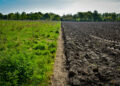


Soil fertility is never a product waiting to be rediscovered, but a whole system waiting to be understood
Many of us first encountered biochar more than twenty years ago, when it was already ascendant as a promising new tool in eco-oriented soil treatment. It was promoted as a rare “win–win”—a soil amendment that could improve fertility while locking away carbon for centuries. The appeal was obvious. Its supposed 3,000-year history added a large sense of rediscovered wisdom. Biochar seemed to offer both agronomic benefit and climate mitigation in a single input.
But from the beginning, something didn’t quite line up with what we were seeing on farms.
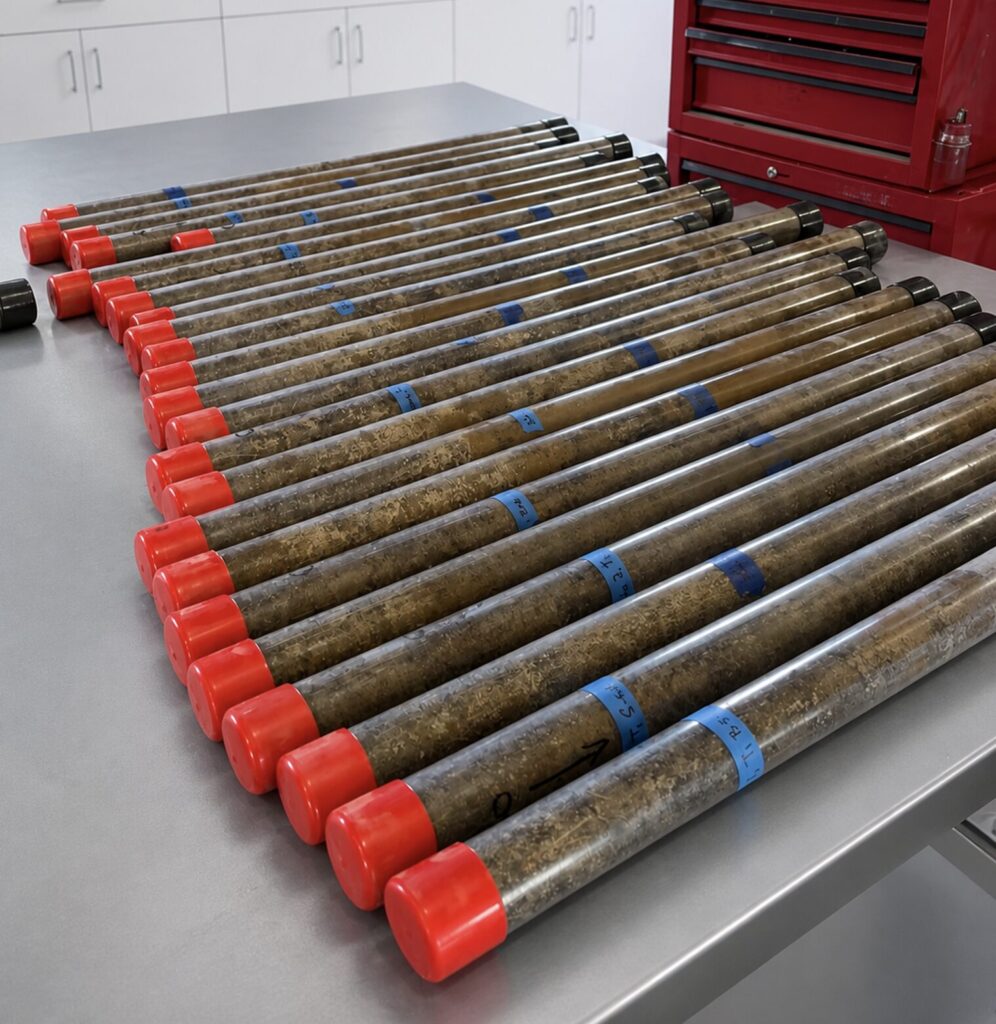
Before I ever regarded biochar as something unique, my soil lab on the farm had worked with activated charcoal, using it to remove discoloration in soil extracts that interfered with measuring phosphate and nitrate. But more interestingly, many reported it could reduce damage from residual herbicides, especially clopyralid, found in compost made from treated lawn clippings.
Long before biochar entered the scene, charcoal was already well understood to have unusual physical properties: extremely high surface area and a microporous structure. During pyrolysis, these structures develop aromatic carbon surfaces capable of attracting other aromatic compounds — such as herbicides — through π–π interactions. The result is immobilization.
This sorptive behavior also explains why activated charcoal has long been known to counteract poison ingestion in livestock and why, in the early 2000s, extension services such as Washington State University and the University of California recommended it to be added for mitigating herbicide carryover via contaminated compost in soils.
What is notable, in retrospect, is that all of this knowledge predates the biochar movement entirely. Carbon, in this context, was not understood as a fertility enhancer or a climate solution but as a sorbent — a way to contain a problem.
Biochar Arrives
When biochar emerged as a distinct product, it quickly inherited the reputation of charcoal’s known properties. Even the name marked a shift: the older, industrial-sounding “charcoal” or “chemchar” was recast as “biochar,” a term that suggested biological compatibility and ecological purpose. This helped propel its adoption.
But from a chemist’s perspective, the comparison was never straightforward. Unlike activated charcoal, which is highly processed to create a uniform and extremely high surface area material, biochar is variable. Its properties depend heavily on feedstock and pyrolysis conditions (temperature, residence time), and this makes its performance far less predictable.
This distinction matters. Activated carbon is engineered — treated with heat, steam, or chemicals to open pore structure and maximize adsorption capacity. Biochar, by contrast, is typically a simpler product, often promoted as a field-made input. The two materials are not equivalent, despite often being discussed as if they were.
That difference also underlies a growing debate. While biochar is broadly accepted in organic systems, more heavily processed activated charcoal is restricted. At the same time, proposals to pyrolyze manures into biochar — such as cow-manure-biochar (CMB), which is now promoted in some institutional settings including Cornell — raise questions about whether biologically active organic matter is being unnecessarily converted into an inert form.
At issue is not just performance, but whether something biologically valuable that we really need to remain in the realm of the living is being lost in the process.
A Narrow but Real Effect
One observation from our farm lab points to a narrower, but potentially real, function of biochar: the absorption of certain compost emissions.
While developing the Solvita compost maturity test which detects CO2 through a colorimetric gel, we occasionally encountered anomalous results. Some composts, particularly those high in nitrogen, produced a sharp, ozone-like odor and suppressed the expected CO2 response, yielding false negatives.
Gas analysis suggests that late-stage denitrification in these materials can generate reactive nitrogen gases, including nitrous oxide (N2O). On a hunch, we introduced a wood-derived biochar into the compost prior to testing. The interference disappeared almost immediately, and the Solvita response normalized. The simplest explanation is adsorption: the biochar was capturing reactive nitrogen gases before they could affect the test.
This points to a more modest but plausible role for biochar: as a sorbent for reactive gases in high-nitrogen systems. Similar approaches are now being explored in parts of Europe to reduce odor emissions from composting operations. Whether this translates into meaningful nitrogen retention in soils, and for how long, remains uncertain.
In this case, biochar is not being “inoculated” to enhance compost but rather used in the opposite way, to suppress or alter specific emissions. What it shows, empirically, is consistent with charcoal’s original function: not as a broad fertility enhancer, but as a material capable of containing specific chemical problems under specific conditions.
From the Past to the Present
After 2005, biochar was widely promoted as a major breakthrough and linked to the rediscovery of Amazonian dark earths (terra preta). It was presented as a rare “win–win”: a soil amendment that could improve fertility while storing carbon for centuries. That kind of claim gets attention.

At the time, I began looking at biochar the way a grower would: does it improve plant performance, and does it outperform existing practices such as compost use? Working with client farms, I saw considerable interest but little consistent evidence of benefit under real conditions.
To examine this more closely, we conducted a series of controlled soil mesocosm studies using lysimeter-type systems designed to preserve realistic features — layering depth, drainage, and plant growth. We focused on typical hay mixes to test legumes with grasses. Across multiple setups, a consistent pattern emerged: roots thinned out and tended to avoid biochar fragments. We also observed localized pH elevations around the char — creating small but distinct zones of inhibition.
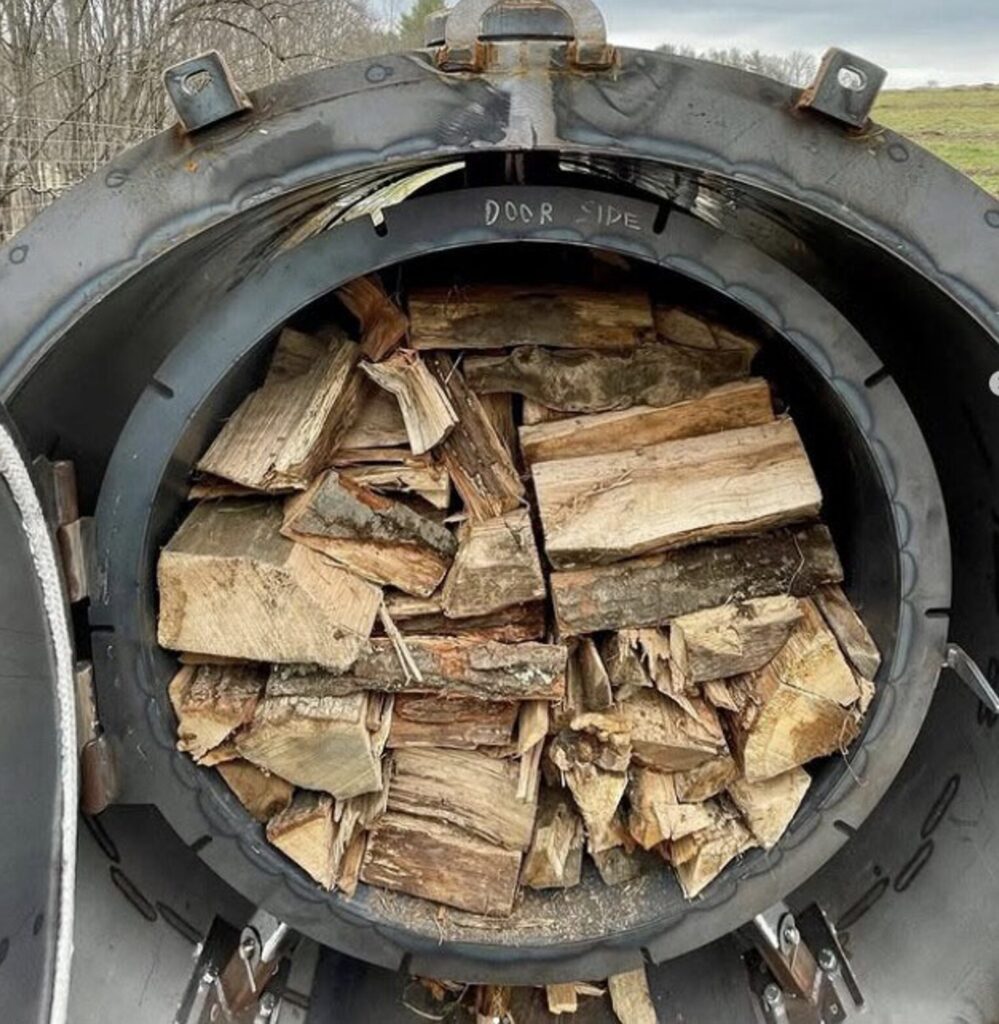
These early findings raised concerns, but they were still limited to controlled systems. More recently, through a four-year USDA-funded project with Arthurs Point Farm in New York, we revisited biochar under field conditions in a Northeast agroforestry system. The biochar was made on site in a professional bioreactor.
In a rigorous, replicated field trial (five treatments, four replicates, four years), we compared biochar alongside compost and inoculum amendments under normal farm management. The results were consistent with our earlier observations: biochar produced no clear or lasting improvements in soil nutrients, plant performance, or tree growth. Compost did. The full report is available at projects.sare.org/project-reports/lne22-452r.
At the same time, we undertook a structured review of the now extensive biochar literature. A pattern became difficult to ignore. Many studies reported positive effects, but often under constrained conditions — short durations, high application rates, or simplified systems. Neutral or negative results were less frequently emphasized, and long-term, field-scale outcomes remained inconsistent, if not lacking.
This raises a more fundamental question: if biochar is truly a reliable “win–win,” why has it proven so difficult to demonstrate consistent, economically meaningful benefits under working farm conditions?
One explanation lies in how results are interpreted. Much of the literature documents what biochar can do in isolation, such as adsorb compounds, alter pH, and influence microbial processes. But these factors do not necessarily translate into improved soil function in complex, already biologically active systems.
A second issue is the distinction between carbon stability and carbon function. Biochar is persistent, but relatively inert. Because of its condensed, energy-stable structure, biochar carbon is largely resistant to microbial breakdown. Compost can be, is transient, and is biologically active. In our work, and in many field settings, it is this biological activity and not carbon persistence that drives measurable improvements in soil and crop performance.
Finally, there is a problem of scale and inference. Processes such as gas adsorption or microscale microbial interactions may be observable under controlled conditions, but they do not automatically translate into meaningful agronomic benefit at the field scale. For example, electron micrographs are often presented showing microbes associated with biochar surfaces. While visually compelling, such images alone do not demonstrate actual colonization or improved soil processes. In many cases like this, we found the interpretation appears to outpace the evidence.
Taken together, these observations suggest that the original framing of biochar as a broadly applicable soil amendment and climate solution was greatly oversimplified.
Revisiting the Past
It’s worth revisiting how the biochar story took shape. In a 1999 analysis of Amazonian dark earths, geographers William Woods and Joseph McCann described something far more complex than the simplified charcoal narrative often cited today.
These soils did not arise from charcoal alone. They were the result of long-term management: repeated additions of ash, organic residues (food waste, manures, mulch), and the steady stimulation of biological activity. Charcoal was present — but as one component within a broader, self-reinforcing system, not as the primary driver of fertility.
Recent work has pushed this further. Lucas Silva and colleagues out of Oregon State University have upended the biochar theory by arguing with considerable new data that the fertility of these soils may predate human management, shaped by significant geologic and fluvial processes, with later human inputs built upon an already enriched soil substratum. If so, the modern effort to recreate Terra Preta through biochar additions alone is not just inconsistent — it may be based on a flawed premise.
In all the effects noted, a key factor appears to have been ash. In highly weathered, acidic tropical soils, ash raises pH and supplies base cations such as potassium, creating conditions that support microbial processes and the gradual formation of stable organic-mineral complexes. In this context, fertility was built over time through interaction — not delivered as a single input.
Read this way, the original insight points less to a product to be added than to a system to be managed: pH care, nutrient augmentation, microbial inoculation, etc. The modern emphasis on biochar as the standalone solution is, at best, an incomplete interpretation — and, at worst, a misleading one.
This concern is not new. In 2014, Rattan Lal and colleagues at Ohio State University already warned that the impacts of biochar are “often inconclusive and contradictory,” despite its widespread promotion as a tool for improving soil quality, increasing yields, and sequestering carbon.
Our own findings, and those of many growers, suggest the same conclusion. Where results do occur, they are context-dependent and inconsistent. Where improvements are needed, they are more reliably achieved through practices that build living soil systems — not through the addition of carbonized materials alone.
If there is a lesson in the long arc from terra preta to modern biochar, it is this: soil fertility was never a product waiting to be rediscovered, but a whole system waiting to be understood. Until we let go of that misunderstanding, we risk chasing inputs while overlooking the many real processes that make soils work.