

When to use cover crops
What is a cover crop? It’s something that covers the ground, something that we don’t harvest, and something that’s planted primarily to improve the soil.
Cover crops help farmers follow the guidelines to soil health: having living roots in the soil, building plant diversity, keeping the soil surface covered, feeding the soil life, and increasing both efficient nutrient use and soil fertility.
Fertility is best defined as the exchange of nutrients, and there is no better way to do this than to have them in the carbon-biological cycle. Nutrients held in plants can’t leach or erode, and they are time-released based on the speed of digestion. Farmers can control this process by managing the termination of the cover crop: young, green, succulent crops digest faster than more mature plants, releasing their trapped nutrients. Some more mature plants provide fungal foods, while some young plants provide bacterial foods. Balance seems like a good idea in this regard.
This has led to some recent research and thinking that liquid carbon plays a huge role in increasing soil organic matter. Up to half of the exudates plants create through photosynthesis are released through their roots, putting carbon back into the soil, where it feeds the soil life. These exudates are sugars, amino acids, nucleotides, flavones, phenolics, fats, oils, etc. — hundreds of compounds in thousands of combinations. They are soluble nutrients that mostly feed bacteria, which become food for fungal populations plus other soil life. A healthy, functioning soil will convert these to long-term stable carbons and humus, greatly improving soil resilience and structure, plus water holding and nutrient holding capacity. That’s how you build soils.
Continuous Cover
Cover crops are something you do anytime and all the time. In the upper Midwest, where we farm, our choices are limited. By the time our corn is harvested, the only option left to us is rye. We have planted rye as late as Christmas, and it’s always there in the spring. We then frost-seed a clover blend — some plants with shallow roots, some with a deeper root profile, but all nitrogen-building plants.
Our farming system is one year rye/clover soil building and one year corn. We farm organically, and we can keep our inputs low because we have been fixing and mineralizing our soils for years. Our system allows us to sell the corn to a local poultry farmer and get the manure back to make compost with added sulfur and boron. We only sell grain off the farm, and we get good crops with minimum tillage.
One real advantage of cover crops is that they fill the soils with roots: some old, rotting roots and some young, growing ones. This, along with feeding soil life, makes channels in the soil, which act as breathing tubes and pathways for future plant roots to follow. They also make good food for earthworms, which also really build soils.
Tillage is so critical. I’m a real believer in shallow incorporation of my residues and cover crops. The no-till farmers/researchers taught us we can’t keep on going with aggressive tillage and expect soil improvement. But we also can’t have a crust on the soil. It’s the middle zone that needs to be left alone.
Remember that the farmer’s tillage job is to control the decay of plant residues and to control air and water. So, you may need to run a ripper to both improve compacted soils and to get water to soak in, until soils are fixed and you have opened them up. Though no-till has been successful for some, it’s risky, it’s dependent on chemicals, and with our crazy, extreme weather patterns and large rain events, it may need some intervention, including cover crops.
Do residues of cover crops, killed and lying on the soil’s surface, feed soil life? For our row crop farmers here in the Midwest, strip tillage not only fits more farms — it’s also less risky. One of the main benefits is that it’s like putting a flowerpot under the plant. It also works great to concentrate nutrient use — farmers aren’t forced to bulk-spread amendments on top of hard, compacted soils.
Selecting Covers Purposefully
So, for cover crops, consider what fits your farm, soils, and land use. Ideally, the ground would be covered with a diversity of plants.
Why is diversity important? Different plants have different root systems, different mineral uptakes, different compounds in the exudates, and feed different soil life. Diversity is a big part of healthy soils, and no one population should be in control. That’s why corn/beans does not provide enough diversity and why plant diseases and insect populations persist. Yes, a corn/bean rotation is an improvement over just corn or just beans, but it still requires the use of chemicals and biotechnology.
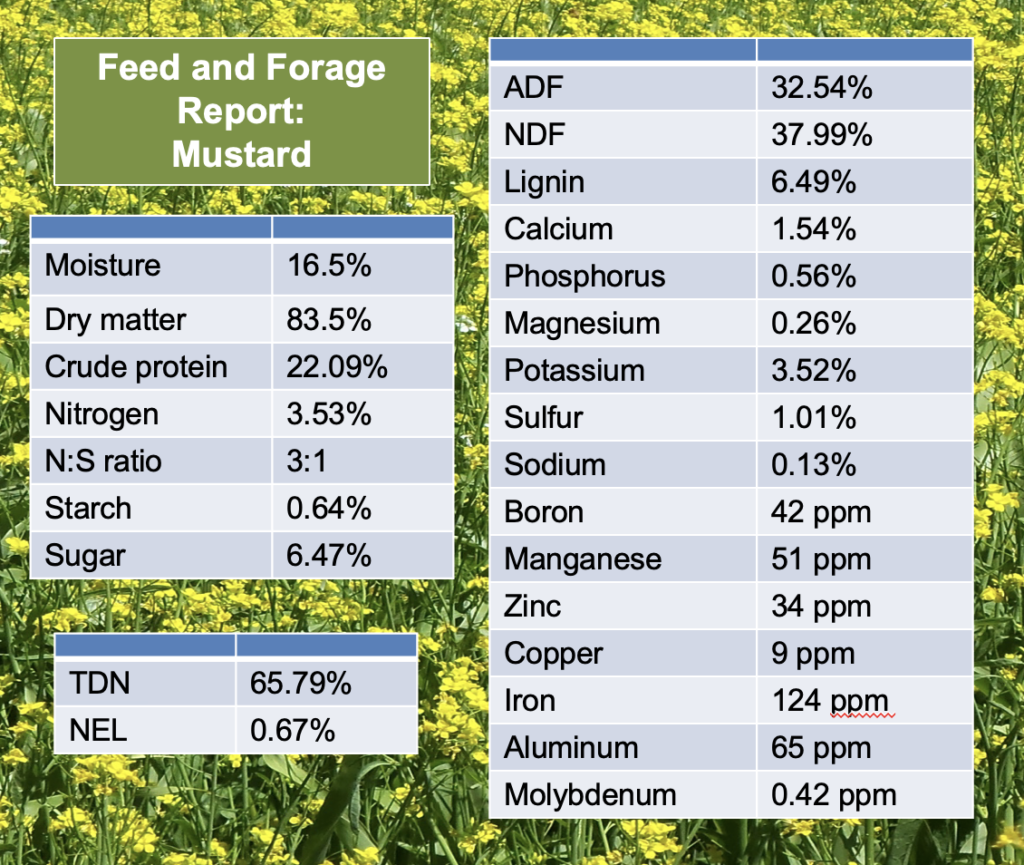
For example, plants like oats and buckwheat have acidic roots and can pull minerals such as phosphorus and magnesium from soils that other plants can’t. Others, like mustards, are bio-fumigants. Some plants build relationships with nitrogen-producing organisms, some with mycorrhizae that bring in nutrients, especially phosphorus. Then there are the large, deep-rooting plants like daikon radish, also known as tillage radish. Crops like sorghum sudangrass are good smother crops and can reduce things like thistles, while they also are very drought tolerant and produce lots of dry matter.

So, farmers have many choices for cover crops, with the chance to select one for a specific purpose, but the cover crop has to fit their area and their system of farming.
Here in the Midwest, after corn or bean harvest, choices are limited. You can try interseeding in the corn — flying it on before harvest — but that’s not always successful, often depending on rainfall. But rye after corn or beans is a good idea, even if it only grows six inches tall. Choosing cash crop varieties that dry down faster and can be harvested earlier allows you to plant in October, giving you more options and more extensive cover crop growth.
Ideally, we would have a third crop in the rotation, as corn/beans doesn’t produce enough biomass to really build soils. Winter wheat following beans and frost-seeding clover in the spring is a good idea. Farmers say that they don’t make enough money on wheat, but when they do grow it, they can really fix soils and improve their for-profit crops, plus they reduce the use (and cost) of chemicals and fertilizers, enhancing profits.
With winter wheat, you also have the option of doing a cocktail cover crop mix the first part of August, solving a lot of problems. Include some species that winter kill, with some living roots overwintering. Then you can terminate them in spring and plant your next crops.
Taking Advantage of Covers
Most farmers don’t know how to take advantage of the cover crop system. When do you cut chemicals, reduce nitrogen use, and/or drop plant-altering genetics? These should be the goals, but many farmers keep doing what they had been doing, and the cover crop becomes just an added expense for them. Some patience is needed — it will take time for the benefits of cover crops to show — and you have to earn the right to make those changes.
Farmers need to learn about cover crops and their many benefits, and even be enticed with rewards — which are now offered in many areas for growing cover crops for at least three years. By that point, the government believes, the farmer should be convinced of the value of cover crops and will continue the practice without payment.
A lot of the land we farm today will certainly not have livestock put back on it, even though that’s the regenerative method. We could graze cover crop fields late in the fall, but in wet years, livestock would do damage, undoing the benefits the cover crop had provided. I don’t believe that cattle are necessary to regenerate land, but taking care of your soil livestock is a must. Create an ideal home for the billions of creatures found in healthy soils, feed them, manage the air and water, understand the benefits they provide, and learn how to take advantage of your new farming system.
Yes, this will require more knowledge and will have a learning curve. To achieve maximum benefits and ideal results will take time — I’d say three to five years, depending on what you’re doing now and your current soil conditions. If the ground is hard and dead, it may take longer. But with those kinds of soils and without regenerative methods, you had better apply enough chemicals and fertilizers, get rain on a regular basis as needed, pay no attention to erosion, and have good insurance.
| Cover Crop Benefits Nitrogen buildingNutrient storingNutrient time release (dependent on digestibility)Erosion protection (building soil structure)Carbon sequestering (building organic matter)Insect controlDisease preventionBuilding soil resilienceIncreasing water holding capacityWeed control |
Higher-quality, mineral-balanced fertilizers will be needed if you want to reduce the money you spend on things that don’t improve your soils, like insecticides, fungicides, nitrogen and biotech. At a minimum, you need to apply calcium, sulfur and boron, which are needed in most places.
Farming is a system, and after all these years working with and following farmers, I now believe we understand what is needed to have healthy, high-producing, fertile soils. You need to work with a balance of nutrients, get them exchangeable, and have them in the carbon-biological cycle. That means cover crops, compost and carbon-based fertilizers.
As I’ve already mentioned, we also know what it takes to manage the soil life: the right foods and a good home. They do like a “blanket” over their heads, with a well-aerated, loose soil, roots in the soil providing exudates, and plants providing carbon/organic matter — and that means cover crops.
Then there is the physical structure: a loose, crumbly, chocolate-cake-type structure with adequate air and water. This may require some intervention with tools; shallow incorporation of the cover crop does feed the soil life and build healthy soils. Cover crop materials and residues lying on top of the soil is like putting the feed for your livestock on the other side of the fence. (Though yes, you do need some on top of the ground to protect the soil.)
Everything needed to have healthy soils regenerated involves plants — a lot of them — all the time. And that’s a cover crop.
Gary Zimmer is the co-owner of Otter Creek Organic Farm in southcentral Wisconsin and the founder of Midwestern BioAg. He is the author, with his daughter, Leilani, of The Biological Farmer and Advancing Biological Farming.
Come hear Gary speak at the 2024 Acres U.S.A. Eco-Ag Conference, December 2-5 in Madison, Wisconsin.