
Third Leaf Farm in Michigan is showing that organic apple production is achievable — even in a humid environment
The Michigan state flower is the apple blossom, and there’s a reason for that — Michigan loves its apples. Come fall, when the leaves start to turn and the days get crisp and chilly, families from all over the state head out to the nearest apple orchard to get their annual fill of apples, cider and doughnuts.

Commercial apple production is big in Michigan, too. The state is the third-largest apple producer in the U.S. in both the number of farms and yield. Michigan’s 1,400 apple farms produced 1.1 billion pounds of apples in 2025 — 10 per cent of total national production.
But whether people are picking their own apples at the local orchard or buying them in a plastic bag at Meijer, most Michigan apples aren’t organic. In 2021, there were only 24 certified organic apple farms in the state of Michigan, producing 10.6 million pounds of organic apples. That’s less than 1 per cent of Michigan’s apple production. In contrast, organic apples were 14 per cent of total production in Washington, the leading apple-producing state.
Why is Michigan so far behind in organic apple production? There’s a simple reason: Michigan apple growers and researchers alike have said for years that it’s impossible to grow organic apples in Michigan. The climate’s too humid, they say. Codling moth and apple scab are too much of a problem. You can’t grow nice-looking apples without pesticides. Don’t even try.
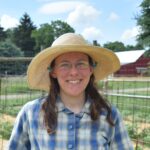
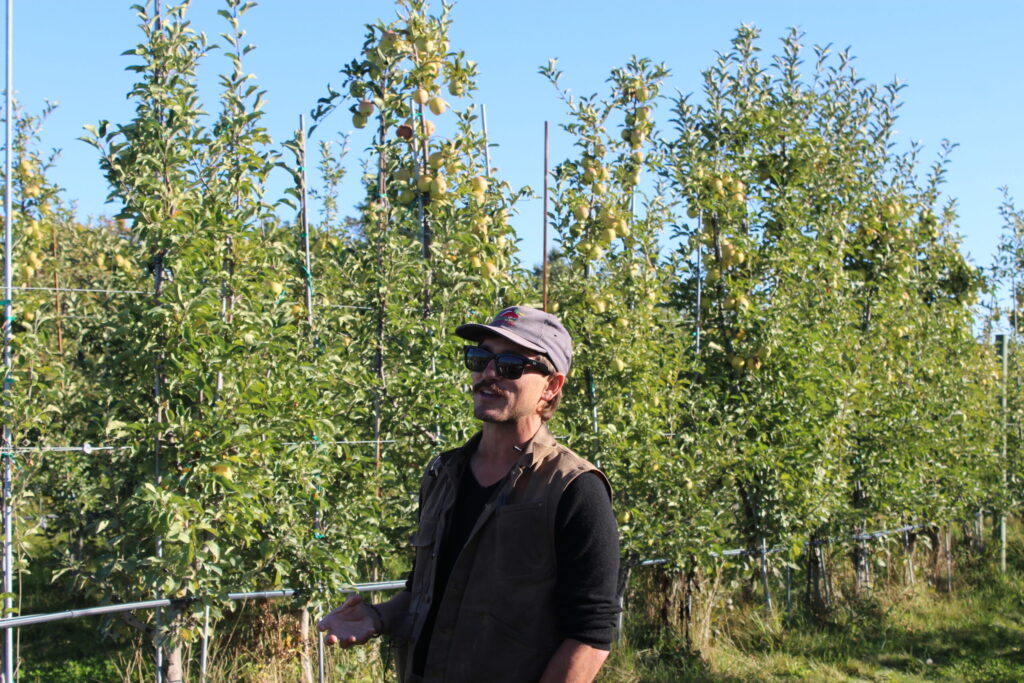
That’s what everybody told Kyle Rasch. But instead of ruling out organic as an option, he took it as a challenge. Impossible, they say? Not for Kyle. At Third Leaf Farm in Greenville, just northeast of Grand Rapids, he’s devoted his life to proving that it is, indeed, possible to grow beautiful organic apples in Michigan.
Rising to the Challenge
Apples are in Kyle Rasch’s blood. He and his brothers, Eric and Devin, are third-generation growers. Kyle always planned to take over the family farm, but he wanted to see the world first. After graduating from college, he spent ten years working worldwide on organic farms (WWOOF) to see how people in other countries — including Australia, Italy, New Zealand, India, Nepal and Peru — accomplished that supposedly impossible feat of growing apples organically. When he came home, he started transitioning his family’s apple farm to organic.
That was ten years ago. Today, Third Leaf Farm is certified organic by both USDA and the Rodale Institute’s Regenerative Organic program. Kyle opted for Regenerative Organic’s add-on certification to differentiate his apples from the industrial organic apple business in Washington. Plus, he really likes Regenerative Organic’s emphasis on soil health. “We want to focus on superior nutrition,” Kyle says. “We are really trying to work with nature every step of the way.”
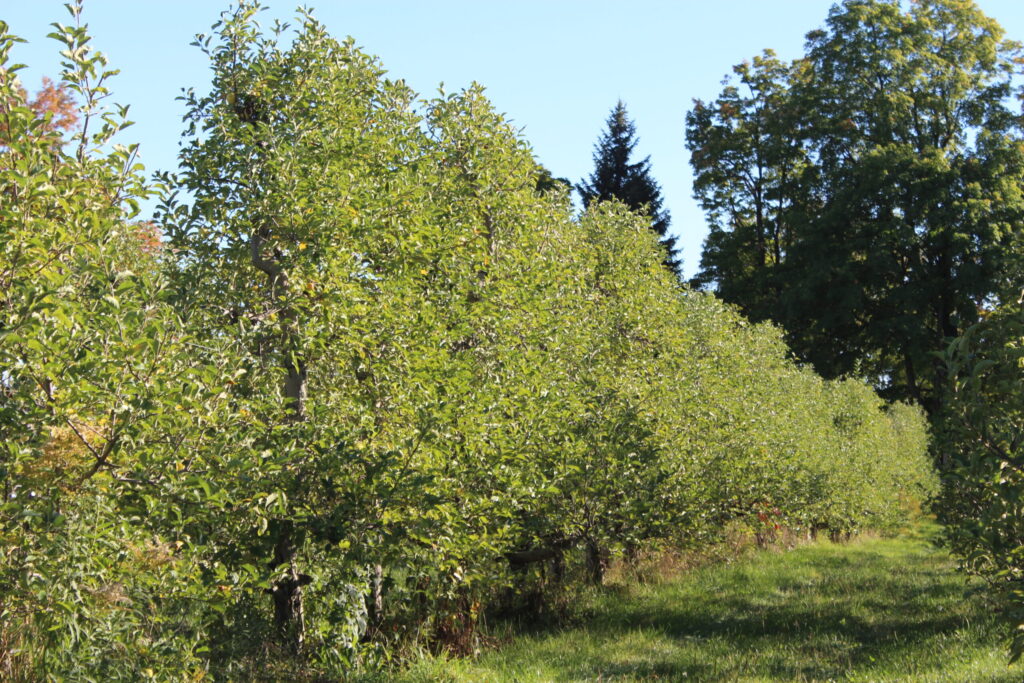
The key to successful organic apple production is health, and health starts with the soil. Before Kyle plants an orchard, he spends ten years preparing the soil with cover crops. In his established orchards, organic nutrient management is the keystone of his production system. The goal is to keep the apple trees so healthy that they are able to naturally resist pests and diseases while producing superior fruit.
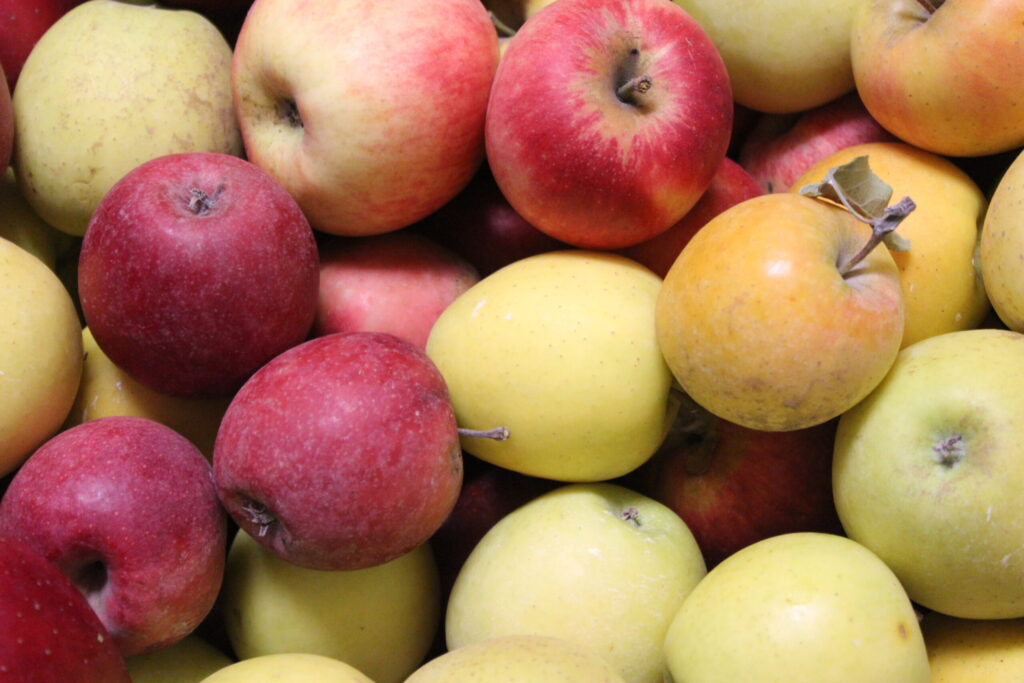
Variety selection is important, too. Some apple cultivars, like McIntosh or Gala, are very susceptible to apple scab and are difficult to grow organically. Others, like Goldrush, Crimson Topaz, Liberty and Enterprise, are bred for scab resistance and are better suited for organic production.
But there are tradeoffs — some of the cultivars bred primarily for scab resistance lack flavor. And consumers aren’t familiar with them, having never seen a Liberty apple bagged up at the grocery store. So cultivar selection becomes a balancing act between what works with organic production, what tastes good and what people have heard of and want to buy.
In general, apples with firmer, denser flesh — like Goldrush and Fuji — are more resistant to disease than softer apples, so Kyle tends toward those varieties. Cultivars like Golden Delicious or Honeycrisp are only partially scab-tolerant, but he can usually get a good harvest from them. And then there are fun varieties like Kissabel, whose firm flesh has a rosy-red tinge and an aromatic flavor.
If a particular cultivar isn’t working well, Kyle will prune the trees back and graft on scions from a different, better cultivar. This is a far faster way to establish a block of a new variety than ripping out the trees completely and starting new trees from scratch. The newly grafted trees are ready for production in just a few years.
Kyle sells most of his apples wholesale for processing, usually into organic applesauce. He also offers U-pick in the fall, and visitors from the greater Grand Rapids area can pick their own organic apples or buy pre-picked apples, pumpkins, squash and honey from E’s Bee Sanctuary, which is run by Kyle’s brother, Eric.
Organic apple production pairs great with beekeeping. Unlike most commercial beekeepers, Eric keeps his bees in Michigan all year round, both at the orchard and in several outyards. He’s working on breeding bees that are resistant to the Varroa mite, a parasite that is one of the factors in ongoing heavy winter colony losses across the beekeeping industry.
Of course, most of the neighboring orchards are not organic, and they routinely spray pesticides that are hazardous to honeybees. Eric’s developed good relationships with his neighbors, and they try to spray at night when his bees aren’t out on the flowers. “Being mindful of your local beekeeper is really important,” he tells growers.
Health Starts with the Soil
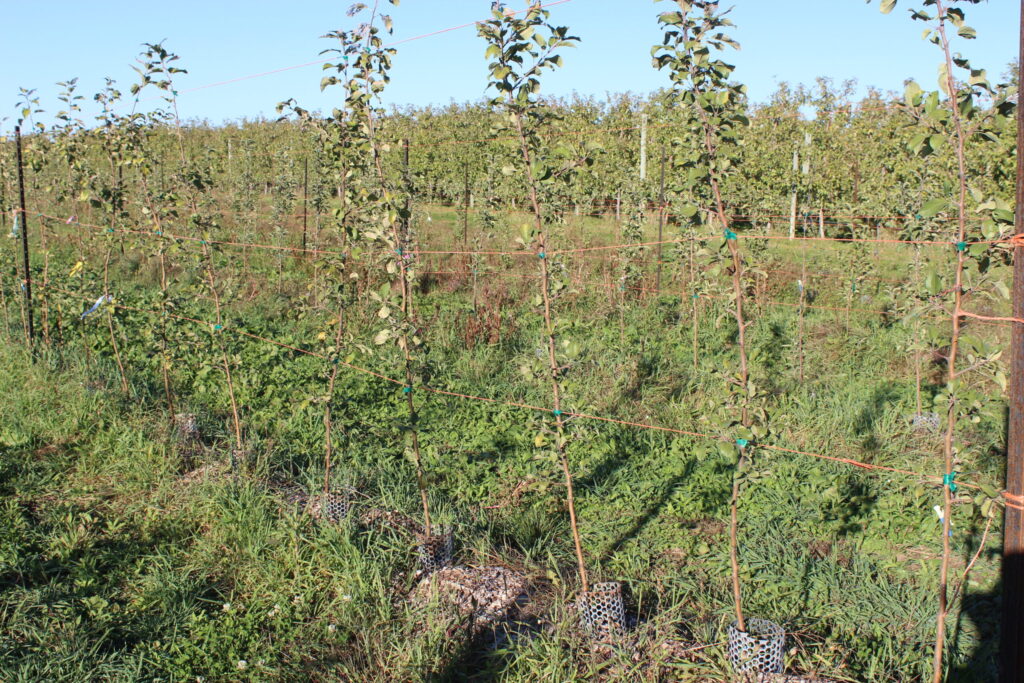
How does Kyle manage the “impossible” feat of growing organic apples in Michigan? As he emphasizes, it’s all about health — and health starts with nutrition. Instead of simply viewing diseases like apple scab as the enemy, Kyle asks, “Why is there apple scab on this variety?” Is the plant stressed? Is it deficient in a particular nutrient?
“Nutrients are the backbone of our program,” Kyle emphasizes. In addition to doing soil tests, he relies heavily on sap tests, which tell him how mobile nutrients are in the plant. This involves taking one young and one old leaf from the same tree, packing them carefully in plastic bags, and sending them to a lab in the Netherlands for analysis. If nutrients are deficient in the middle of the season, Kyle will use foliar sprays, like fish emulsion, to get nutrients directly into the leaves and bark.
Another major difference between organic and conventional apple production is that conventional growers typically spray herbicides at the base of the trees for weed control. In organic production, the emphasis is on maintaining a biodiverse understory. In the spring and summer, “this orchard ends up turning into a massive wildflower field,” Kyle explains. He doesn’t plant anything except a basic orchard mix of bluegrass and clover, but other plants grow naturally to diversify the planting.
To keep the understory plants from overwhelming the trees, Kyle mows between the rows several times a year. The farm has a mower that swings between the trees, and where that can’t reach, there’s always the weed eater. “There are a lot of benefits to soil health — benefits to the ecology under the tree,” he says.
The main downside to keeping a living understory in the tree rows is when it’s time to plant new trees. The first year or two is the hardest. Ample applications of wood chip mulch help keep weeds back from the tiny trees, and metal vole guards help prevent rodent damage. But it’s still touch-and-go at first, which is why Kyle prefers to graft new scions onto already established trees whenever possible.
Eliminating herbicides requires slight modifications in rootstock selection, too. Kyle’s newer plantings are in a high-density trellis system, which typically uses a Bud 9 dwarfing rootstock. But because the roots have to compete more with other plants for nutrients and water, Kyle’s found that the next size up — Bud 10 — is necessary to get the same size of trees as would grow on herbicide-sprayed Bud 9.
Like most commercial apple growers, Kyle’s newer plantings use a high-density trellis system. This has both pros and cons in organic production. Since treated lumber is not allowed in organic production, Kyle has to substitute rot-resistant woods like cypress or cedar, or else use metal or concrete posts, all of which are more expensive. But the single-leader, simple-spindle pruning system helps maximize light interception, which reduces insect and disease pressure.
Challenges of the Perfect Apple
If he could, Kyle wouldn’t spray anything except foliar nutrients. An ideal organic production system would keep the trees so healthy that they could fight off all diseases and pests without assistance. But in real-life conditions, especially in Michigan, there will always still be at least a small amount of disease and pest pressure.
“If we weren’t trying to make an apple that looks perfect, this would be a lot easier,” Kyle explains. Unfortunately, market demand for perfection is so high that even one codling moth hole or spot of apple scab will make an otherwise perfect apple unsaleable. “We are trying to get to where every apple is unblemished, and that’s a stretch for organic in Michigan.”
Rather than trying to kill pests and diseases, organic management focuses on resistance and deterrence. Products like LifeGard, a Bacillus mycoides extract, trigger disease resistance in trees so “they can help defend themselves.” Kyle also uses a lot of microbial sprays, which “cover the trees with microbes to compete with disease microbes that we are trying to not have in the orchard.”
The main deterrent Kyle uses is Surround, a kaolin clay slurry that coats the developing apples with a white film that physically protects them from pests. “It’s a nightmare to work with, but it does work a lot,” Kyle says. Other deterrents include cinnamon and garlic extracts.
Kyle sometimes uses sulfur products to prevent apple scab but tries to minimize the use of copper because it accumulates in the soil. He uses organic bioinsecticides like DiPel (Bacillus thuringiensis) and Entrust (spinosad) sparingly and only at night, because they are toxic to Eric’s honeybees and other pollinators.
Another useful deterrent for codling moth is pheromone disruption. Pheromone dispensers, hung near the tops of the trees, fill the air with so much female codling moth pheromone that the males get disoriented and exhaust themselves trying to find a female to mate with. Because the pheromone is specific to codling moth, it doesn’t impact any other species of insect.
Yes, it’s more work to manage for pests and diseases organically, and at times even Kyle gets frustrated — like this year, when almost half of his apples were unsalable because of one small blemish on otherwise good fruit. “Some years organic is like, why am I doing this?” he admits. But he perseveres, because he has tasted success — and it’s as sweet as a fresh-picked apple.
And it’s catching on. Coming out of the conventional apple industry himself, Kyle maintains good relationships with his neighbors. “I don’t see anyone as the enemy,” he says. “We are all working together to find more regenerative practices to grow something that makes more sense ecologically long term. No one wants to be out there spraying.”
Every year is a learning experience, and Kyle doesn’t consider himself to be all the way there yet. “I want to find more ways to partner with nature and create the most resilient communities here in the soil,” he says. Through that perseverance, he’s overcoming more challenges each year. And the delicious apples he grows at Third Leaf Farm are indisputable proof that it is, indeed, possible to grow organic apples in Michigan.