
• Home
  • Events

    Upcoming Events

    • Menoken Farm Field Day
    • Eco-Ag Conference
    • View all events →

    Recent Webinars

    • Kyle Richardville
    • David Montgomery
    • Gary Zimmer
    • Taylor Henry
    • Fernando Falomir
    • Megan Neubauer
    • David Knaus
    • View more webinar replays →
  • Bookstore

    Books by Category

    • Soil Health
    • Livestock & Animals
    • Gardening & Homesteading
    • Farm Business
    • Health & Food

    Books by Collection

    • New Releases
    • The Albrecht Volumes
    • Acres U.S.A. Published
    • Eco-Ag Speakers
    • Soil Health Educators

    Books by Level

    • Beginner
    • Intermediate
    • Advanced
    • Kids

    Featured

    • Explore Jon Stika's New Book →
  • Resources

    Continue Learning

    • White Papers
    • Online Courses

    Where to Find Us

    • Acres U.S.A. Podcast
    • YouTube Channel
    Facebook Instagram X-twitter Linkedin
    • Join our Newsletter →
  • Articles

    Articles by Topic

    • News
    • Ecological Farming
    • Livestock
    • Soil Health
    • Opinion

    Articles on Crops

    • Cover Crops
    • Crop Nutrition
    • Disease & Pests
    • Fruits & Nuts
    • Ag Technology

    Magazine Issues

    2026
    • January
    • February
    • March
    • April
    • May
    • June
    • July
    • August
    2025
    • January
    • February
    • March
    • April
    • May
    • June
    • July
    • August
    • September
    • October
    • November
    • December
    2024
    • January
    • February
    • March
    • April
    • May
    • June
    • July
    • August
    • September
    • October
    • November
    • December
    • Explore the archives →
    • Subscribe to the magazine →
  • About

    About Us

    • About Acres U.S.A.
    • Meet Our Team
    • Our History
    • Eco-Ag Achievement Award

    Contact Us

    • 970-392-4464
    • support@acresusa.com

    Acres U.S.A. LLC
    PO Box 351
    Viroqua, WI 54665

    • A New Era of Eco-Ag →
Subscribe
HOME
Events
  • Upcoming Events
  • Menoken Farm Field Day
  • Eco-Ag Conference
View all events
  • Webinars
  • Kyle Richardville
  • David Montgomery
  • Gary Zimmer
  • Taylor Henry
  • Fernando Falomir
  • Megan Neubauer
  • David Knaus
Bookstore
  • Books by Category
  • Soil Health
  • Livestock & Animals
  • Gardening & Homesteading
  • Farm Business
  • Health & Food
  • Books by Collection
  • New Releases
  • The Albrecht Volumes
  • Acres U.S.A. Published
  • Eco-Ag Speakers
  • Soil Health Educators
  • Books by Level
  • Beginner
  • Intermediate
  • Advanced
  • Kids
Resources
  • Continue Learning
  • White Papers
  • Online Courses
  • Where to Find Us
  • Acres U.S.A. Podcast
  • YouTube Channel
Facebook Instagram X-twitter Linkedin
Join our Newsletter
Articles
  • Articles by Topic
  • News
  • Ecological Farming
  • Livestock
  • Soil Health
  • Opinion
  • Articles on Crops
  • Cover Crops
  • Crop Nutrition
  • Disease & Pests
  • Fruits & Nuts
  • Ag Technology
  • Magazine Issues
2026
  • January
  • February
  • March
  • April
  • May
  • June
  • July
  • August
2025
  • January
  • February
  • March
  • April
  • May
  • June
  • July
  • August
  • September
  • October
  • November
  • December
2024
  • January
  • February
  • March
  • April
  • May
  • June
  • July
  • August
  • September
  • October
  • November
  • December
Explore the archives
Subscribe to the magazine
About
  • About Acres U.S.A.
  • Meet Our Team
  • Our History
  • Eco-Ag Achievement Award
SUBSCRIBE

Less Fertilizer, More Thought

Jeffrey Kleypas by Jeffrey Kleypas
March 1, 2026
0
Home Ecological farming
3
SHARES
970
VIEWS
Share on FacebookShare on Twitter

Strategic reductions in phosphorus, potassium and nitrogen work best when driven by soil biology and sound agronomy

Jeffrey Kleypas

As I scroll through ag social media, I find a world is buzzing with strident thoughts: “liquid fertilizer is better than dry,” “anhydrous nitrogen is bad,” “the timing of the application is wrong,” and countless other critiques about how nutrients should be managed. Everyone seems to have a strong opinion, often tied to a product, a practice, or a trend. 

At the end of the day, however, your farm has to make money, and nutrient management decisions have to be grounded in return on investment, not noise. From rethinking long-held assumptions about phosphorus and potassium, to being cautious with nitrogen reductions, to understanding the critical role of soil biology and carbon, managing macronutrients has become less about chasing silver bullets and more about building systems that consistently support yield and profitability.

Rethinking Phosphorus and Potassium

What was once a taboo idea — reducing or even eliminating phosphorus and potassium inputs — has now gained momentum in mainstream agriculture. The management of these two nutrients can have a very significant impact on bottom lines as fertilizer prices creep northward. Nearly all of my clients have the ability to eliminate these two inputs. Some consideration has to be made for soil type, the crop being raised, and the end goal on the farm, but on acres where Total Nutrient Digestion tests show adequate levels of phosphorus and potassium, reductions from 50 to 100 percent are very feasible.

However, what ultimately allows for this reduction is a fully functional soil biology system. This is where the water gets muddy in a hurry — with all of the different microbial stimulants and biological products on the market. Making these nutrients accessible goes well beyond an individual product. 

If you spend your money on a miracle drug, don’t be surprised when it’s not the cure and you see no response. Yes, some products may produce a positive change, but experience says that if you want a consistent response, you have to build a full program that supports biology. 

I get very excited when growers see no difference in yield when they eliminate bulk fertilizer applications by focusing on a biological system. In today’s world, this may mean an extra $100 to the bottom line.

Nitrogen: A Different Standard

If I were to caution against reducing any nutrient, though, it would be nitrogen. This is a nutrient that, as a farm manager, you have to earn the right to reduce. I have experienced a handful of growers reducing nitrogen beyond 20 percent and having a yield reduction. 

We can argue over nitrogen efficiency programs and their effectiveness, and you will find that many growers have mixed results. Many of these mixed results come from the timing of the application. As I continue to put years behind me, I am coming to the conclusion that the time for a nitrogen efficiency program may only be when nitrogen is applied at high levels well ahead of the planter. This is an area I look to learn more about through on-farm trials.
The Role of Carbon

One piece that cannot be ignored is carbon. I used to not pay much attention to carbon, but more and more growers are coming back to me with higher yields where they had an abundance of carbon. I can count on one hand how many times in college we talked about carbon as being an essential input. Understanding how crops burn through this element is critical. The rise in inputs such as chicken litter, humic acid, and biochar is directly related to carbon. If you can’t grow it, you have to apply it.

When looking to achieve nutrient reduction, the process and product selection can become a never-ending maze. From a long-term perspective, simply adding the right cover crop mix to your farm can do a lot of the heavy lifting and is something I recommend even to growers looking for a short-term fix. Having those living roots working with the microbial community is definitely a big part of the equation.

However, if your operation does not use cover crops, or you simply want a quicker response, there are some answers. A fall biological soil primer has been proven to supply many of the benefits of cover crops without worrying about managing living plants. It allows growers to eliminate phosphorus and potassium fertilizers in many cases. 

There are many biological products on the market these days. Some even go so far as to promise specific levels of nutrient replacement or your money back. But living systems in the soil do not work on marketing promises. Experience has taught me that even the best microbial products are not successful in every single instance. This is where it is critical for growers investing money in these products to work with trusted advisors that understand the systems and how to fix them, even if a product seems to fail.

The biggest takeaway here is to not think of these products as the first thing you can eliminate from your budget. These products are parts of a bigger program, a shift in management that often results in lower input costs that maintain yield and/or increase profits.

The Total Picture

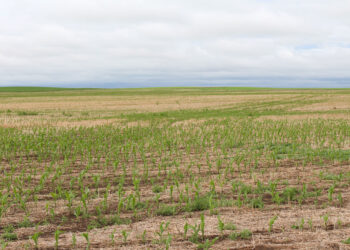
What we do at planting dictates so much of the success of the season. Upfront biology and plant support are vital to success. I’ve seen time and time again where a biological fertility system that minimizes stress and moves nutrients into the plant during times of stress is literally the difference between producing a harvest and having to bring out the shredder.

Everything I ask growers to do revolves around supporting biology, even when discussing foliars. In extreme dryland cases, it is not impossible to see stress reduction and nutrient access result in a 100 percent increase in yield, or a field having a more uniform yield that justifies harvest. Choose products because they are needed, not just because it is something that has always been done or recommended by the local supplier. A classic example of this is nitrogen management, where plants are stressed by an unneeded application that is backed up by sap data.

Supporting biology, applying the right nutrient at the right time in the right form, and not just pumping on more nitrogen is how I have repeatedly saved growers money on their total program while also experiencing significant yield increases. We can’t change the markets with agronomy, but we can change the ROI. The best investment for your farm in 2026 is an agronomist that understands these relationships and how to navigate the myriad of new and existing products being marketed to every farmer.

Navigating the many companies, products, and systems all wanting a piece of your farm can be a daunting task. Focus on building functioning biological systems, and you will be able to reduce inputs, increase production and experience a successful growing season. Allow biology to pay you back in 2026.


← Previous ECO-UPDATE Next Doing the Impossible  →
Tags: Fertilizer
Jeffrey Kleypas

Jeffrey Kleypas

Jeffrey Kleypas is a consultant with Advancing Eco Agriculture.

Next Post
Doing the Impossible 

Doing the Impossible 

  • Trending
  • Comments
  • Latest
The Most Important Livestock in Our Fields

The Most Important Livestock in Our Fields

July 1, 2024
Glyphosate Does What It’s Designed to Do — Kill

Glyphosate Does What It’s Designed to Do — Kill

February 19, 2025
USDA organic seal over American farm land

Losing Organic Farms

September 18, 2026
The Take-Half, Leave-Half Fallacy

The Take-Half, Leave-Half Fallacy

July 1, 2025
Author photo (Wikimedia)

A Food Emancipation Proclamation

3
We Don’t Need Another Bridge — We Need an Off-Ramp

We Don’t Need Another Bridge — We Need an Off-Ramp

3
Under One Roof

Under One Roof

3
A Rose By Any Other Name

A Rose By Any Other Name

2
Regenerative as Usual

Regenerative as Usual

October 7, 2026
October 2026 • Issue #664

October 2026 • Issue #664

October 2, 2026
Regenerating Mycorrhizae

Regenerating Mycorrhizae

October 2, 2026
ECO-GRAPHIC

ECO-GRAPHIC

October 2, 2026

Recent News

Regenerative as Usual

Regenerative as Usual

October 7, 2026
October 2026 • Issue #664

October 2026 • Issue #664

October 2, 2026
Regenerating Mycorrhizae

Regenerating Mycorrhizae

October 2, 2026
ECO-GRAPHIC

ECO-GRAPHIC

October 2, 2026

Don't miss an update!

Stay informed on what's new in the Acres U.S.A. community: new articles, upcoming events and resources for regenerative farmers.

Acres U.S.A. is North America’s oldest publisher on production-scale organic and regenerative farming. For more than 50 years, our mission has been to help farmers, ranchers and market gardeners grow food profitably, regeneratively, and with nature in mind.

Facebook Instagram X-twitter Youtube Linkedin Spotify

SHOP

  • Bookstore
  • Online Courses
  • Giftcards

ABOUT

  • About Acres U.S.A.
  • Our Team
  • Eco-Ag Acheivement

LEARN

  • Events
  • Magazine
  • Newsletter
  • Webinars
  • Free Articles
  • Online Courses

Contact Us

Acres U.S.A. LLC
PO Box 351
Viroqua, WI 54665​
info@acresusa.com
970-392-4464
  • Manage My Subscription
  • Advertise with Us
No Result
View All Result
  • HOME
  • ARTICLES
    • News
    • Farm
    • Ecological farming
    • Livestock
    • Crop
      • Crop management practices
      • Cover crops
      • Crop nutrition
      • Crop protection
      • Crops
      • Ag technology
    • Soil
    • Opinion
  • RESOURCES
    • Magazine
    • Online Learning
    • Newsletters
    • Blog
    • Free Articles
  • MAGAZINE ISSUES
    • 2026
      • June 2026
      • May 2026
      • April 2026
      • March 2026
      • February 2026
      • January 2026
    • 2025
      • December 2025
      • November 2025
      • October 2025
      • September 2025
      • August 2025
      • July 2025
      • June 2025
      • May 2025
      • April 2025
      • March 2025
      • February 2025
      • January 2025
    • 2024
      • December 2024
      • November 2024
      • October 2024
      • September 2024
      • August 2024
      • July 2024
      • June 2024
      • May 2024
      • April 2024
      • March 2024
      • February 2024
      • January 2024
    • 2023
      • December 2023
      • November 2023
      • October 2023
      • August 2023
      • July 2023
      • June 2023
      • May 2023
      • April 2023
      • March 2023
      • February 2023
      • January 2023
  • ABOUT US
    • Our History
    • Our Staff
    • Contact Us
    • Community
      • Soil Health Primer Resources
  • EVENTS
    • Eco-Ag Conference
    • Farm Weird
  • SUBSCRIBE
  • Login
  • Sign Up
  • Cart

© 2024 Acers USA Magazine

Lost Password?