• Home
  • Events

    Upcoming Events

    • Menoken Farm Field Day
    • Eco-Ag Conference
    • View all events →

    Recent Webinars

    • Kyle Richardville
    • David Montgomery
    • Gary Zimmer
    • Taylor Henry
    • Fernando Falomir
    • Megan Neubauer
    • David Knaus
    • View more webinar replays →
  • Bookstore

    Books by Category

    • Soil Health
    • Livestock & Animals
    • Gardening & Homesteading
    • Farm Business
    • Health & Food

    Books by Collection

    • New Releases
    • The Albrecht Volumes
    • Acres U.S.A. Published
    • Eco-Ag Speakers
    • Soil Health Educators

    Books by Level

    • Beginner
    • Intermediate
    • Advanced
    • Kids

    Featured

    • Explore Jon Stika's New Book →
  • Resources

    Continue Learning

    • White Papers
    • Online Courses

    Where to Find Us

    • Acres U.S.A. Podcast
    • YouTube Channel
    Facebook Instagram X-twitter Linkedin
    • Join our Newsletter →
  • Articles

    Articles by Topic

    • News
    • Ecological Farming
    • Livestock
    • Soil Health
    • Opinion

    Articles on Crops

    • Cover Crops
    • Crop Nutrition
    • Disease & Pests
    • Fruits & Nuts
    • Ag Technology

    Magazine Issues

    2026
    • January
    • February
    • March
    • April
    • May
    • June
    • July
    • August
    2025
    • January
    • February
    • March
    • April
    • May
    • June
    • July
    • August
    • September
    • October
    • November
    • December
    2024
    • January
    • February
    • March
    • April
    • May
    • June
    • July
    • August
    • September
    • October
    • November
    • December
    • Explore the archives →
    • Subscribe to the magazine →
  • About

    About Us

    • About Acres U.S.A.
    • Meet Our Team
    • Our History
    • Eco-Ag Achievement Award

    Contact Us

    • 970-392-4464
    • support@acresusa.com

    Acres U.S.A. LLC
    PO Box 351
    Viroqua, WI 54665

    • A New Era of Eco-Ag →
Subscribe
HOME
Events
  • Upcoming Events
  • Menoken Farm Field Day
  • Eco-Ag Conference
View all events
  • Webinars
  • Kyle Richardville
  • David Montgomery
  • Gary Zimmer
  • Taylor Henry
  • Fernando Falomir
  • Megan Neubauer
  • David Knaus
Bookstore
  • Books by Category
  • Soil Health
  • Livestock & Animals
  • Gardening & Homesteading
  • Farm Business
  • Health & Food
  • Books by Collection
  • New Releases
  • The Albrecht Volumes
  • Acres U.S.A. Published
  • Eco-Ag Speakers
  • Soil Health Educators
  • Books by Level
  • Beginner
  • Intermediate
  • Advanced
  • Kids
Resources
  • Continue Learning
  • White Papers
  • Online Courses
  • Where to Find Us
  • Acres U.S.A. Podcast
  • YouTube Channel
Facebook Instagram X-twitter Linkedin
Join our Newsletter
Articles
  • Articles by Topic
  • News
  • Ecological Farming
  • Livestock
  • Soil Health
  • Opinion
  • Articles on Crops
  • Cover Crops
  • Crop Nutrition
  • Disease & Pests
  • Fruits & Nuts
  • Ag Technology
  • Magazine Issues
2026
  • January
  • February
  • March
  • April
  • May
  • June
  • July
  • August
2025
  • January
  • February
  • March
  • April
  • May
  • June
  • July
  • August
  • September
  • October
  • November
  • December
2024
  • January
  • February
  • March
  • April
  • May
  • June
  • July
  • August
  • September
  • October
  • November
  • December
Explore the archives
Subscribe to the magazine
About
  • About Acres U.S.A.
  • Meet Our Team
  • Our History
  • Eco-Ag Achievement Award
SUBSCRIBE

No-Tiller Beware

Nicholas Podoll and Nathanael Siemens by Nicholas Podoll and Nathanael Siemens
August 30, 2024
0
Home Magazine issues November 2022
2
SHARES
33
VIEWS
Share on FacebookShare on Twitter

System and equipment considerations for organic no-till

Nicholas Podoll and Nathanael Siemens

As conventional producers continue to adopt no-till practices, and as the potential benefits of soil health are touted, many growers are beginning to think about how no-till could be accomplished in organic systems. 

Organic farmers have always understood reducing tillage. However, more recent ideas about eliminating tillage entirely, which has been accomplished in some conventional systems with the aid of increasing chemical and synthetic fertilizer applications, have put pressure on organic producers to come up with systems in which they can also eliminate tillage. 

Although great strides have been made with the advent of the roller-crimper (especially in its successful application in organic no-till soybeans), complete elimination of tillage in organic systems remains elusive. Attempting to manage an organic system without tillage is considerably different than one that utilizes judicious tillage for purposes of incorporating green-manure cover-crop biomass. 

Several unique and complex challenges become apparent. We do not assert that we have solutions to all of these challenges, which change dramatically depending on the context of individual farms. Rather, we hope to summarize many of them here in an effort to aid others in more thorough contemplation of adopting no-till practices in organic systems and the extent to which they may be able to do so pragmatically.

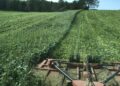
The first thing to consider is the different equipment that is needed in completely no-till organic systems. Most efforts have focused on the concept of laying down a cover crop with a roller-crimper to terminate it and create a thick layer of mulch that suppresses weeds. At a basic level, such an operation also requires a no-till planter and/or no-till drill. 

As with any new equipment, there will be a technical learning curve in operating it to achieve full termination of cover crops and optimal crop stands. On a planter, some type of residue manager will likely be necessary. There are several types available that are designed to deal with different amounts and types of residues. It would be prudent to understand what types of crop residue you will have to deal with in your system before investing in this essential equipment. A visit to your local corner of the internet will reward you with a view of the proliferation of shiny new implements and engineered solutions to no-till planting and residue management. It is an enticing rabbit hole to get lost in.

This leads to system-wide considerations. The challenge is to design a diverse-enough crop rotation that will work with your specific climate, soil, equipment, on-farm infrastructure and available marketing opportunities. Beginning with climate and soil, you must obviously choose cash crops that are marketable and that produce well in your climate and soils. However, cropping options that help accomplish diversity in the rotation can be somewhat limited in no-till systems because certain crops will not establish well in an untilled seedbed. 

Beyond that, cover crops must also be chosen that perform well and that attend to the functions of reducing pest, disease and weed pressure in the rotation while also having the right characteristics (timing and uniformity of flowering/maturity, ability to crimp stems, etc.) to be terminated at the correct time relative to when the next cash crop must be planted. These have been the major challenges that have gotten most of the attention in organic no-till efforts thus far. Local Extension services and NRCS Plant Material Centers and many private seed companies have waded into these turbulent waters to offer farmers a guiding hand. 
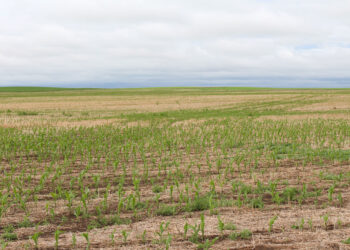
Large farm equipment in general — and no-till equipment to an even greater degree — weighs a lot. Compaction and its effect on water infiltration and aeration, particularly in heavier soils, is a key concern in managing a system that eliminates tillage. Even in conventional systems, the gravity of this factor alone has caused farmers to abandon their commitment to no-till. 

Managing fertility and nutrient losses is also an issue — particularly in an organic system that relies on manure for fertility. Without tillage to incorporate manure, large nitrogen losses — and the application of even more manure to adjust for it — may become untenable, both financially and environmentally. Also, the breakdown of cover crop biomass, which often needs to be mature for termination and for longer weed suppression, may immobilize a significant amount of nitrogen in the soil and create further challenges. 

In terms of disease and pest management, the residues in no-till systems unfortunately also provide a haven for many crop pests and diseases, which can be especially problematic in organic systems. In the short term, the farmer will need to consider these implications in opposition to the other positive mulching effects, such as erosion, evaporation and weed control. It may take a number of years, however, for the soil biology to catch up to the imbalance created in transitioning to a system of high surface biomass and to reach a functional homeostasis. Once again, equipment, timing and species choices will dramatically impact the success of balancing these issues.

There are also concerns with simply maintaining field boundaries, as well as the increasing weed pressure from both annual and perennial weeds. A variety of no-till tactics with equipment such as flame weeders, weed zappers and mowers will be necessary whenever the situation calls for them. Some of this equipment requires a significant financial investment that one must be prepared to shoulder, either at a farm or community level. 

Even so, some weeds will inevitably make seed, and without tillage to facilitate germination, and subsequent termination of weed flushes to reduce weed populations, careful planning of the rotation and timing of cover crop termination — which you must rely on completely for weed control — are even more critical. Increasingly volatile weather cycles due to climate change will frequently affect this timing, making well-conceived contingencies and full access to tools essential. 

Figuring out how to balance and address all of these challenges in a rotation simultaneously — while throwing in the wild cards of weather and climate change — presents an extraordinary task. Changing any one factor will have a domino effect across the system, without the reset button that tillage represents. 

Before attempting organic no-till at any scale and investing heavily, it would be wise to experiment on a small number of acres to begin the learning process. However, reducing tillage across the rest of the farm and beginning to incorporate limited (one- or two-year) periods in the rotation without it can be accomplished without too much risk. 

It is in the nature of farmers to innovate, and precedent dictates that smart people working together will continue to rise up and creatively address these challenges. 

Nicholas Podoll and Nathanael Siemens are organic crop consultants with the Rodale Institute. Learn more at rodaleinstitute.org/consulting.


← Previous Eco-update Next Biostimulants in a Nutshell  →
Tags: November 2022
Nicholas Podoll and Nathanael Siemens

Nicholas Podoll and Nathanael Siemens

Nicholas Podoll and Nathanael Siemens are organic crop consultants with the Rodale Institute. Learn more at rodaleinstitute.org/consulting

Next Post

December 2022 • Issue #618

  • Trending
  • Comments
  • Latest
The Most Important Livestock in Our Fields

The Most Important Livestock in Our Fields

July 1, 2024
Glyphosate Does What It’s Designed to Do — Kill

Glyphosate Does What It’s Designed to Do — Kill

February 19, 2025
USDA organic seal over American farm land

Losing Organic Farms

September 18, 2026
The Take-Half, Leave-Half Fallacy

The Take-Half, Leave-Half Fallacy

July 1, 2025
Author photo (Wikimedia)

A Food Emancipation Proclamation

3
We Don’t Need Another Bridge — We Need an Off-Ramp

We Don’t Need Another Bridge — We Need an Off-Ramp

3
Under One Roof

Under One Roof

3
A Rose By Any Other Name

A Rose By Any Other Name

2
Regenerative as Usual

Regenerative as Usual

October 7, 2026
October 2026 • Issue #664

October 2026 • Issue #664

October 2, 2026
Regenerating Mycorrhizae

Regenerating Mycorrhizae

October 2, 2026
ECO-GRAPHIC

ECO-GRAPHIC

October 2, 2026

Recent News

Regenerative as Usual

Regenerative as Usual

October 7, 2026
October 2026 • Issue #664

October 2026 • Issue #664

October 2, 2026
Regenerating Mycorrhizae

Regenerating Mycorrhizae

October 2, 2026
ECO-GRAPHIC

ECO-GRAPHIC

October 2, 2026

Don't miss an update!

Stay informed on what's new in the Acres U.S.A. community: new articles, upcoming events and resources for regenerative farmers.

Acres U.S.A. is North America’s oldest publisher on production-scale organic and regenerative farming. For more than 50 years, our mission has been to help farmers, ranchers and market gardeners grow food profitably, regeneratively, and with nature in mind.

Facebook Instagram X-twitter Youtube Linkedin Spotify

SHOP

  • Bookstore
  • Online Courses
  • Giftcards

ABOUT

  • About Acres U.S.A.
  • Our Team
  • Eco-Ag Acheivement

LEARN

  • Events
  • Magazine
  • Newsletter
  • Webinars
  • Free Articles
  • Online Courses

Contact Us

Acres U.S.A. LLC
PO Box 351
Viroqua, WI 54665​
info@acresusa.com
970-392-4464
  • Manage My Subscription
  • Advertise with Us
No Result
View All Result
  • HOME
  • ARTICLES
    • News
    • Farm
    • Ecological farming
    • Livestock
    • Crop
      • Crop management practices
      • Cover crops
      • Crop nutrition
      • Crop protection
      • Crops
      • Ag technology
    • Soil
    • Opinion
  • RESOURCES
    • Magazine
    • Online Learning
    • Newsletters
    • Blog
    • Free Articles
  • MAGAZINE ISSUES
    • 2026
      • June 2026
      • May 2026
      • April 2026
      • March 2026
      • February 2026
      • January 2026
    • 2025
      • December 2025
      • November 2025
      • October 2025
      • September 2025
      • August 2025
      • July 2025
      • June 2025
      • May 2025
      • April 2025
      • March 2025
      • February 2025
      • January 2025
    • 2024
      • December 2024
      • November 2024
      • October 2024
      • September 2024
      • August 2024
      • July 2024
      • June 2024
      • May 2024
      • April 2024
      • March 2024
      • February 2024
      • January 2024
    • 2023
      • December 2023
      • November 2023
      • October 2023
      • August 2023
      • July 2023
      • June 2023
      • May 2023
      • April 2023
      • March 2023
      • February 2023
      • January 2023
  • ABOUT US
    • Our History
    • Our Staff
    • Contact Us
    • Community
      • Soil Health Primer Resources
  • EVENTS
    • Eco-Ag Conference
    • Farm Weird
  • SUBSCRIBE
  • Login
  • Sign Up
  • Cart

© 2024 Acers USA Magazine

Lost Password?