

Turning Your Residential City Block into a Neighborhood Garden
We have to eat to live. In the urban environments where more than three-quarters of Americans now reside, there isn’t space for planting fields of corn, wheat and potatoes or room to raise livestock. But you can grow fresh vegetables and fruits right in your own yard—with home gardening.
Home gardening is the absolute best way to get fresh produce on your table. Fresh, homegrown vegetables and fruits taste better and are more nutritious than store-bought produce. They’re cheaper, too. Home gardening ensures that vegetables and fruits (and the essential vitamins and minerals they supply) can be a regular part of our diet, even when prices rise.
Gardening is also a great way to grow community. You can share your harvest with family members or roommates; treat friends to homegrown, personally prepared dishes; and give any surplus to your neighbors. Food brings people together and builds community ties. Home gardening provides the seedbed for broader social networks .
What Is a Hamlet?
When we first started converting the ubiquitous grass lawns in our city block to gardens, folks called what we were creating an “eco-village.” That seemed a little presumptuous. A village meets a minimum population threshold, has businesses and services, and is its own local governmental subdivision. We had none of those things in our block.
So we googled, “What’s smaller than a village?” And the term “hamlet” immediately popped up. Hamlet, we learned, is a medieval European word that historically meant simply “a cluster of houses,” from three to twenty—just like our residential city block.
We live in the Hawley Historic Landmark District, named for the 1880s homebuilder who developed the area. Liking how the words “Hawley” and “Hamlet” tripped off the tongue, we have been calling ourselves the “Hawley Hamlet” ever since.
What’s important here is not the “hamlet” label. You can call yours anything you want. It’s the concept of a neighborhood garden. It’s the immediacy, convenience, and social connections that distinguish a neighborhood garden from a community garden, which invariably pulls from a broader—and therefore more impersonal—locale.
In 2020, just ten years after our founding, the Hawley Hamlet received NeighborWorks America’s prestigious Dorothy Richardson Award for Neighborhood Leadership. We were honored to be a model for what other urban residential neighborhoods could do. Over time, though, that feeling of gratification began to dim as it dawned on us that we’d been lauded for simply doing what human communities have done for millennia—growing some food at their homes and mingling with their neighbors.
Food and community are the building blocks of human society. A hamlet is simply the fusion of those building blocks. We’re doing nothing more than returning to our roots. But we’re having to do it in the most alienated setting imaginable—the built urban environment that four out of five U.S. residents now call home.
Edible Landscapes
The overwhelming majority of Americans don’t know the first thing about our food supply. Since the 1950s, city folks have been acculturated to see their role in the food chain as that of consumers. Someone else, somewhere else, is producing the food. Our job is to eat it. We barely know how to cook anymore, let alone how to garden.
More than likely, your neighbors have never seen food growing in the city. If you want to create a hamlet in your block, you have to provide an example by converting your own lawn and yard into an edible landscape. Until your neighbors see food growing on their street with their own eyes, they’re never going to buy into something as unconventional and eccentric as urban agriculture—let alone a hamlet.
But such vital modeling comes with its share of challenges. In a culture where a manicured grass lawn is the national standard, putting in an edible landscape is flying in the face of all that residential aesthetics holds sacred. You are rocking the boat, and the higher up you go on the ladder of real estate values, the greater the likelihood of resistance. So be forewarned.
Apart from risking the ire of turf-lovers and HOAs (Homeowner Associations), switching out lawn for food gardens isn’t a simple one-for-one swap. Compared to weekly grass mowing, gardening requires a drastic spike in time and energy spent outdoors—especially if you intend to garden in areas visible from the street.
Further, not all gardens are the same. Floral gardens can generally be counted on to look attractive if you faithfully water, weed and deadhead blossoms that have finished blooming. But food gardens aren’t bred for visual splendor and at some point in the plants’ life cycle are fated to look ragged and unkempt. Those dying cucumber vines, onion tops, and yellowing tomato foliage when the fruit is ripening can become an eyesore.
If you get behind in your tending, the plants suffer from too little moisture when it’s hot, and weeds start taking over the patch, don’t be surprised if you get hit with nuisance complaints from city government. Despite our unceasing efforts, we in the Hawley Hamlet are, regrettably, on a first-name basis with the Weed Control Authority.
Trying to stay on top of all the required maintenance across an entire growing season is a never-ending challenge to having an inviting-looking model home garden. If it doesn’t look nice, you can bet the farm (urban and otherwise) that nobody is going to want to replicate it in their yard.
Gardens Don’t Grow Themselves
Putting tomato starts in on a nice Sunday in May and then not showing up again until August to collect a harvest is not a viable strategy. If you want a successful garden that will reliably produce fresh veggies, you’ve got to assume the responsibility for overseeing it, day-in and day-out, without fail.
A commitment of that scale is going to seriously mess with your lifestyle. Gardening operates by Mother Nature’s clock—not yours—and you have to work in cold and wet, heat and bugs, evenings and weekends. Unless you get someone to watch your plot, you can kiss summer vacations goodbye. When it’s 90 degrees out and it hasn’t rained in weeks, you need to water. Home gardening gives you a taste of what those field workers who invisibly provide our food have to contend with daily.
Gardening can be fun, but it’s work. If you harbor ambitions for creating a hamlet in your block, you need to become proficient at gardening—because you’re going to be the mentor and guide for your neighbors. There’s no time like the present to start developing that proficiency. As a rule, it takes five years of diligent effort to become a competent gardener. You can and will learn as you go, but you need to authentically grasp what exactly you’re getting yourself into.
Building and Nurturing Your Soil
Food is essential for life, but that food comes from the soil. You’re not going to get tasty, nutritious edibles unless you have healthy, fertile soil to grow them in. Feeding your soil to improve and maintain its health and fertility is vital—particularly in the built urban environment, where we don’t have much growing space to work with and none to waste.
In our hamlet, we plant three crops a year on each of our 100 vegetable plots to keep our soil healthy and fertile. That takes a lot of work. Even in four-season Nebraska, we’re out working nine to ten months of the year. We do everything we can to ensure that our hamlet gardeners annually meet with garden success—because nothing will cause a beginning grower to throw up their hands and walk away faster than garden failure. We don’t want that if we can avoid it.
The importance of soil health is no joking matter. I have seen over half of my tomato crop sicken and die in a week from fusarium wilt. Tomatoes, peppers, potatoes and eggplant are all nightshade plants, and to prevent fusarium, you need to plant six different crops before planting another nightshade there. That’s easier said than done, because tomatoes and peppers are Americans’ favorite garden crops.
Since almost all of our Hamlet gardeners want to plant salsa gardens every year, we have regular nightmares about our garden beds becoming diseased. Such an event could well spell the end of the Hamlet, because there is nowhere else to plant our favored foods. The bond holding our neighbors all together would disintegrate in front of our eyes.
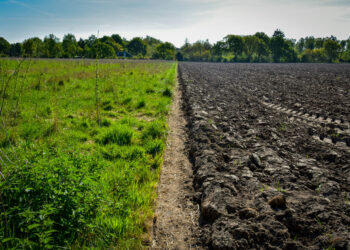
Out of necessity, we religiously incorporate the regenerative agricultural practices of crop rotation, cover cropping, mulching, composting and biochar amendments. We never leave our soil uncovered and always keep it alive, even in the dead of winter. By gardening in four-foot-wide beds, we never, ever step on the soil or compact it—dramatically reducing the need for tillage. Year after year, our soil is becoming fluffier and more friable, despite its high clay content.
Successively planting three crops a year enables us to annually put in at least one crop exclusively for building soil health. A few vegetable crops like bush green beans and peas will give you both a food crop and a green manure. Otherwise, we plant some combination of oats, winter pea, hairy vetch, crimson clover and daikon radish over the fall, winter and spring, and buckwheat or cowpea during the summer.
We’re also maintaining the health and fertility of the 60-tree fruit orchard we’ve planted in our block, as well as our 23 berry patches and 11 grape arbors. Where we can’t plant food for human consumption, we’ve planted 36 native pollinator beds to provide wildlife food and habitat.
We’ll be honest—it is a lot of work. We’re outside gardening from March to November. But we don’t ever want to court garden failure on a massive scale. So far, we’re keeping ahead of the threat, and we mean to keep it that way.
Why Garden?
Is there an easier alternative? Not that we’ve found. If there was, we suspect all those invisible food workers who supply our produce would have discovered it by now.
Humans need an uninterrupted supply of food. If we expect to always have plenty to eat, might it not be wise for us consumers—particularly for those of us who live in food-production deserts like the urban environment—to know where our food is coming from? This is, after all, a life-or-death matter.
Do we want to rely totally on a nameless, faceless, corporate supply chain to fill our refrigerators? Are we going to be helpless next time something like the COVID pandemic disrupts our national and international food system, leading to shortages on the grocery store shelves?
Are we going to blindly trust that decision-makers in corporate board rooms and governmental agencies will be able to navigate the supply-side turmoil spawned by extreme weather events, infectious disease outbreaks, unexpected wars, food contamination, and hotter, drier conditions from climate change?
Are we just going to wait for food shortages to erupt and for prices to become so unaffordable that we pour out into the streets, banging our pots, and demand that our public officials fix things?
Or are we going to begin pulling some of our own weight and start growing some of our fresh produce? Not to mention start sourcing from local farmers and market gardeners year-round to promote the development of a local food system.
In our hamlet, we’ve had neighbors garden with us for a season or two, then decide that it’s too much work and they’d rather just go to the store. As long as there’s sufficient inventory in the produce section, they still can. But such an attitude displays dangerous ignorance about our food system.
The average bite of food we eat travels 1,500 miles to get to our mouths. Our hometown of Lincoln needs to import over 1.5 million pounds of food each day to meet the dietary needs of our 300,000 residents. Our grocery stores and restaurants stock just three days’ worth of inventory. And 90 percent of Nebraskans’ food dollars leave the state, because—despite being a commodity agriculture powerhouse—Nebraska doesn’t grow edible food for humans.
Growing some of our own food is a matter of food security and food sovereignty. Those of us in the city will never be able to be self-sufficient. Veggies and fruits provide only 10 percent of the calories in our diet. But they supply the bulk of the vitamins and minerals our bodies need for good health, we in the city are positioned to grow them best, and growing them will stretch our food dollars when inflation is pinching our budgets.
Growing food will become a household necessity in the not-too-distant future. We may as well get started now and begin honing our skills.
From a Home Garden to a Hamlet
For the first 23 years that we lived in our home, we knew the names of just three of our neighbors. That’s because the only time we were outside during the summer was when we were busily mowing the grass and unapproachable over the roar of the mower. But once we began spading up our lawn, turning our lot into an edible landscape and creating the first food garden in the block, within two years we knew everybody.
Out in the yard for hours on end, down on our knees planting and weeding, it was quiet enough to exchange a greeting or even to converse with the people who walked by. And it turned out they wanted to talk. They weren’t ready to join us in gardening. But they were interested in what we were doing.
By design, we planted lots of strawberries. We harvested them as they ripened, and—as a brazen bribe—knocked on the doors of neighbors we’d never met, introduced ourselves, and offered them a quart of fresh-picked, homegrown strawberries. That was all it took to break the ice and establish a relationship.
At that time, nobody was yet prepared to start tearing up their grass to put in a garden in their own lot. But we prevailed on an absentee landlord to let us till up the backyard of a piece of property, supply our own water, and put in garden plots for interested neighbors. Since these new gardeners knew less about gardening than we did, we ended up serving as mentors.
Only five other households gardened with us that first year, and the harvest was modest. But we had laid a foundation. The following year, two other neighbors offered to let us garden in their backyards, enabling us to boost our gardener numbers. By our third growing season, we were up to ten participating households and had our first revelation about how building neighborhood networks actually works.
Generally, you know the people across the street from you better than you know your neighbors on the other side of the block. So we decided to enlarge our definition of a “neighborhood garden” to include the properties directly across the street.
Involving those neighbors promptly put a greater squeeze on our available gardening space, and we were starting to sweat that maybe we had overreached. Then several of our existing gardeners announced that, instead of gardening in the joint neighborhood plots, they were going to garden in their own yards—freeing up space for more neighbors, especially renters who would never have garden space of their own.
Becoming Hamleteers
With gardens now on nearly every lot, our neighbors were regularly interacting with each other—talking about the weather, swapping favorite recipes, sharing surplus harvest, and preserving for winter. Fifteen years after we established that first edible landscape, we have progressed from a simple neighborhood garden to what now amounts to a neighborhood mutual aid society. We’re even setting up an emergency food pantry so that we can get everyone a hot meal if there’s a power outage or other calamity.
In what would have otherwise been just one impersonal residential block among hundreds, we are now growing food in our yards, collaborating with our neighbors, and living out our idea of a hamlet. It’s our personal vision of an everyday utopia.
Other residential blocks can create hamlets of their own, too. Because every block is unique with its own housing layout, tree canopy, solar exposure, soil type and social makeup, no two hamlets will be identical. You and your neighbors can make your hamlet however you want. It’s just waiting for someone to make it happen.
Just to be clear, nobody’s suggesting that creating a hamlet means we have to give up our privacy and hang out with the neighbors 24/7. Not at all. You and your neighbors will set the terms. But if you’d like to live in a more closely-knit neighborhood where you know the people you reside beside, feel safe walking around the block, have neighbors you could call on in a crisis, and increase your personal food security, you might want to explore creating a hamlet in your block.
Home gardening is lots of work. But the social, economic, environment, and health rewards are more than worth it. And sooner or later, we in the city will have no choice but to start growing whatever (and wherever) we can.
Whatever the future holds in store, we will always need to eat.