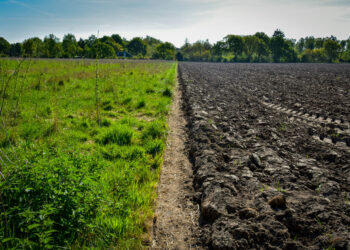


My Journey from Tragedy to Permaculture
How does this work in nature? How did soil form in the first place? What cycles are at work here?
These are the kinds of questions I ask as I work with soils, teach courses, and do consultations. Natural cycles are the foundation of my work today, but it’s been a long road to get here. I wasn’t always so focused on what was most natural. I was simply focused on my work as a musician and recording artist.
Then, when our firstborn son was about a year old, my wife started having terrible bouts of fatigue and nerve pain. The doctor removed her thyroid without her permission and told her she had cancer. It was a nightmare that kept getting worse as we listened to the doctors, thinking they were trying to help. After three bouts of cancer within four months’ time, my wife was shell-shocked and wanted to recover with her mom on the west coast. We both prayed about it and realized that we needed to move.
At the time, I had the best gig I’d ever had as a bass player—playing with John Cusimano of The Cringe when he met Rachael Way. My wife and I were at their wedding, and Rachael used to give me feedback and advice on my writing. They loved and took care of me and I knew they’d never fire me, but for my wife’s sake I left that gig and moved to Coarsegold, California.
The Central Valley of California was a picturesque place to raise our boys, but it was the sixth-most violent county in America and hot—soil temperatures could easily reach 140°F in direct sun. I worked as a bartender at the local Indian casino and played blues tours on bass with Brad Wilson. Sometimes we’d go and play at Indian casinos, which was the most depressing work I’ve ever done. After years of playing for an appreciative audience, suddenly I was just background noise while people were gambling. It was humbling, to say the least.
As I was driving at 3 a.m. on the outskirts of Yosemite on my way back from a blues tour, I came over a ridge where I couldn’t see anything but open sky. At the bottom was a hairpin curve, and I almost went off the road. I decided at that moment that I was never doing that again—ever. It wasn’t worth it. I finally listened to my wife’s encouragement and became a certified substitute teacher. I started off substitute teaching guitar, but the kids asked why I was a substitute teacher if I was so good at music.
One day, I was substitute teaching a remedial reading class. The kids were forced to read children’s books, but they were only miming the act of reading while quietly talking amongst themselves. They opened the books and flipped the pages in a rote, synchronized fashion that I found unnerving. I was incensed. It was like Brave New World where they’re shocking babies in the presence of books to make them innately fearful of reading books.
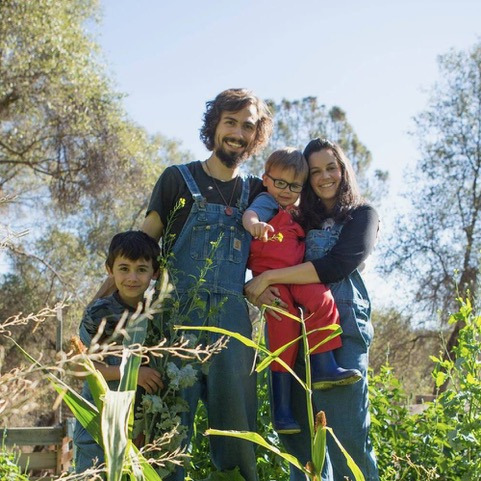
That was the moment when I became a teacher. I began showing the kids what I learned when I was their age, things like outlining essays and organizing evidence. The response was always extreme—I was either banned from the school or applauded by the administration. After I became a student-teacher, I was shocked to discover that most ninth-graders had never even read a book, let alone written an essay on one. I was appalled at the complete lack of education in schools.
I became an advocate for project-based, student-centered education focused on best practices and earned my master’s degree in education. I became head of the English department and began teaching teachers to minimize or remove homework while still helping their students get high scores on standardized tests. I felt like I had found my calling, but I was earning less and less each year. I realized I was never going to get out of debt, let alone move out of Grandpa Joe’s garage.
That was when I took Geoff Lawton’s permaculture design certification course. I had already read Bill Mollison’s Permaculture: A Designer’s Manual cover to cover, but I wanted to get my certification. Geoff let me turn his course into a K-12 curriculum, which I did with help and advice from Dr. Elaine Ingham, Rosemary Morrow, Neal Spackman, Mike Oehler, and others. As I was standing on the stage for the Kickstarter for this first book, The Permaculture Student 1, I knew I was exactly where I was meant to be—beginning my career as a permaculture author.
What began with one book ballooned into over 20 books on permaculture, soil science, and microscopy. I tried to figure out what would serve people best and how I could tie that desire in with permaculture—the regenerative overlap between earth care, people care, and future care. I dug deeper into soil science, microscopy, and DNA testing.
The structure, logic, and underlying philosophy of Regenerative Soil are all based on permaculture. It’s written in a way farmers can understand, bridging classic chemistry with modern insights about how natural cycles and biological connections can save us time, money, and energy. I want to serve as many people as possible.
How can I help others live more regeneratively and build a regenerative future? That’s what I ask as I write and teach. I don’t want anyone to live through what my wife and I had to go through 18 years ago. I want our health to improve from generation to generation. We can do this work together.
I invite you to become a citizen scientist in your life, apply critical thinking, and verify your work so that you don’t have to assume, guess, or hope—you know. That’s what I am teaching in my Regenerative Soil and Regenerative Soil Microscopy courses and books, which I encourage you to check out.