

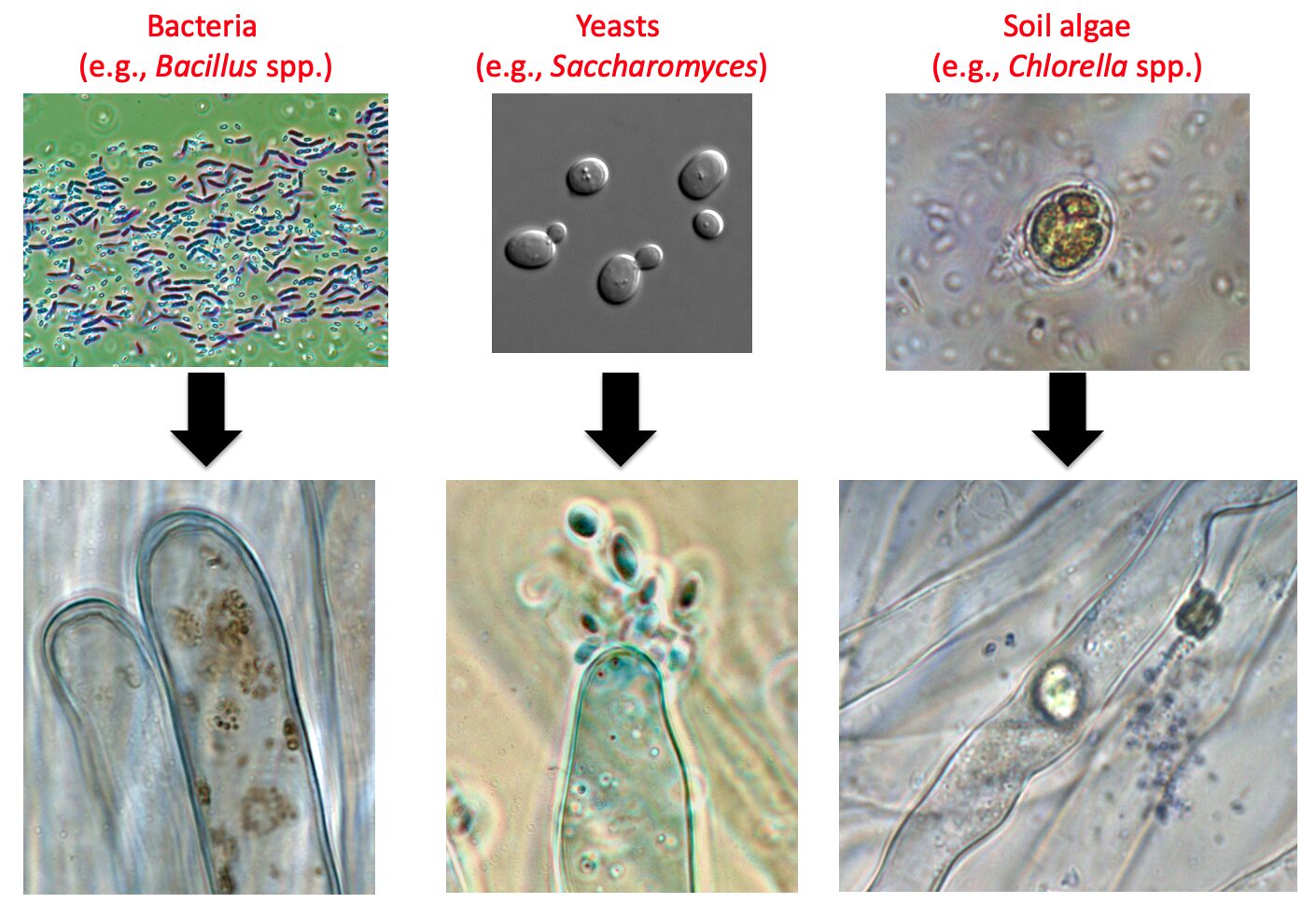

Q. What kinds of soil microbes are internalized in the rhizophagy process?
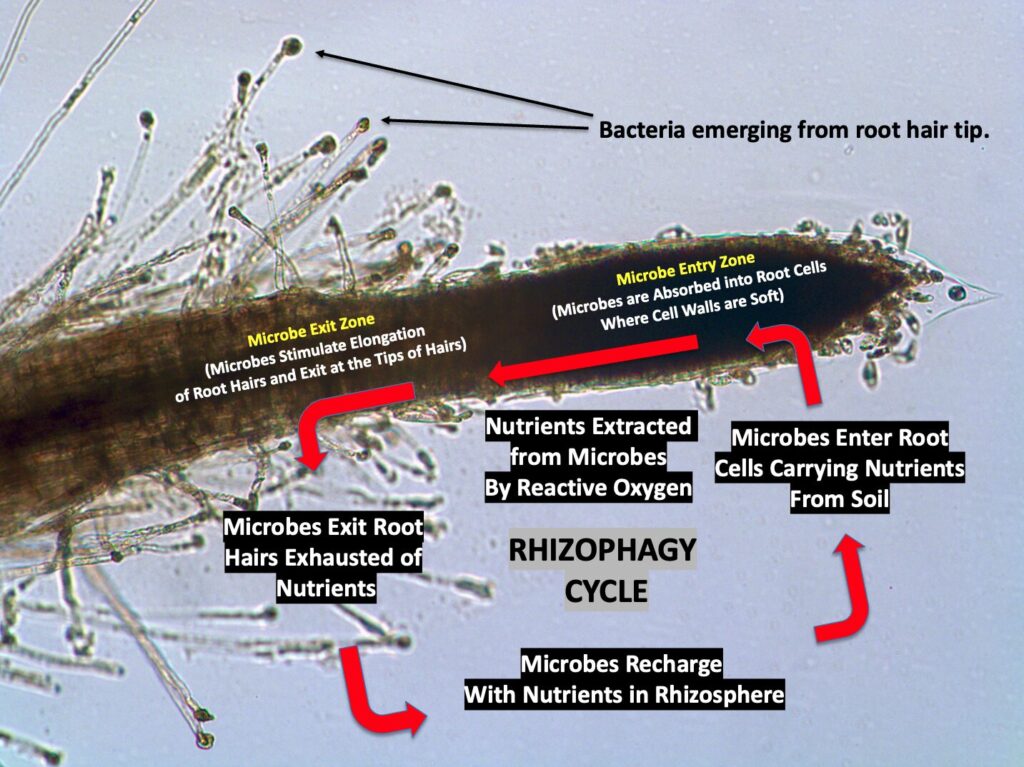
A. Bacteria, yeasts, and even algae. In the images, you can see root hairs, and you can see bacteria in the root hair, and yeasts in the root hair. The dots are the little protoplasts — little forms of those bacteria while they’re in the endophytic, intracellular form.
Root tips secrete exudates — sugars, organic acids, nutrients — that attract bacteria and other soil microbes. These exudates have other effects in the soil. The organic acids solubilize nutrients.

Then the plant takes the microbes into its cells and uses reactive oxygen to oxidize the microbes and take their cell walls off and get nutrients out of them. It’s a very simple digestive system that all eukaryotes have. Animal cells have it. All plant cells have this.
Then the microbes go back out of the root hairs. The plant puts those bacteria back into the soil after it extracts nutrients from them. The plant repopulates the soil with these microbes that it works well with it — that it needs. It’s actually cycling these bacteria from the soil, through the root, back into the soil. That’s how this rhizophagy process works.
From James White’s presentation at the 2025 Acres U.S.A. Eco-Ag Conference. Full presentation available at eco-ag.com.