

1970s environmentalism was simple: don’t pollute; today we’ve made a devil of the very element that is the building block of life: carbon
My parents weren’t quite old enough to be real hippies of the 1960s. Born in the 1950s, they came of age in the ’70s, carrying with them a love of meditation, nature, and “back to the land” living. The environmentalism of my childhood was simple and direct: it was about pollution. Don’t dump toxins in rivers. Don’t litter. Don’t poison the ground you depend on.
Somewhere along the way, we lost that focus. Today’s environmentalism has drifted far from the basics of clean air, clean water and healthy soil. Instead, it has become almost entirely about carbon. We’ve made a devil out of the very element that is the building block of life. Plants, animals and humans are all made of carbon. How did we convince ourselves that the essence of our bodies and our soil is the enemy?
I can’t help but suspect that money plays a role. After all, how much profit can be made by telling people not to litter, not to dump chemicals in their fields, or not to poison the water supply? Not much. But if you convince the public that every single act they do — eating, driving, even breathing — is a threat to the planet, there’s an endless array of products, technologies and offsets you can sell them to soothe their guilt.
That’s why today’s environmentalism is crowded with solar panels, wind farms, electric cars and rechargeable everything, while principles like regenerative agriculture — proven to draw carbon down into healthy soil — are largely ignored. I’ve even read recent articles claiming planting trees is bad, because it might allow people to feel they can continue using fossil fuels. Imagine that: trees, the original carbon-capture technology, are now framed as dangerous!
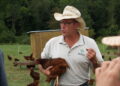
Not long ago, I got a call from a casting agent working for a major environmental nonprofit. They wanted me to be part of a campaign telling the story of a farmer “fighting climate catastrophe.” I was intrigued. I love regenerative agriculture, and I’m always eager to talk about how building soil heals the land. But during the casting call, they told me — seven or eight times — that the real purpose was to “hold fossil fuel companies’ feet to the fire.”
I asked them politely: Will you stop using fossil fuels yourself? Will you give up the MacBook Pro you’re typing on, made from mined minerals with its own environmental costs? Will you give up your cell phone? They seemed stunned by the question.
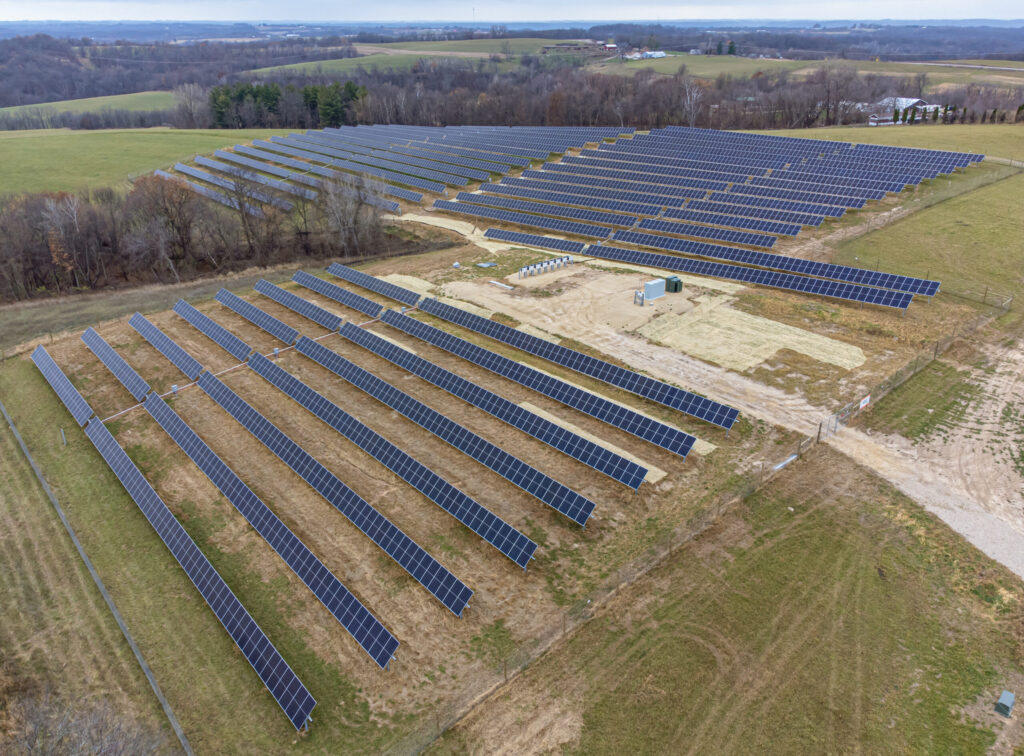
I asked again: How can we hold companies’ feet to the fire if none of us are willing to give up the conveniences they provide? How many people would be pushed into poverty if we abandoned fossil fuels overnight? And are we certain that covering millions of acres with solar panels — built with questionable supply chains and mineral extraction that scars landscapes — is truly better?
Needless to say, I didn’t get the part in the commercial. I followed up with a polite email declining, but I’m sure they had already crossed me off the list.
Here’s the thing: I am an environmentalist. But I am an old-school environmentalist. I believe in planting trees, in stopping pollution, in healing soil, in integrating with nature’s perfect design. I believe carbon belongs in the top eight inches of healthy topsoil, not treated as a villain in the sky. I believe in solutions that strengthen local communities and ecosystems — not massive, subsidized industrial schemes that enrich corporations and distract us from the basics.
The environmentalists of today are unrecognizable to me. They shout about renewable transitions with no realistic pathway forward unless we embrace nuclear energy — or someday, perhaps, technologies to harness electricity directly from the atmosphere. But the truth is, what we’re building now isn’t a clean future. It’s a costly, temporary patch sustained only by subsidies — one that shifts wealth while leaving pollution and depletion in its wake.
Real environmentalism is humble. It doesn’t rely on massive ad campaigns or billion-dollar industries. It looks like a compost pile, a cover crop, a child learning to plant a tree. It looks like soil alive with worms, water clean enough to drink, air clear enough to breathe.
If we truly want a future worth celebrating, we don’t need a new kind of environmentalism. We need to remember the old kind.