
One of the great mercies in American history is that barbed wire wasn’t invented until about 1870. If it had arrived on the scene just a decade earlier, our Civil War surely would have been even bloodier and more terrible. This fact was little comfort to young men in 1914, when that technology came to its logical conclusion on the Western Front.
Human nature dictates that if a technology exists, someone is going to use it. While there are some frontiers that the vast majority of people will hopefully always reject, human cloning and artificial wombs come to mind; in most cases, the realistic course of events is that people are going to adopt the technologies that are available to them. It’s easy to judge people decades or centuries after the fact for adopting technologies that we eschew today, but if we’re honest, those choices would have been difficult for us too.
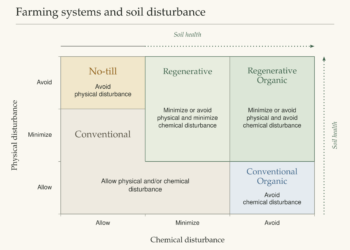
In terms of agriculture, this way of thinking allows us to give some slack to our parents and grandparents who took up a conventional way of farming after World War II. The technology suddenly existed to drastically reduce the amount of physical labor required to farm. In their context, it made enough sense that most farmers went this route.
A key thing to notice, though, is that the technology preceded the policy. Earl Butz and “get big or get out” came twenty years later. Government regulations almost always react to technological realities that politicians can’t fully control. Look what’s happening today with social media, AI, data centers, etc.; the government is playing catch-up. Yet this is what always happens. We humans, not just politicians! – have a poor track record on the whole of being able to identify the unknown side effects of any new advance and plan wisely to avoid those pitfalls. Not that we shouldn’t try, but it’s almost pointless to expect it.
Here’s the bright spot, though: so many technologies have recently come into being, or likely soon will, that enable truly regenerative, ecological agriculture. From mundane things like no-till drills and better spray nozzles to real-time plant-leaf-nutrition detectors, precisely formulated and effective biological inoculants, and non-toxic weed-control methods, farming while respecting nature has never been more possible. We can manage cattle with electronic collars instead of barbed wire! The internet alone has made it so much easier for farmers to find out what other ecologically minded growers are doing that might work for them.
Just as the context in 1950 pushed farmers toward the use of synthetic chemicals, so the context of 2026 clearly favors a regenerative approach. No farmer wants to poison their land; they just didn’t foresee in 1950 how much the chemical approach would lead to that. Here in 2026, it’s obvious that they don’t have to.
The right technology for ecological agriculture exists. We can be optimistic that people will use it.
And that’s the view from the country.