
A conference in 1939 essentially launched the organic farming movement
Editor’s note: this is an excerpt from Anneliese Abbott’s new book, The Cold War Against Organic: How Organic Farming Came to America and Grew—Despite Intense Opposition, published by Acres U.S.A.
On March 22, 1939, over six hundred people gathered at the ornate Crewe Lyceum Theatre in Cheshire County, England. Some were doctors, some were farmers, some were teachers, and some were government officials—and they weren’t at the theater to be entertained. Their reason for meeting was very serious. They were there to talk about England’s public health crisis.
Medical science had made huge advances in curing contagious diseases in the first few decades of the twentieth century. But more and more people were suffering from noncontagious “deficiency” diseases—things like anemia, rickets, tooth decay, and gastrointestinal ailments. These diseases couldn’t be cured by sterilization or drugs, because they weren’t caused by pathogens. They were caused by nutrient deficiencies. And they were getting worse.
The culprit? Modern food processing. Many of the staple foods of modern Western civilization—white flour, white sugar, margarine, and canned meat and vegetables—were dangerously deficient in vitamins. Nutrition researchers had recently discovered that foods like whole wheat flour, whole milk, and fresh fruits and vegetables contained protective factors that prevented deficiency disease.
One of those researchers, Sir Robert McCarrison, was the first speaker on the gilded stage that evening. Now retired, McCarrison had spent his career in India researching the connection between nutrition and health. In one of his most famous studies, he fed seven groups of genetically identical rats seven different diets.
The rats on the best diet—whole wheat, legumes, raw vegetables, raw milk, butter, and meat once a week—were sleek, shiny, and strong. They were so healthy that McCarrison decided to use that diet for his stock rats. The rats eating the Western diet were a sickly contrast. They suffered from every disease known to rodents, and 45 percent of them died after just six months on the Western diet.
“Food,” McCarrison told the audience, “is the dominant factor in determining man’s general physical endowment and powers of resistance to disease.”
The doctors nodded their heads in agreement. They had read McCarrison’s work, and many of them had been able to drastically improve their patients’ health by recommending a diet of natural, whole foods. Everything he said confirmed that they were on the right track.
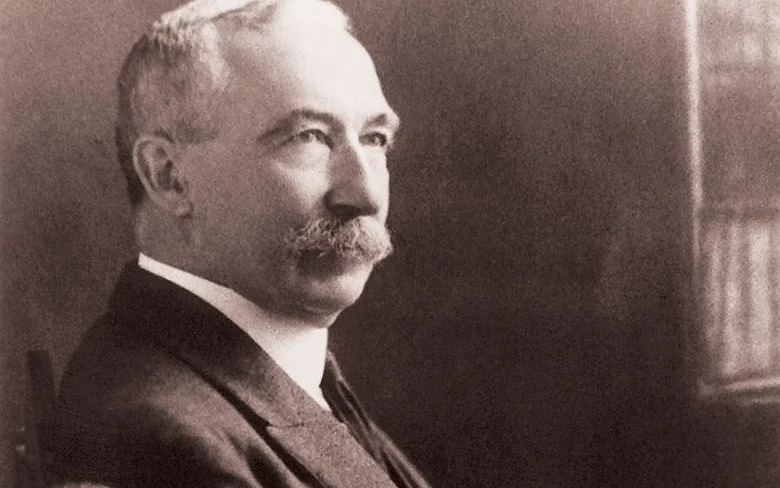
Next, Dr. J. Kerr—chairman of the Cheshire Medical Committee, the group that organized the conference—introduced the second keynote speaker of the evening. Sir Albert Howard was a retired plant scientist from India, and at first glance, he seemed a little out of place at a nutrition conference. His work in India had been focused on composting. What did that have to do with health?
A lot, it turned out.
***
Healthy plants are resistant to disease.
As Howard explained to his eager audience, that was one of the first lessons he’d learned when he arrived in India in 1905. Following a government mandate to improve Indian agriculture on its own lines, he spent his first few years carefully observing traditional farming practices.
“I rapidly discovered that my best teachers were the peasants of India themselves,” Howard told the crowd. He also learned from “Nature’s own Professors of Agriculture, the insects and fungi which attack crops.”
By 1910, after five years of observation, Howard had learned “how to grow healthy crops practically free from disease without any help from mycologists, entomologists, bacteriologists, agricultural chemists, statisticians, clearing-houses of information, artificial manures, spraying machines, insecticides, fungicides, germicides and all the other expensive paraphernalia of the modern Experiment Station.”
Pests and diseases, Howard realized, were not actually the cause of disease. True, they were the agents in causing damage, but only on “unsuitable varieties of crops improperly grown.” Far from being evil villains that attacked innocent plants, Howard started thinking of pests and pathogens as “censors for pointing out the crops which are imperfectly nourished and so keeping our agriculture up to the mark.”

That revelation changed his whole understanding of pest control. Since pests and diseases were only symptoms of an underlying problem of poor health, fighting them was futile. Sure, farmers could spray pesticides, but that “merely preserves the unfit and obscures the real problem—how to grow healthy crops.”
“The birthright of every crop and of every animal is health,” Howard told his audience. And that’s where composting came in. Properly made compost kept soils fertile and rich in organic matter, which in turn supported myriads of microorganisms that kept plants nourished and healthy.
One cutting-edge area of research that intrigued Howard was the discovery of mycorrhizae—symbiotic fungi that helped plants absorb phosphorus and other nutrients from the soil. Plants with a good mycorrhizal network were healthy, and compost stimulated mycorrhizal growth. In crop after crop, field after field, Howard noted that the presence of mycorrhizae “is associated with health; its absence is associated with diminished resistance to disease.”
That was when Howard really started to turn against chemical fertilizers. Though they could supply soluble mineral nutrients, they didn’t supply humus. Most importantly, chemical fertilizers didn’t stimulate health-giving mycorrhizae. That’s why chemically fertilized plants were susceptible to pests and diseases.
“The meaning of all this is clear,” Howard wrote later. “Nature has provided a marvelous piece of machinery for conferring disease-resistance on the crop. This machinery is only active in soil rich in humus; it is inactive or absent in infertile land and in similar soils manured with chemicals. The fuel needed to keep this machinery in motion is a regular supply of freshly prepared humus, properly made. Fertile soils then yield crops resistant to disease.”
“Soil fertility is the basis of the public health system of the future,” Howard concluded. “Agriculture will fall into its proper place as the real foundation of preventative medicine. The medical profession will come into its own as the guardian of the greatest of our national possessions—a healthy, virile, sturdy population.”
***
Any doubts the audience might have had about having a plant scientist speak at their nutrition conference quickly vanished. They listened “spellbound” as Howard described how the cattle at Indore, fed on plants grown on humus-rich soil, were so healthy that they didn’t even contract foot-and-mouth disease when they rubbed noses with infected cattle across a fence.
“Sir Albert Howard was an iconoclast,” reported Lionel Picton, one of the conference organizers. “And that night, in the minds of the audience, the images of chemical agriculture and pest control, to whose shrines three generations of farmers have been assiduously directed, lay shattered to fragments.”
The implications were enormous. “Without pretension to agricultural knowledge we can appreciate the bearing of Sir Albert Howard’s discovery on our work,” Picton concluded. “The arrest of the present exhaustion of the soil and the restoration and permanent maintenance of its fertility concern us very closely, for nutrition and the quality of food are the paramount factors in fitness.”
After listening to Howard’s stirring speech, the conference attendees signed their names to the “Medical Testament,” a document authored by Picton that summarized what McCarrison, Howard, and others had said about this connection between nutrition and health.
“We are called upon to cure sickness,” the Medical Testament concluded. “We conceive it to be our duty in the present state of knowledge to point out that much, perhaps most, of this sickness is preventable and would be prevented by the right feeding of our people.”
Once the signing ceremony was completed, the participants headed over to the nearby Crewe Town Hall for tea. The meal was carefully prepared “in accordance with the principles the Committee advocated—in every respect except one. They had been unable to control the conditions under which the ingredients were grown.”
The Cheshire conference was a watershed moment. The doctors started working on improving the health of their patients through better nutrition, and soon they were able to cite many examples of people whose health drastically improved when they started eating fresh, locally grown, natural, whole foods.
Howard, for his part, was so excited by the conference that he published a detailed account of his observations and philosophies in 1940. His chosen title, An Agricultural Testament, was a direct nod to the Medical Testament. The book quickly became one of the key texts that launched the organic farming movement in England, America, and beyond.
And it all started at a conference.