
Brown’s Ranch is in its first year of all perennials, and it is thriving
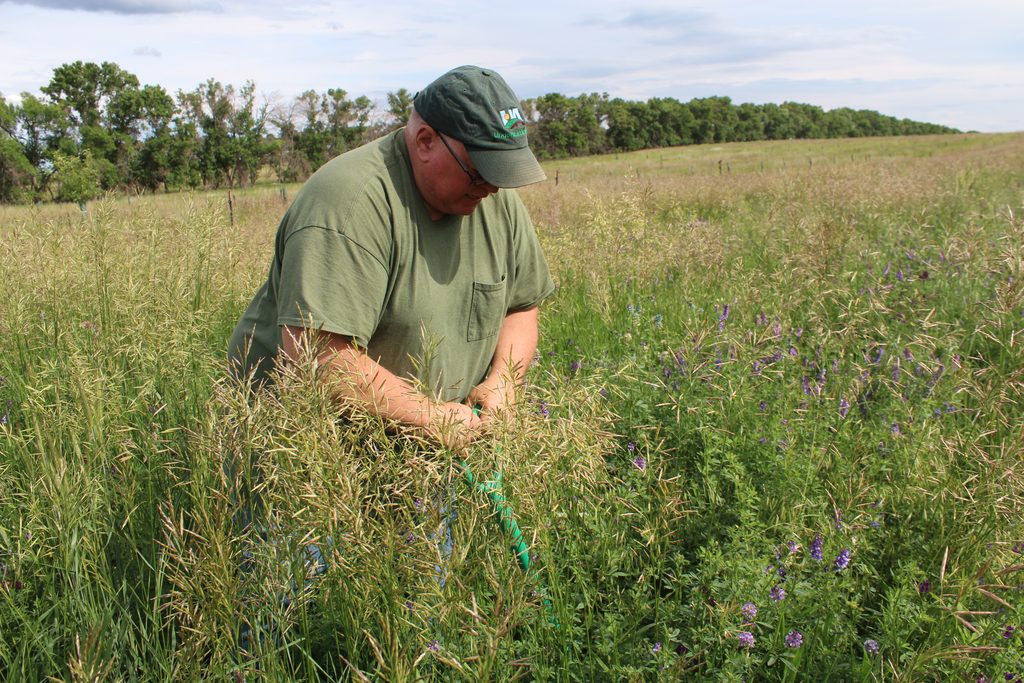
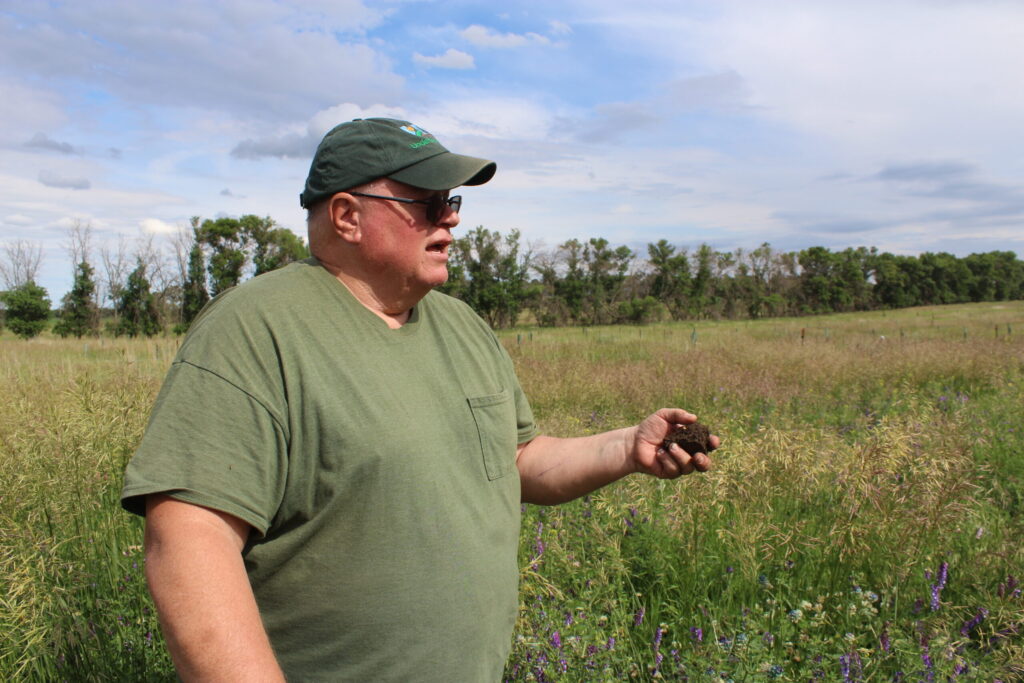
It’s a beautiful June evening at Brown’s Ranch. Birds sing in the trees, a pheasant scuttles by, and the wind gently blows the thick grasses and legumes that come up higher than Gabe Brown’s waist. The forages are so tall, in fact, that I can barely see the spade that Gabe’s sinking into the ground.
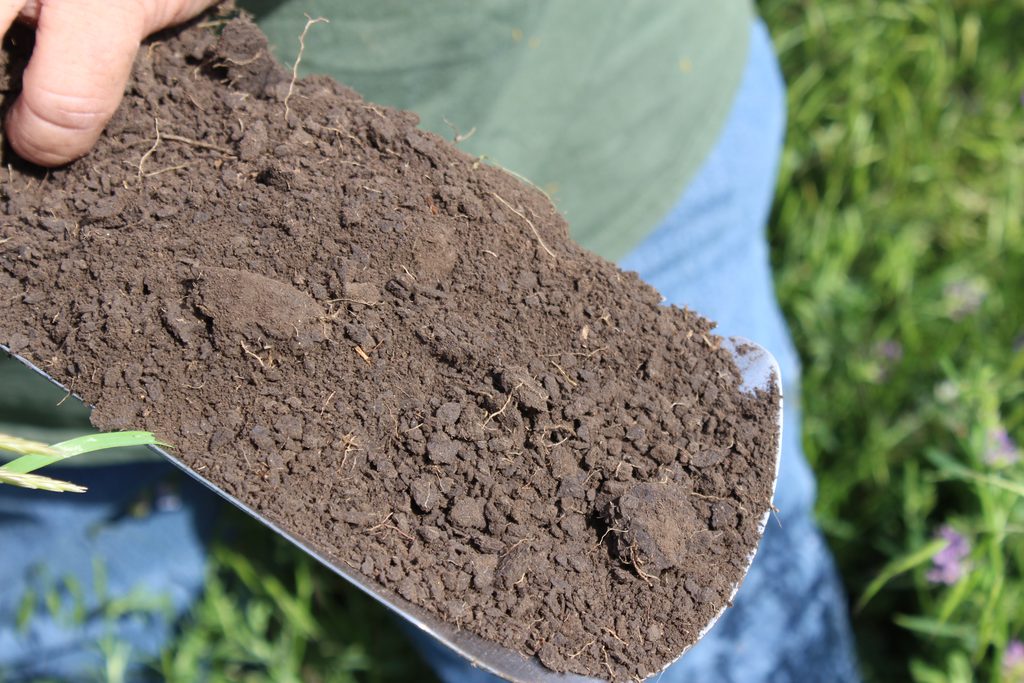
Gabe pulls the spade back up, filled with some nicely aggregated soil. It’s dark, rich, crumbly, and teeming with soil life. I’m impressed. Everyone says Gabe has amazing soil, but I had to see it for myself. And all I can say is, “Wow.”
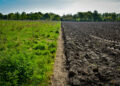
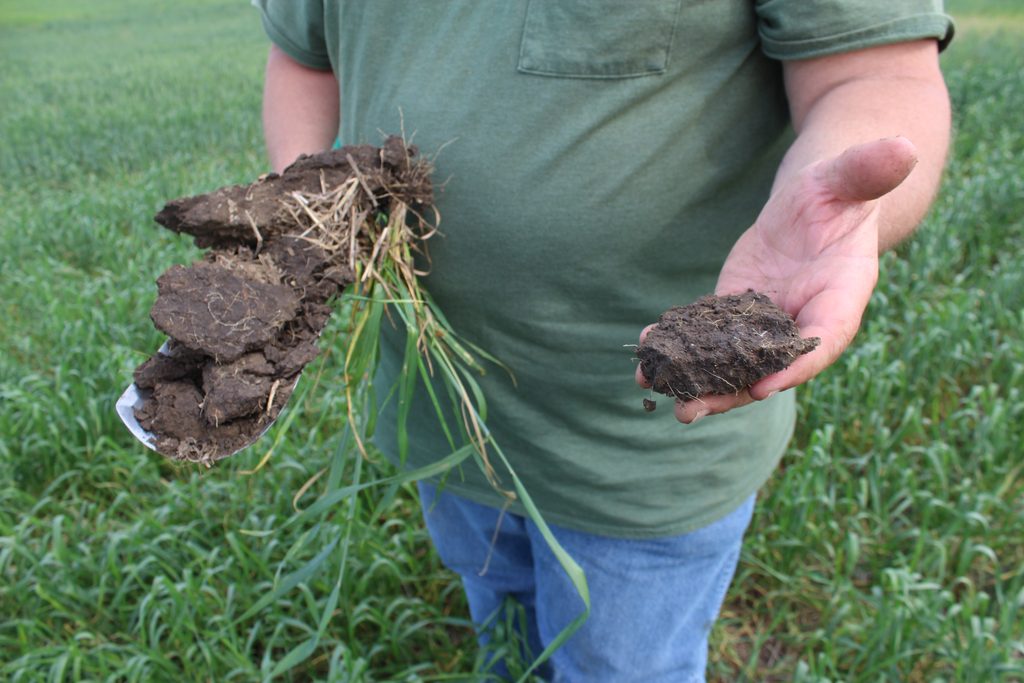
For comparison, Gabe digs up a spadeful of soil in the neighbor’s no-till wheat field across the street. The difference is stark. This soil is dense, compacted, and platy. The wheat roots are growing laterally because they can’t penetrate the hard soil.
“The difference is strictly management,” Gabe explains. “It’s the same soil type. And my soil was just like that, back before we started no-till. And it’s not just no-till. It’s the cover crops, livestock integration, diverse crop rotations.”
It’s probably not a stretch to call Gabe’s soil world-famous. His book Dirt to Soil is one of the key texts of the modern regenerative movement, and Brown’s Ranch was featured in the films Kiss the Ground and Common Ground. Everyone who’s been to Gabe’s farm agrees — his management practices are definitely a successful way to build soil health.
But what are those practices, and how have they changed over the years?
Diverse Perennials
After reading Gabe’s book, I expected to see a mix of crop fields and pastures on his ranch. But this is the first year that the farm is entirely in perennial crops. It’s a transition that Gabe started years ago and his son, Paul, is continuing. And it’s a cropping system that fits the land and climate perfectly.
Brown’s Ranch is located in Bismarck, North Dakota, just west of the 100th meridian. Only seventeen or eighteen inches of rain falls each year, and most of that is in the months of May and June. The native vegetation is mixed-grass prairie — a diverse mixture of deep-rooted grasses, legumes, and forbs that thrive in this low-moisture environment.
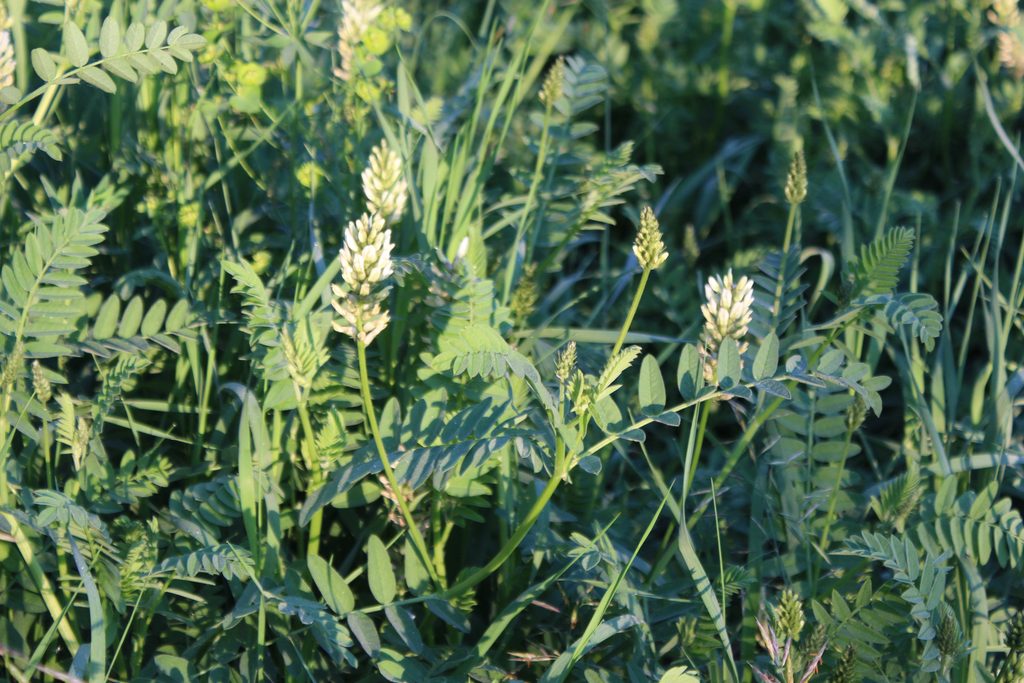
Gabe tells me that one of his favorite native grasses, big bluestem, can send roots down eighteen or twenty feet. He’s seen nine-foot-deep roots on Cicer milkvetch, a native legume with creamy white flowers. With his well-aggregated soil, every drop of rainfall infiltrates, keeping the deep-rooted plants lush and healthy during the dry summer and fall months.
When Gabe started farming this land, part of it was in native prairie, part of it was planted in non-native smooth bromegrass as part of the Conservation Reserve Program (CRP), and part of it was in tilled cropland. The tilled land was severely eroded — one of his fields has an eighteen-inch bump at the transition from unbroken prairie to formerly tilled land.
Gabe started regenerating the soil in his crop fields by using cover crops. At first, he used only two or three species, but then he realized they needed to be seeded in multispecies combinations.
The same principle applies to perennial forages — the more diversity, the better. The field where Gabe dug up that lovely spadeful of soil was seeded last year with a twenty-species mix. The native prairies are even more diverse — researchers have documented 174 plant species on Brown’s Ranch.
As the soil health improves on land that was once tilled, native prairie plants start to come back. Gabe points out some big bluestem in a reclaimed crop field that he didn’t plant; the seeds sprouted after lying dormant for nearly a hundred years. All they needed was the right mycorrhizal partners and well-aggregated soil.
In contrast, much of the grazing land in central North Dakota is dominated by smooth bromegrass, a non-native species introduced, ironically, by soil conservationists to halt erosion. Unlike the native grasses, smooth brome is only nutritious early in the season, turning hard and woody by midsummer.
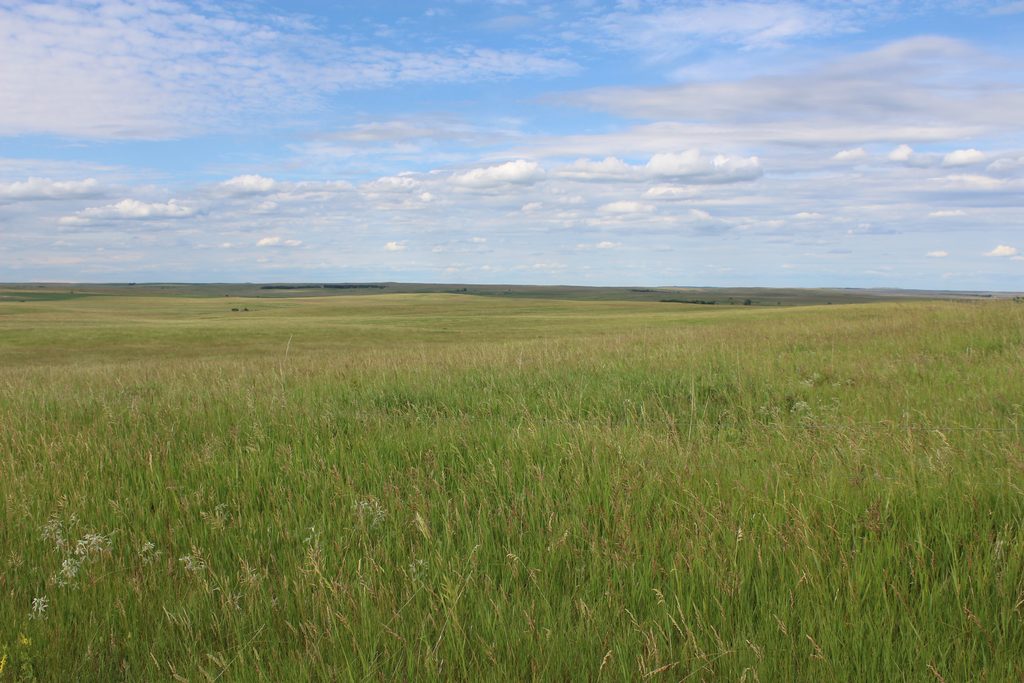
So how does Gabe keep his pastures diverse? That’s where grazing management comes in.
Grazing Management
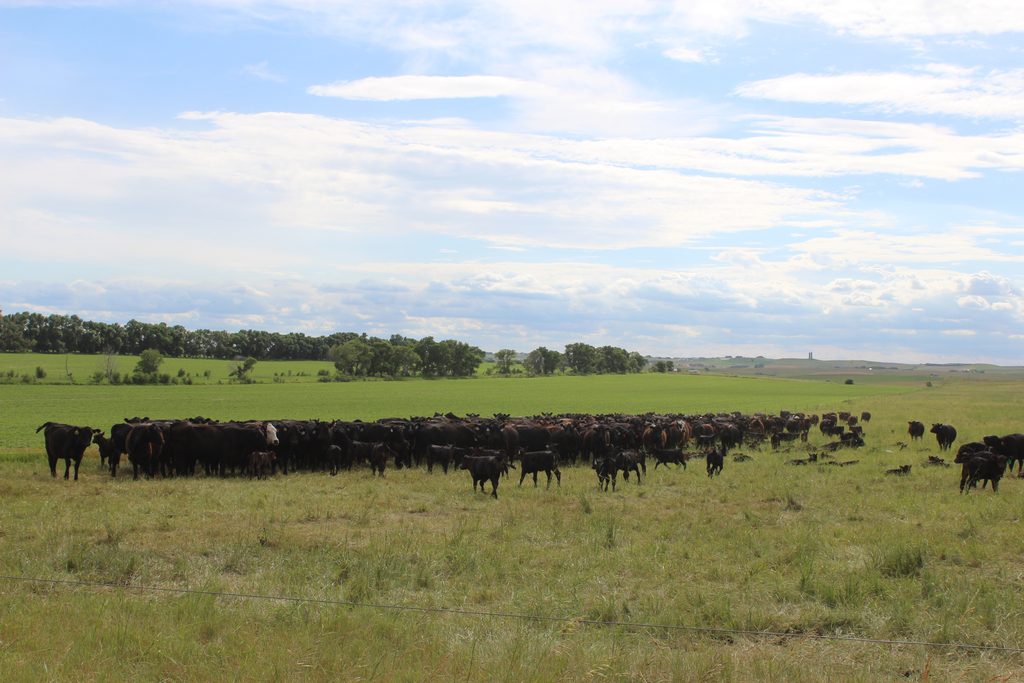
Atop a hill in one of the rolling back pastures, we run across the cow-calf herd. Three hundred Black Angus cows are bunched up along one side of the paddock, with the little black heads and ears of their calves poking out of the grass nearby. The forages are so tall — about four feet — that we wouldn’t even be able to see the calves if their mamas hadn’t trampled down much of the grass.
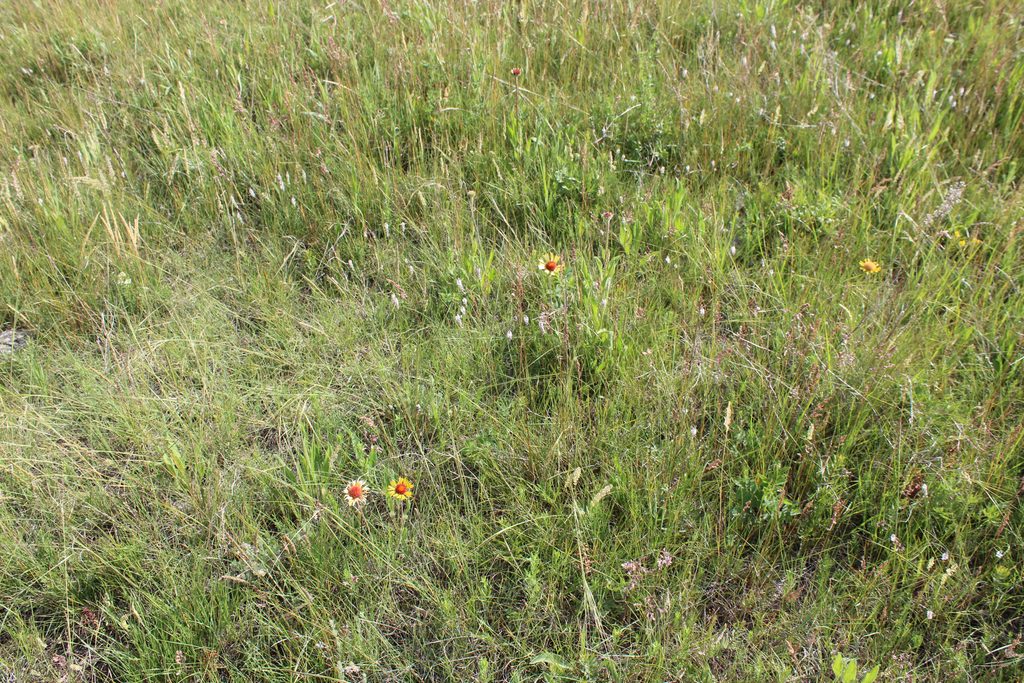
Grazing management is the key to keeping the pastures at Brown’s Ranch healthy and productive. Paul moves the cows to a fresh paddock every day or two using a management-intensive grazing system. That way, they always have fresh forages to eat, and the plants get a rest.
The big difference between Brown’s Ranch and other rotational grazing operations I’ve visited is how long Paul and Gabe rest the pastures before the cows come back. Some farmers rotate their pastures sequentially, moving the cows into each paddock two or three times a year. That works fine in humid areas with high rainfall, but in central North Dakota it doesn’t give the plants enough time to recover.
At Brown’s Ranch, each paddock is only grazed once a year — and never on the same calendar date. Grazing at the same time every year selects for specific plant species and decreases the overall diversity. Mixing up the dates when each paddock is grazed keeps the prairie healthy and diverse.
A year is about the right rest period for the mixed prairie region in central North Dakota. Gabe says that in the shortgrass prairies of western North Dakota and Montana, it’s best to graze each paddock only once every two years. The rainfall is so low in that region that it takes over a year for the plants to fully recover after being grazed.
Too little grazing would be detrimental, too, because grazing is the best way to control smooth bromegrass. There’s brome in all the Brown’s Ranch pastures, but it’s not outcompeting the other plants. When the cows graze the brome, they set it back and allow the other plants to compete with it.
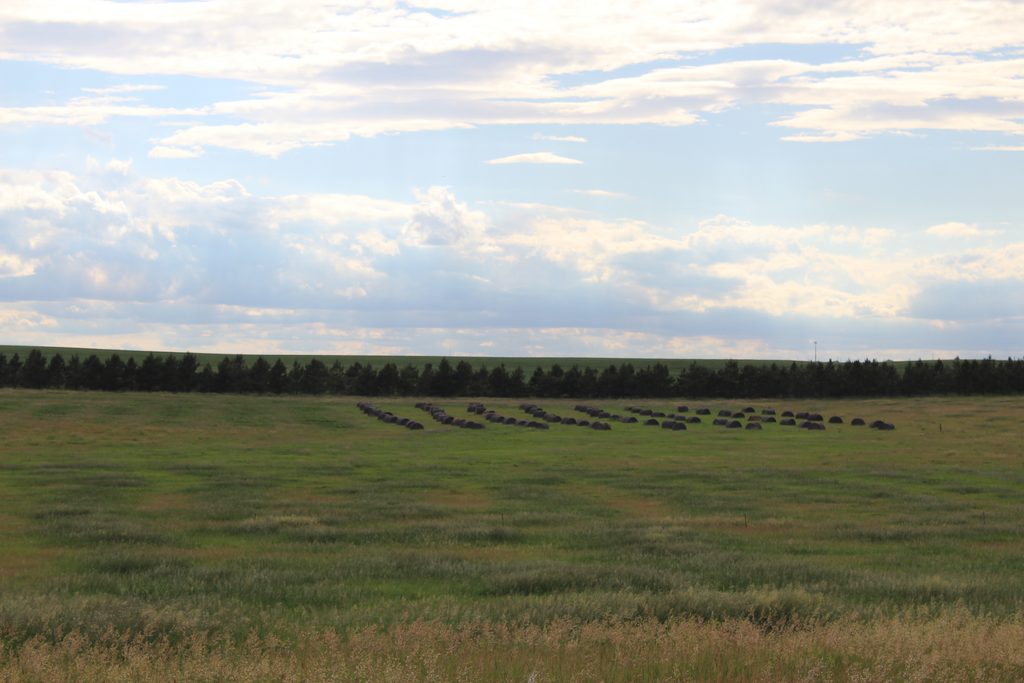
Even with a good grazing system, sometimes the four-foot winter snows make it necessary to feed hay. Paul makes hay on rented land that doesn’t have the water lines or fences necessary for grazing. He tries not to make hay on the same field two years in a row. Even so, the hayfields are less diverse because making hay cuts all the plants at once, which never happens with grazing.
Hay can help build up soil, too, when it’s used in a bale grazing system. Gabe shows me a field with neat lines of round, lush, grassy spots where Paul fed bales of hay over the winter. There are still a few bales lined up for next winter. Between the grass seeds from the hay and the manure and urine from the cattle, bale grazing is a great way to improve soil fertility.
Continuing the Legacy
One of the most encouraging things about Brown’s Ranch is that Gabe has successfully handed the farming operation over to his son, Paul. Paul has made some changes — like discontinuing annual cropping and focusing on grazing. And Gabe’s okay with that. He’s been able to disconnect from the day-to-day farm operations and leave the decisions up to Paul, who’s been doing a great job continuing the legacy of soil health.
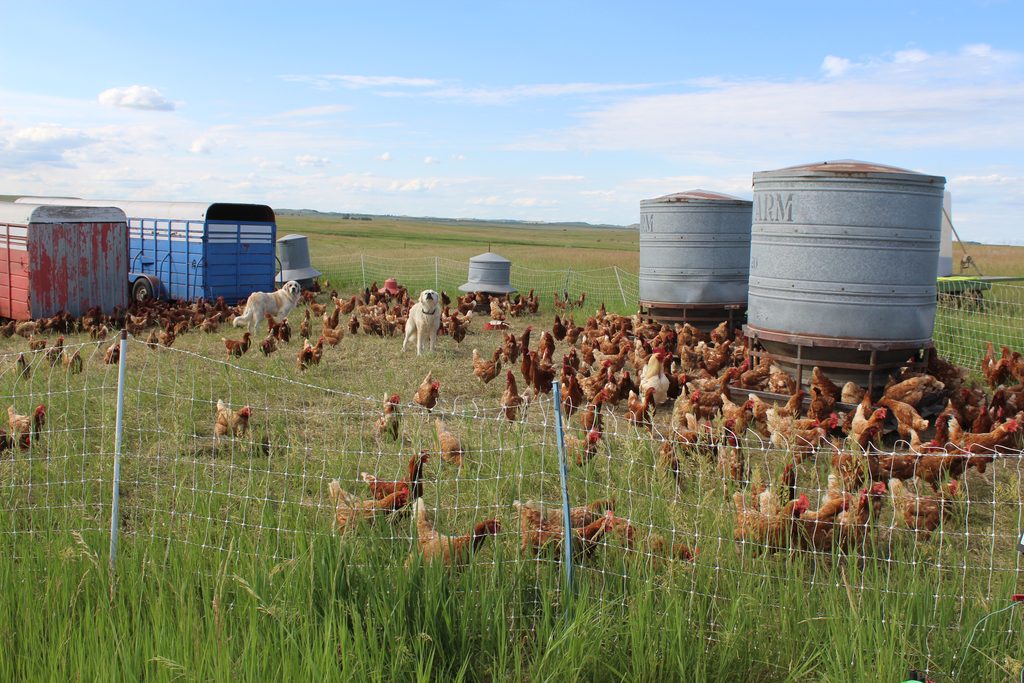
It was Paul’s idea to branch out into other livestock. We pass some pastured pigs and a flock of laying hens, guarded by two white, fluffy Anatolian dogs. Paul also has an agreement with a local beekeeper, who puts hives on the ranch to take advantage of all the blooming flowers and then sells the honey wholesale to Paul.
Paul bottles and sells honey under the Nourished by Nature label, along with grass-finished beef, pastured pork, grass-finished lamb, and free-range eggs. With the suburbs of Bismarck sprawling almost up to the farm’s borders, there’s no shortage of customers for these high-quality products.
“It is what it is,” Gabe says modestly as we finish the tour. “It’s nothing special, but I am pretty proud of the soil.”
After seeing what many of the other farms in the area look like, I know that Gabe’s ranch is something special. And I think I know why, too — it’s because Gabe loves and cares for his land. He knows his soil, plants, and animals, and over the years he’s learned how to make them thrive through careful, thoughtful management with an emphasis on soil, plant, and animal health. And it looks like he’s passed that love and knowledge on to Paul.
Brown’s Ranch really is special. But any other farm can be, too — if you know and love your land the way Gabe Brown does.